Choosing the Right Notebook Is Harder Than It Looks
I was talking to a procurement manager from a school in Rajahmundry last month. He had a stack of samples on his desk — maybe fifteen different notebooks. He looked tired. “They all look the same to me,” he said. And he's not wrong. If you don't know the types of notebooks available, you end up picking based on the cover design. Which is a terrible way to buy something students will use every day for a year. The paper quality, binding strength, size, ruling — all of that matters more than what's on the front page. And if you're ordering in bulk, one wrong choice means hundreds of notebooks nobody wants. So let's actually look at what's out there. If this process feels familiar, you might want to check what Sri Rama Notebooks offers. I think it'll make your job easier.
Size Matters More Than You Think
Here's something I've noticed over the years. People think a notebook is a notebook. But the size determines everything — how portable it is, how long the paper lasts, whether it fits in a bag or a desk drawer. For schools and colleges, the most common types of notebooks by size are:
- King Size (23.6 cm x 17.3 cm) — standard for classroom use, good for general note-taking.
- Long Notebook (27.2 cm x 17.1 cm) — longer, slimmer. College students love these for lecture notes.
- Short Notebook (19.5 cm x 15.5 cm) — pocket-friendly. Journaling, quick notes, small bags.
- A4 and A5 — universal sizes, especially for offices and corporate use.
- Crown — a bit of an odd size, but still used in some regions for specific subjects.
I personally think the Long notebook is the most underrated. It gives you more writing space without feeling bulky.
Anyway. The point is, don't just ask for “a notebook.” Ask for a specific size. Your students or employees will thank you.
Not All Paper Is Created Equal
Right. Let's talk about something nobody asks about until it's too late. The paper itself. You'd be surprised how many schools order notebooks and then find out the paper is so thin that ink bleeds through to the next page. That's a disaster. Types of notebooks are defined largely by the paper quality and ruling inside them.
At the factory, we use around 54 GSM paper for standard notebooks. That's a good middle ground — smooth enough for writing, thick enough to handle a ballpoint without showing through. But if you're ordering for younger kids who press hard, or for fountain pen users, you might want something heavier. And the ruling? That changes everything:
- Single Ruled (SR) — for everyday writing.
- Double Ruled (DR) — for subjects that need separation, like languages.
- Four Ruled (FR) — handwriting practice. Kids need this.
- Unruled (UR) — drawing, diagrams, free notes.
- Broad Ruled (BR) — larger spacing for younger children.
One time, I saw an order for 2000 notebooks arrive at a school with the wrong ruling. The teacher nearly cried. Four lines for kids who needed single. It was a mess. So double-check this. Seriously.
Binding: The Part That Breaks First
A notebook can have perfect paper and a gorgeous cover. But if the binding falls apart in two weeks, it's useless. I've seen it happen too many times. When procurement managers ask me about types of notebooks, I always tell them to look at how it's put together before anything else.
We manufacture three main binding types:
| Binding Type | Best For | Durability | Lay Flat |
|---|---|---|---|
| Stitched | School notebooks, heavy use | High — pages don't fall out | Yes |
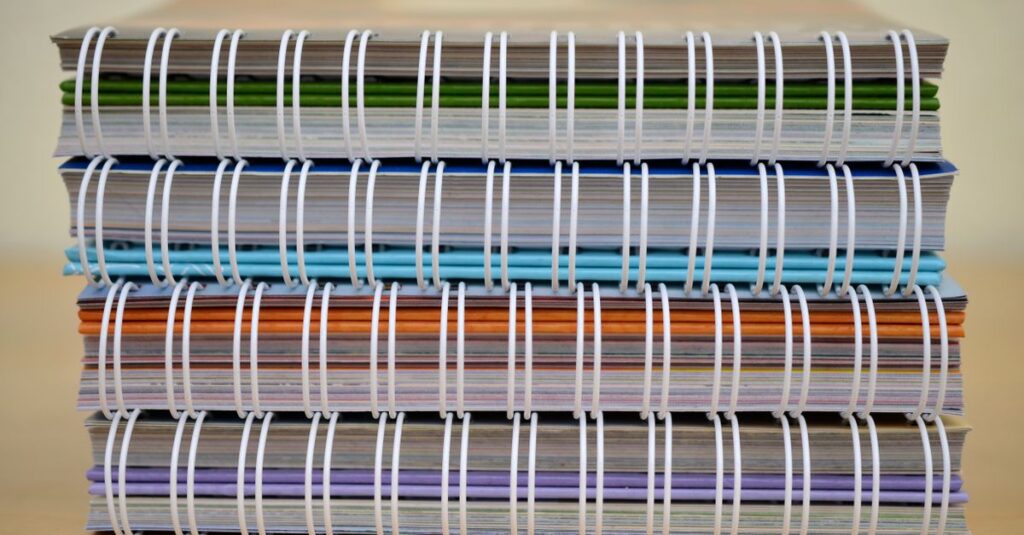
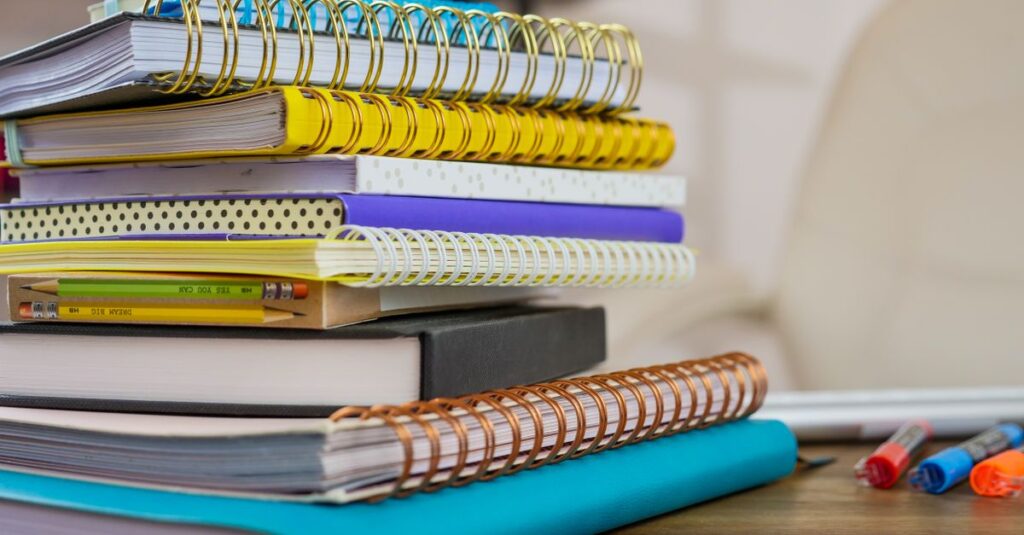
| Spiral | Art books, tear-out pages | Medium — coils can bend | Yes |
| Perfect | Diaries, corporate notebooks | Medium — spine crack with heavy use | No |
Stitched notebooks are the workhorses. They last. Spiral is great for artists or anyone who needs to fold the notebook back. Perfect binding looks clean but honestly? It doesn't survive a schoolbag well. Something to keep in mind.
Expert Insight
I remember visiting a school in Kakinada about five years ago. The principal showed me a pile of half-destroyed notebooks. They were perfect-bound. Beautiful covers. But every single one had lost its first few pages within a month. He said, “I thought the cover was what mattered.” I told him the cover is just the welcome mat. The binding is the foundation. He switched to stitched the next year. His complaint rate dropped to almost zero. I don't know why we keep learning this lesson the hard way.
Custom Notebooks: When You Need Something Specific
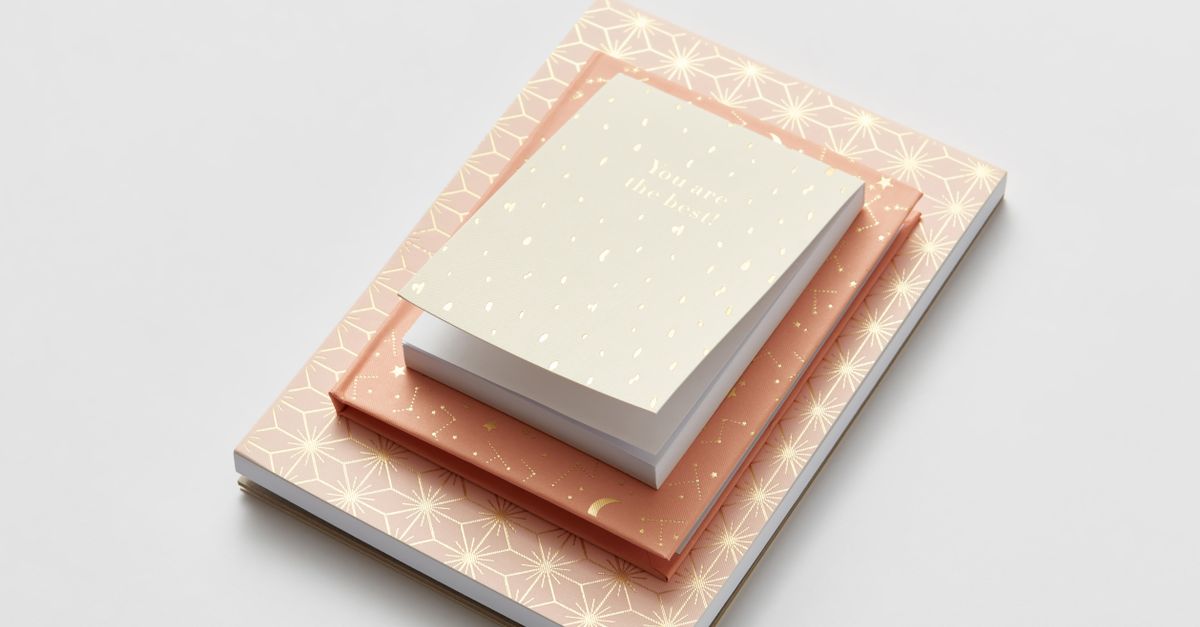
Not every school or business needs a standard notebook. Sometimes you need your logo printed on the cover. Or you need a specific page layout. Or you want a private label that makes it look like your brand made the notebook. This is where the less common types of notebooks come in — the customized ones.
I'll give you an example. Rajesh, 38, runs a chain of coaching centers in Visakhapatnam. He came to us last year and said, “I want a notebook that has my centre's logo, my syllabus printed on the first page, and a different color cover for each subject.” We made it happen. Full customization. Logo printing, custom cover design, even the inside pages had his content. He said the students felt more connected to the brand. Which I think is smart marketing, honestly.
Custom notebooks include:
- Logo printing and embossing
- Private label (your brand name on the cover)
- OEM manufacturing
- Foil stamping and special finishes
- Custom page counts and ruling
Most notebook suppliers don't want to touch small-batch custom orders. We do. I think that makes a difference for schools and businesses that want their own identity.
Paper Quality Isn't Just About GSM
Okay, I said we'd talk about paper. Let me be a bit more specific. People obsess over GSM — grams per square meter. And sure, 54 GSM is standard. 70 GSM feels premium. But there's more to it. The finish of the paper matters. Smooth paper feels great but sometimes ink sits on top and smudges. Slightly textured paper gives the ink something to grab onto. I've had customers argue about this for hours.
Different types of notebooks use different papers depending on the user. Account books need thicker paper because they get used daily for years. School notebooks need something that handles erasing and pressure. Corporate diaries need paper that feels expensive to the touch but doesn't bleed with fountain pens. Nine times out of ten, I recommend 54 GSM for schools and 70 GSM for corporate orders. But ask your supplier for samples. Always. (I must admit I'm biased towards our own paper, but I genuinely believe it's good.)
Frequently Asked Questions
Frequently Asked Questions
What are the main types of notebooks for students?
Students typically use King Size and Long notebooks for regular notes, Short notebooks for pocket use, and A4 for subjects requiring more space. Ruling varies by grade — single ruled for older students, four ruled for younger ones learning handwriting.
Which binding type is best for school notebooks?
Stitched binding is the most durable for school notebooks. Pages stay in place even with daily use and being stuffed in bags. Spiral binding is okay for art classes, but doesn't last as long. Avoid perfect binding for school use.
Can I order custom notebooks with my school logo?
Yes. Manufacturers like Sri Rama Notebooks offer custom cover printing, embossing, foil stamping, and private label options. You can add your logo, school name, and even custom page layouts. Minimum order quantities vary.
What is the difference between King and Long size notebooks?
King Size is wider (23.6 x 17.3 cm), more square. Long is narrower and taller (27.2 x 17.1 cm). King is a general-purpose classroom notebook. Long gives more writing lines per page, making it popular for college lecture notes.
What GSM paper is best for bulk notebook orders?
For most school and office purposes, 54 GSM paper offers good quality without high cost. For premium corporate diaries or account books, 70 GSM or higher is recommended. Always request a sample before placing a bulk order to test the paper feel and ink behavior.
So Where Do You Go From Here?
Look, I know choosing the right notebook sounds like a small decision. But when you're ordering thousands of them, it stops being small. It becomes a budget decision, a usability decision, and honestly, a brand decision for your school or company. I don't have a clean answer for every situation. It depends on who will use it and how.
But I can tell you this: pay attention to the binding first. Then the paper. Then the size. Everything else is secondary. And if you want someone who actually knows what they're talking about? Sri Rama Notebooks has been doing this since 1985. We've seen most of the mistakes. And we can probably help you avoid them.