So You're Looking for a 300 Pages Long Notebook Price?
Let me guess. You typed that exact phrase into Google because you need to order a bunch of them — maybe for a school, a training program, some kind of institutional supply. And now you're staring at a dozen online stores and B2B listings, and every single one shows a different number. Annoying, right?
The truth is, a 300 pages long notebook price isn't one number. It depends on who you are buying from, how many you order, and — honestly — whether the person making the notebook actually knows what they're doing. I've been in this business since 1985, and I've seen buyers pay double for notebooks that fell apart in two months.
Anyway. Let me break it down for you. No fluff. I'll show you what actually matters when you're trying to figure out the price. If you want to skip ahead and check what we offer at Sri Rama Notebooks, feel free. But I'd recommend reading this first so you know what questions to ask.
First Things First — What “300 Pages” Actually Means in a Notebook
Here's something I see all the time. A buyer calls and says — “I need a 300 page notebook.” Then we start talking and it turns out they mean 300 sides. Or 300 sheets. Those are different things.
In the notebook world:
- 300 sheets = 600 pages (front and back)
- 300 pages = 150 sheets
Most manufacturers count in sheets. So when we say a 300 pages long notebook, we mean 150 sheets of paper, bound together, with a cover. That's around 1.2 to 1.5 cm thick — a chunk of paper.
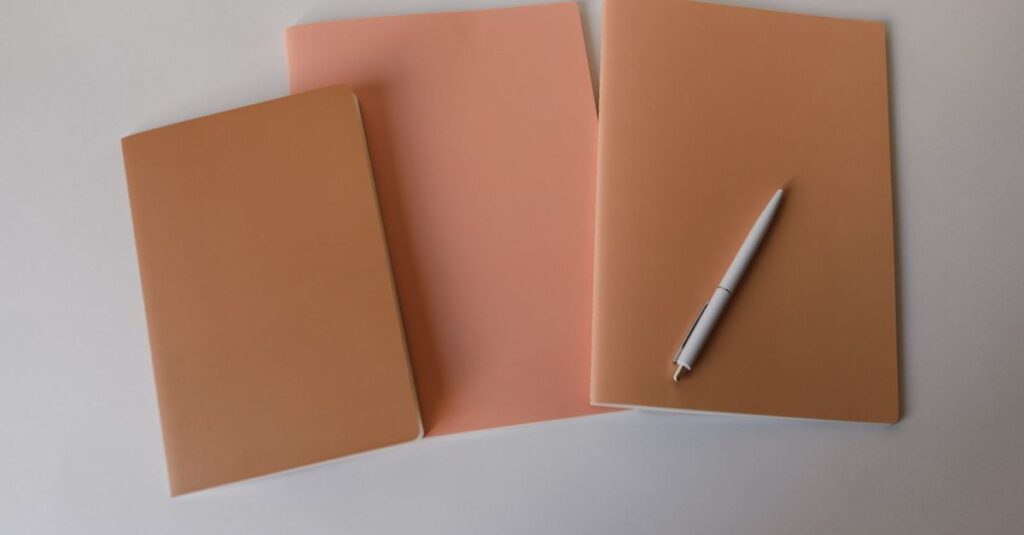
And the “long” part? That's the size. A long notebook in India is typically 27.2 cm × 17.1 cm. Not A4, not short. Somewhere in between. It's the standard size for school notebooks, account books, and diaries in this part of the world.
So when you're searching for a 300 pages long notebook price, make sure you and the seller are talking about the same thing. Because if there's a mismatch, the price will be off and you won't get what you need.
What Actually Affects the 300 Pages Long Notebook Price?
I could give you one number right now and say — this is the price. But it would be a lie. Because it changes based on five things.
1. Paper Quality (GSM)
The most important thing. Standard notebooks use 54 GSM or 60 GSM paper. Cheaper ones go down to 48 GSM. Higher quality — 70 GSM or above — costs more. For a 300 pages notebook, the paper alone can account for 40-50% of the total cost.
2. Binding Type
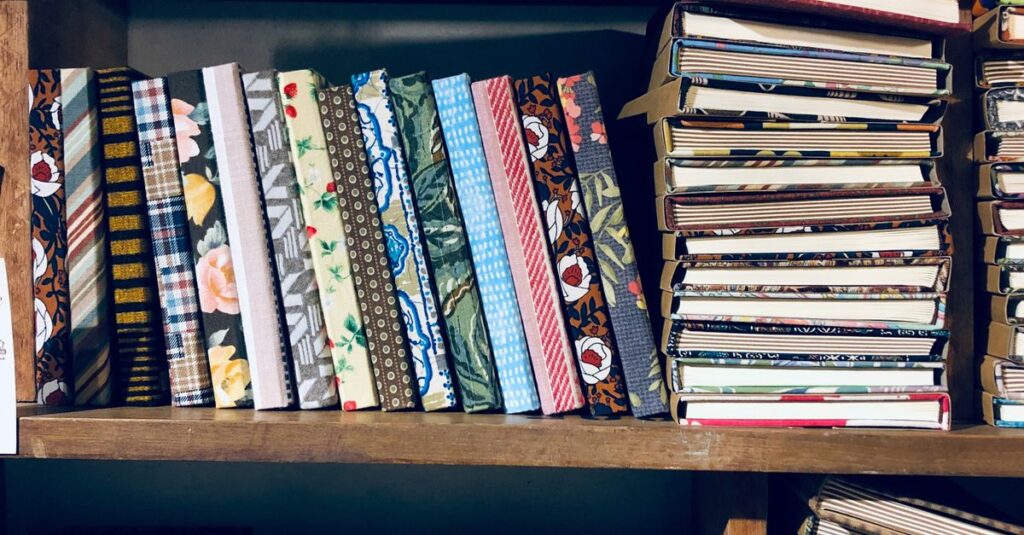
Three common bindings: stitched, spiral, perfect. Stitched is the cheapest. Spiral costs a little more because of the wire and labor. Perfect binding (the glued spine you see on paperback books) needs special equipment. On a 300 page notebook, binding choice affects both durability and price.
- Stitched binding — strong, classic, cheaper
- Spiral binding — lies flat, convenient, mid-range
- Perfect binding — professional finish, costs more
3. Cover Material and Printing
Plain paper cover? Laminated? Hard cover? One-color print or full color? Logo embossing? Foil stamping? Each addition changes the cost. And for bulk orders — 500, 1000, 5000 notebooks — even a small per-unit difference adds up.
4. Quantity Ordered
This is probably the biggest factor. A 300 pages long notebook price for 100 pieces is very different from the price for 10,000 pieces. Manufacturers have setup costs — cutting, printing, binding, packaging. The higher the volume, the lower the per-unit cost.
5. Customization
Logo printing, private labeling, custom cover design — these all add cost. But if you're a school or a corporate buyer, it's often worth it because the notebooks become a marketing tool. You're not just buying notebooks; you're buying space for your brand.
Comparison — 300 Pages Long Notebook Price vs Other Sizes
Let me give you a rough idea. These are approximate numbers for a stitched notebook with standard 54 GSM paper. Prices change with material costs, but the relative difference stays the same.
| Notebook Type | Size | Pages | Approx Price per Unit (Bulk) |
|---|---|---|---|
| Short Notebook | 19.5 × 15.5 cm | 300 pages | ₹35 – ₹45 |
| Long Notebook | 27.2 × 17.1 cm | 300 pages | ₹50 – ₹70 |
| A4 Notebook | 29.7 × 21.0 cm | 300 pages | ₹75 – ₹95 |
| King Size Notebook | 23.6 × 17.3 cm | 300 pages | ₹55 – ₹75 |
See the jump? Size matters. The long notebook sits in a middle zone — bigger than short, smaller than A4. And the price reflects that.
One thing I'll say — I've seen buyers pick the short size to save money and then regret it because the content doesn't fit. You can't cut corners on space if people are actually going to write in these notebooks for a whole year.
Let Me Tell You About a Buyer I Spoke to Last Month
Ravi. He runs a small training center in Kakinada — about 60 kilometers from us. He needed 800 notebooks for a batch of students. The course was six months long, so he wanted 300 pages long notebooks. He found some online for ₹45 each. Seemed like a deal.
He ordered them. Three weeks later, pages started falling out. The binding was poor — cheap glue. Students complained. He had to buy replacements.
He called me after that. I asked him one question: “What paper GSM were they?” He didn't know. Nobody told him. The price was low — but the cost, in the end, was higher. He ended up spending ₹62 per notebook from us, and he's been ordering ever since.
Here's the point. That 300 pages long notebook price you see online — it might be real. But if it's too low, something is missing. Cheap paper, bad binding, thin covers. And you'll pay for it later — in replacements, complaints, and embarrassment.
So What's a Realistic 300 Pages Long Notebook Price in Bulk?
Look, I'll give you a straight answer based on what we manufacture. For a stitched, long-size notebook with 54 GSM paper and a simple paper cover, the price typically ranges between ₹50 and ₹70 per notebook in bulk orders of 500 or more. This is for the standard product — no frills.
For spiral binding, add about ₹8-12 per notebook. For perfect binding, add ₹15-20. For custom cover printing or logo embossing, the price goes up further depending on the complexity.
If you're ordering 10,000+ units, the prices can drop by 10-15%. But below 200 pieces, you're looking at retail pricing — which can be ₹90-120 per notebook.
The real question is — what do you need? Not the cheapest possible. The one that will last. I've learned this the hard way over 40 years. A notebook that falls apart is a waste of money at any price.
Expert Insight
I remember a conversation from maybe five years back. I was talking to a stationery distributor in Visakhapatnam — old guy, been in the trade since the 80s. He said something I never forgot. He said, “The paper is the soul of the notebook. Everything else is decoration.” I think about that whenever someone asks me about the price of a 300 pages long notebook. You can have the best cover in the world, but if the paper bleeds through or tears easily, the notebook is useless. The GSM matters more than most buyers realize. And I've seen too many people learn this after they've already paid.
How to Get the Best 300 Pages Long Notebook Price Without Sacrificing Quality
I'll tell you what I tell every buyer who calls me.
- Ask for paper samples. Before you order anything, get a physical sample. Write on it. See if the ink bleeds. Feel the paper. This is non-negotiable.
Don't be lazy. A ₹100 sample can save you thousands in bad inventory. - Negotiate on binding. If you don't need spiral or perfect binding, go with stitched. It's strong and cheaper. For a 300 page notebook, stitched binding done right will last years.
- Check the manufacturer's experience. A new setup might offer you a low price to get business. But their quality control might not be there yet. An established manufacturer — think 20+ years — has already made all the mistakes and fixed them. You get the benefit of that experience.
- Ask about packaging. Sometimes you can save by opting for bundle packing instead of individual plastic wrapping. Depends on how you plan to distribute the notebooks.
- Think about the long term. If you're a school or corporate buyer, you're going to need notebooks again next year. Build a relationship with a reliable manufacturer. Consistent quality and timely delivery matter more than saving ₹5 per notebook once.
Earlier I said the price is the main thing. That's not entirely true. Actually, the value is the main thing. A cheap notebook that fails is expensive. An expensive notebook that lasts is cheap. That's the paradox. So when you look at a 300 pages long notebook price, ask yourself not just “how much?” but “for how long?”
Frequently Asked Questions
What is the average 300 pages long notebook price in India?
For bulk orders of 500 or more, expect to pay between ₹50 to ₹70 per notebook for a standard stitched, long-size notebook with 54 GSM paper. Prices vary based on binding, cover quality, and customization.
Is the price different for spiral binding vs stitched binding?
Yes. Spiral binding typically adds ₹8 to ₹12 per notebook compared to stitched binding. Perfect binding costs even more — around ₹15 to ₹20 extra. Stitched is the most economical option for a 300 page notebook.
Does the 300 pages long notebook price include logo printing?
Not usually. Logo printing, embossing, or custom cover design are charged separately. The base price is for a standard cover. Customization costs depend on the complexity and number of colors in the print.
How does paper GSM affect the 300 pages long notebook price?
Paper GSM directly impacts cost. 54 GSM is standard and most affordable. 60 GSM costs slightly more but offers better durability. 70 GSM and above are premium — they cost more but reduce ink bleed-through. Choose based on how the notebook will be used.
Can I order a small quantity and still get a good price?
Small orders — under 100 pieces — are priced at retail rates, typically ₹90 to ₹120 per notebook. The best pricing starts from 500 units and above. For institutional buyers ordering 5,000+, discounts of 10-15% are common.
One Last Thing
I don't think there's a perfect price for a 300 pages long notebook. It depends on too many things — paper, binding, quantity, customization. But I do think there's a right price — the one that gives you good quality without wasting money.
Three takeaways, and I'll stop.
- Cheapest is almost never cheapest in the long run. Bad notebooks fail. You end up reordering.
- Ask the right questions. Paper GSM, binding type, cover material. Don't just look at the number.
- Find a manufacturer you trust. That relationship is worth more than any single discount.
If you want to see what we make — or just ask a real person about the price — go ahead and visit Sri Rama Notebooks. I'm not going to pretend we're the cheapest. But we've been doing this since 1985, and we make notebooks that don't fall apart. That matters.