What Exactly Is a 5 in One Notebook?
You walk into a stationery shop in Rajahmundry — the backstreets near Jandapanja Road, where the air smells of paper dust and binding glue. The shopkeeper pulls out a thick notebook. Five sections. One cover. That's it.
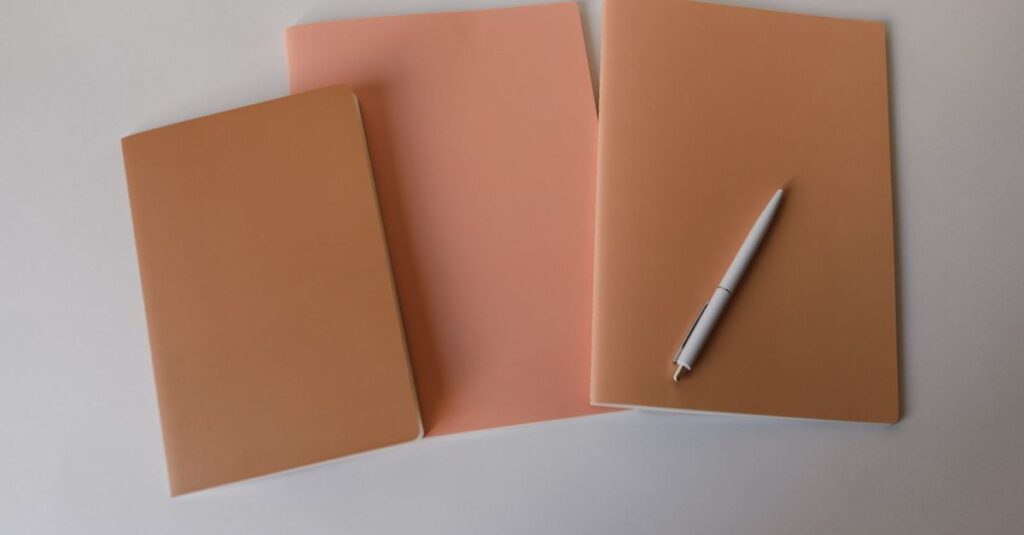
A 5 in one notebook is exactly what it sounds like: a single bound book with five separate ruled sections, each usually divided by a coloured divider or just a thicker page. Students use them to carry maths, science, English, social studies, and one extra subject — all in one place. No juggling five separate notebooks. No forgetting the right one at home.
I've seen procurement managers from schools and colleges order these by the thousand. They're practical. Cheap. Save locker space. And honestly? They make inventory a lot easier for distributors.
If you're looking to understand what goes into making a good 5 in one notebook — and whether it's the right choice for your bulk order — Sri Rama Notebooks has been making them since 1985. We know the difference between a notebook that falls apart by mid-term and one that lasts the whole academic year.
Why Schools and Offices Are Switching to 5 in One Notebooks
It's not new. But lately, I've noticed more institutions — and even a few corporate training centres — asking for them. Why? Because it solves a simple problem: too many books, too little space.
Think about a school kid. Fourteen subjects. Fourteen notebooks. Plus textbooks. A school bag that weighs as much as a small dog. Now imagine cutting that down to three 5 in one notebooks. Suddenly, the bag becomes manageable.
But there's a catch — not all 5 in one notebooks are built the same. Some use cheap paper that bleeds through. Others have flimsy covers that curl within a week. That's where the manufacturing matters.
What to Look for When Ordering in Bulk
- Paper GSM: At least 54 GSM for writing. Lighter paper shows ink on the other side.
- Binding: Stitched or perfect binding. Spiral works too, but for kids, stitched lasts longer.
- Cover thickness: Minimum 250 GSM laminated cover. Not that thin cardboard that feels like it's already damaged.
- Number of pages per section: Usually 192 pages total — 40 pages per subject. But you can customise.
Here's a thing most people don't consider: the alignment of the ruling. If the lines are printed even slightly crooked across the five sections, it drives teachers mad. I've heard complaints. More than you'd think.
5 in One Notebook vs. Individual Notebooks: A Comparison
| Feature | 5 in One Notebook | Individual Notebooks (5 separate) |
|---|---|---|
| Number of books to carry | 1 | 5 |
| Weight in school bag | ~300–400g | ~800g–1kg |
| Space in locker/shelf | One spine width | Five times the space |
| Risk of losing a subject | Low — all in one cover | High — kids misplace books |
| Customisation options (school logo, colour) | Yes — school name on cover, section colours | Yes, but five separate designs |
| Cost per student (bulk pricing) | Lower — one binding, one cover | Higher — five bindings |
| Durability risk | Binding must be strong — spine wears faster | Each book wears independently |
| Reordering for next term | Easy — one SKU | Five SKUs to manage |
That table makes it obvious why schools love the 5 in one notebook. But it's not perfect. The spine takes more stress because it's thicker. If the binding is weak, the whole book falls apart. That's why manufacturers like us use reinforced stitching on these — not just glued perfect binding.
I remember one order from a school in Kakinada. They had switched to 5 in one notebooks the previous year, bought from a cheaper supplier. By November, half the books had pages falling out. They came to us the next June. That's the kind of thing you learn when you've been in this business for nearly four decades.
How a 5 in One Notebook Is Manufactured
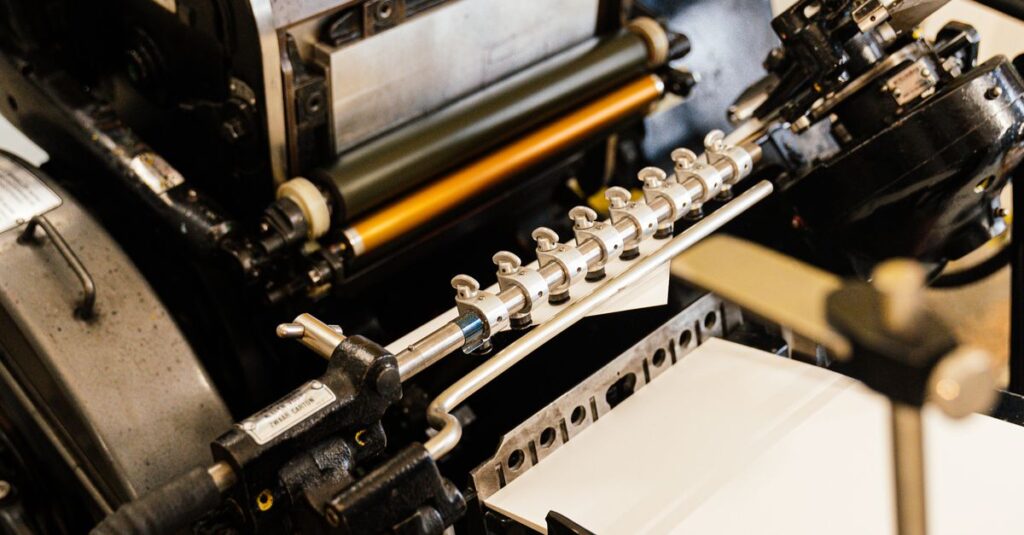
It starts with paper reels — giant rolls that get cut into sheets. Then we print the rulings: single ruled, double ruled, four ruled for languages. Each section can have a different ruling if needed. Then the sections are gathered, collated, and sewn or glued together. The cover is printed — sometimes with a school logo, sometimes with a custom design. Then the whole thing is trimmed, checked, and packed.
One detail people miss: the order of sections. If the sections are not bound in the right sequence, a student ends up writing maths in the middle of the English section. Sounds silly, but I've seen it happen with inexperienced binders.
We use collating machines that automatically stack the sections in the correct order. Then we stitch them with thread — not just wire — because thread holds better when the book is thick.
The cover is glued separately, and then the book is pressed flat for a few hours. That pressing is what makes the notebook lie flat when open. Cheap notebooks skip this step. You can tell immediately.
Expert Insight
I was at a trade fair in Chennai a few years back, talking to a binder from Kerala. He told me something I still think about: “A notebook is only as good as its spine. You can have the best paper in the world, but if the spine cracks, the book is useless.” He had been in the business for thirty years. He pointed to a stack of 5 in one notebooks and said, “Those are the hardest to get right — because the spine takes more weight than a normal notebook. Most factories rush them.” That stuck with me. We don't rush them. Not anymore.
Real-Life Micro-Story: A Procurement Manager's Experience
Venkatesh, 42, procurement manager at a chain of 15 schools near Visakhapatnam. He ordered 5 in one notebooks for the first time in 2022. “I thought it would be simple,” he told me over the phone. “But the first batch had the wrong ruling in the fourth section. Double ruled instead of single. The teachers were calling me every day.” He switched to Sri Rama Notebooks the next year. “Now I just send the spec sheet and it comes out right. No drama.” He said that with a laugh, but I could hear the relief. That's what happens when you work with a manufacturer who checks every collation.
Customisation Options for Bulk Orders
You're not limited to plain covers. Schools want their name, logo, and sometimes even their motto. Corporate training centres want a clean, branded look. Private label distributors want their own brand on the cover.
Here's what we offer:
- Logo printing: Offset or foil stamping on the cover
- Section dividers: Coloured sheets or printed subject labels
- Custom ruling: Each section can have a different ruling type
- Cover material: Glossy lamination, matte finish, or even embossed
- Packaging: Sets of 10 in shrink wrap with your brand sticker
We've done orders where each section had a different colour edge — red for English, blue for maths, green for science. It helps students identify sections quickly. Simple idea, but it makes a difference.
The thing is — customisation isn't just about looks. It's about function. A 5 in one notebook for a primary school kid needs wider ruled lines. For a college student, narrower. And for a corporate training programme? Unruled sections for sketching, plus one lined for notes. We can do that.
5 in One Notebook FAQ
Frequently Asked Questions
What is a 5 in one notebook exactly?
A 5 in one notebook is a single bound book that contains five separate ruled sections, each intended for a different subject. It reduces the number of individual notebooks a student needs to carry, saving weight and space.
How many pages does a typical 5 in one notebook have?
Most standard 5 in one notebooks have 192 pages total, divided into five sections of roughly 40 pages each. However, custom page counts — like 100 or 300 pages — are possible with bulk manufacturing.
Can I get a 5 in one notebook with different rulings per section?
Yes. Many manufacturers, including Sri Rama Notebooks, can print different ruling types in each section — single ruled, double ruled, four ruled, graph, or unruled. This is a common request for schools and colleges.
Is a 5 in one notebook cheaper than buying five separate notebooks?
In bulk orders, yes. Because there is only one cover, one binding, and one manufacturing run, the per-unit cost is typically lower than producing five individual notebooks. You also save on packaging and shipping weight.
What binding is best for a 5 in one notebook?
Stitched binding is generally best because the spine takes more stress. Perfect binding can work for lighter page counts, but for school use, thread stitching with a reinforced spine gives the longest life.
Conclusion
A 5 in one notebook isn't complicated — it's just clever. It solves a real problem for students, teachers, and procurement managers: too much weight, too many books, too little space. But the devil is in the binding, the ruling alignment, and the paper quality. I've seen notebooks that barely last two months. And I've seen others that still look decent at the end of the year.
The choice isn't just about price. It's about whether the manufacturer knows what they're doing. I think that's worth thinking about.
If you're buying bulk — or just curious — Sri Rama Notebooks can help.