So Someone Asked Me About “A for Sheet Size”
I was on a call last week with a school administrator from Vizag. She said, “I need notebooks with a for sheet size — the standard one.” And I knew exactly what she meant. But I also knew that not everyone uses that phrase the same way. So let's clear this up.
The “A” in sheet sizes comes from the ISO 216 standard. It's an international system for paper dimensions. A4, A5, A6 — you've seen these labels on everything from printer paper to notebooks. But when someone says “a for sheet size”, they're usually referring to the A-series. Specifically A4 or A5, depending on what they need.
And honestly? The confusion makes sense. Because different industries, different countries, even different states in India — everyone has their own way of naming sizes. But the A-series is the closest thing we have to a universal language for paper. If you order notebooks in bulk, this is the system you need to understand.
We've been making notebooks since 1985 at Sri Rama Notebooks, and I've seen this confusion more times than I can count. So let me break it down.
The A-Series Paper Size System Explained Simply
The A-series works on a simple principle. Each size is exactly half the area of the previous size, folded in half. A0 is the largest — one square meter of paper. Cut it in half, you get A1. Cut that in half, you get A2. Keep going until you get to A10, which is tiny.
Here's what that looks like in practice:
- A0 — 841 x 1189 mm (posters, large prints)
- A1 — 594 x 841 mm (technical drawings)
- A2 — 420 x 594 mm (small posters)
- A3 — 297 x 420 mm (tabloid size, art paper)
- A4 — 210 x 297 mm (standard office paper, notebooks)
- A5 — 148 x 210 mm (half of A4, pocket notebooks, diaries)
- A6 — 105 x 148 mm (postcards, mini notebooks)
Most people asking for “a for sheet size” are looking for either A4 or A5. A4 is your standard letter-size notebook — common for offices, schools, and account books. A5 is smaller — what you'd carry in a bag for notes or meetings.
The thing that surprises people: there's no single “correct” A size. It depends entirely on what you're using it for. A college student needs something different from a corporate executive. And a school ordering 10,000 notebooks needs yet another thing.
Here's what I tell buyers: think about how the notebook will be used before choosing your a for sheet size.
A4 vs A5: Which One Do You Actually Need?
This is the question I get most often. And my answer is never the same, because it depends.
| Feature | A4 Notebook (210 x 297 mm) | A5 Notebook (148 x 210 mm) |
|---|---|---|
| Best for | Classroom notes, account books, office documents | Personal diaries, meeting notes, pocket notebooks |
| Page count typical | 52–320 pages | 52–200 pages |
| Portability | Requires a bag | Fits in most bags, some coat pockets |
| Writing surface | More space per page | Less space, more compact |
| Bulk orders common | Schools, colleges, offices | Corporate gifts, promotional diaries |
| GSM paper typical | 54–70 GSM | 54–80 GSM |
Most school notebooks in India use the A4 size. It's big enough for diagrams, long-form writing, and multiple subjects per page. A5 is what you'd give as a corporate diary or a personal journal.
But here's the twist: some people ask for “A4” when they actually mean “Long size” or “King size.” Those are different standards used in India. Long size is 272 x 171 mm. King size is 236 x 173 mm. Those aren't A-series at all.
So when you say “a for sheet size”, make sure you actually mean the A-series — not just a generic way of saying “standard size.” Because there's nothing standard about it.
I was talking to a distributor in Vijayawada once — Rajesh, 42, runs a stationery supply business — and he said his biggest headache was customers returning notebooks because the size wasn't what they expected. He keeps a sample of every size on his desk. Even shows them to customers before ordering. Smart guy. Saved himself a ton of returns.
That's the kind of practical experience you can't get from a chart.
Why Knowing Your Sheet Size Matters for Bulk Orders
I've seen orders go wrong because someone said “give me the normal size” and the manufacturer sent something completely different. “A for sheet size” is one of those phrases that sounds clear but isn't.
Here's what happens when you get it wrong:
- Notebooks don't fit in the shelf space you allocated
- Students complain because the paper looks too big or too small
- You end up with stock that doesn't sell
- Returns cost money and time
I honestly don't think most buyers understand how much a size mismatch costs. It's not just the price of the notebooks — it's the logistics, the customer dissatisfaction, the reordering cycle.
At Sri Rama Notebooks, we manufacture 30,000 to 40,000 notebooks every day. We see this all the time. The buyers who get it right are the ones who ask questions before placing an order. They want to know: what’s the exact dimension? Will this fit standard binders? What wastage should I expect?
Those are the questions that save money.
A Quick Note on GSM and Paper Quality
The a for sheet size is only one part of the equation. The other part is paper quality, measured in GSM — grams per square meter. A4 and A5 come in different GSM options. 54 GSM is standard for school notebooks. 70 GSM feels heavier, used for diaries. 80 GSM is premium — almost like bond paper.
Doesn't matter what size you choose if the paper quality is poor. Ink bleeds through. Pages tear. The notebook falls apart. Size alone won't save you.
I remember a batch we shipped to a school in Hyderabad once — A4 size, 54 GSM, standard ruling. The principal called me complaining that the pages were too thin. Turned out they were using fountain pens. Fountain pens need thicker paper. 54 GSM isn't designed for that. We swapped the order for 70 GSM in the same A4 size. Problem solved.
That's the kind of detail a manufacturer should know. And if your manufacturer doesn't ask about pen type, you might have the wrong partner.
Common Misconceptions About Notebook Paper Sizes
Let me clear up a few things I hear all the time.
Misconception 1: “A4 is the same everywhere.” It's not. US Letter is different — 215.9 x 279.4 mm. A4 is 210 x 297 mm. They look similar but don't fit the same binders. If you're exporting to the US, don't assume A4 works.
Misconception 2: “A5 is exactly half of A4.” Yes, in area. But not in every dimension. A4 folded gives you A5, but the proportions are the same ratio. The aspect ratio is 1:1.414 for all A-sizes. That's why they scale perfectly.
Misconception 3: “A for sheet size means only A4.” No. It means any size in the A-series. Could be A3, A4, A5, A6. Don't assume.
Misconception 4: “All Indian notebooks are A4.” Far from it. Indian manufacturers produce Long, Short, Crown, King, Account sizes — these are not A-series. They follow older British standards or local conventions. If you order “standard size” in India, you might get something completely unexpected.
I've seen buyers assume that “a for sheet size” is the only system that matters. It’s not. And honestly, if you work with a manufacturer who only makes A-series, you might miss out on sizes that are more common in your market.
What I Tell Every New Buyer
Before you order, get a physical sample. Hold it. Write on it. See if it fits your binder or shelf. Don't trust dimensions on a screen. Paper is physical. You need to feel it.
Most bulk suppliers — including us at Sri Rama Notebooks — can send samples before you commit. It costs a little time and money upfront but it saves a lot of headache later.
I think about a conversation I had with a procurement manager from a bank in Chennai. He said his team ordered 5,000 diaries based on a PDF spec sheet. When they arrived, the size was off by 5 millimeters. 5 millimeters. They couldn't fit the diaries into the branded gift boxes they had already printed. Cost them nearly a lakh in reprinting.
Don’t be that person.
How Sri Rama Notebooks Handles Sheet Size Orders
When someone calls us asking for “a for sheet size”, I don’t assume. I ask: what are you using it for? Who’s the end user? What’s the binding type? What paper weight do you need?
We produce A4, A5, and custom sizes every day. Our factory in Rajahmundry runs three shifts to meet demand. But here’s what separates us from many manufacturers: we don’t just make what you ask for. We help you figure out what you actually need.
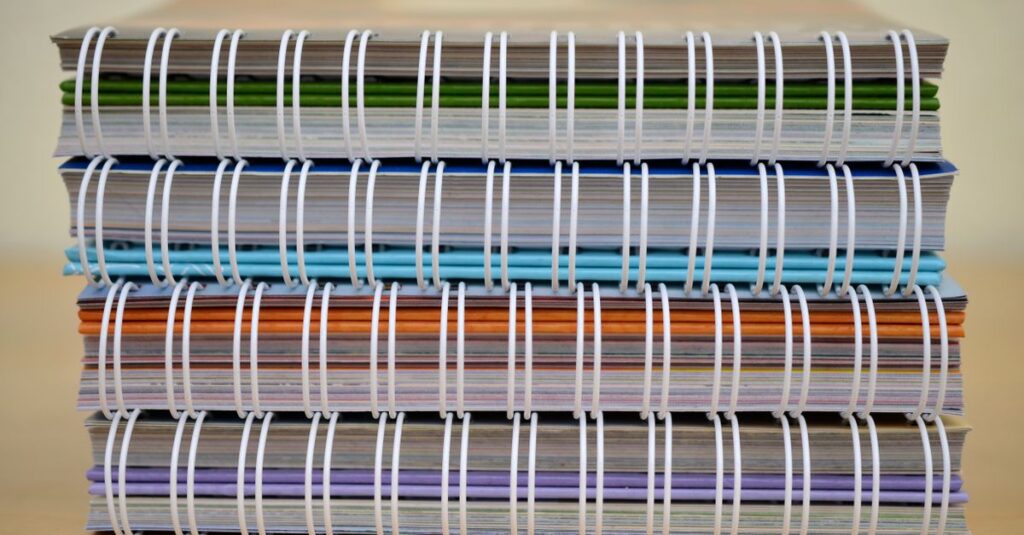
We offer stitched binding for school notebooks, spiral binding for diaries that need to lay flat, and perfect binding for premium products. Each binding type works differently with different sizes. A spiral-bound A5 diary handles differently from a stitched A4 notebook. The size affects the binding, the cover, the usability.
If you’re ordering in bulk — say 5,000 units or more — the size choice affects the shipping cost too. Smaller sizes mean more units per box, lower freight costs per unit. It adds up.
We also do custom sizes. Not every project fits into A4 or A5. Some clients want something unique for branding purposes. We can do that, as long as the quantity justifies the setup. OEM and private label work is part of what we do daily.
But I’ll say this: most people overcomplicate it. If you’re buying notebooks for a school, just say A4 with 54 GSM paper and stitched binding. That’s the workhorse. For corporate diaries, A5 with 70 GSM paper and spiral binding is your best bet. Simple.
Frequently Asked Questions
What does \”a for sheet size\” mean?
It’s a shorthand for A-series paper sizes like A4, A5, or A6. These are international standard dimensions defined by ISO 216. A4 measures 210 x 297 mm and A5 is 148 x 210 mm. When someone says “a for sheet size,” they usually mean one of these standard sizes.
Is A4 or A5 better for school notebooks?
A4 is better for most school use because it gives more writing space per page. It’s ideal for diagrams, long answers, and multiple subjects. A5 works for pocket notebooks or personal diaries but is too small for classroom notes.
What GSM paper is best for A4 notebooks?
54 GSM is standard for school notebooks. It’s affordable and works well with ballpoint pens. If students use fountain pens or markers, go for 70 GSM or higher to prevent ink bleed. Always ask your manufacturer before ordering bulk.
Can I get custom A4 or A5 notebooks with my logo?
Yes. Most notebook manufacturers offer logo printing, embossing, foil stamping, and custom cover design. At Sri Rama Notebooks, we do custom A4 and A5 notebooks with your branding. Minimum order quantities may apply depending on the customization.
Why do Indian notebook sizes differ from A-series?
Indian manufacturers often use older British standards like Long size (272 x 171 mm) or Crown size. These are not part of the ISO A-series. If you specifically want A4 or A5, make sure to mention the exact dimensions in millimeters to avoid confusion.
To Sum It Up — And Not Perfectly
Here are the three things I want you to remember about “a for sheet size”.
One: Know your actual dimensions. Don't assume. Get a ruler or a sample. Two: Match the size to the use case. A4 for classrooms, A5 for diaries. Three: Work with a manufacturer who asks questions. Someone who helps you avoid mistakes before they happen.
I don't think there's one perfect size for everyone. Probably there isn't. The right a for sheet size depends on your specific need, your budget, your audience. But if you've read this far, you already know more than most buyers do. And that puts you ahead.
If you want to talk sizes — or anything else — give us a call. We've been doing this since 1985. Sri Rama Notebooks