What Quality Printing Actually Looks Like — and What It Doesn’t
Most people think printing is just ink on paper. But there’s a world of difference between something that looks sharp and something that looks cheap. I’ve seen notebooks where the logo is blurry — pixelated edges as if someone printed it on a home printer. That’s not quality printing. That’s a mistake you can’t undo once you’ve ordered 5,000 units.
Here’s what I look for when I check a notebook printing run:
- Sharpness: Text should be crisp. No fuzzy edges. Even tiny fonts should be readable.
- Consistency: Every page should look the same. Not one page dark, next one faded.
- Alignment: Lines should be straight. Margins even. Nothing crooked.
- Ink density: Black should be black, not gray. Colors should be solid, not patchy.
- Durability: Ink shouldn’t smudge when you rub it. Even a month later.
These aren’t nice-to-haves. They’re the baseline. And honestly? A lot of manufacturers cut corners here. They use cheaper ink, skip calibration, rush the press. You end up with notebooks that look fine from a distance but fall apart under scrutiny.
The thing is — once you know what to look for, you can’t unsee it. And once you’ve seen bad printing, you start noticing how many notebooks out there are just… okay.
How Printing Quality Affects Your Brand — More Than You Think
I met a procurement manager last year. Let’s call her Sunita. She works for a mid-sized tech firm in Hyderabad. They ordered custom notebooks for a client event — 2,000 units. The supplier promised quality printing. What arrived was a mess. The logo was off-center, the cover color was slightly wrong, and the inside pages had streaks. Sunita had to explain to her boss why the client gifts looked like rejects. She still talks about it.
That’s the thing about printing — it’s silent. Nobody says “this notebook has bad printing.” They just think the company doesn’t care. Your brand is in every detail. If you hand someone a notebook and the first thing they see is a blurry logo, that’s the impression you leave.
I’ve seen corporate diaries that looked cheap because the foil stamping was uneven. I’ve seen school notebooks where the ruling was printed so faint you could barely see it. Those aren’t production mistakes — they’re decisions. Somebody decided to save a few rupees per notebook.
And here’s the part nobody says: quality printing doesn’t cost that much more. The difference between good and bad printing is often just attention to detail — calibrating the press, using the right paper, checking the first few hundred units. It’s not about expensive equipment. It’s about not cutting corners.
The Technical Side: Paper, Ink, and Presses
Let’s get into the boring stuff — because it matters. Quality printing depends on three things: the paper, the ink, and the press. You could have the best printer in the world, but if the paper is rough and absorbs ink unevenly, the print will look patchy. Conversely, great paper can’t fix bad press calibration.
| Printing Method | Best For | Quality Level | Cost Efficiency |
|---|---|---|---|
| Offset Printing | Large runs, full-color covers, consistent quality | High — sharp, even, vibrant | Very cost-effective for bulk orders |
| Digital Printing | Short runs, variable data, quick turnaround | Good — but can vary between units | Higher per-unit cost, no setup fees |
| Screen Printing | Simple designs, thick ink, fabric covers | Decent — not as sharp for fine detail | Moderate, but limited color options |
| Flexography | Large runs, simple line art, packaging | Variable — depends on plate quality | Very low per-unit for huge volumes |
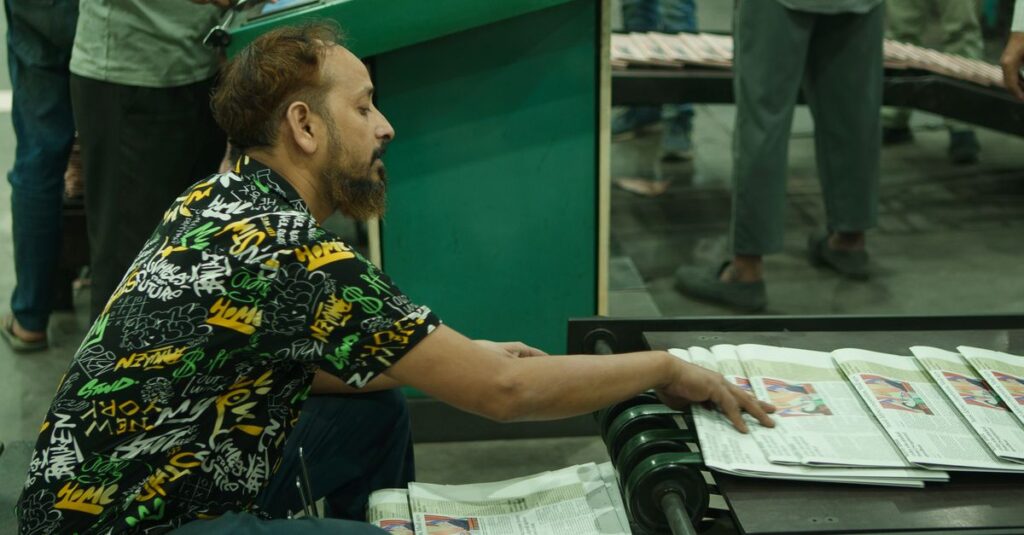
At Sri Rama Notebooks, we use offset printing for most of our notebooks and diaries. Why? Because offset gives you the sharpest, most consistent results — especially when you’re printing thousands of units. The ink dries evenly, the colors stay true, and you don’t get those faint banding lines that digital sometimes leaves.
But here’s the thing: no method is perfect. I’ve seen beautifully printed notebooks that still had issues because the paper GSM was too low and ink bled through. Paper matters just as much as the press. We use 54 GSM paper for most notebooks — it’s thick enough to prevent bleed-through but not so heavy that the notebook becomes bulky.
Why Cheap Printing Costs You More — in the Long Run
I’ll be honest: when we get inquiries from new corporate buyers, the first question is always “how much per unit?” Price matters. I get it. But I’ve seen too many cases where the cheapest quote ended up being the most expensive.
Expert Insight
I remember a conversation I had a few years ago with a stationery distributor from Chennai. He told me about a school order — 10,000 notebooks. They went with the lowest bidder. Three weeks later, the school complained. The printing was uneven, some pages were blank on one side, and the covers started peeling. He had to reorder from another supplier — at double the cost, plus rush fees. He said to me, “I learned my lesson. Cheap is expensive.”
That stuck with me. Because it’s not just about the money — it’s about the time, the reputation, the headache of dealing with returns. Quality printing isn’t a luxury. It’s insurance. You pay a little more upfront so you don’t have to pay a lot more later.
I’m not saying you should overpay. But I think — and I could be wrong — that people underestimate the cost of bad printing. It shows up in rejected shipments, unhappy customers, and wasted materials. And that’s harder to measure than a unit price.
How to Spot Quality Printing Before You Place a Bulk Order
You don’t need to be a printing expert to catch problems early. Here are a few things I always tell buyers to check:
- Ask for a sample. Not a digital proof — a physical printed sample. Feel the paper. Look at the ink under light. Rub the cover.
- Check the registration. If the design has multiple colors, are they aligned? Even a 1mm shift is noticeable.
- Look at the spine. Foil stamping or embossing on the spine is a sign of attention to detail. If the spine is sloppy, the rest might be too.
- Test the ruling. Open to a random page. Are the lines evenly spaced? Are they dark enough? Do they fade at the edges?
- Ask about their press. If they’re vague about what equipment they use, that’s a red flag.
These checks take ten minutes. They can save you from ordering 5,000 notebooks that you can’t give away. I’ve had buyers tell me they wish they’d done these checks earlier. Now they always do.
And here’s something unexpected: good printing doesn’t always look flashy. Sometimes the best printing is the kind you don’t notice — it’s clean, consistent, unremarkable. That’s the goal. You want the notebook to be used, not scrutinized.
Making the Right Choice for Bulk Orders
If you’re ordering notebooks in bulk — for a conference, a school year, or corporate branding — you need a partner who understands quality printing at scale. It’s not just about a single perfect sample. It’s about consistency across thousands of units.
We produce 30,000 to 40,000 notebooks a day. That’s a lot of pages. And every single one needs to meet the same standard. That’s why we have quality checks at multiple stages: paper inspection, press calibration, first-off approval, random sampling during production.
I won’t say we never have issues. Nobody’s perfect. But we catch them before they ship. That’s the difference between a manufacturer and a supplier — the willingness to slow down and fix a problem instead of pushing out defective stock.
If you’re looking for quality printing in your next notebook order, I’d say start with a conversation. Tell us what you need. Ask questions. We’re at Sri Rama Notebooks — same place we’ve been since 1985.
Frequently Asked Questions
What is quality printing in notebooks?
Quality printing means sharp, consistent, and durable ink application on every page. It involves using proper paper, calibrated presses, and even ink coverage. Bad printing shows as smudges, faded lines, or blurry text. Good printing is invisible — you don’t notice it because everything looks right.
How can I check printing quality before ordering bulk notebooks?
Ask for a physical sample — not a digital proof. Check for alignment, ink density, and ruling consistency. Rub the cover to see if the ink smudges. Look at the spine for attention to detail. A good manufacturer will happily provide samples.
Does paper GSM affect printing quality?
Yes. Low GSM paper (below 50) can cause ink bleed-through, making pages look messy. Higher GSM paper (54+ for notebooks) absorbs ink evenly and prevents show-through. Paper quality directly impacts how clean the final print looks.
What printing method is best for custom notebook covers?
Offset printing is generally best for large runs — it gives sharp, consistent color with crisp details. For small runs or variable designs, digital printing works, but offset is the gold standard for quality printing on notebooks.
How does Sri Rama Notebooks ensure quality printing?
We use offset presses, calibrated daily. We inspect paper before use, check the first hundred units, and sample randomly during production. With over 40 years of experience, we have processes in place to catch issues before they reach you.
Conclusion
Look, I don’t think there’s one magic answer to getting quality printing. It’s a combination of the right paper, the right press, and a manufacturer who actually checks the work. If you’ve ordered notebooks before, you probably already know the difference between good and bad — you just might not have known what to ask for.
Two takeaways: (1) always get a physical sample, and (2) don’t assume the cheapest price is the best deal. The real cost of bad printing is the reputation you lose.
If you’re planning a bulk order, reach out to us. We’ll talk through what you need.