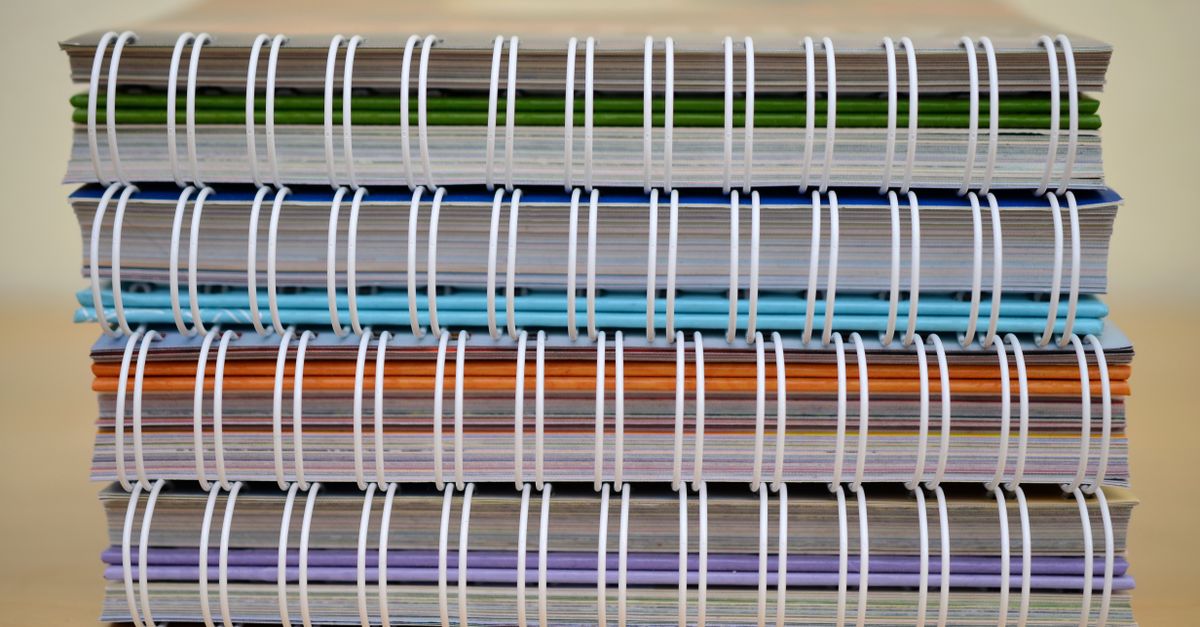
What Exactly Is a Single Line Notebook?
Let me ask you something. Have you ever stood in front of a stack of notebooks and wondered why some have lines that are further apart than others? You're not alone. I get calls about this almost every week from schools and offices.
A single line notebook is exactly what it sounds like. Pages ruled with evenly spaced horizontal lines. No margins. No boxes. Just clean, continuous lines from edge to edge. It's the most common notebook you'll find in any stationery shop in India. And honestly? It's also the most misunderstood.
People assume one single line notebook is the same as another. That's where the trouble starts. Because when you're ordering for a school with 2,000 students or a corporate office with 500 desks, small differences become big problems.
At Sri Rama Notebooks, we've been making single line notebooks since 1985. Thought it was time to clear up the confusion.
Single Line Notebook Ruling: What the Space Between Lines Means
Here's a thing most buyers don't notice until it's too late. The distance between lines changes everything about how a notebook gets used.
Single ruled notebooks are usually spaced at either 8mm or 9mm intervals. That might not sound like much. But to a Class 3 student whose handwriting is still big and wobbly? Those extra millimeters are the difference between readable work and a mess.
Common Single Line Ruling Standards
- 8mm ruling — Standard for most notebooks. Works for secondary school and college students.
- 9mm ruling — Slightly wider. Used in primary schools and for people who write larger.
- 7mm ruling — Closer lines. Found in pocket notebooks and slim diaries.
- 10mm ruling — Extra wide. Rare. Used for very young children or specific coaching needs.
And here's the thing nobody tells you. The paper quality matters just as much as the ruling. Thin paper with single lines on one side? The ink bleeds through. You can see the lines on the other side. It's distracting.
I've seen schools order the cheapest single line notebooks, then complain that students can't write properly. The problem wasn't the students. It was the paper.
In my experience, 54 GSM paper is the sweet spot for single line notebooks. Good enough to hold ink. Light enough to keep costs reasonable for bulk orders. But don't go below that. You'll regret it.
Single Line Notebook Sizes: Which One Do You Actually Need?
This is where things get messy. A single line notebook comes in so many sizes that even distributors sometimes mix them up.
The most common sizes we manufacture:
- Long size (27.2 cm x 17.1 cm) — The classic school notebook. Everyone knows this one.
- Short size (19.5 cm x 15.5 cm) — Compact. Fits in smaller bags. Popular for homework copies.
- King size (23.6 cm x 17.3 cm) — A bit wider than long. Good for wider handwriting.
- A4 size (29.7 cm x 21.0 cm) — International standard. Used in offices and some competitive exam coaching centers.
- Crown size (18.4 cm x 24.0 cm) — Less common these days but still ordered by some institutions.
Now, here's a problem I see all the time. Schools and colleges get attached to a particular size because 'that's what we've always used.' But sometimes the old size doesn't make sense anymore. I had a conversation last month with a procurement manager from a college in Kakinada. They were still ordering short size single line notebooks for engineering students. The students kept complaining they couldn't fit all their rough work on one page. The solution was simple. Switch to long size. Same ruling, more space.
Don't be afraid to question your own assumptions about what size works. Sometimes the answer is obvious once you look at it.
Single Line vs Other Ruling Types: A Honest Comparison
Before you place that bulk order, let me show you how single line notebooks stack up against other options. This might save you from ordering the wrong thing.
| Ruling Type | Best For | Line Spacing | Common Mistake |
|---|---|---|---|
| Single Line (SL) | General writing, notes, assignments | 8mm or 9mm | Assuming all single line notebooks have same spacing |
| Double Line (DL) | Joined handwriting practice | Alternating 8mm and 4mm | Buying for kids who aren't ready for it yet |
| Four Line (FL) | Alphabet writing, early primary school | 4 lines per set | Using it beyond Class 2 — wastes space |
| Unruled | Drawing, diagrams, rough work | None | Ordering for subjects that need structured notes |
| Broad Ruled | Students with large handwriting | 11mm or wider | Assuming it's the same as standard single line |
The truth? Most general writing needs are covered by a single line notebook. But if you're ordering for primary school kids, think about whether they need double line or four line instead. I've seen schools waste money ordering single line for Class 1 students. The kids couldn't even see the lines properly.
Expert Insight
I was talking to a retired school headmaster from Rajahmundry last year. He told me something that stuck. He said, 'When I started teaching in 1982, every student used a single line notebook for everything. We didn't think about ruling types. We just wrote.' And he's right. There's something honest about a single line notebook. No frills. No fancy rulings. Just a place to write. But here's the thing he also admitted — his students' handwriting was worse than today's kids who use four line books in primary school. So maybe simplicity isn't always the answer. It depends on what you're trying to achieve.
Real Story: How One School Fixed Their Notebook Problem
Let me tell you about Rajesh. He's 42. Works as the administrative officer at a government school in Amalapuram. Last June, he called me in a panic. The school had ordered 3,000 single line notebooks from a local supplier. When they arrived, the lines were practically invisible. The paper was so thin you could see through to the next page.
Students refused to use them. Parents complained. The school was stuck with notebooks nobody wanted.
Rajesh called me because a friend had recommended us. We sent him samples of our single line notebooks in three different paper quality levels. He picked the mid-range option. 54 GSM paper. Clear, dark lines. Enough opacity that ink doesn't bleed through. We delivered 3,500 notebooks within two weeks.
The difference? Rajesh said the students actually started taking notes properly. Teachers stopped complaining. And the school placed another order in November for the next term.
The moral isn't that we're great (though I'd like to think we are). The moral is: don't buy a single line notebook without checking the paper quality and line clarity first. Get samples. Test them. Your students and employees will thank you.
How to Order Single Line Notebooks in Bulk: What Buyers Get Wrong
If you're responsible for ordering notebooks for a school, college, or office, here's what I wish someone had told me years ago.
Five Things to Check Before Ordering
- Line darkness — Lines should be visible but not so dark that they distract from writing. Greyish lines work better than jet black.
- Paper GSM — Don't go below 52 GSM for general use. 54 GSM is ideal. 60+ GSM if students use fountain pens.
- Binding strength — A single line notebook that falls apart in two months isn't worth half the price. Stitched binding lasts longest.
- Cover thickness — 230 GSM cover paper minimum. Thinner covers curl up within a week in humid climates like Andhra Pradesh.
- Page count accuracy — Some suppliers sell 56-page notebooks as 'single line 60 pages.' Count the actual leaves.
I know this sounds like a lot. But honestly? Most problems with bulk notebook orders come from skipping these checks. And look, I'm not saying you should only buy from us. But I am saying that when you order from a manufacturer who's been doing this since 1985, you're less likely to face these issues.
Frequently Asked Questions
Frequently Asked Questions
What is a single line notebook used for?
A single line notebook is used for general writing in schools, colleges, and offices. It's suitable for notes, assignments, journaling, and rough work. The ruled lines help keep handwriting straight and organized. Most Indian schools use single line notebooks for subjects from Class 3 onwards.
What is the difference between single line and double line notebook?
A single line notebook has evenly spaced horizontal lines across the page. A double line notebook has two sets of lines — a wider line for capital letters and a narrower line for lowercase letters. Double line books are used in Classes 1 and 2 for handwriting practice. Single line is for general writing.
Which paper is best for a single line notebook?
54 GSM paper is the most common and practical choice for single line notebooks. It offers a good balance between durability and cost. For fountain pen users or heavy writers, 60 GSM paper is better. Lower than 52 GSM causes ink bleed-through and makes the lines visible on the other side of the page.
How many pages does a standard single line notebook have?
Standard single line notebooks come in 52 pages, 92 pages, 200 pages, and 240 pages. The most common school notebook has 92 pages (46 leaves). For exam preparation and competitive coaching, 200 or 240 pages are preferred. Office notebooks often have 200 to 320 pages depending on use.
Can I get custom printed single line notebooks for my school?
Yes. Most notebook manufacturers offer custom printing for single line notebooks. You can get the school name, logo, and subject labels printed on the cover. At Sri Rama Notebooks, we do custom cover design, logo printing, embossing, and foil stamping. Minimum order quantity varies depending on the customization required.
Final Thoughts on Single Line Notebooks
Look, a single line notebook isn't complicated. It's ruled paper bound together. That's all. But the difference between a good one and a bad one shows up over months of use. Not on the first day.
Here are the two things I'd want you to remember. First, check the paper quality and line spacing before placing a bulk order. Second, don't assume all single line notebooks are the same. They're not. And when you're ordering thousands at a time, small differences add up to real problems.
I don't think there's one perfect single line notebook for everyone. Probably there isn't. But if you've read this far, you already know what matters to you — you just need to find a manufacturer who delivers on those details consistently.
If you want to talk through your requirements, Sri Rama Notebooks has been doing this since 1985. We've seen every problem a notebook can have. Call us. We'll figure it out.