What Exactly Is A5 Printing Size?
You've probably seen it a hundred times. That little notebook that fits perfectly in a bag, in a desk drawer, in your hand. That's A5. But here's the thing — most people don't know what those letters and numbers actually mean. And if you're ordering notebooks in bulk for a school or a company, getting the size wrong can mess up your whole print run.
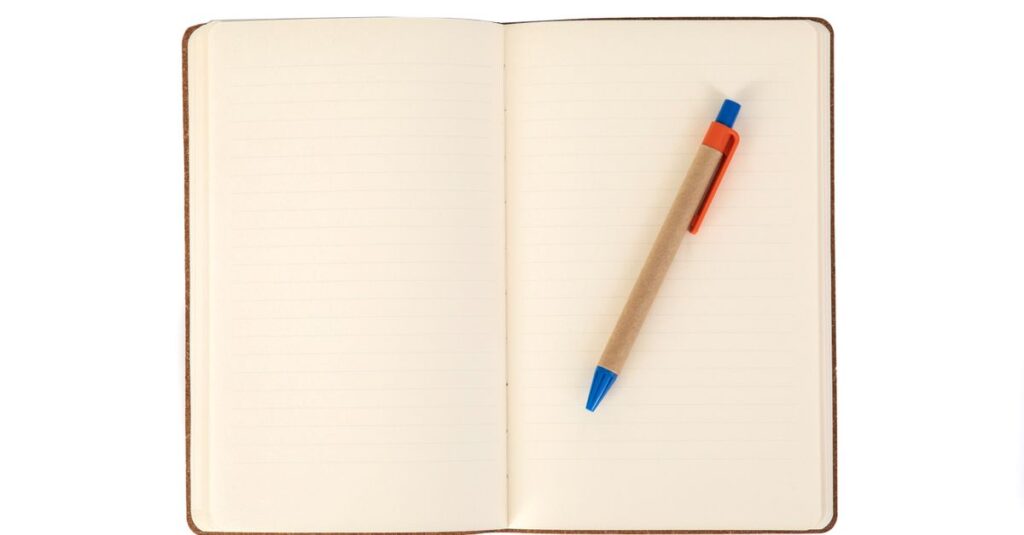
A5 printing size is part of the ISO 216 standard. It measures 148 mm x 210 mm. That's half of an A4 sheet, folded once. Simple on paper, but when you're dealing with binding, trim, and margins, it gets tricky. I've seen buyers order A5 notebooks and end up with something that looks more like a pocket memo pad because they didn't account for bleed and binding edge.
At Sri Rama Notebooks, we've been cutting and binding A5 sheets for over three decades. So let me walk you through what this size actually works for, and what it doesn't.
Where A5 Printing Size Actually Works
Honestly? A5 is a workhorse. Not too big, not too small. It's the size you see in most spiral notebooks, thin diaries, and school exercise books. I'd argue it's the most practical everyday size — fits in a messenger bag, lies flat on a desk, and still has room for notes and drawings.
But it's not for everything. If you're printing architectural plans or dense spreadsheets, A5 will drive you crazy. The font would need to be tiny. So who actually wants A5? Here's a short list:
- Schools using notebooks for writing practice and homework
- Corporate diaries for executives who want something portable
- Pocket-sized planners and journals
- Custom branded notebooks for giveaways and events
- Account books where each page only needs limited rows
One thing I've noticed — buyers often pick A5 because it's cheaper per unit than A4. And yes, less paper means lower cost. But you also get less content per page. So if your users are heavy notetakers, they might prefer A4 and just deal with the bulk. It's a trade-off.
I was talking to a procurement manager last month — Vijay, from a college in Vizag. He ordered 5,000 A5 notebooks for a freshman orientation pack. Saved about 20% compared to A4. But then students complained they couldn't fit detailed math equations. So he ended up adding a loose A4 graph pad insert. Which kind of defeated the whole point.
How A5 Compares to A4 and A6 — A Quick Table
Let me put it in front of you. If you're comparing sizes, here's how they stack up for common notebook uses:
| Size | Dimensions (mm) | Best For | Portability | Typical Page Count |
|---|---|---|---|---|
| A4 | 210 x 297 | Detailed notes, diagrams, reports | Low — bulky | 52–200 pages |
| A5 | 148 x 210 | Everyday notes, diaries, journals | Medium — fits most bags | 52–320 pages |
| A6 | 105 x 148 | Pocket notebooks, mini planners | High — fits in a pocket | 48–120 pages |
See the pattern? A5 hits the sweet spot between content space and carry comfort. But it's not a one-size-fits-all. If your audience is sitting at a desk all day, go A4. If they're constantly on the move, A5 wins. And if they only need quick jots, A6 is enough.
Expert Insight
I remember a conversation with an old printer in Rajahmundry — he must be retired now. He told me once: 'The size doesn't matter if the binding fails.' He was talking about stitched vs. spiral, but the point stuck. A5 printing size is just a number until you figure out how many pages you're putting in and how they'll hold together. A 320-page A5 notebook needs a different binding than a 52-page one. Otherwise pages start falling out by week two. I've seen it happen.
Printing A5 Notebooks in Bulk — What to Watch For
If you're ordering a thousand or more, the savings add up. But there are pitfalls. Let me name a few from experience.
Bleed and margins. A5 is small. If your design has images or color backgrounds that go to the edge, you need at least 3 mm bleed on each side. Some printers ignore that and crop too tight. You end up with white edges where the design is cut off. I've rejected entire batches because of that.
Paper GSM. For A5 notebooks, I recommend 60–80 GSM for writing. Lower than that, you get ghosting. Higher than that, the notebook becomes too thick and doesn't lie flat. We use 70 GSM for most of our A5 school notebooks — feels smooth, no bleed, and it keeps the spine thin.
Binding type. Spiral binding works well for A5 because it allows the notebook to fold back. Stitched binding is cheaper but doesn't lie flat. Perfect binding (glued) looks clean but can crack with heavy use. Choose based on how the notebook will be used — not just cost.
Here's a micro-story: Preeti, 34, a school coordinator in Hyderabad, ordered 2,000 A5 notebooks for her primary section. She wanted them spiral bound so kids could fold the cover back easily. But the printer used cheap spiral wire that snagged on clothes. Kids were getting scratched. She switched to stitched after that. Sometimes small details become big problems.
Anyway. Where was I. Right — bulk printing. The key is to communicate your use case clearly to the manufacturer. A good manufacturer will ask you questions you didn't think of. That's how you know they've done it before.
Why Custom A5 Notebooks Are a Smart Choice for Branding
Corporate buyers often overlook A5. They go for A4 because it looks more 'professional.' But here's my honest take — A5 diaries are more likely to be carried around. They're not sitting on a shelf. They go to meetings, client visits, coffee shops. Your logo gets seen more often.
When you customize A5 notebooks, the print area is smaller, which actually makes the logo pop more. You're forced to keep it simple. And simplicity sticks. We've printed A5 diaries for banks, real estate firms, even a hospital chain. The best ones had just a logo and a tagline on the cover. Nothing else.
Of course, the page count matters. A slim 52-page A5 diary will be used for a few months. A 200-page one lasts the whole year. Think about what timeline your brand needs to be visible. And don't forget the inside pages — we can print your company message, calendar, or contact info on the first page. That's extra touch that clients appreciate.
I think — and I could be wrong — that more companies should try A5 for their next corporate gift. Instead of another heavy presentation folder, give them something they'll actually write in. It's a small shift but it changes how people perceive your brand.
Frequently Asked Questions
Frequently Asked Questions
What is A5 printing size in inches?
A5 printing size is 5.83 inches by 8.27 inches. It's half the area of A4. Most printers can handle A5 paper in trays that support A4 or larger sheets, as long as you adjust the settings correctly.
Can I print A5 on regular A4 paper?
Yes, you can print two A5 pages on one A4 sheet by selecting the booklet or 2-up option in your printer settings. Then you cut the sheet in half. But for professional notebooks, it's better to use pre-cut A5 paper to avoid uneven edges.
What is the difference between A5 and B5 printing size?
A5 is 148 x 210 mm; B5 is 176 x 250 mm. B5 is noticeably wider and taller — closer to the old 'composition book' size. B5 is popular for textbooks and journals in some Asian markets, while A5 is standard in Europe and India.
How many A5 pages can fit in a notebook without bulking up?
For a typical stitched A5 notebook, 92 to 120 pages (46–60 sheets) is comfortable. Beyond that, the spine becomes too thick and the notebook won't lie flat. For higher page counts, spiral binding or perfect binding is better.
Is A5 printing size suitable for professional reports?
It depends. If the report is meant for quick reading — like a brief or a product guide — A5 works fine. But for formal proposals with lots of data, A4 is still standard. A5 can look too informal for boardroom presentations.
Final Thoughts on A5 Printing Size
So here's where I land. A5 printing size is practical, cost-effective, and perfect for daily-use notebooks. But it's not for every job. You need to match the size to the reader's habits and the binding to the page count. Sri Rama Notebooks has been making A5 notebooks since 1985 — we know the pitfalls because we've made all the mistakes ourselves. If you're ordering bulk notebooks, talk to us. We'll ask the right questions, even if they slow you down a bit.