What Is Printing Handbill in a Notebook Factory?
Look, I’ll just say it — printing handbill sounds like a small thing. Like something you’d knock out in ten minutes while waiting for lunch. But in a notebook factory that’s running 30,000 units a day? It’s not small. It’s a whole process.
I’ve seen people assume a handbill is just a piece of paper with some text. A few bullet points. A logo slapped on top. That’s not how it works — not if you want it to actually look professional. A well-printed handbill needs the right paper weight, the right ink density, and a layout that doesn’t make your eyes hurt.
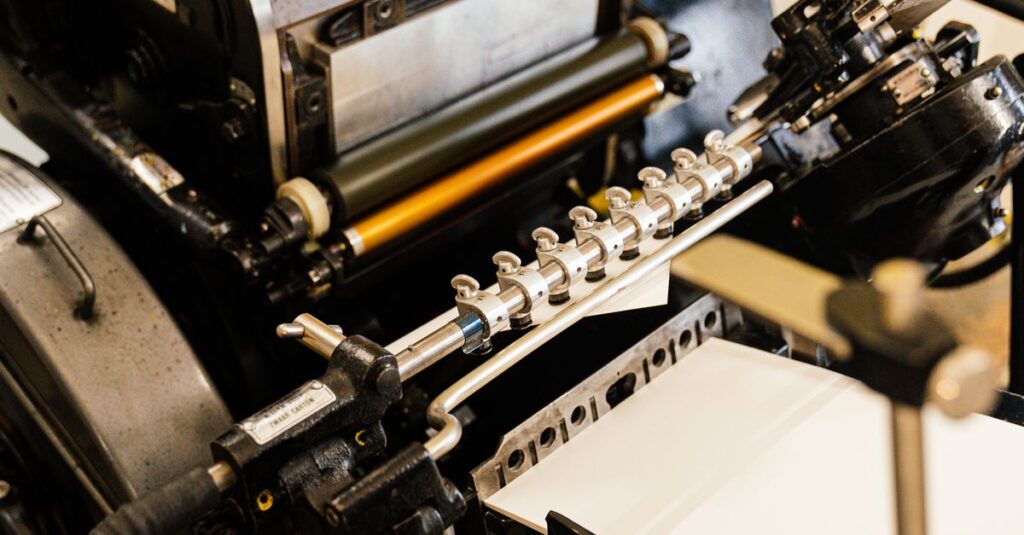
And here’s the part people don’t think about: a handbill that comes out of a notebook factory is printed on machines that handle notebooks all day. That changes things. The calibration, the speed, the drying time — it’s all tuned for thicker stacks of paper. Handbills are thinner. So you adjust. Or you end up with smudged ink and crooked cuts.
If you’re ordering custom notebooks or stationery in bulk and need print work done right, you might want to check out Sri Rama Notebooks. We’ve been at this since 1985.
How Printing Handbill Differs from Notebook Printing
This took me a while to understand, honestly. When I first started talking to the production team, I kept asking — why can’t we just print handbills the same way we print notebook covers? The answer is simple. Paper thickness.
Handbill stock is usually around 80 to 100 GSM. Notebook covers? Sometimes 250 GSM. That’s a big difference. So the same printing press that handles a thick cover needs to be recalibrated for a lightweight sheet. And I don’t mean just flicking a switch. I mean changing rollers, adjusting pressure, testing a few sheets, making a mess, trying again.
Three Things That Go Wrong During Printing Handbill
- Ink bleeding — thick machines push too much ink, and thin paper soaks it up unevenly.
- Misregistration — the paper shifts because it’s too light for the feeder.
- Offset marks — where the paper touches the blanket and leaves a ghost.
Every single one of these happened at least three times last month. I know because I was there. Watching. Wishing I had a faster way to explain what “the paper’s bowing” means to a guy who’s been running a press for fourteen years.
Expert Insight
I remember a conversation I had with one of our senior press operators — Raju, who’s been with us since the late ’90s. He told me about a job we did for a college. Five thousand handbills. Simple black and white. But the paper they sent was so thin, it felt like newsprint. He had to run the press at half speed, and even then, every third sheet came out curled. He didn’t say it was impossible. He just said “this is going to take twice as long.” And it did. The point is — paper quality decides half the job before you even start.
Common Mistakes People Make When Ordering Printing Handbill
Most people I speak to are not printers. They’re procurement managers, school administrators, people running small businesses. They just want a handbill that looks good and doesn’t cost too much. That’s fair.
But the mistake I see the most? Sending a design that’s meant for digital printing and expecting it to look the same on an offset press. It’s not the same. Digital prints are crisp and sharp because they don’t use water. Offset uses water and ink, and the dot gain is real. Your thin lines become thick. Your small font becomes unreadable.
I think — and I could be wrong — but a lot of this happens because nobody explains the difference upfront. So the buyer assumes it’s all the same. And then they get disappointed.
Another thing. People forget about trimming. A handbill is printed on a big sheet, then cut down. If you put your design too close to the edge, it gets sliced clean off. We see that more often than I’d like.
Anyway. Here’s a table that might help you decide which approach fits your next order.
| Factor | Offset Printing Handbill | Digital Printing Handbill |
|---|---|---|
| Best for | Bulk orders (500+) | Small runs (under 500) |
| Cost per unit | Low at volume | Higher per piece |
| Color accuracy | Very high with spot colors | Good, but not exact PMS |
| Turnaround | 3–5 days with setup | 1–2 days |
| Paper handling | Requires proper GSM selection | Works with most paper |
Which one matters more to you? The cost or the speed? That’s the real question.
The Real Cost of Printing Handbill — Not Just the Price Tag
Let’s talk money. Not because I like numbers, but because people always ask. A basic black-and-white handbill on standard paper might cost you 50 paise to 1 rupee per piece in small quantities. In bulk — say 10,000 or more — that can drop to 20 or 30 paise. Color is higher. Two-sided is higher.
But here’s what nobody says out loud. The real cost is what happens when you get a bad print. When the ink smears. When the text is blurry. When the paper feels flimsy and nobody wants to pick it up from a counter. That’s wasted money. Wasted time. And you don’t get a do-over.
A school near Rajahmundry once ordered handbills for a parent-teacher meeting. They went with the cheapest option. The paper was so thin, you could see through it. The parents didn’t complain. They just didn’t read them. That’s the real loss.
So when someone asks me about cost, I don’t give them a number. I tell them — figure out what the handbill needs to do first. Then choose. Because a handbill that nobody reads is just an expensive napkin.
A Real Story: Printing Handbill for a Local College Event
A few months ago, a man named Prakash called us. He’s 34. Works as an event coordinator for a college in Kakinada. He needed handbills for a career fair. Five thousand pieces. Full color. Two sides. And he needed them in four days.
He sent a design that looked great on his laptop. But when we loaded it into the system, the black text was built out of CMYK colors instead of pure black. That’s fine on a screen. On paper, it looks muddy. We caught it. Fixed it. But it took half a day. And Prakash was nervous the whole time.
The handbills came out well. He told me later that the career fair had more students than last year. I don’t know if the handbills made the difference. But he believes they did. And that’s something.
What Quality Printing Handbill Actually Depends On
Alright I’ll be direct. If you want a good handbill, three things matter.
- The file you send. Not the design — the file. PDF with bleed. Proper resolution. No weird fonts.
- The paper. Not just the GSM — the finish. Matte or gloss? Coated or uncoated? Each one prints differently.
- The press operator. Someone who knows when to slow down, when to adjust the flow, and when to just stop and clean the blanket.
I’ve stood beside a running press at 10 PM. The noise is loud. The smell of ink and solvents is sharp. And the operator is watching the sheets come out one by one, pulling aside any that look wrong. That’s what quality actually looks like. Not a certificate on the wall. A guy with ink on his hands who won’t let a bad sheet go through.
But that’s a separate thing. I don’t think there’s one answer here. Probably there isn’t. Some people need cheap. Some need fast. Some just want it to look good. The trick is knowing which one you actually need.
Frequently Asked Questions About Printing Handbill
Frequently Asked Questions
What file format is best for printing handbill?
PDF is the safest. Make sure it has 3mm bleed on all sides, text is converted to outlines, and images are at least 300 DPI. Avoid Word files or PowerPoint exports — they shift everything on press.
What GSM paper should I use for a handbill?
100 to 150 GSM is standard. Below 100 GSM, the paper feels too thin. Above 150 GSM, it bends less but costs more. For most purposes, 120 GSM coated paper gives a good feel without driving up the price.
Can I print handbills on both sides?
Yes, but it costs more and takes longer. The ink needs to dry before the second side prints, or it smears. With offset printing, we usually wait a few hours between sides. Digital printing handles it faster.
How long does printing handbill take in bulk?
For 5,000 handbills, expect 3 to 5 working days including design check, setup, printing, drying, cutting, and packing. Rush orders are possible but not recommended if you want quality.
What is the minimum quantity for printing handbill?
Most offset printers prefer 500 or more. For smaller quantities, digital printing is cheaper. At our factory, we usually recommend at least 1,000 for a good per-piece price on offset.
So Where Does That Leave Us?
Printing handbill is not complicated. But it does ask for a few things — a clean file, the right paper, a printer who knows what they’re doing. Get those three right, and you’re most of the way there.
The thing I keep coming back to is this. A handbill is a piece of paper. But it’s also the first thing someone sees about your event, your business, your school. If it looks cheap, they assume the rest is cheap too. If it looks solid, they give you a second look.
I don’t know what your next order looks like. But if you want someone who’s done this a few thousand times before, Sri Rama Notebooks is worth a call.