What Are Stationery Materials, Really?
You'd think this would be simple. Paper, pens, notebooks — done. But when you're the person responsible for ordering notebooks for an entire school year, or corporate diaries for 500 employees, it gets complicated fast.
I've seen procurement managers spend hours comparing stationery materials online, still unsure if they're getting the right thing. And honestly? The confusion makes sense. Because "stationery materials" isn't one thing. It's a category that covers everything from the paper itself to the binding, the cover stock, even the glue.
Here's the thing most people don't realize: the cheapest option often costs more in the long run. Paper that bleeds through. Bindings that fall apart by week three. Covers that curl up in humidity. I've seen it all.
So let's talk about what actually matters when you're buying stationery materials in bulk — the stuff nobody explains until you've already made the wrong choice. And if you want to skip straight to a reliable source, Sri Rama Notebooks has been making this stuff since 1985.
The Problem With Most Stationery Materials on the Market
Walk into any wholesale stationery shop and you'll see shelves stacked with products that all look the same. Same covers. Same sizes. Same prices, give or take a rupee. So what's the difference?
Most of it is invisible until you start using it.
The paper. That's where the shortcuts happen. Manufacturers use 54 GSM paper — that's fine for standard notebooks. But I've seen suppliers slip in 45 GSM without telling anyone. Feels thinner? It is. Ink bleeds through. Pages tear easily. The difference between decent and bad stationery materials is usually 1 rupee per notebook. That's it.
And the binding. Stitched binding holds up. Glue-only binding? Not so much.
I remember talking to a school principal from Kakinada — this was maybe two years ago. She told me she had ordered 2000 notebooks for the new academic year. By October, half of them had pages falling out. She had to reorder. Paid twice. And she was furious — at herself, mostly, for not checking the supplier.
That's the thing about stationery materials. The real quality isn't visible on the shelf. You only find out after you've paid.
What Actually Makes Good Stationery Materials?
Three things. Paper weight. Binding type. Cover durability. That's it. Everything else — ruling style, page count, size — that's preference. Those three are non-negotiable.
- Paper GSM (grams per square meter): 54 GSM is standard writing paper. 60+ GSM is better. Anything below 50 is trouble.
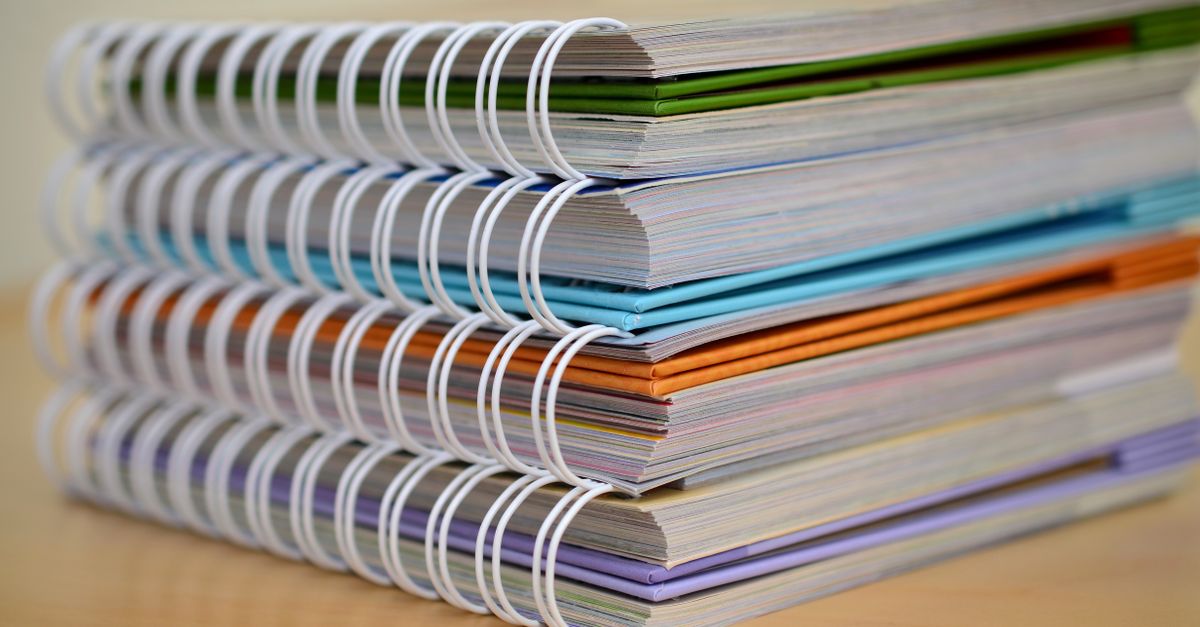
- Binding type: Stitched binding is strongest. Spiral is good for lay-flat use. Perfect binding works but depends on glue quality.
- Cover material: 230-300 GSM cover stock is standard. Glossy lamination adds protection against moisture.
Expert Insight
I was reading something last month — a report from some paper industry association. Don't quote me on the exact numbers, but the gist was: nearly 30% of low-cost notebooks sold in India use paper below 50 GSM. That means for every three notebooks, one will probably bleed through with anything wetter than a ballpoint. I don't have a cleaner way to put it than that. You get what you pay for.
So the real question isn't which stationery materials look good. It's which ones will still look good after three months of daily use.
How to Evaluate Stationery Materials for Bulk Orders
Here's where I sound like your annoying uncle who checks everything twice. But hear me out — bulk orders are where the mistakes get expensive. Ordering 100 notebooks vs 10,000 notebooks is not the same game.
Request a sample. Not a photo. Not a description. An actual physical sample. Feel the paper. Try writing on it. Drop the notebook on the floor. Open it flat and see if pages stay put.
Rajan, a procurement manager I know from Visakhapatnam, told me he always asks for three samples from different batches. "Same supplier, same spec, different production runs. You'd be surprised how much variation exists." I think he's right. Consistency in stationery materials is rarer than you'd think.
Check the GSM yourself. There's a simple way: weigh a single page and multiply by the number of pages per square meter. Or just buy a GSM cutter. They're cheap. And they save you from getting cheated.
Look, I'll just say it: some wholesalers will tell you a notebook is 60 GSM when it's really 50. They rely on buyers not checking. Don't be that buyer.
But that's a separate issue. Let me move on.
Different Stationery Materials for Different Needs
Not all stationery materials work for all situations. This seems obvious, but I see people order the same notebooks for kindergarten kids and corporate executives. Different use cases. Different requirements.
For schools and colleges, you want durability. Kids carry notebooks in bags. They get tossed around. Stitched binding, 60+ GSM paper, laminated covers. That's the formula. We make these at Sri Rama Notebooks by the way — not a pitch, just a fact.
For corporate diaries, aesthetics matter more. Leather or faux leather covers. Foil stamping. Ribbon bookmarks. The paper quality should still be good, but the look and feel is what people notice. I've had clients spend more on the cover design than the paper inside. Which is… a choice.
For account books and ledgers, paper quality is everything. These get stored for years. Acid-free paper is ideal. Binding needs to be strong enough for heavy daily use. Account books are the workhorses of stationery materials — nobody notices them until they fall apart.
The point is: one size doesn't fit all. And the worst mistake is assuming "generic stationery materials" will work for every situation.
Stationery Materials: What You're Actually Paying For
Let me break this down in a way that makes sense.
| Component | Budget Option | Premium Option |
|---|---|---|
| Paper GSM | 45-54 GSM | 60-80+ GSM |
| Binding | Glue/Perfect binding (low quality) | Stitched or spiral binding |
| Cover | 150-200 GSM, no lamination | 230-300 GSM, laminated or coated |
| Printing | Single color, basic | Full color, foil stamping, embossing |
| Finishing | Standard cut, no extras | Rounded corners, ribbon marker, elastic closure |
| Durability | Months (maybe) | Years (usually) |
The gap between budget and premium stationery materials is smaller than you think in terms of cost. Usually 15-20% more. But the gap in lifespan? That's 3x or more. I'm not saying always buy premium. I'm saying know what you're choosing.
Earlier I said the difference is usually 1 rupee per notebook. That's not quite fair — sometimes it's more, sometimes it's less. But the principle holds: small upfront savings can mean big replacement costs later.
The thing about — okay, let me rephrase that. The thing most buyers miss is that they're not just paying for paper and binding. They're paying for the printer's attention to detail. The quality of the glue. The consistency of the cut. The alignment of the ruling. These are invisible things. But they matter.
FAQ: Stationery Materials
Frequently Asked Questions
What are the most important stationery materials for schools?
Paper quality and binding are the most important. Schools need notebooks with 54 GSM or higher paper and stitched binding. Covers should be laminated for durability. Ruling can be single, four-line, or plain depending on the subject.
How do I check the quality of stationery materials before buying?
Always ask for a physical sample. Check the paper GSM using a scale or GSM cutter. Open the notebook flat and see if pages stay intact. Write with a pen to check for bleed-through. Drop it once to test the binding strength.
What's the difference between stitched and perfect binding in stationery materials?
Stitched binding uses thread to hold pages together — it's stronger and lasts longer. Perfect binding uses glue at the spine. It's cheaper but can fail over time, especially with heavy use. For bulk school orders, stitched binding is usually better.
Can I customize stationery materials with my school logo or company branding?
Yes. Most manufacturers offer customization including logo printing, foil stamping, embossing, and custom cover design. You can also request custom page layouts and ruling patterns. Minimum order quantities may apply for full customization.
What paper size is best for bulk stationery material orders?
It depends on use. A4 (210mm x 297mm) is standard for office and corporate use. Long size (272mm x 171mm) is common for schools. Short size (195mm x 155mm) works for younger students. Account books use larger sizes. Choose based on your audience.
But I'll be honest — the best way to know is to talk to someone who makes these every day. Specs are useful on paper. Hands-on experience is better.
So What Actually Matters With Stationery Materials?
Two things, really. Paper quality and binding. Everything else is preference.
Get those right, and the notebooks last. Get them wrong, and you're reordering mid-year. It's that simple and that annoying.
I don't think there's one perfect formula. Different situations call for different stationery materials. But if you've been ordering the cheapest option and wondering why it doesn't work — that's probably your answer.
If you want to talk specifics — custom orders, bulk pricing, export requirements — give us a call. Or visit Sri Rama Notebooks. We've been at this for nearly 40 years. Happy to help.