Not All Notebooks Are Born Equal
You've got the paper sorted. The cover design is done. Then someone asks: what binding do you want? And you freeze. Because there are three different types of binding, and each one changes how the notebook actually feels in your hands.
I've been in this business long enough to see people make the wrong call — and regret it later. A school orders 2000 notebooks with perfect binding, then complains the pages fall out after three months. A corporate buyer picks spiral binding for a diary and finds the coil digs into their wrist. It's not a small decision.
So let me walk you through the main types of binding: stitched, spiral, and perfect. I'll tell you what they're good for, where they fall short, and how to pick the right one for your next bulk order. If you want to skip the theory and go straight to sourcing, Sri Rama Notebooks has been making notebooks since 1985 — we know what works.
Stitched Binding — The Workhorse Nobody Talks About
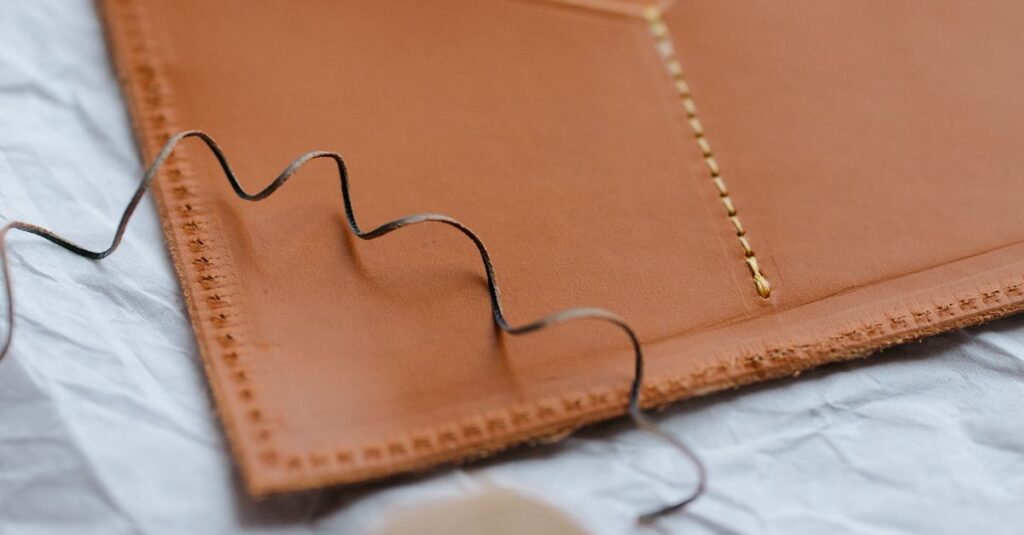
Stitched binding is the oldest of the three. Also the most reliable. You take a bunch of folded sheets, sew them together along the spine, and glue the spine to a cover. Simple. Strong. Boring. That's exactly why schools love it.
When I say stitched, I mean the notebook lies flat — mostly. Not as flat as spiral, but close enough. And if you fold it back, the pages don't rip out because they're physically sewn in. That matters for kids who treat notebooks like punching bags.
What it's best for
- School notebooks — 52 to 200 pages, handled roughly
- Account books — heavy use, need to stay intact
- Bulk institutional orders — cost-effective in large quantities
I remember a procurement manager from a school in Vijayawada called me once. He said, 'Last year we got spiral-bound notebooks and the kids had the coils bent by October. Can you give us something that lasts?' Stitched binding fixed that. Seven months later, no complaints.
The catch? Stitched notebooks don't look premium. The spine is flat, the cover is usually thin. If you're making corporate diaries that need to sit on a desk and impress, keep reading.
Spiral Binding — Flexible, But Fragile
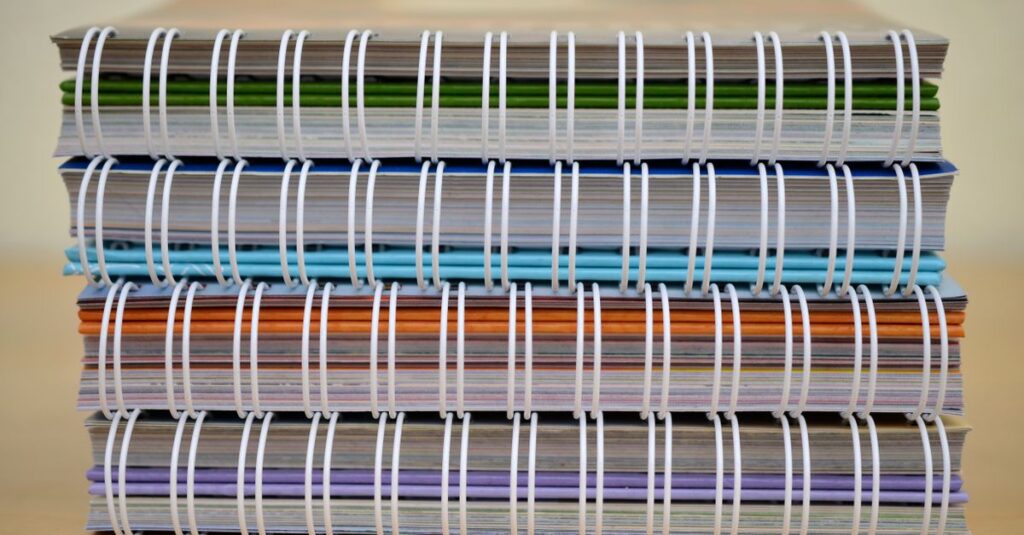
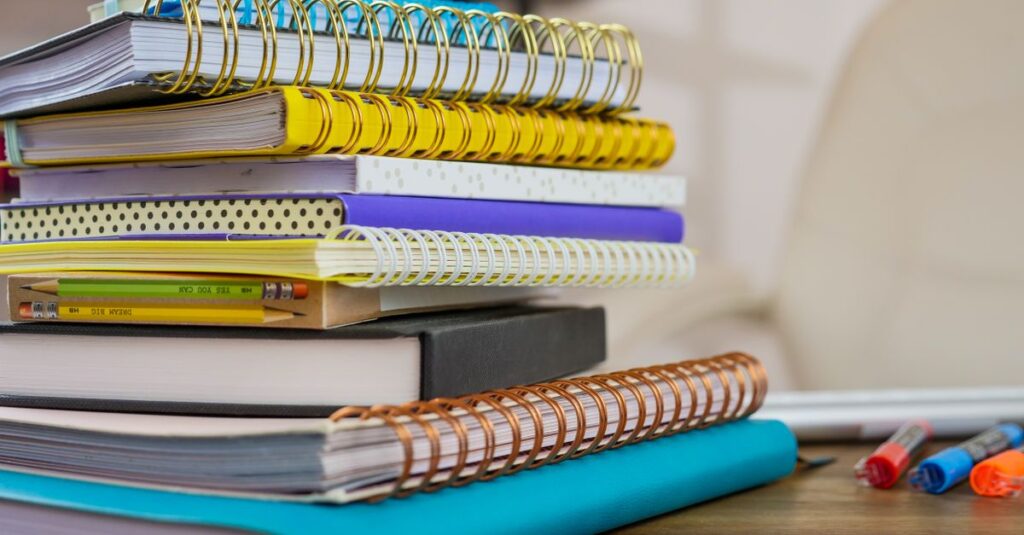
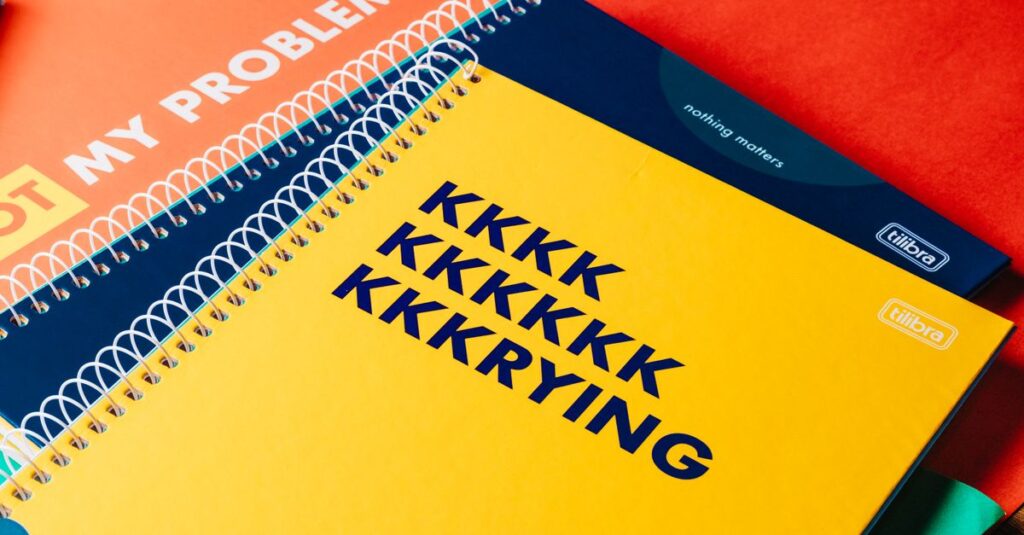
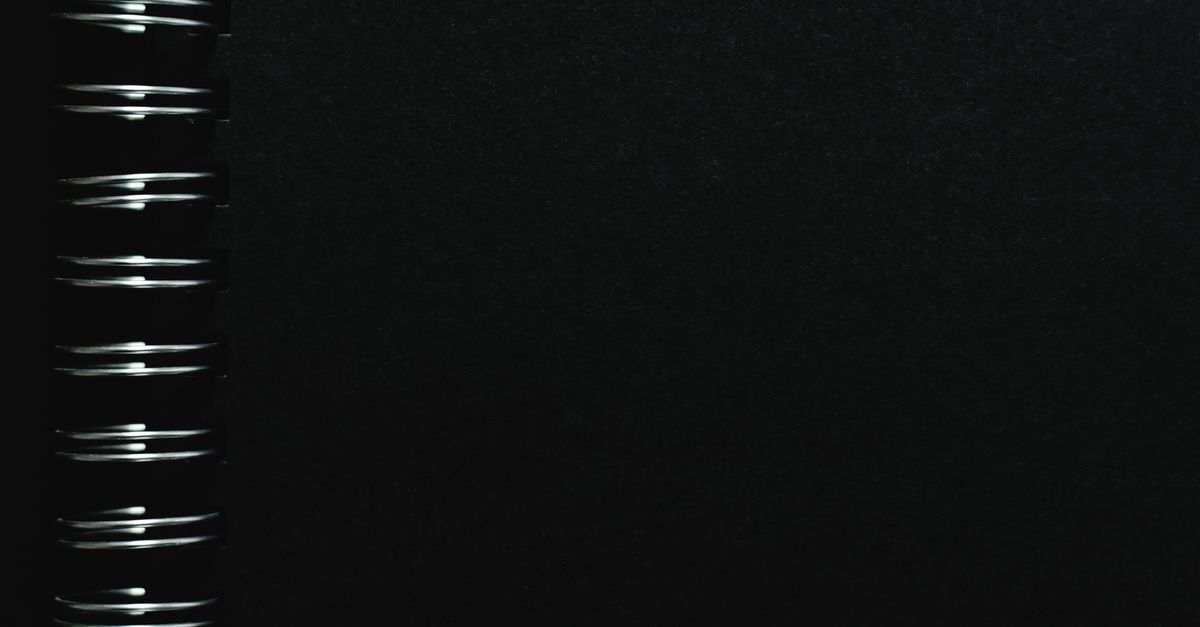
Spiral binding is easy to spot: a metal or plastic coil runs through holes punched along the side of the pages. The notebook opens 360 degrees. You can fold it back on itself. That's a big deal if you're writing with the notebook on your knee, or if you need to tear out pages regularly.
But here's the thing nobody tells you: spiral binding doesn't age well. The coil bends. The holes tear. By the time you're halfway through the notebook, the pages start slipping off the spiral. Especially if you're using 54 GSM paper — which is standard — it's not designed to hold up to constant flipping.
I talked to a student last month — Ravi, 22, engineering student in Kakinada. He said his spiral notebook lasted exactly one semester. The coil got caught in his bag strap and snapped. He switched to stitched and never looked back.
That said, spiral is great for certain things:
- Diaries and planners — need to lay flat easily
- Notebooks for left-handed people — no spine blocking the left side
- Short-term use — where durability isn't a priority
If you're a corporate buyer ordering promotional diaries that will be used for a year or less, spiral works fine. Just don't expect them to survive a second year.
Perfect Binding — The Clean, Professional Look
Perfect binding is what you see on paperback books and high-end notebooks. The pages are glued to the spine with a strong adhesive, and the cover wraps around. The result is a square, clean spine that looks good on a shelf.
It's the type of binding that screams 'quality.' That's why corporate diaries use it. That's why premium journals use it. But it has a weakness: the pages don't lay flat. You have to press the book open, and over time the glue can crack.
I remember — this is going back maybe ten years — a client from Dubai ordered 5000 perfect-bound diaries. They looked beautiful. Gold foil on the cover. Ribbon bookmark. Everything. Six months later, I got a call. 'The pages are falling out. What happened?' The problem was the paper GSM was too high for the glue they specified. We fixed it by switching to a different adhesive. But it taught me that perfect binding is unforgiving if you don't match the materials right.
So when should you choose perfect binding?
- Corporate diaries — where appearance matters most
- Gift notebooks — people judge by the cover and spine
- Limited page count — works best under 200 pages
If you're ordering perfect-bound notebooks, ask the manufacturer what glue they use. Not all adhesives are equal. And never expect them to last as long as stitched.
Comparison Table: Stitched vs Spiral vs Perfect
| Feature | Stitched Binding | Spiral Binding | Perfect Binding |
|---|---|---|---|
| Durability | Very high — pages sewn in | Moderate — coils can bend | Moderate — glue can crack |
| Lays flat | Mostly (depends on page count) | Yes — 360° open | No — needs pressing |
| Appearance | Functional, basic | Casual, practical | Premium, professional |
| Best for | School, account books, bulk orders | Planners, diaries, short-term use | Corporate gifts, journals |
| Repairability | Hard to repair | Easy to replace coil | Nearly impossible |
| Cost (bulk) | Lowest | Medium | Highest |
Look at the table and think about your actual use case. A school needs durability over looks. A corporate buyer needs appearance over longevity. There's no universal winner — only the right fit for your order.
How to Choose the Right Binding for Bulk Orders
If you're ordering hundreds or thousands of notebooks, the decision narrows down. Because price matters. Volume matters. And your users' habits matter.
Here's the simplest way I can put it:
For schools and colleges: go with stitched binding. It survives the year. Kids are rough. Teachers don't want to hear about broken notebooks. Stitched is cheaper at scale. That's why every government supply contract I've seen specifies stitched binding.
For corporate diaries and gifts: choose perfect binding if you want something that sits on a desk and looks impressive. But only if the page count is under 200. If you need a diary that lays flat — for executives who write in meetings — spiral might actually be better, even though it looks less premium.
Expert Insight
I was reading an old industry report from 2019 — I don't remember the exact source, something about stationery manufacturing in India — and one line stuck with me. It said the binding failures in notebooks are almost always due to mismatched materials, not poor production. The paper weight, the glue type, the thread strength — they all have to be calibrated to each other. If you cheap out on one, the whole thing falls apart. And in bulk orders, that means thousands of returns. That's expensive.
Real-Life Micro-Story
Anita, 34, runs a small stationery wholesale business in Rajahmundry. She ordered 3000 spiral-bound notebooks from a new supplier. Three months later, customers started returning them because the coils were popping out. She switched to stitched binding from Sri Rama Notebooks. That was four years ago. She still orders from us. I don't think she'll ever go back.
The point is, don't just pick a binding because it looks good on a sample. Think about the whole lifecycle of the notebook. Who's using it? How long should it last? What's your budget per unit? Answer those questions first, then choose.
Frequently Asked Questions
Frequently Asked Questions
What are the main types of binding for notebooks?
The three most common types of binding are stitched (sewn), spiral (coil), and perfect (glued). Each has different strengths: stitched is durable, spiral allows the notebook to open flat, and perfect gives a clean, professional spine.
Which type of binding is best for school notebooks?
Stitched binding is usually best for school notebooks because it can withstand rough handling. The pages are sewn in, so they don't fall out easily. It's also cost-effective when ordering in bulk for schools and colleges.
Is spiral binding good for long-term use?
Spiral binding is not ideal for long-term heavy use. The coil can bend or snap, and the holes in the paper can tear over time. It works well for planners and diaries used for a year or less, but not for notebooks that need to last several years.
What is the most professional-looking binding for corporate diaries?
Perfect binding gives the most professional look with a square spine and clean finish. It's often used for corporate diaries and premium journals. However, it doesn't lay flat and the glue may crack over time if not made with quality materials.
Can I customise the binding for bulk orders?
Yes, many manufacturers including Sri Rama Notebooks offer custom binding options. You can choose stitched, spiral, or perfect binding in various sizes and page counts. Customisation like logo printing and cover design is also available for bulk orders.
So, What's the Right Call?
There's no magic answer. Each of the three types of binding has a job it does well. Stitched for durability and cost. Spiral for flexibility and flat opening. Perfect for image and presentation.
I think the smartest buyers don't ask 'which is best' — they ask 'what fits my use case?' And then they test. Order a few samples. See how they hold up. Because a binding that looks great in a catalogue can be a disaster in real life.
If you're ordering notebooks in bulk and you're not sure which binding to pick, talk to us. We've been making notebooks since 1985. We've seen what works — and what doesn't. Sri Rama Notebooks can help you get it right the first time.