What Exactly Is a B5 Size Book?
Let me be honest with you. When someone asks me about a b5 size book, I don't start with measurements. I start with a question: have you ever picked up a notebook that felt just right? Not too big to carry around. Not so small that you run out of space after a week. That middle ground? That's the B5.
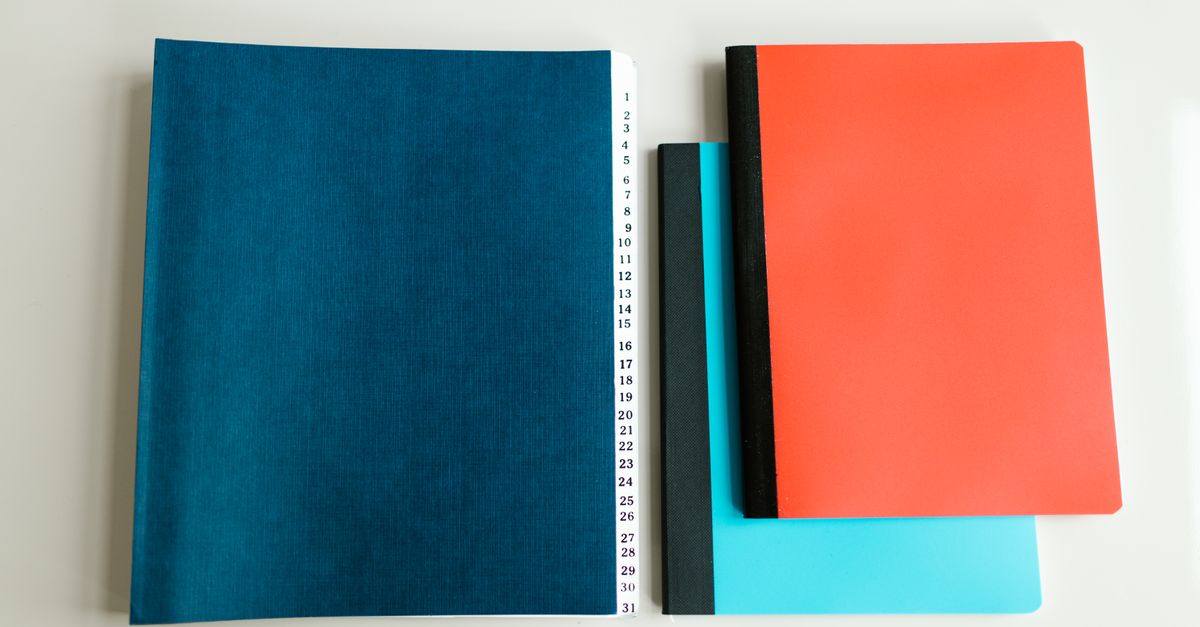
It sits between A4 and A5. Bigger than a standard school notebook. Smaller than a ledger. And for a lot of people I've spoken to — procurement managers, school administrators, even corporate buyers — it's the size they didn't know they needed until they tried it.
The dimensions are 176 mm x 250 mm. Or roughly 6.9 inches by 9.8 inches. Not quite A4. Not quite A5. Right in the middle. And that middle is where most of the useful stuff happens.
If you're ordering notebooks in bulk and wondering whether the b5 size book makes sense for your institution or office, Sri Rama Notebooks has been making these for decades. Let me walk you through what I've seen work.
Why B5 Size Books Are Used in Schools and Colleges
I've been in this business long enough to notice patterns. One of them is that schools and colleges don't always pick the biggest notebook. They pick the one that fits. And the b5 size book fits a lot of classrooms better than you'd expect.
Here's what I mean. A4 is great for diagrams and charts. But it's bulky. Kids carry five or six subjects a day. Add A4 notebooks to that bag and you're looking at back problems by tenth grade. A5 is lighter, but the writing space is limited — especially for subjects like science or mathematics where you need room for working out problems.
B5 sits in the middle. Enough space for detailed notes. Light enough that a bag doesn't feel like luggage.
I remember talking to a school principal in Visakhapatnam last year. She told me they switched from A4 to B5 for their high school students. The reason wasn't academic. It was practical. Kids were complaining about back pain. Parents were complaining about bag weight. The B5 solved both problems without reducing the amount of content students could write.
That's the thing about the b5 size book. It doesn't ask you to compromise. It just fits.
B5 Size Book vs A4 vs A5: A Practical Comparison
If you're buying notebooks in bulk — for a school, a college, or a corporate office — you need to know what you're getting. Not just the numbers on a spec sheet. The real differences. How they feel in hand. How they fit on a desk. How many you can stack in a storage room.
Let me break it down simply.
| Feature | B5 Size Book | A4 Notebook | A5 Notebook |
|---|---|---|---|
| Dimensions | 176 mm x 250 mm | 210 mm x 297 mm | 148 mm x 210 mm |
| Writing space | Good for detailed notes | Excellent for diagrams | Limited for long notes |
| Portability | Easy to carry | Bulky in bags | Very portable |
| Best for | High school, college, office | Architecture, engineering | Quick notes, journals |
| Bulk storage | Efficient stacking | Takes more space | Very compact |
| Cost per page | Moderate | Higher | Lower |
I'm not saying B5 is always the right choice. But if you're buying for a group of people who need to write a lot and carry their notebooks around, it's worth a serious look.
Who Actually Uses a B5 Size Book?
Let me tell you about a conversation I had a few months ago. A man named Ravi — 42, procurement manager for a chain of coaching institutes in Vijayawada — called me up. He was frustrated. His institutes had been using A4 notebooks for years. Students complained they were heavy. Teachers complained they took up too much desk space. He wanted something different.
I suggested the b5 size book. He ordered a sample batch. Two weeks later, he called back. Not to complain. To ask if we could do a bulk order of 15,000 units. The students liked the size. The teachers liked the space. The bags were lighter.
That's one example. But I see B5 used in a lot of places:
- High schools and junior colleges — especially for science and math subjects where students need room for working out problems
- Corporate training programs — big enough for detailed notes, small enough to fit in a laptop bag
- Government exam coaching centers — students write pages of notes daily, and B5 gives them the space without the weight
- Office meeting notebooks — professional looking, not too bulky, fits in a drawer
The b5 size book isn't for everyone. But for the people who use it, it's hard to go back to anything else.
What to Look for When Ordering B5 Size Books in Bulk
I've seen buyers make the same mistakes over and over. They focus on price. They forget about paper quality. They assume all B5 notebooks are the same. They're not. Not even close.
Here's what I tell people when they ask me what to check:
Paper GSM Matters More Than You Think
Most standard notebooks use 54 GSM paper. That's fine for ballpoint pens. But if your students or employees use gel pens or fountain pens, 54 GSM will bleed through. You want 60 GSM or higher for that. I've seen institutions save a few rupees per notebook on paper quality, only to get complaints about ink showing through on the other side. Not worth it.
Binding Type Changes Everything
A b5 size book can be stitched, spiral bound, or perfect bound. Stitched binding lasts longer. Spiral binding lets the notebook lie flat. Perfect binding looks more professional but can crack if you fold it back too hard. Think about how the notebook will actually be used before you decide.
Ruling Options
Single ruled is standard. But for mathematics, you might want four-ruled or graph paper. For office use, unruled or one-side-ruled works better. Don't assume one ruling fits all.
If you're placing a bulk order and want to get these details right, check out the product range at Sri Rama Notebooks. We've been doing this long enough to know what works.
What Most Buyers Get Wrong About B5 Size Books
I'll be honest. When I started in this industry, I thought B5 was just a random size that nobody used. A4 was standard. A5 was for pocket notebooks. B5 felt like an odd middle child that didn't know where it belonged.
I was wrong.
The mistake most buyers make is thinking that bigger is always better. They see A4 and think — more space, more value. But that's not how it works in practice. A notebook that's too big doesn't get used. It stays on the shelf. It gets left at home because it's heavy. The b5 size book gets used because it's convenient.
Another mistake: assuming all B5 notebooks are the same size. They're not. Some manufacturers cut corners. The dimensions vary by a few millimeters. That might not sound like much, but when you're ordering 10,000 units, those millimeters add up. Covers don't fit properly. Pages look misaligned. It's a mess.
I think — and I could be wrong — that the real issue is that people don't ask enough questions before ordering. They see a price. They place an order. And then they deal with the consequences.
Expert Insight
I was talking to a paper supplier from Hyderabad last year. Old guy. Been in the business since the 80s. He told me something I keep thinking about. He said the B5 size was originally designed for a specific reason — not just to be a middle size, but to match the proportions of the human hand when writing. The width and height are balanced so your arm doesn't have to stretch too far across the page. I don't know if that's true or if he was just telling a good story. But it makes sense when you actually write in one.
How B5 Size Books Are Manufactured
This is the part I actually enjoy talking about. Because a lot of people don't realize how much goes into making a simple notebook.
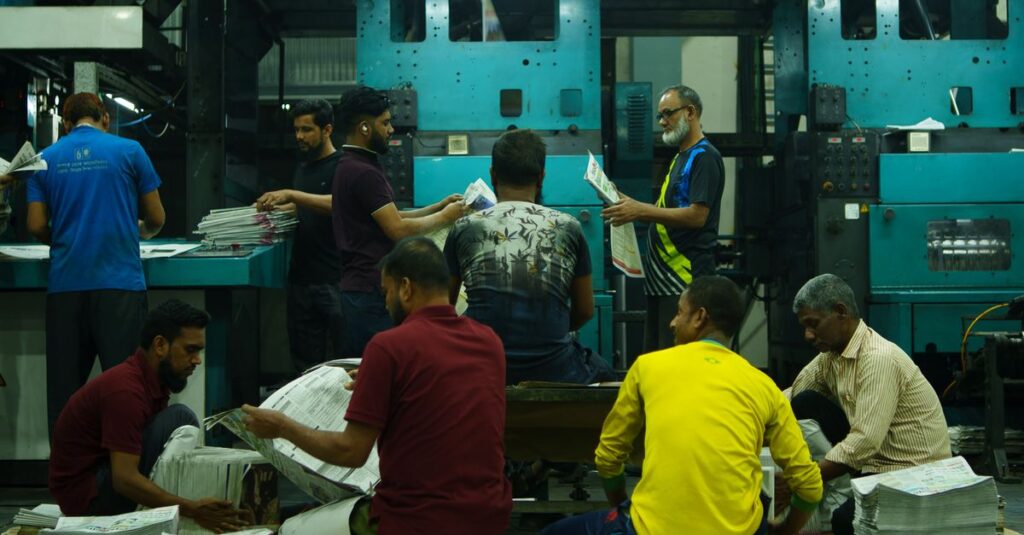
At our factory in Rajahmundry, we produce about 30,000 to 40,000 notebooks a day. That includes B5, A4, A5, and other sizes. The process is straightforward but every step matters.
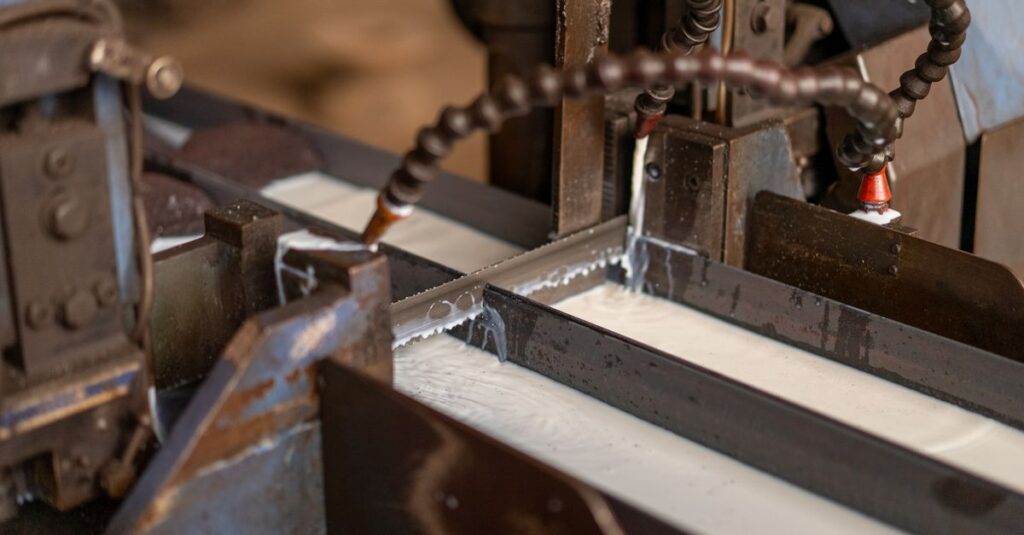
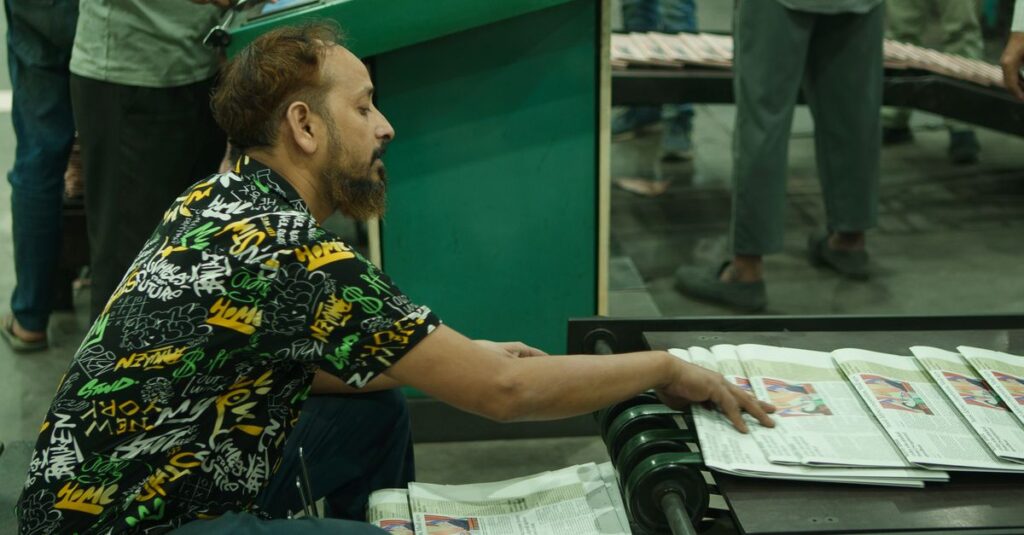
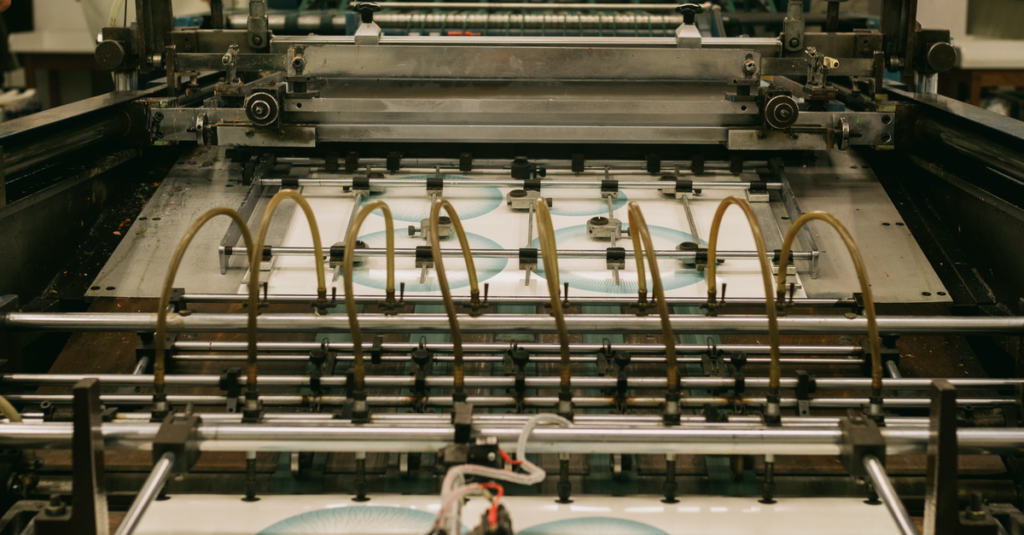
First, the paper arrives in large reels. We cut it to size. Then it goes through the printing press — ruling lines, cover designs, any custom branding. After printing, the sheets are collated and folded into signatures. Then binding. Stitching, spiral, or perfect binding depending on the order.
The thing about B5 is that it requires specific cutting settings. If the blades are off by even a millimeter, the whole batch is uneven. That's why experience matters. A new manufacturer might get the dimensions wrong. We've been doing this since 1985. We don't make that mistake.
For custom orders — logo printing, private label, embossing — the process is similar but with extra steps. The cover is designed separately. The branding is applied. The final product is checked for quality before packaging.
If you want to understand more about how we handle custom orders, our printing services page has the details.
B5 Size Book in Bulk: What to Consider Before Ordering
I've dealt with enough bulk orders to know that the small things become big things when you're ordering thousands of units.
Here are the things I tell every buyer before they place an order for b5 size books:
- Check the paper weight. 54 GSM is standard. 60 GSM is better for gel pens. 70 GSM if you want premium quality. Don't compromise here.
- Decide on binding early. Stitched binding lasts longer. Spiral binding is more convenient for students. Perfect binding looks more professional for corporate use.
- Think about the cover. A 250 GSM cover is standard. But if the notebooks will be carried around daily, go for 300 GSM. It holds up better.
- Ask about ruling options. Single ruled is default. But if your institution needs four-ruled or graph paper, confirm it before ordering.
- Request a sample first. I can't stress this enough. Order a sample batch. Let your team test it. Make sure it works before committing to a large order.
Nine times out of ten, the problems I see with bulk orders come from skipping the sample step. Don't be that buyer.
Frequently Asked Questions
Frequently Asked Questions
What are the exact dimensions of a B5 size book?
A B5 size book measures 176 mm by 250 mm, or about 6.9 inches by 9.8 inches. It sits between A4 and A5 in size. This makes it a practical choice for note-taking that needs more space than A5 but less bulk than A4.
Is B5 the same as A5?
No. A5 is smaller at 148 mm by 210 mm. B5 is noticeably larger. If you place them side by side, the B5 is about 28 mm wider and 40 mm taller. They are not interchangeable sizes.
Can I get a B5 size book with custom printing?
Yes. Most notebook manufacturers offer custom printing for B5 notebooks. You can add logos, school names, or corporate branding on the cover. Some manufacturers also offer custom ruling and page layouts for bulk orders.
What is the best binding for a B5 size book?
It depends on use. Stitched binding is the most durable and works well for students. Spiral binding lets the notebook lie flat, which is useful for office meetings. Perfect binding gives a premium look but is less flexible.
How many pages does a typical B5 size book have?
Common page counts for B5 notebooks range from 92 pages to 240 pages. Some manufacturers offer up to 320 pages. The right count depends on the subject and how long the notebook needs to last.
Final Thoughts on the B5 Size Book
I don't think there's one perfect notebook size. There isn't. But the b5 size book comes closer than most people realize. It balances space and portability in a way that A4 and A5 don't. It works for students, professionals, and institutions alike.
If you're ordering notebooks in bulk, don't ignore this size just because it's less common. It might be exactly what your team or students need. The only way to know is to try it.
If you want to discuss a bulk order or request samples, get in touch with Sri Rama Notebooks. We've been making notebooks since 1985. We know what works.