What Exactly Is a Bound Booklet?
You order a few hundred copies of something. Maybe it's a training manual. A product catalog. A program for an event. Someone says, “Make it a bound booklet.” And you nod along like you know what that means.
I've been in this business long enough to tell you — most people don't. Not really. They think a bound booklet is just a stack of pages with a staple in the corner. And sometimes, yeah, that's what they get. But a real bound booklet is different. It's built to last. It stays shut. It doesn't lose pages on day two.
A bound booklet, in the simplest terms, is a collection of pages that are physically fastened together along one edge. The binding could be staples (saddle-stitched), glue (perfect bound), or even thread (stitched). The point is — it's not loose. It's not going anywhere. And that matters more than you'd think when you're handing them out to students, clients, or staff.
If you're ordering for a school or a company, you want something that looks professional and holds up. That's the baseline. A bound booklet from a proper manufacturer does exactly that.
Bound Booklet vs. Other Formats — The Real Difference
I'll be blunt. There's a lot of confusion about what counts as a booklet. People call things booklets that are just folded paper. Or stapled sheets. Or bound notebooks that are way too thick to be called a booklet.
Here's how I think about it. A booklet is smaller than a full notebook. Usually 8 to 48 pages. Maybe 64 if you push it. It's meant to be consumed quickly — read, referenced, maybe thrown away or stored. A bound booklet is just that, but with a proper binding method so it doesn't fall apart.
How It's Different from a Notebook
- Notebooks have more pages (60 to 700+), thicker covers, and are meant for long-term use.
- Booklets are thin, lightweight, and often disposable after use.
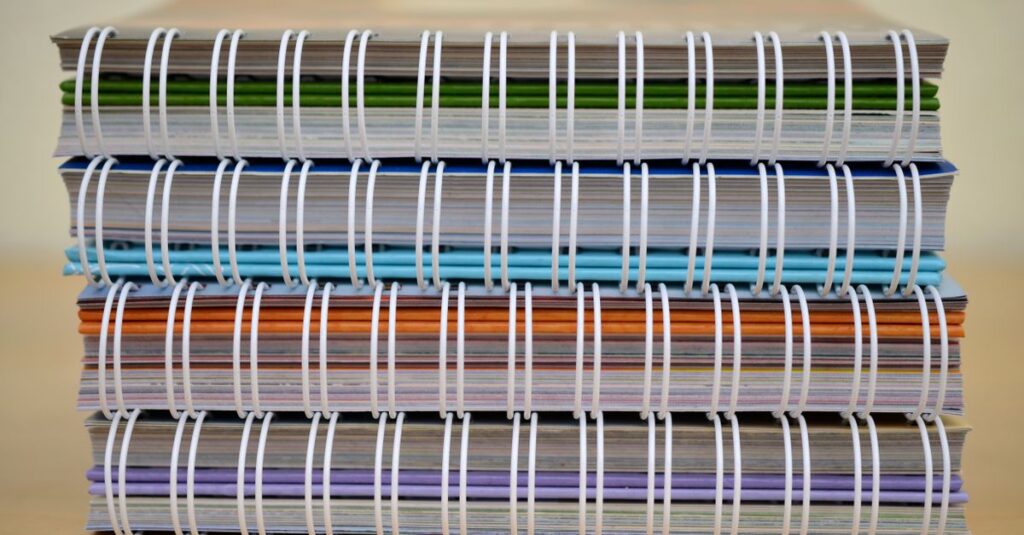
- Bound booklets use saddle-stitching or perfect binding — notebooks use sewn binding or spiral.
The biggest mistake I see: someone orders a “booklet” from a print shop that does wedding invitations, and they get a few folded pages shoved into a cover. Not bound. Not durable. A waste of money. A real bound booklet is built, not assembled.
| Feature | Bound Booklet | Stapled Sheets | Spiral Notebook |
|---|---|---|---|
| Page count | 8–64 pages | 2–20 pages | 60–300 pages |
| Durability | High (pages stay intact) | Low (staples pull out) | Medium (spiral can bend) |
| Lays flat | Yes (saddle-stitch) / No (perfect bound) | Yes (if thin) | Yes |
| Best for | Manuals, catalogs, event programs | Quick memos, handouts | Daily notes, journals |
| Custom printing | Full color, logos, covers | Limited | Full color, custom |
See the difference? A bound booklet fits a specific need. It's not a notebook. It's not a flyer. It's something in between — and that makes it perfect for certain jobs.
Where People Use Bound Booklets (And Why They Choose Wrong)
I was talking to a procurement manager from Chennai last month. Let me call him Ravi. He's about 42, works for a company that does industrial training. He needed 500 bound booklets for a safety course. He went to a local print shop and got back something that looked okay — until day three. Pages started falling out. The cover peeled off. He called me frustrated.
This happens all the time. The problem isn't the idea of a bound booklet. It's where people buy them.
The most common uses for bound booklets are:
- Training manuals — employees need to flip through them repeatedly without pages flying out.
- Product catalogs — lightweight, easy to mail, looks professional.
- School workbooks — students need to write in them, carry them around, spill coffee on them.
- Event programs — handed out once, but if it falls apart during the ceremony, that's embarrassing.
- Government forms and handbooks — needs to hold up in storage for years.
Here's the thing nobody says: the binding method determines everything. Saddle-stitching (staples along the fold) works great for 8 to 32 pages. Goes flat, easy to print. Perfect binding (glued spine) works for 32 to 64 pages — looks more like a real book, but won't lay completely flat. Matching the binding to the use case is the only thing that separates a good booklet from a bad one.
What Goes Into Making a Bound Booklet — The Stuff You Don't See
A lot of people think making a bound booklet is simple. And honestly? It can be. But there's a difference between a quick job and something that actually works.
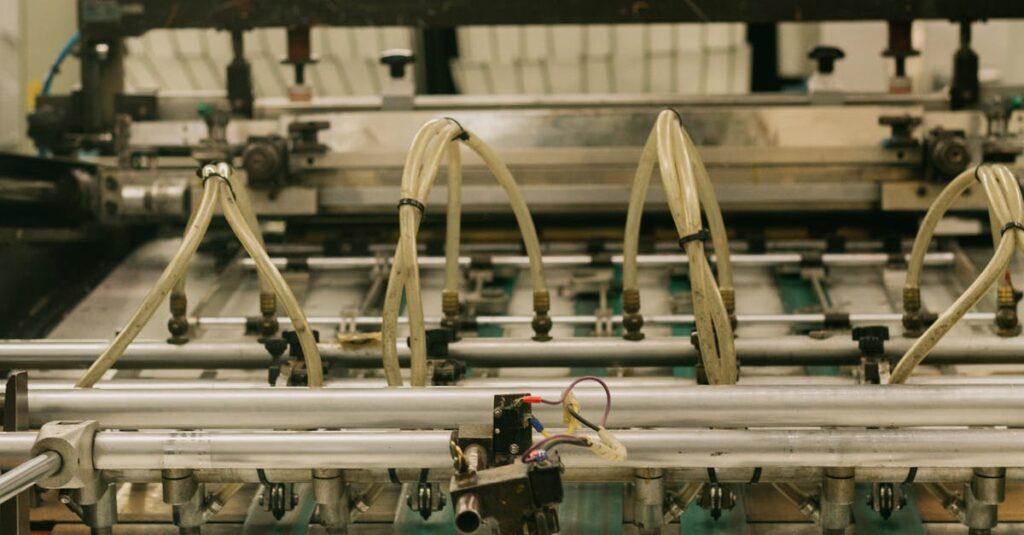
At our factory in Rajahmundry, we make them every day. The process isn't complicated — but it needs the right equipment and the right paper.
Here's what happens:
- Paper selection. For booklets, you don't want thick 100 GSM paper. It makes the booklet too bulky and hard to fold. 60 to 70 GSM is the sweet spot — thin enough to fold, strong enough to write on both sides.
- Printing. Offset printing for quantity (500+). Digital for small runs. Each has its place. Offset is sharper, cheaper for bulk. Digital is faster for short runs.
- Folding and gathering. Pages are folded into signatures (groups of pages). Each signature is placed in order. One mistake here and the whole batch is garbage.
- Binding. Saddle-stitch or perfect bind depending on page count and budget. Saddle-stitch uses two or three staples along the center fold. Perfect bind uses hot glue on the spine with a paper wrap.
- Trimming. The final cut. Square edges. Clean finish. A bad trim job makes the whole thing look cheap.
- Quality check. Someone flips through each one. Look for loose pages, misprints, crooked covers.
I've seen factories skip the quality check to save time. The result? Booklets that look identical from the outside but have missing pages inside. That's the kind of thing that ruins a training session or a product launch.
An Expert Insight I'll Never Forget
Years ago, an old printer in Kakinada told me something I still think about. He said, “A booklet is like a handshake. If it's weak, people remember.” He wasn't being dramatic. He meant it. He showed me two identical booklets — same paper, same print. One was saddle-stitched properly, the other was rushed. The rushed one opened crooked. The spine cracked. The staples were off-center. He was right. The details matter. Not because anyone will notice consciously — but because they'll feel it. Subconsciously. The booklet feels cheap. And that feeling transfers to whatever's inside it.
How to Order Bound Booklets Without Regretting It
I get calls from people who already ordered somewhere else and are disappointed. They ask if we can fix it. Sometimes we can. Sometimes we can't — the job is already printed on the wrong paper.
If you're ordering bound booklets for the first time, or switching suppliers, here's what matters.
- Know your page count before you ask for a quote. 16 pages and 48 pages use different binding. Saddle-stitch ends at around 48 pages (24 sheets folded). Beyond that, you need perfect binding.
- Ask about paper weight. If someone offers you 80 GSM for a booklet, walk away. It's too thick. The booklet won't fold cleanly. 60 to 70 GSM for the inside, 200 to 300 GSM for the cover.
- Get a physical proof. Not a PDF. A real printed booklet. Colors look different on screen. The weight feels different. The binding feels different. You need to hold it.
- Check the bleed. If your design has color that goes to the edge, make sure it's set up with 3mm bleed on each side. Without it, you'll get white edges. Looks terrible.
- Order a small batch first. Even if the final quantity is 10,000. Run 100 first. Check them. Approve them. Then go big. This step saves more money than any discount.
Most of the problems I see come down to one thing: people rush. They need booklets by next week and they accept whatever the printer offers. A good manufacturer will push back and ask the right questions. If someone just says “yes” to everything without asking for details — be careful. You'll likely get a weak handshake.
And honestly? That's avoidable. Custom bound booklets can be made well if you work with people who know what they're doing.
Frequently Asked Questions
What is a bound booklet?
A bound booklet is a small collection of printed pages that are fastened together along one edge using staples (saddle-stitching), glue (perfect binding), or stitching. It typically has 8 to 64 pages and is used for manuals, catalogs, programs, and workbooks.
How many pages can a bound booklet have?
Most bound booklets range from 8 to 64 pages. Saddle-stitched booklets work best up to 48 pages. Perfect bound booklets can handle 32 to 64 pages. For more than 64 pages, you're usually looking at a notebook or a full book.
What is the best binding for a booklet?
It depends on page count and use. For 8 to 32 pages, saddle-stitching is the best — it lies flat, costs less, and looks clean. For 32 to 64 pages, perfect binding gives a more professional look. For booklets that need to open completely flat, saddle-stitch is better.
Can I print a bound booklet in full color?
Yes. Full color offset or digital printing works well for bound booklets. Offset printing is more cost effective for quantities above 500. Digital printing works for smaller runs. Both can print on the cover and inside pages with good quality.
Where can I order custom bound booklets in bulk?
You can order from a manufacturer like Sri Rama Notebooks in Rajahmundry, India. They produce bound booklets with saddle-stitch or perfect binding, custom printing, and cover design. Minimum order quantities vary, so it's best to call and discuss your requirements.
Wrapping This Up
A bound booklet seems like a simple thing. And it can be. But the difference between something that works and something that frustrates everyone comes down to a few decisions made early on. Paper weight. Binding method. Page count. Print quality. None of it is complicated, but each piece matters.
I don't think there's one perfect way to make a bound booklet for every situation. There isn't. What works for a school workbook won't work for a glossy product catalog. The trick is knowing what you actually need before you order. If you're not sure, ask. A good manufacturer will guide you. A bad one will just take your money and give you whatever they have in stock.
If you're looking for bound booklets that don't fall apart, contact Sri Rama Notebooks. We've been at this since 1985. We know what works.