What Does “Cheap Copy” Actually Mean?
You search for “cheap copy” and you get a flood of options. Low prices. Too many promises. But here’s the thing — cheap doesn’t have to mean bad. It just means you need to know what you’re paying for. I’ve been in this business since 1985, and I’ve seen buyers walk into a trap thinking they’re saving money. They end up with notebooks that fall apart, paper that bleeds through, and a headache that costs more than the savings.
Cheap copy, in the notebook world, is about manufacturing efficiency. It’s about using the right paper, the right binding, and the right print run size. Not about cutting corners. A lot of suppliers will sell you a “cheap copy” that’s just low-grade paper and thin covers. But a real cheap copy is one that gives you value — not just a low number on the invoice.
If you’re ordering in bulk, you need to understand the difference. Sri Rama Notebooks has been making notebooks for decades, and we know how to deliver a cheap copy that actually works.
1. The Real Cost Behind a Cheap Copy
When I say “cheap copy”, I’m not talking about flimsy paper. I’m talking about the price per unit after you factor in volume, materials, and labor. The cheapest notebooks on the market use 50 GSM paper, basic stitching, and thin covers. That’s fine for one-time use, but if you’re a school or a corporate office, you need something that lasts at least a few months.
I remember a client — let’s call him Rajesh — who ordered 10,000 “cheap copy” notebooks for his school. He paid rock-bottom price. Three weeks later, the pages started falling out. He called me, frustrated. The problem wasn’t the paper quality alone — it was the binding. The supplier used a cheap glue that didn’t hold. So Rajesh ended up reordering from us, paying more in the long run.
The thing is, cheap copy can be done right. You just need to know where to cut costs and where not to. Here’s what I mean:
- Paper: 54 GSM is the sweet spot for affordable notebooks. It’s not too thin, not too thick.
- Binding: Stitched binding is cheaper than spiral, but it holds better than perfect binding if done right.
- Cover: A 230 GSM cover is standard. Anything less and you’ll get bent corners.
- Printing: Offset printing is cheaper for large runs. Digital for small runs.
That’s the honest take. Our products are built this way.
2. Cheap Copy vs. Quality Copy — A Comparison
Let’s put it side by side. I see this confusion all the time. Buyers think “cheap copy” means the same as “low quality” — but it doesn’t have to. Here’s a comparison table that shows the difference between a poorly made cheap copy and a well-made affordable one.
| Feature | Poor Cheap Copy | Smart Cheap Copy |
|---|---|---|
| Paper GSM | 50 GSM or less | 54-60 GSM |
| Binding Type | Perfect binding with low-grade glue | Stitched binding or quality perfect binding |
| Cover Thickness | 180 GSM or less | 230 GSM |
| Printing Quality | Faded or misaligned | Offset or digital with proper registration |
| Page Count | Often 40-60 pages only | Any page count, but optimized for production |
| Customization | No or limited | OEM, logo, foil stamping available |
| Durability | Weeks, not months | Months to a year |
| Bulk Price | Very low — but hidden costs | Low — but no hidden costs |
See the difference? The smart cheap copy uses efficient manufacturing without sacrificing the essentials. You don’t need premium paper for a notebook that will be used for notes. But you do need binding that holds. Our printing services are designed to get you that balance.
3. The Hidden Trap: Why Some “Cheap Copy” Notebooks Cost You More
I was talking to a procurement manager last week — over the phone, actually — and she said something that stuck with me. “I can get a notebook for Rs. 10 less than your price. Why should I pay more?”
I asked her: “What’s the return rate on those notebooks?” She paused. She didn’t know.
That’s the thing with cheap copy. If you buy from a supplier who doesn’t care about quality, you’ll end up with returns, complaints, and wasted time. I’ve seen it happen to schools that ordered 5000 notebooks and got a batch where half had misaligned rulings. They had to reprint covers. That’s not cheap.
Here’s a real story: I met a distributor named Arun from Vijayawada. He’s 38, runs a stationery shop. He bought a container of “cheap copy” notebooks from a new supplier. The price was amazing. But the paper was so thin that ink bled through to the next page. His customers returned them. He lost trust. He now buys from us — even though our price is slightly higher — because he knows the quality is consistent.
So when you search for “cheap copy”, don’t just look at the price tag. Look at the total cost of ownership. Returns, refunds, brand damage — those add up.
Expert Insight
I remember reading something years ago — I think it was a manufacturing study — that said the cheapest products often have the highest hidden costs. The exact number escapes me, but it was something like 25% of low-cost goods fail within a month. I don’t have the source anymore, but I’ve seen it play out in real life. That’s why I always tell buyers: don’t go for the absolute cheapest. Go for the cheapest that still works.
4. How to Evaluate a Cheap Copy Supplier
So you want a cheap copy. Good. But how do you pick the right supplier? Here’s what I look for — and what you should too.
- Ask for samples. Not just one. Ask for five random notebooks from a production run. If they can’t provide, run.
- Check the paper. Hold it up to light. Can you see through it? If yes, it’s too thin.
- Test the binding. Open the notebook flat. Does the spine crack? Do pages fall out? That’s a red flag.
- Compare price per page. Not just per notebook. A 200-page notebook at Rs. 20 is cheaper per page than a 100-page notebook at Rs. 12.
- Look at customization. A good supplier can do logo printing, foil stamping, or custom covers even at low volumes. That shows they have proper equipment.
Nine times out of ten, the supplier that offers the lowest price on a “cheap copy” is cutting corners you can’t see. But the supplier that offers a competitive price with transparent specs — that’s the one you want.
5. Why “Cheap Copy” Doesn’t Have to Mean Low Quality
Look, I’ll be honest. I’ve been making notebooks for 40 years. We’ve had to compete with suppliers who sell notebooks at prices that make no sense. They use recycled paper with low GSM, thin covers, and glue that dries out. And they still sell. Because buyers see “cheap copy” and think that’s all they need.
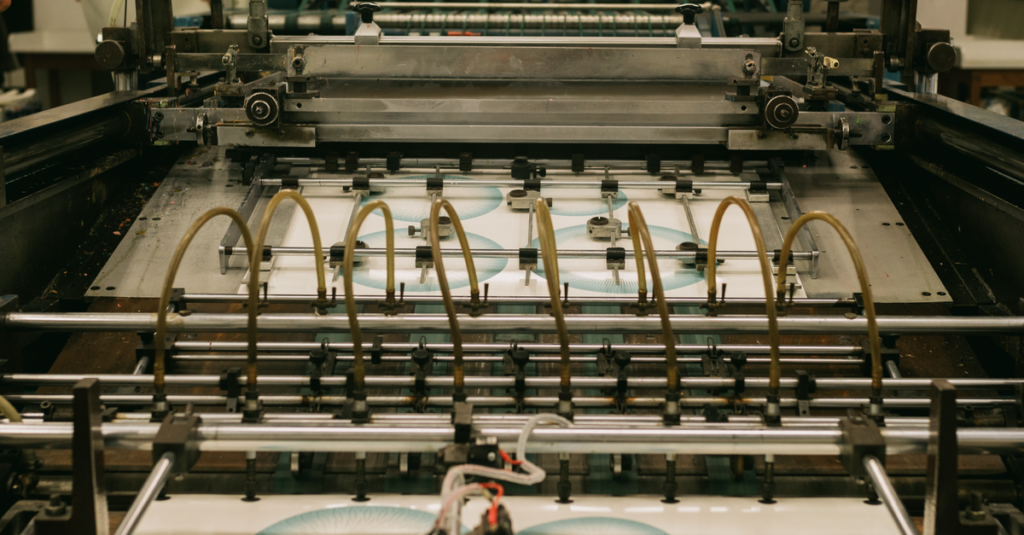
But here’s the truth: a cheap copy can be made well. It’s about efficiency. We produce 30,000 to 40,000 notebooks a day. Our machines are set up to handle large runs with minimal waste. That’s how we keep the price down without dropping quality. We use 54 GSM paper, stitched binding, and 230 GSM covers. That’s our standard. Not the cheapest possible, but the cheapest that still gives you a notebook that lasts.
So when you search for “cheap copy”, ask yourself: do you want a notebook that falls apart in a month, or one that lasts the whole school year? The price difference is small. The value difference is huge.
Frequently Asked Questions
What is a cheap copy in notebook manufacturing?
A cheap copy usually refers to a low-cost printed notebook. It can be made with thinner paper and basic binding, but a good cheap copy balances cost with durability. Look for at least 54 GSM paper and stitched binding.
Can I get a cheap copy notebook with custom logo printing?
Yes, many manufacturers offer custom logo printing at low prices, especially for bulk orders. The key is to choose a supplier that uses offset printing for large runs, which reduces per-unit cost. Contact us for quotes.
How much does a cheap copy notebook cost in bulk?
Prices vary by paper quality, page count, binding, and quantity. For a standard 100-page notebook with stitched binding, expect around Rs. 10-15 per notebook in bulk orders of 5000+. Request a quote from manufacturers for exact pricing.
What is the minimum order quantity for cheap copy notebooks?
Minimum order quantity (MOQ) is typically 500 to 1000 notebooks for standard designs. Customized notebooks may have higher MOQs, often 2000+. Some manufacturers offer lower MOQs for plain notebooks.
Is cheap copy paper safe for fountain pens?
Generally, cheap copy paper (50-54 GSM) is not ideal for fountain pens because ink may bleed through. For fountain pens, choose at least 60 GSM paper. If you need cheap copy for fountain pens, ask for denser paper.
Conclusion
Here’s the short of it: cheap copy is a real thing, but it’s not a free pass. You can get affordable notebooks without sacrificing quality — if you know what to look for. Paper, binding, and supplier transparency matter more than the lowest price.
I don’t think there’s a single answer. Maybe you’ll find a supplier that gives you a great deal. But if you’ve read this far, you’re probably already thinking about the long-term cost. That’s the right mindset.
If you want to talk about cheap copy that actually works, reach out to Sri Rama Notebooks. We’ve been doing this since 1985. We know what works.