Wait — Are Classmate Notebook Pages Actually Different?
I get this question a lot. Usually from someone who's been ordering notebooks for years. They'll call and say, "I need classmate notebook pages — the same quality."
And I get it. There's this idea that Classmate has some magic formula. Better paper. Smoother writing. Some kind of special coating that makes your pen glide. I've heard it all.
Here's what I'll tell you — and I'll be direct about it. Classmate notebook pages are good. Not because of some secret tech. Because they stick to basics that most manufacturers cut corners on. Good GSM. Consistent ruling. Proper binding that doesn't fall apart by week four of school.
But here's the thing people don't talk about. You can get the same — or better — if you know what to look for. The paper, the size, the ruling type. These aren't brand secrets. They're specs. And specs can be matched.
If you're ordering for a school or a corporate office, you don't need a brand name. You need pages that don't ghost when you write on them. Let's talk about what that actually means.
Sri Rama Notebooks has been making this stuff since 1985. We know the specs.
What Classmate Notebook Pages Actually Are — The Breakdown
Classmate is ITC's brand. It dominates the Indian school notebook market. The pages are standard 54–60 GSM paper. Nothing exotic. But they're consistent. That's the secret.
Most people don't realize that classmate notebook pages come in different variants. Let me list the ones I see ordered most often:
- Long size — 27.2 cm x 17.1 cm. The classic. Most schools want this.
- Short size — 19.5 cm x 15.5 cm. Smaller. For younger kids or specific subjects.
- King size — 23.6 cm x 17.3 cm. Slightly wider. Gaining popularity.
- Four ruled (4R) — Four lines per row. For handwriting practice. Always in demand.
- Single ruled — Standard lines. What you'd expect in most notebooks.
The paper quality is where it gets interesting. Classmate uses what they call "superior grade paper." That's marketing speak for "decent quality with minimal bleed-through."
(I remember a distributor in Visakhapatnam telling me once — this was maybe 2019 — he could tell Classmate pages apart blindfolded. I didn't believe him. Then he showed me. Not the paper. The smell of the binding glue. Some people just know their product.)
The thing is — classmate notebook pages work well for ball pens and gel pens. Fountain pen users might get some show-through. That's not a defect. That's paper density physics. You want zero bleed, you go up to 70 GSM.
But in bulk ordering, most buyers don't have that option. Or they think they don't.
Why Bulk Buyers Obsess Over These Pages
Here's an uncomfortable truth. A lot of school procurement managers don't know what they're ordering. They just say "give me the Classmate one." It's safer. Nobody gets fired for buying Classmate.
But. Here's what they're actually looking for when they ask for classmate notebook pages:
- Consistency — Every batch looks and feels the same. Kids notice when page 10 is lighter than page 40.
- Ruling clarity — Lines that aren't too dark or too faint. This matters for younger children learning to write within boundaries.
- Page count accuracy — 200 pages should actually be 200. Not 196. Not 204. Some manufacturers fudge this.
- Paper whiteness — Not too bright (which causes glare) and not too dull (which makes writing look messy).
- Binding strength — Pages that stay put until the notebook is finished. Not falling out in week two.
I've heard enough stories from school principals about notebooks that disintegrated mid-semester. One government school in Rajahmundry had to replace 400 notebooks in October. October! Mid-exams. The original supplier had vanished.
The real reason people want classmate notebook pages? Trust. They trust the consistency. And that's fair. But consistency isn't exclusive to one brand.
Expert Insight: What a Manufacturer Sees
I was talking to our production head last month — he's been with Sri Rama since 1996. He said something that stuck with me. "Classmate pages are made on machines that run 24 hours. So are ours. The difference isn't the machine. It's who's checking the quality at 3 AM."
He meant it literally. Night shift quality control. The person who catches the misalignment before 10,000 pages get printed wrong. That's what makes pages consistent. Not the brand name. The person at 3 AM who decides to stop the machine.
I don't have a cleaner way to put it than that. Quality is boring. It's vigilance. It's checking the same thing a thousand times and noticing when something changed.
Classmate vs Standard Notebook Pages — A Real Comparison
If you're a procurement person, you've probably been asked: "Should we just buy Classmate or go with a local manufacturer?" Here's a comparison that might help.
| Feature | Classmate Notebook Pages | Standard Bulk Pages (Example: Sri Rama) |
|---|---|---|
| GSM Range | 54–60 GSM | 54–70 GSM (customizable) |
| Ruling Options | SR, UR, 4R, BR | SR, UR, DR, BR, FR, CR, OSR, CBR (8 types) |
| Page Count Accuracy | Very consistent | Consistent, verified at binding stage |
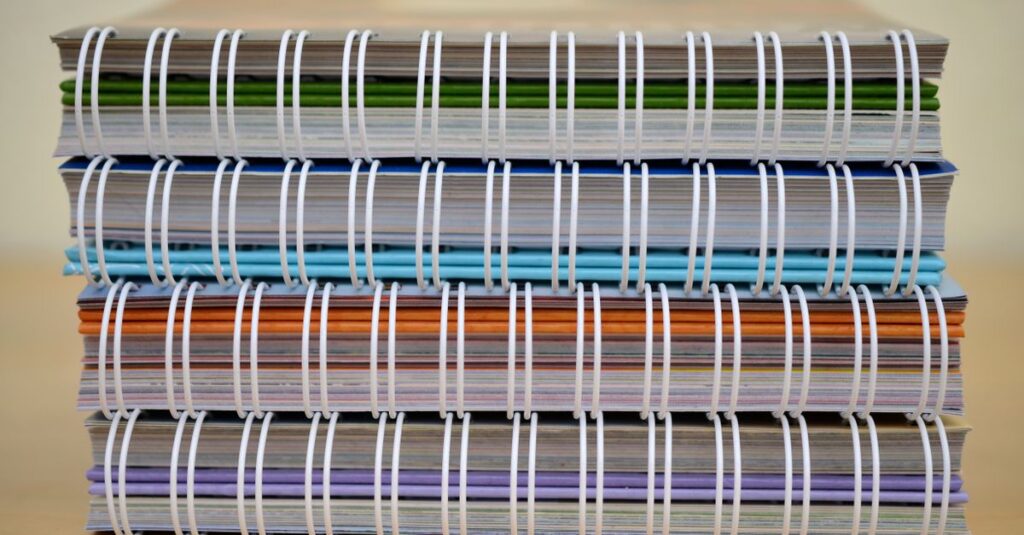
| Binding Quality | Good (stitched or spiral) | Stitched, spiral, perfect — all options |
| Customization | Limited branding options | Logo printing, full cover design, embossing |
| Bulk Pricing (per notebook) | Higher (brand premium) | Lower (no brand markup) |
| Minimum Order | Varies by distributor | Flexible — from 500 to 50,000+ |
The honest answer? Classmate notebook pages are a safe bet. But safe costs a premium. If your school or institution is on a tight budget — and which one isn't — you can get equal or better quality from a dedicated notebook manufacturer at a lower price. The catch? You have to vet the manufacturer yourself. Or you can work with someone who's been doing this for four decades.
A Real Story: The Principal Who Switched
Let me tell you about Ravi. He's 47. He's principal of a private school in Kakinada — about 60 km from our factory. Three years ago, he was ordering Classmate exclusively. Had been for seven years. Never questioned it.
Then his accounts department showed him the numbers. They were spending 18% more than a neighboring school of similar size. Same student count. Same subjects. Different notebook supplier.
Ravi called me. Told me he needed "the exact same Classmate notebook pages, but cheaper." I laughed. We had a long conversation about paper, ruling, binding — he didn't realize how much went into it. He thought all notebooks were basically the same.
We made him samples. 54 GSM long notebooks. Single ruled. Stitched binding. Custom cover with his school logo. He tested them for a month. Gave them to three teachers and asked them to be brutal.
(One teacher wrote back: "The pages hold up better than last year's. And the lines are actually straight." That was the review that sold him.)
He switched. That was 2022. He's still ordering from us. Not because we're cheaper — although we are. Because the pages work.
What Most Buyers Miss When Ordering Pages
I'll tell you something that still surprises me. Most people who order classmate notebook pages don't check the ruling type carefully. They just write "ruled notebook" on the purchase order. That's like ordering "a car" without specifying model, fuel type, or color.
There are at least eight ruling types in common use:
- SR (Single Ruled) — Standard horizontal lines. Most common.
- UR (Unruled) — Blank pages. For diagrams, art, or free writing.
- DR (Double Ruled) — Two sets of lines. For certain subjects.
- BR (Broad Ruled) — Wider spacing. For younger kids or bigger handwriting.
- FR (Four Ruled) — Four lines per set. Handwriting practice. Huge in primary schools.
- CR (Cross Ruled) — Grid pattern. For graphs, math, science.
- OSR (One Side Ruled) — Ruled on one side only. Used for specific formats.
- CBR (Center Broad Ruled) — Broad ruling in the center. Niche but requested.
And page count. Oh, page count. I've seen orders for "200 page notebooks" that arrived with 180 pages. The supplier saved paper. The school's running out of notebooks two months early. Nobody checks until it's too late.
If you're ordering in bulk, ask for a page count verification clause in your contract. Some suppliers will fight that. The good ones won't.
Frequently Asked Questions
What paper GSM do classmate notebook pages use?
Classmate notebook pages typically use 54 to 60 GSM paper. This is standard for school notebooks. It's smooth enough for ball pens and gel pens. Fountain pen users may see some ghosting on the back of the page.
Can I get classmate notebook pages with custom logo printing?
Classmate does offer some customization, but it's limited and requires large minimum orders. Many schools and businesses buy from manufacturers like Sri Rama Notebooks who can match the paper quality and print custom logos, covers, and page layouts in smaller quantities.
Are classmate notebook pages available in four ruled format?
Yes. Classmate offers four ruled (4R) notebooks, which are popular for handwriting practice in primary schools. These have four horizontal lines per row to help children form letters consistently. Many manufacturers also produce this ruling type.
What sizes do classmate notebook pages come in?
The most common sizes are Long (27.2 x 17.1 cm), Short (19.5 x 15.5 cm), and King (23.6 x 17.3 cm). Each serves a different purpose. Long notebooks are standard for most subjects. Short notebooks are often used for homework or specific subjects.
How do I verify that my bulk order matches classmate notebook page quality?
Ask for a physical sample before placing a bulk order. Check the GSM, ruling clarity, and page count. Test a few pages with the pen your students use most. Good paper won't bleed through. Also check the binding — open the notebook flat and see if pages stay intact.
So — Do You Need Classmate Specifically?
Here's where I stand after doing this for a long time. Classmate notebook pages are good. They're consistent. They're reliable. If that's what you need and your budget allows it, nobody's stopping you.
But if you're buying 500 or 5,000 or 50,000 notebooks, you have options. The specs matter more than the brand. GSM. Ruling type. Page count. Binding. Those are the things that make a notebook usable or forgettable.
I don't think there's one right answer here. Probably there isn't. But if you've read this far, you're probably the kind of person who wants to understand what you're paying for. And that's the right instinct.
If you want to talk about what works for your specific order — school, corporate, whatever — we can help at Sri Rama Notebooks. We've been doing this since 1985. We know what classmate notebook pages are made of. And we know how to match or beat them.