What Actually Is Commercial Printing for Notebooks?
You walk into a meeting. You've got samples from three different suppliers. They all say they can do commercial printing. But what does that even mean when you're ordering 10,000 notebooks with your company logo on the cover?
I've been around printing presses long enough to know that 'commercial printing' sounds fancy but it's really just a fancy term for 'we print stuff in bulk, fast, and at a price that makes sense.' The difference is in the details — the paper, the ink, the binding, the turnaround.
If you're sourcing for a school, a corporate event, or a distribution chain, you need to understand what commercial printing actually delivers. Otherwise you'll end up with notebooks that look great in the sample but fall apart after three weeks. I've seen it happen. It's not pretty.
Let me break it down — and if this sounds like your situation, Sri Rama Notebooks has been doing this since 1985. We know what works.
How Commercial Printing Works for Notebooks and Diaries
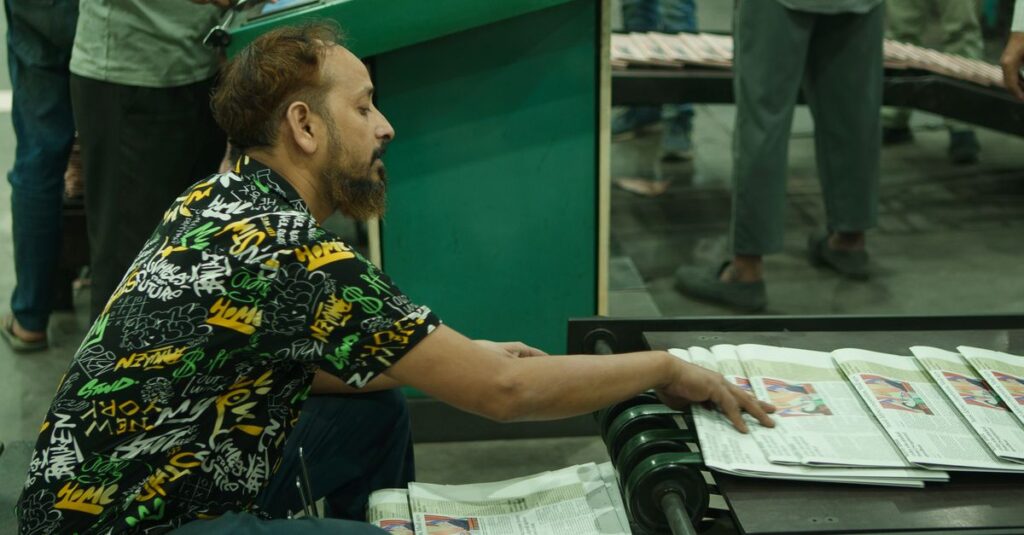
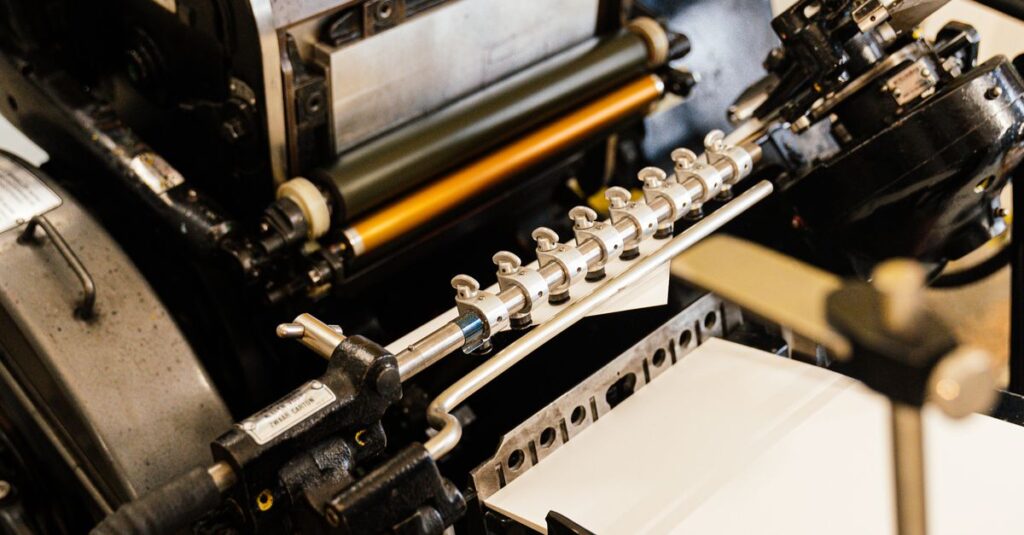
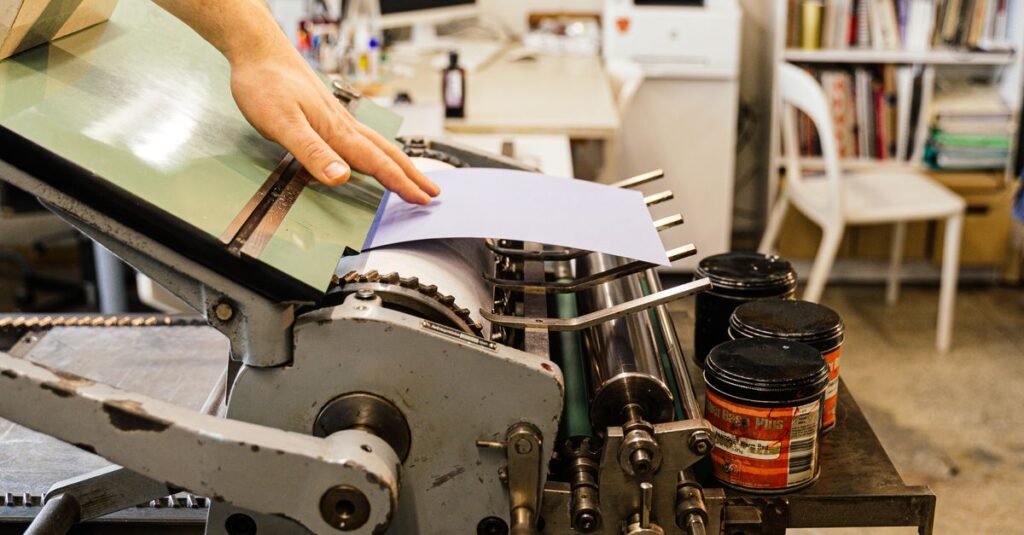
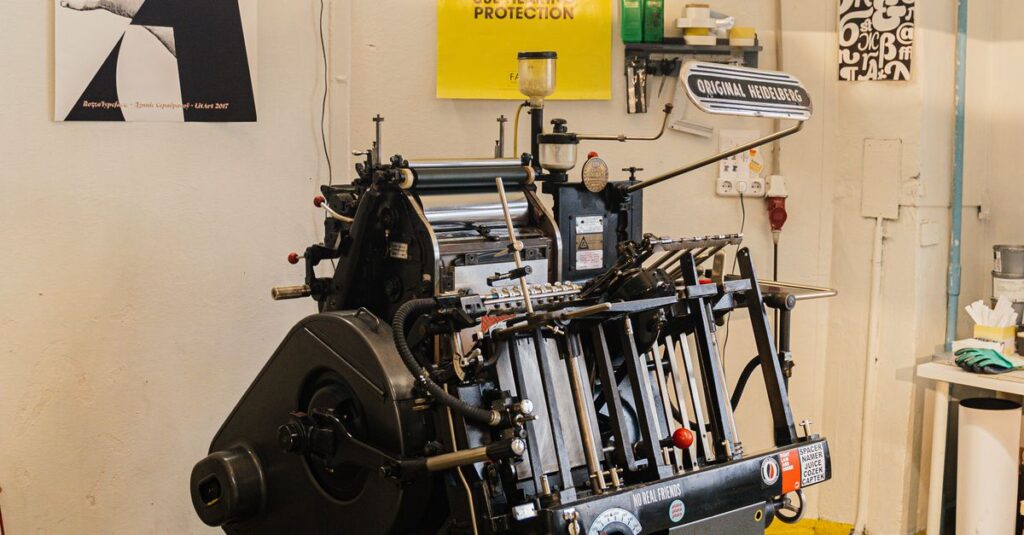
So here's the thing. Commercial printing is not the same as the digital printing you'd use for a few hundred flyers. For notebooks, we're talking offset printing — huge sheets of paper, CMYK inks, plates that cost thousands but give you razor-sharp results for runs of 5,000 units and up.
At our factory in Rajahmundry, we run offset presses daily. The process goes like this:
- Design & proofing — we get your artwork, check for bleeds and margins
- Plate making — each color gets its own plate
- Printing — sheets feed through at high speed, drying between colors
- Cutting & folding — the big sheets get sliced into notebook pages
- Binding — stitched, spiral, or perfect depending on what you need
- Trimming & packing — final cut, shrink wrap, pallet ready
And the whole thing takes about 15–20 working days for a standard order. Not bad for 30,000 units a day, right?
One thing people don't realize: commercial printing gives you a lot more paper and ink options. You want 80 GSM paper instead of the usual 54? Done. You want foil stamping on the cover? Easy. But you have to tell us early. Changing paper stock mid-run is a headache. Honestly, it's a pain I don't wish on anyone.
Expert Insight
I remember a conversation with our production manager — he's been running presses since the late 90s. He told me once that the biggest mistake new buyers make is thinking commercial printing is just bigger digital printing. 'It's not,' he said. 'Digital is like making one perfect pizza. Offset is like making a thousand perfect pizzas in a row without stopping. The oven has to be right. The dough has to be consistent. One variable off and you waste a whole batch.' I think about that every time someone asks me for a quote without telling me the paper weight.
Commercial Printing vs. Digital Printing: Which One Should You Choose?
This is the question I get most often. And I get it — you want to know what's best for your budget and your deadline. So let me lay it out in a table. Because I'm a visual person, and maybe you are too.
| Factor | Commercial Offset Printing | Digital Printing |
|---|---|---|
| Best for quantity | 500+ units (sweet spot: 2,000+) | Under 500 units |
| Cost per unit | Drops significantly with volume | Stays flat — higher per unit |
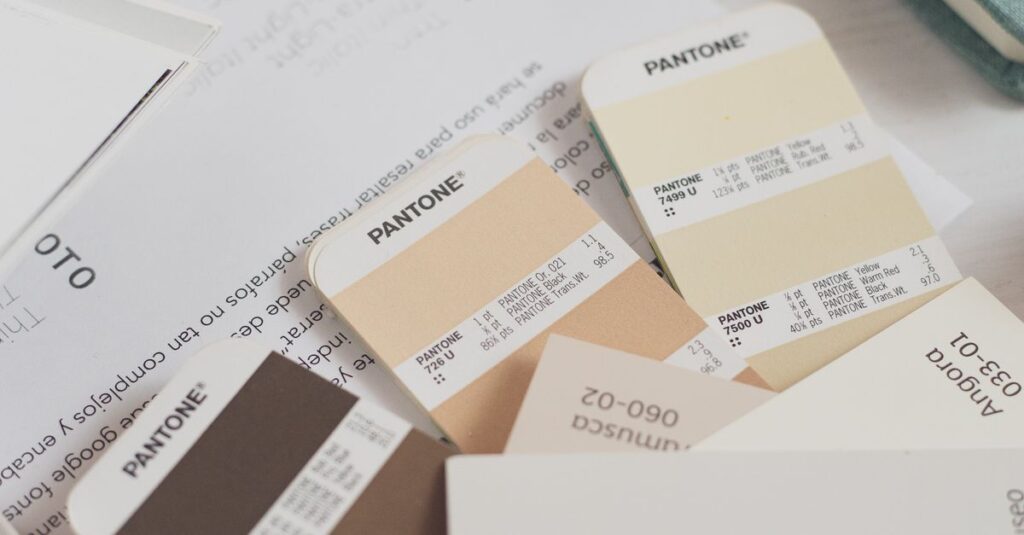
| Color accuracy | Excellent (Pantone matching available) | Good, but can vary between runs |
| Paper options | Wide range — specialty stocks possible | Limited to standard papers |
| Setup time | 3–5 days for plates and proofs | Minimal — print in minutes |
| Turnaround time | 2–3 weeks for bulk orders | Overnight for small runs |
| Customization per unit | Same design for all (unless variable data) | Easy to personalize each copy |
So which one? If you need 10,000 notebooks with your company logo, go commercial. If you need 50 personalized notebooks for a client gift, go digital. It's not complicated. But I've seen people order 1,000 on digital and pay double what they would have with offset. Don't be that person.
A Real-Life Example: Ramesh from Chennai
Ramesh is 38. He works as a procurement manager for a chain of 12 private schools in Chennai. Every year, he orders custom notebooks for the students — about 15,000 units. He used to go with a local printer who did digital printing. The notebooks looked okay, but the covers started peeling after a month. Parents complained. Ramesh got yelled at.
Last year, he called us. He was skeptical — 'You're in Rajahmundry, how will you manage quality?' I told him to send a sample file. We printed a proof, shipped it to him in two days. He compared it side by side with his old stock. 'The paper is thicker,' he said. 'And the color is more even.' We talked about commercial printing vs. digital. He placed an order for 15,000 stitched notebooks with his school logo embossed on the cover. Turnaround: 18 days. He's been ordering from us ever since. Not because we're cheap — because the notebooks last the whole school year.
What to Look for in a Commercial Printing Partner
I'll be direct: not every printer who says they do commercial printing actually knows what they're doing. Here's what I'd check before handing over your order:
- Experience with notebooks — printing a flyer is not the same as printing a 200-page notebook. The binding matters. The paper grain matters. The fold line matters.
- In-house binding — if they outsource binding, you're adding a middleman. More delays, less control.
- Paper samples — ask for actual paper swatches, not just a PDF. Feel the weight. Write on it with a pen.
- Turnaround history — ask for recent order timelines. Not promises. Real data.
- Communication — do they answer your emails within 24 hours? If not, imagine what happens when there's a delay.
People who've navigated this successfully often say the same thing: find a partner who's done it before, not someone who's learning on your job. And look, I'm biased, but Sri Rama Notebooks has been doing this since 1985. We've seen every mistake in the book. Probably made a few ourselves.
Common Mistakes in Bulk Notebook Commercial Printing
Here's one I see all the time: people send us artwork with no bleed. They've designed the cover in Canva, saved it as a JPEG, and expect it to print edge-to-edge. It won't. You need at least 3mm bleed on each side. I know, I know — it's a pain. But it's the difference between a professional look and a white border that looks like a mistake.
Another mistake: choosing the wrong paper GSM. For a school notebook, 54 GSM is fine. For a corporate diary, you want at least 70 GSM. And for a diary that'll be written in with fountain pens? Go 80 GSM or higher. The ink bleeds through thin paper. Nobody wants to see the ghost of page 10 on page 11.
And the third one: not checking the binding type. Stitched binding is strong and lies flat. Spiral binding is great for notebooks that need to fold back. Perfect binding looks clean but can crack if you open it too wide. Each has its place. Don't just pick the cheapest.
I think — and I could be wrong — that the biggest mistake is rushing. People want everything yesterday. Commercial printing takes time. If you plan ahead, you'll get exactly what you want. If you don't, you'll get something close, and you'll have to live with it.
Frequently Asked Questions
What is the minimum order quantity for commercial printing of notebooks?
For commercial offset printing, we typically recommend a minimum of 500 units. Below that, digital printing makes more sense. For larger runs, the cost per unit drops significantly. We can discuss your needs and suggest the best option.
How long does commercial printing take for a bulk notebook order?
Standard turnaround is 15-20 working days after artwork approval. Rush orders are possible for an additional fee, but we recommend planning at least 3-4 weeks ahead for best results. The setup time for plates and proofs takes about 3-5 days.
Can I get my logo printed on the cover using commercial printing?
Absolutely. Commercial printing allows for full-color logo printing, foil stamping, embossing, and even spot UV. Send us your artwork and we'll advise on the best technique for your design. We do custom cover designs as well.
What paper quality should I choose for school notebooks?
For standard school notebooks, 54 GSM writing paper works well. It's smooth and affordable. For higher-end notebooks or diaries, 70-80 GSM is better, especially if students use pens that bleed. We can provide samples in different GSM weights.
Do you ship internationally for commercial printing orders?
Yes, we export to Gulf, Africa, USA, UK, Europe, and Australia. We handle all customs documentation and shipping. Freight costs depend on order volume and destination. Contact us for a quote with shipping included.
Final Thoughts on Commercial Printing for Notebooks
Here's what I'd want you to remember: commercial printing is not a mystery. It's a process. It's predictable. But only if you work with someone who knows the details. The paper, the ink, the binding — all of it matters more than you think.
I don't have a neat answer for every situation. Sometimes digital is better. Sometimes you need a mix. But if you're ordering in bulk and you want consistency, commercial printing is the way to go. And if you're looking for a partner who's been at it since 1985, Sri Rama Notebooks is ready to help.