Why “Color Print Shop Near Me” Is the Wrong Question
Let me tell you something that might sound strange coming from someone who runs a print shop. When you type “color print shop near me” into Google — I get it. You want someone close by. You want to walk in, show them the file, get a proof, and walk out with a box of printed stuff. That makes sense.
But here’s what I’ve seen working with procurement managers for over 30 years: the local shop isn’t always the right answer. Especially when you’re ordering in bulk.
I’m not saying local printers are bad. Some are great. But if you’re ordering 5,000 notebooks with custom color printing, or 10,000 corporate diaries, the guy around the corner probably doesn’t have the right machines. Or the right paper. Or the binding setup.
So maybe the question isn’t “who’s nearby.” Maybe it’s “who can actually do this right.” Because Sri Rama Notebooks gets calls every week from people who went local first, got burned, and now need a do-over. I’ll tell you a story about one of them in a minute.
What Most People Get Wrong About Color Printing
I was talking to a procurement manager last month — Ramesh from a pharma company in Hyderabad. He needed 2,000 branded notebooks with full-color covers and logo embossing. He found a local color print shop near his office. Told them he needed “good quality.”
Three weeks later, the print came back with the company logo looking like a photocopy of a photocopy. Colors were off. The binding started cracking by day two.
This happens all the time. And honestly? I don’t blame Ramesh. He did what anyone would do — searched nearby, picked a shop, placed the order. But color printing isn’t just about having a printer that sprays ink.
Here’s what determines whether your colors actually come out right:
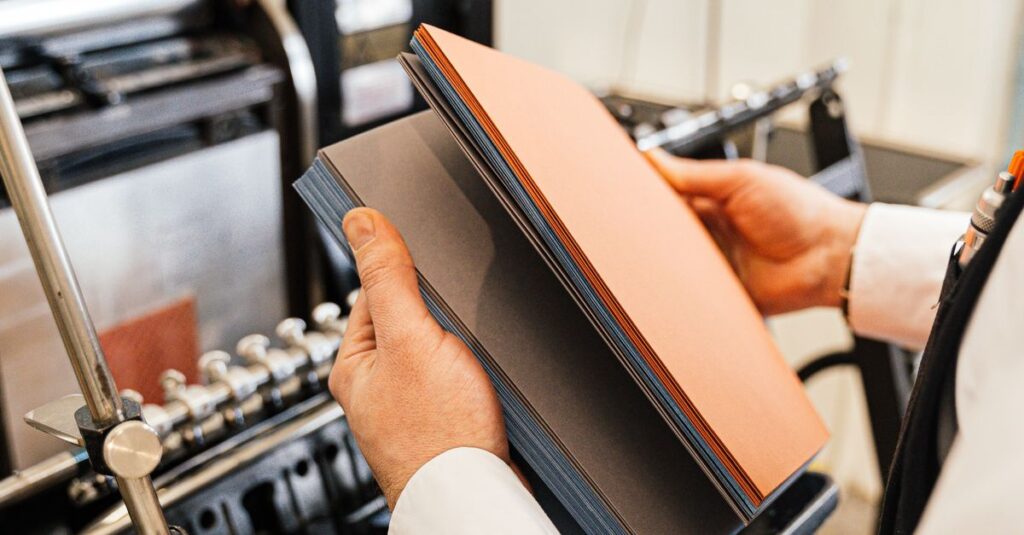
- Paper quality and GSM — cheap paper absorbs ink differently. You get patchy colors.
- Printing method — offset vs digital. Digital is fine for small runs. For bulk? Offset wins every time.
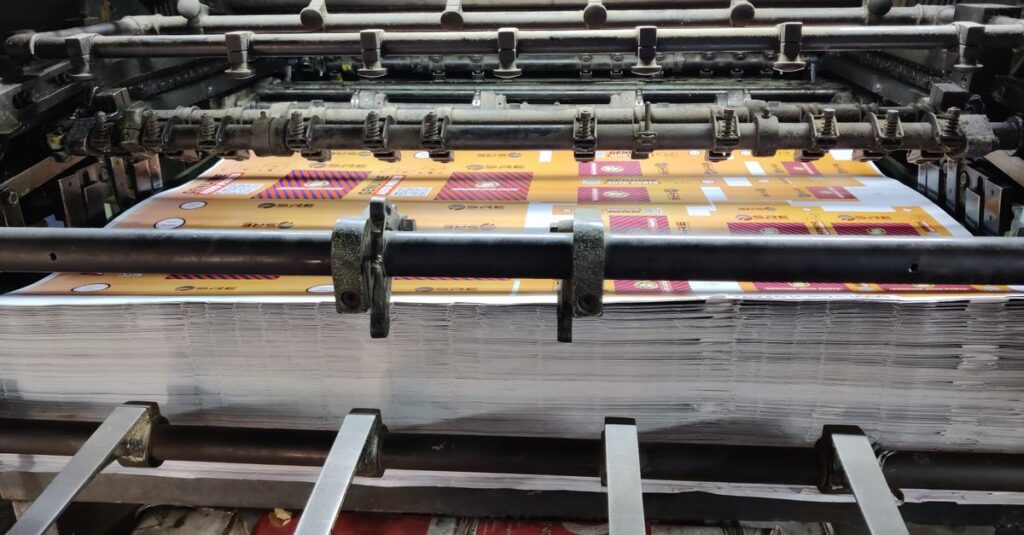
- Color calibration — most local shops don’t calibrate their machines weekly. Some don’t do it at all.
- Drying time — rush jobs = smudged print. That’s just physics.
Anyway. Where was I. The point is: finding a color print shop near me isn’t just about distance. It’s about whether they actually know what they’re doing with color.
The Hidden Costs of Choosing the Wrong Shop
Expert Insight
I remember this one time — maybe five years ago — a school in Kakinada ordered 3,000 notebooks with full-color covers. They went with a local guy. The price was good. The timeline worked. But the colors on the actual notebooks were so washed out that the school logo looked like a faded memory of itself. They had to reprint everything. Wasted time, money, and a lot of trust with parents. Things you can’t get back.
Look, I’ll be direct: color printing is expensive to mess up. Here are costs that people forget to factor in:
- Reprinting — if the first batch is wrong, you’re paying twice for the same thing.
- Brand damage — nothing says “we don’t care” like a blurry logo on a notebook.
- Missed deadlines — schools and businesses don’t wait. They move on.
- Returns and complaints — which means your staff spends hours handling angry calls instead of doing their actual job.
I’m not trying to scare you. But I’ve seen enough procurement cycles fall apart because someone searched “color print shop near me” and picked the first result without asking the right questions. The cost isn’t just money. It’s time. Reputation. Sanity.
Color Print Shop Near Me vs. A Real Printing Partner
Most people don’t need a print shop. They need a printing partner. I know that sounds like corporate nonsense. Let me explain the difference.
| What You’re Getting | Local Color Print Shop | Full-Service Manufacturer |
|---|---|---|
| Color accuracy | Hit or miss | Calibrated machines, test runs |
| Bulk capacity | 300–500 units max | 30,000–40,000 per day |
| Paper options | What they have in stock | GSM choices, paper types |
| Binding options | Basic stapling or spiral | Stitched, spiral, perfect binding |
| Customization | Limited | Logo, foil stamping, embossing, private label |
| Turnaround for bulk | Often late | Scheduled, reliable timelines |
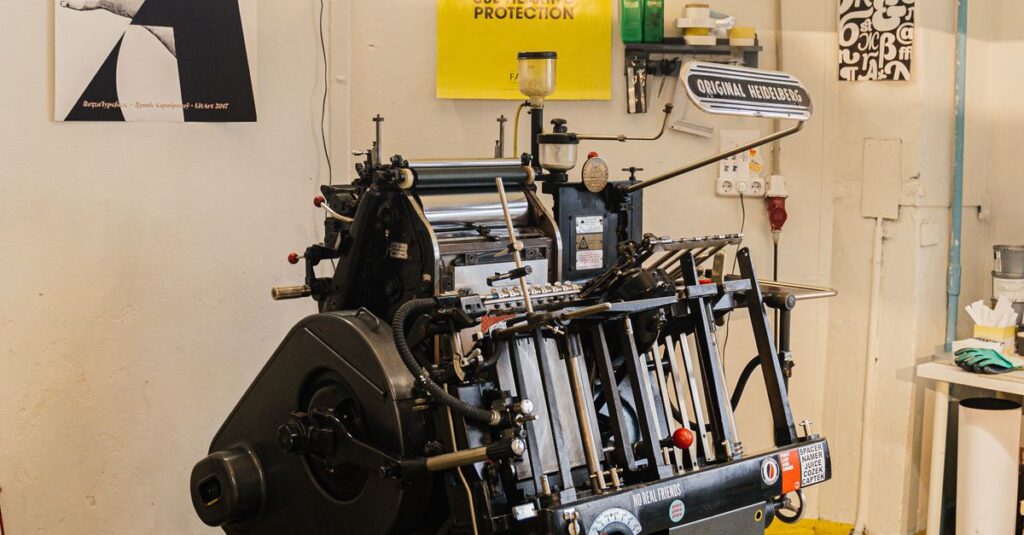
The thing is — I’m not saying local shops are useless. They’re great for small jobs. 50 notebooks? Sure. 100 flyers? Fine. But once you cross a certain volume, you need infrastructure. Machines that don’t overheat after 2,000 prints. Staff who know how to fix a color profile at 2am.
Which is… a lot to sit with.
A Real Story About a Color Printing Disaster — and What Saved It
Let me tell you about Geetha. She’s 34, works as an administrative officer at a college in Rajahmundry. She handles all the stationery orders. Last year, she needed 1,500 notebooks for a new academic year — full-color covers with the college crest and department colors.
She found a color print shop near her college. Seemed fine. Nice guy. Gave her a decent price. She placed the order three weeks before the term started. Plenty of time, she thought.
One week before delivery, the shop called. Said there was a “technical issue.” Another week passed. Then another. The notebooks showed up two days after the term started — and the colors didn’t match. The crest was too dark. The department color was wrong. Purple looked blue. The binding was so tight the pages wouldn’t lay flat.
Geetha called me in a panic. Her boss was furious. Students were complaining. We ran a rush job — same specs, proper color calibration, stitched binding — and delivered in 10 days. The college is still ordering from us two years later.
Geetha told me something I keep thinking about. She said: “I assumed nearby meant reliable.” It didn’t.
When Should You Look for a Color Print Shop Near Me vs. a Manufacturer?
Here’s my honest take. This isn’t an answer that makes me money in every case. But I’d rather you know when to do what.
Use a local color print shop when:
- You need under 200 pieces
- You need it tomorrow
- Color accuracy isn’t critical (internal documents, drafts)
- You can physically inspect the print before paying
Use a manufacturer like us when:
- You need 500+ units
- Color matching matters (brand colors, logos)
- You want custom binding, foiling, or embossing
- You need consistent quality across thousands of units
- Your deadline is real — not aspirational
Earlier I said local shops are fine for small jobs. That’s not quite fair — it’s more that the skill sets are different. A local shop might do beautiful work on 50 wedding invitations. But scaling that same quality to 5,000 units requires a completely different setup. Different machines. Different workflows. Different kind of pressure.
I don’t think there’s one answer here. Probably there isn’t. But if you’ve read this far, you already know what you’re looking for — you’re just figuring out if it’s okay to want it done right.
Frequently Asked Questions
What is the best way to find a reliable color print shop near me?
Check their portfolio specifically for color-heavy work. Ask about their printing method — offset is better for bulk. Request a proof before committing. And read reviews from other businesses, not just individuals.
How much does color printing cost for bulk notebooks?
It depends on quantity, paper quality, binding type, and color complexity. For 1,000+ notebooks, expect more competitive per-unit pricing. Always ask for a detailed quote including setup costs and delivery.
Can a local color print shop handle 5,000 notebooks?
Most can’t. Their machines are designed for smaller runs. For high-volume orders, you need a manufacturer with industrial-scale equipment who can maintain color consistency across thousands of units.
What should I check before placing a bulk color printing order?
Ask for a physical sample or proof. Confirm the paper GSM. Verify the binding method. Ask about turnaround time and what happens if they miss the deadline. Get everything in writing.
Why do colors sometimes come out different from what I see on screen?
Screens use RGB; printing uses CMYK. Different paper types also affect how colors appear. A good print shop will do a test print and adjust the color profile before running the full batch. If they skip this step, the colors can be off.