Look, nobody asks about A5 size because they want to be a designer
You’re probably trying to order notebooks. You’ve got an Excel sheet open, comparing prices per unit from three different suppliers. You see “A5 Notebooks” listed, and you pause. What does that actually mean? Is it a standard? Will the notebooks you order for your school’s next term be the same size as last year’s? Will the diaries you’re printing for your corporate clients look right?
That’s the real question behind the search. It’s not about design theory. It’s about getting the order right.
And honestly? In the notebook and printing business, knowing your paper sizes isn’t just trivia. It’s the difference between a smooth bulk order and a headache. We see it every day.
What is A5 paper size? (The numbers you actually need)
A5 is part of the ISO A series. It’s an international standard. The beauty of it? It’s predictable. You fold an A4 sheet in half, and you get an A5. Every size in the series works that way.
Here are the exact dimensions you need for your spec sheet:
- In millimeters: 148 mm × 210 mm
- In centimeters: 14.8 cm × 21.0 cm
- In inches: 5.83 inches × 8.27 inches
That 5.8 x 8.3 inch measurement is the one that sticks. It’s smaller than the standard US “Letter” size (8.5 x 11 inches), but bigger than a pocket notebook. It sits right in the middle — portable but still useful.
The real thing you need to know: it’s a standard. If you order A5 notebooks from us in Rajahmundry, or from a supplier in Europe, the core page size should be the same. The cover might extend a bit (we add a few millimeters for trimming and binding), but the usable page area is that 14.8 x 21.0 cm rectangle. That consistency is why businesses and institutions use it.
Why A5 is the notebook industry’s secret favorite
I think about this a lot. We make everything from King Size to A4 account books. But when you look at the orders that come in — for bulk school notebooks, for corporate diaries, for private label journals — A5 is quietly the most requested size. Not by a landslide, but consistently.
Three things happen when you choose A5:
- It feels professional without being intimidating. An A4 notebook can look like a formal report. An A6 can feel too small. A5 hits that sweet spot of being serious but approachable. Students use it. Managers use it.
- It’s cost-effective in bulk production. The paper sheets we start with are larger formats (A4, A3). Cutting them down to A5 is a logical, efficient process. Less waste. More notebooks per master sheet. That efficiency translates into your per-unit cost.
- It’s globally understood. If you’re an international buyer looking at manufacturers in India, you can say “A5” and we know exactly what you mean. No confusing conversions from inches to cm. It just works.
I was talking to a procurement manager from a Gulf-based distributor last week — over a call, actually — and he said something I keep thinking about. He said, “We standardize on A5 for all our generic stock because it fits everywhere. School bags, office desks, briefcases.” It’s the universal fit.
A5 in real life: who uses it and why
Let me give you a real-life example. Not a case study. Just a snapshot.
Priya, 28, handles institutional procurement for a chain of private schools in Hyderabad. She’s finalizing the order for next academic year’s student notebooks. Last year, they used a mix of Long Size and Short Size notebooks from a local supplier. The students complained some books didn’t fit neatly in their bags alongside textbooks. This year, she’s evaluating. She’s looking at A5. It’s a known quantity. It’ll match the A4 textbooks in proportion, just smaller. She can order 5,000 units with one clear specification: A5, 92 pages, single ruled. The decision is simple. The order is clean.
That’s the power of a standard. It removes guesswork.
And it’s not just schools. Corporate offices ordering branded diaries for employees often choose A5. It’s substantial enough to feel like a gift, but slim enough to carry to meetings. Event organizers use A5 custom notebooks as conference swag. Distributors stock it because it sells to everyone.
Expert Insight
I was reading an old industry report a while back — something from a paper standards body — and one line stuck with me. It said the adoption of the A series in commercial manufacturing wasn’t really about design purity. It was about logistics. Standard sizes mean standard packaging, standard shipping cartons, standard pallet loads. The entire supply chain, from our factory floor in Andhra Pradesh to a school storeroom in Dubai, gets simpler. I don’t have a cleaner way to put it than that: standards are less about beauty and more about moving things from here to there without friction.
A5 vs. Other Common Notebook Sizes (The comparison you need)
When you’re placing a bulk order, you’re often comparing options. Here’s how A5 stacks up against other common notebook sizes we manufacture.
| Size Name | Dimensions (cm) | Common Use | Best For | Our Typical Page Counts |
|---|---|---|---|---|
| A5 | 14.8 × 21.0 | International Standard | General student notebooks, corporate diaries, personal journals | 92, 200, 240 pages |
| Long Notebook | 27.2 × 17.1 | Indian Traditional Size | School subject notebooks, extensive note-taking | 52, 92, 200 pages |
| Short Notebook | 19.5 × 15.5 | Indian Traditional Size | Quick notes, rough work, pocket-friendly format | 52, 92 pages |
| A4 | 21.0 × 29.7 | International Standard | Account books, project documentation, large sketches | 200, 320, 700 pages |
| Crown Size | 20.0 × 15.0 | Regional Preference | Specific regional school requirements | 92, 200 pages |
The choice depends on the job. If you need something familiar and globally portable, A5. If you need maximum writing space per page for students, Long Notebook. If you’re accounting, A4.
But for a one-size-fits-most bulk order? A5.
How A5 notebooks are actually made (from our factory floor)
Okay, let’s get practical. How does an A5 notebook come to life in a place like our factory? It starts with larger paper. We often use A4-sized paper sheets (21.0 x 29.7 cm) as the base. Printing happens on these bigger sheets — it’s more efficient to print multiple pages at once. Then, the sheets are cut. That A4 sheet is folded and cut precisely to yield two A5 pages. This process — printing on a larger sheet then cutting down — is why standardized sizes are cheaper to produce. The machinery is set for those exact dimensions. No adjustments. No wasted paper margin.
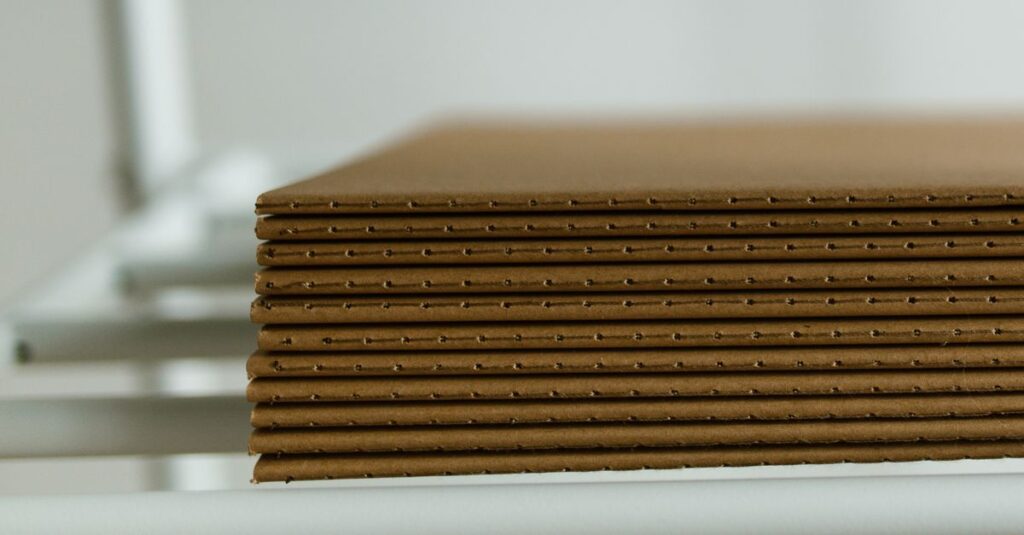
Then comes binding. For A5 notebooks, we typically use stitched binding for standard notebooks up to 240 pages. It’s durable, lies flat, and is cost-effective for bulk orders. For thicker diaries or premium notebooks, we might use spiral binding or perfect binding. The size influences the binding choice, too. A5’s proportions work well with all three.
The cover is the final touch. For an A5 notebook, the cover is always slightly larger than the page dimensions — by about 5 mm on each side. This “overhang” protects the pages and gives a clean finish. So your final A5 notebook might measure 15.3 x 21.5 cm, but the page inside is the standard 14.8 x 21.0 cm.
Right.
So if you’re specifying an order, you can ask for “A5 page size” and know the core product is consistent. The cover specs might vary slightly by manufacturer, but the usable part — the paper — is locked.
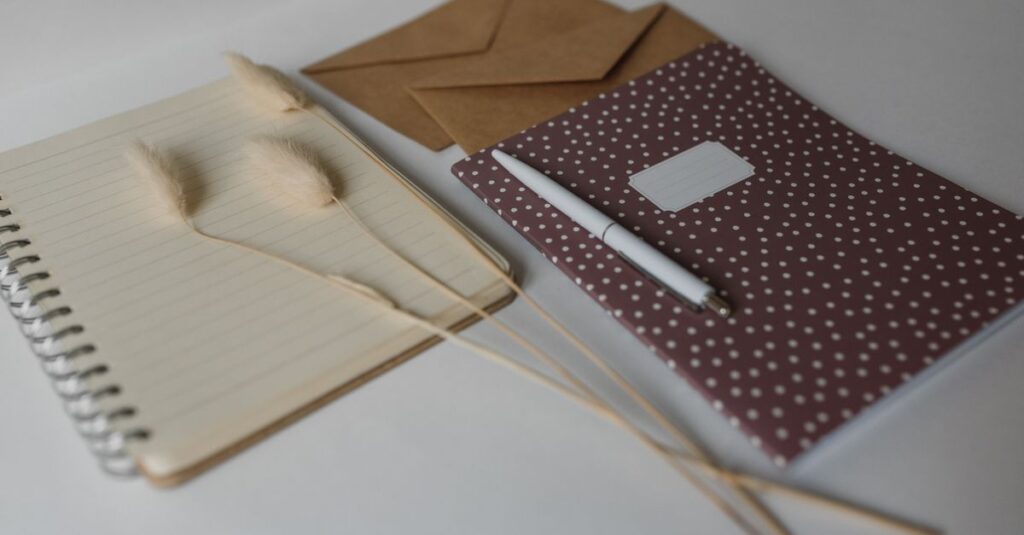
Seeing how these options materialize helps.
What to check when ordering A5 notebooks in bulk
Here’s the thing. Knowing the size is step one. Making sure you get what you ordered is step two. When you’re talking to a manufacturer — us or anyone else — a few specific questions will save you trouble.
- Ask about the paper GSM. A5 notebooks can come with different paper weights. For everyday writing, 54-60 GSM is standard. For a premium diary, you might want 70-80 GSM. Thicker paper feels better but costs more.
- Confirm the ruling. A5 pages can be single-ruled (SR), double-ruled (DR), unruled (UR), or even graph (CR). Specify it. A school notebook needs single or double ruling. A sketchbook needs unruled.
- Clarify the page count. “92 pages” means 92 leaves, or 184 writing sides. Some manufacturers count sides, some count leaves. We specify leaves. Make sure you’re comparing apples to apples.
- Discuss cover overhang. If your design has critical borders or a logo near the edge, ask how much extra space the cover adds. We can adjust.
Most people I’ve spoken to think the size is the only variable. It’s not. The size is the framework. The paper quality, ruling, and binding are the experience.
Frequently Asked Questions
Is A5 the same as a “Short Notebook”?
No. A5 (14.8 x 21.0 cm) and the traditional Indian “Short Notebook” (19.5 x 15.5 cm) are different shapes and sizes. A5 is taller and narrower. Short Notebook is wider and shorter. They serve different purposes. If you need a standard international size, use A5. If you need a specific regional format, use Short Notebook.
Can I get custom printing on A5 notebooks?
Absolutely. A5 is one of the most common sizes for custom and private label notebooks. You can print logos, designs, or full-branded covers on A5 notebooks. The standard size makes it easier for us to template your design accurately across thousands of units. We do this all the time for corporate clients.
What’s the typical page count for an A5 school notebook?
For bulk school notebooks, 92 pages (184 sides) is the most popular. It’s enough for a full term without being too bulky. We also supply 52-page and 200-page A5 notebooks. The choice depends on the school’s syllabus and pricing.
Is A5 good for corporate diaries?
Yes. It’s probably the best balance for a corporate diary. It’s professional, fits in desk drawers and briefcases easily, and has enough writing space for daily appointments and notes. Most of the corporate diary orders we handle are A5 size.
How do I specify an A5 notebook order for my institution?
Provide these clear specs: Size: A5. Page Count: (e.g., 92 pages). Ruling: (e.g., Single Ruled). Paper Quality: (e.g., 54 GSM). Binding: (e.g., Stitched). And any custom printing requirements. With those details, any manufacturer can give you a precise quote and deliver exactly what you need.
The real point isn’t the measurement
I don’t think anyone cares deeply about 148 millimeters. What they care about is getting 5,000 notebooks that are uniform, fit the purpose, and don’t cause complaints. The A5 size, as a standard, delivers that predictability.
In bulk manufacturing and procurement, predictability is everything. It means your order can be replicated next year. It means your distribution across different regions gets simpler. It means when a teacher opens the box, every notebook feels the same.
That’s the actual value. Not the number. The consistency.
If you’re comparing suppliers or planning your next bulk order, knowing the size is your starting point. Knowing what to ask next — paper, ruling, binding — is where the real quality happens.
We’ve been building that consistency for over four decades, one standard size at a time.