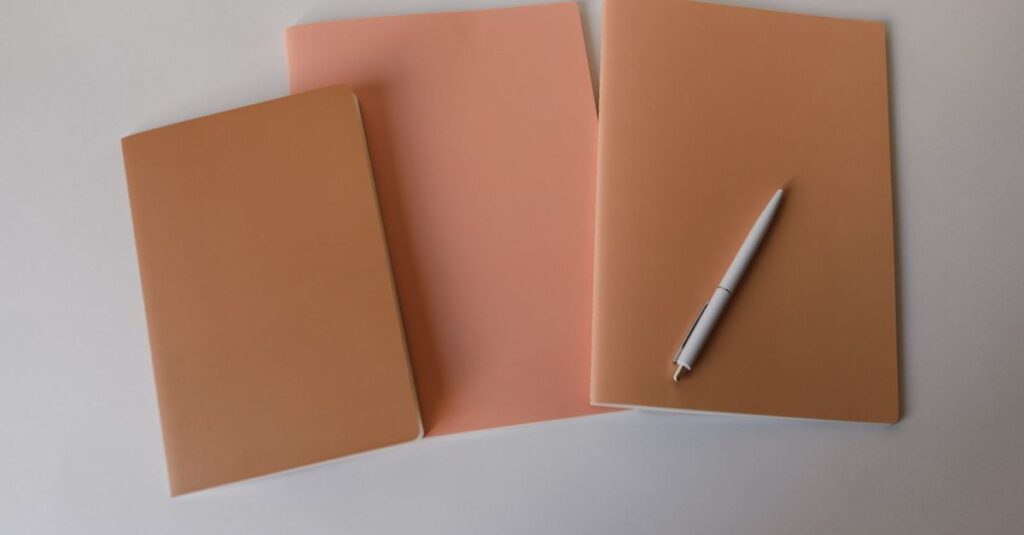
You’re ordering notebooks for your school or maybe corporate diaries for your office. You get a quote. You approve the design. And then someone sends a PDF saying “make it A4”.
And you sit there for a second.
Because honestly — what does that even mean? Is it bigger than a legal pad? Smaller than a ledger? And why does it matter so much when you’re ordering thousands of them?
The thing is, it matters. A lot. Because A4 is the standard that makes everything else fit. If you’ve ever handed out a corporate diary that felt awkward in a bag, or notebooks for students that were too floppy to write on, it probably started with the paper size. I’ve seen this happen more than a few times.
What Is A4 Paper Size Exactly?
Let’s cut through the jargon. A4 paper size is 210 mm wide by 297 mm tall. Or 8.27 inches by 11.69 inches if you prefer. It’s the standard paper size for almost everything outside North America — letters, forms, notebooks, diaries, reports.
It comes from an international system called ISO 216. The “A” series. And A4 is the one everyone uses.
Here’s the part nobody says out loud: A4 isn’t just a measurement. It’s a promise. It’s a promise that a document printed in London will fit perfectly into a folder in Rajahmundry. That a student’s notebook from our factory will match the page size of their textbook. That’s the whole point.
Think about it this way — if you’re ordering 10,000 custom notebooks for a school, and you get the size wrong, you’re not just wasting paper. You’re creating a logistical headache for teachers, for students, for the people who have to store them. The silence when those notebooks arrive and don’t fit the shelves has weight.
Anyway. Where was I.
Why A4 Matters When You’re Buying Notebooks in Bulk
Most people don’t realize this, but paper size directly changes three things: cost, durability, and customer satisfaction.
I was talking to a procurement manager from a college last week — over a phone call, actually — and he said something I keep thinking about. He’d ordered “standard notebooks” from another supplier. They arrived. They were slightly off-A4. Just a few millimeters.
And that tiny difference meant they didn’t stack neatly with the previous year’s stock. The storage room became a mess. Teachers complained. The entire order, which looked perfect on paper, became a problem on principle.
Three things happen when you stick to A4:
- Your notebooks fit international expectations. Gulf countries, Europe, Australia — they all expect A4.
- The paper cutting becomes predictable. Which means fewer wasted sheets. Which lowers your unit cost.
- The final product feels “standard”. Which is weirdly important for institutional buyers. They want consistency.
And honestly? That makes complete sense. When you’re responsible for buying for 5000 students or 2000 employees, you don’t want surprises. You want things that work.
Let me tell you about Priya. She’s 28, works as an admin officer for a government institution in Hyderabad. Her job is to source stationery for seven departments. Last quarter, she approved an order for 7000 record books. The spec said A4. The samples looked right. But the delivery — they were a non-standard size the supplier called “Indian A4”. Which is not a real thing. It’s just a way to use cheaper, smaller paper.
Priya had to process the return. Explain the mismatch to seven department heads. Find a new supplier in two weeks. She didn’t sleep well for a month. The question isn’t whether you need the right size. It’s whether you’re willing to risk the wrong one.
A4 Notebooks vs. Other Common Sizes
Look, I’ll be direct. In the notebook industry, we make a lot of sizes. But when someone asks for A4, they’re asking for a specific thing. Let’s compare it to what we usually make.
Expert Insight
I was reading something last month and one line stuck with me. An engineer from a paper mill said something like — the entire ISO A-series is designed so that when you fold a sheet, you get the next size. Fold an A3, you get A4. Fold an A4, you get A5. It’s a system of harmony.
Most of our bulk orders for schools are for what we call Long Notebooks (27.2 cm × 17.1 cm) or Short Notebooks (19.5 cm × 15.5 cm). Those are Indian market standards. They’re good, durable, cost-effective.
But A4 is different. It’s wider. It gives more writing space per page. It feels more “official”. That’s why corporate diaries, executive notebooks, premium project reports — they’re almost always A4. The extra width lets you add columns, charts, side notes.
Here’s a simple table to show the difference:
| Notebook Type | Size (cm) | Common Use | Feel & Purpose |
|---|---|---|---|
| A4 Notebook | 21.0 × 29.7 | Corporate reports, executive diaries, international projects | Formal, spacious, standard-compliant |
| Long Notebook (Our Standard) | 27.2 × 17.1 | School subjects, general writing, bulk student orders | Familiar, portable, cost-effective |
| Short Notebook | 19.5 × 15.5 | Primary students, rough work, quick notes | Compact, lightweight, everyday |
| Account Notebook | 33.9 × 21.0 | Ledgers, financial records, large format data | Expanded, detailed, ledger-style |
| A5 Notebook (Half of A4) | 14.8 × 21.0 | Personal journals, pocket notebooks, compact planners | Portable, personal, discreet |
The real difference isn’t just the numbers. It’s the impression. An A4 notebook lands on a desk and says “this is serious work”. A Long notebook says “this is for daily class”. And that matters when you’re choosing what to order.
The Manufacturing Reality of A4 Paper
Here’s the thing — producing true A4 notebooks isn’t just about cutting paper to 210×297. It’s about the entire chain.
The paper has to be the right GSM — usually between 70 and 80 GSM for a good, stiff feel. Thinner paper at this size feels flimsy. The binding has to be stronger because the wider pages put more stress on the spine. And the cover needs extra rigidity.
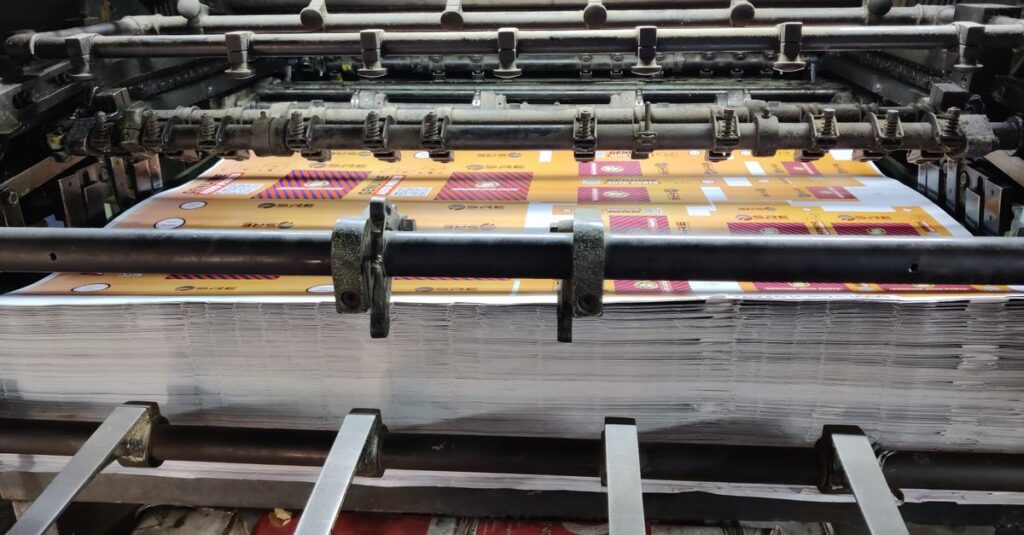
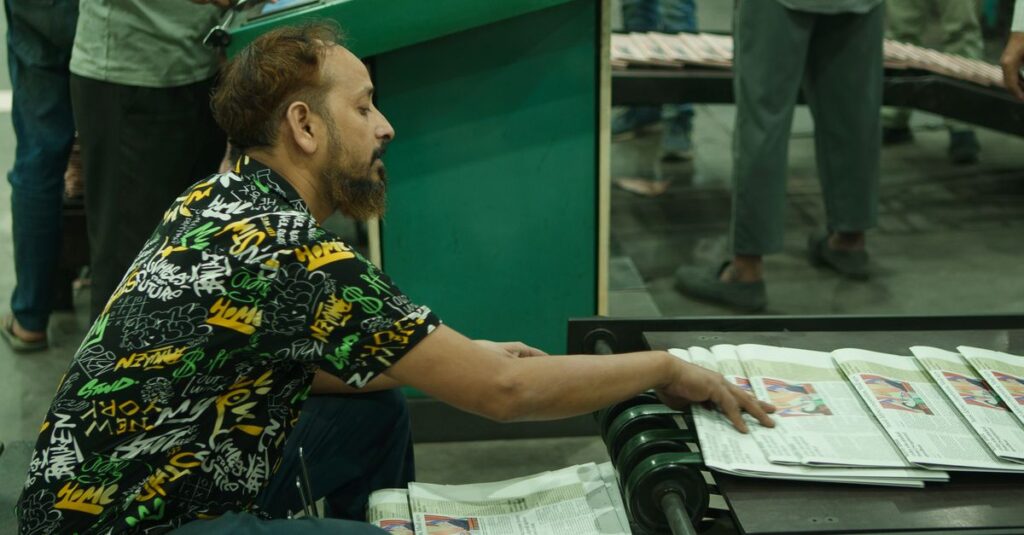
Our factory can produce about 30,000–40,000 bound notebooks a day. But when we switch to A4 runs, the speed changes. The cutting is more precise. The margin for error is smaller. We use different machines.
I think — and I could be wrong — that most buyers don’t think about the machine side. They think about the product. But if your supplier isn’t used to A4 production, you might get inconsistent trimming, or weak binding, or paper that curls. Which means your 5000 diaries might have 500 that are just… a bit off.
And that’s a headache, honestly.
If this is something you’re considering for a corporate or institutional order, it’s worth looking at a supplier who handles A4 regularly. Not as a specialty, but as a standard.
When Should You Actually Order A4 Notebooks?
Not every bulk order needs A4. Most don’t.
But here are the situations where it’s probably the right choice:
- Corporate Diaries for Executives or Managers: The A4 size conveys importance. It fits standard briefing sheets and printed reports.
- International Orders: If you’re exporting notebooks to the Gulf, Europe, or Australia, A4 is expected. Anything else looks non-standard.
- Government or Institutional Reports: Many official forms and report templates are designed for A4. Matching that makes filing easier.
- Premium Project Notebooks: For research teams, engineering projects, or design studios — where side-by-side diagrams or wide tables are needed.
- When Your Client Specifically Requests It: Sometimes the request comes from the end-user. And that’s the only reason you need.
For regular school notebooks, student bulk orders, or general office notepads — our standard Long and Short sizes are more economical, more durable for daily handling, and perfectly accepted in the Indian market.
Which is… a lot to sit with.
The Cost Factor: A4 vs. Standard Notebooks
Let’s talk about money. Because that’s where most procurement decisions start.
A4 paper uses more raw material per page than a Long notebook. The sheet is bigger. So the paper cost is higher. The binding requires more glue or stitching. The cover needs more board. The packaging might need bigger boxes.
All of that adds to the unit price. Maybe 15–20% more per notebook, depending on GSM and page count.
But.
If you’re ordering for a corporate client who values that “premium” feel, or for an international market where A4 is the only acceptable size, that extra cost isn’t an extra. It’s the base. It’s what makes the product valid.
I’ve heard this enough times now to know it’s not coincidence. Buyers who try to save by ordering a near-A4 size for an A4 market end up with rejection. The product doesn’t sell. The client complains. The savings turn into losses.
Right.
So what do you do? You start by asking the end-user. If they need A4, you budget for A4. If they don’t, you choose a more cost-effective standard. It’s not complicated. It’s just honest.
Frequently Asked Questions
Is A4 the same as Long Size notebook?
No. A4 paper size (21.0 cm x 29.7 cm) is wider and shorter than the Indian-standard Long Notebook (27.2 cm x 17.1 cm). They feel different and are used for different purposes. Long notebooks are more common for school use; A4 is standard for corporate and international markets.
Can you make custom notebooks in true A4 size?
Yes. We produce A4 notebooks regularly for export and corporate orders. It requires specific paper cutting and stronger binding, but it’s a standard part of our manufacturing capability. You can choose page count, ruling, cover design, and binding type.
Is A4 paper better quality than other sizes?
Not necessarily. The quality depends on the GSM (thickness) and finish of the paper, not the size. An A4 sheet can be low GSM and feel flimsy, or high GSM and feel premium. The size just determines the use case.
Why do international buyers always ask for A4?
Because A4 is the ISO standard for paper in most of the world. It ensures compatibility with printers, binders, folders, and existing office systems. It’s a uniformity expectation, not just a preference.
What binding is best for A4 notebooks?
For A4, stitched binding or spiral binding is most durable because the wider pages put more stress on the spine. Perfect binding can work for lighter page counts. We recommend discussing the use case with your manufacturer to choose the right type.
So, Should You Care About A4 Paper Size?
If you’re ordering notebooks for a local school, maybe not. The standard sizes work perfectly.
But if your order is crossing borders, or landing on corporate desks, or matching official documentation — then yes. You should care. Because A4 isn’t a random measurement. It’s a language. And if you’re not speaking it, your product won’t fit in.
Earlier I said A4 is a promise. That’s not quite fair — it’s more that A4 is a key. It unlocks compatibility. It removes friction. In bulk manufacturing, removing friction is the only thing that matters here.
I don’t think there’s one answer here. Probably there isn’t. But if you’ve read this far, you already know what you’re looking for — you’re just figuring out if it’s okay to want it. And it is. Talk to someone who makes these every day.