


Right. So let’s talk about a “book for notes.”
You’re a busy person. A procurement manager with a budget to meet. A school principal staring down the new academic year. Or a distributor who needs to stock up — and fast.
You search for a “book for notes” and Google shows you a million options. Spiral-bound, hardcover, ruled, unruled, A4, A5, 92 pages, 200 pages… it’s overwhelming. Which one is actually going to get the job done without falling apart in a month? The real question isn’t just about buying a notebook. It’s about finding the right tool that your team, your students, your customers won’t complain about for the next six months.
You’re not looking for a lifestyle accessory. You’re looking for a workhorse. And that’s a completely different search. Anyway, if the sheer number of choices is giving you a headache, seeing how a real manufacturer thinks about this stuff might be worth a look.
It’s not just paper. It’s a system.
When most people think “book for notes,” they picture a generic thing you scribble in. But for businesses and institutions, it’s a piece of equipment. And like any good equipment, the specs matter. A lot.
Here’s the first thing I’d check: what’s the actual job? Taking meeting minutes? That’s a neat, bound, corporate diary with dates pre-printed. Engineering design notes? You’re talking cross-ruled graph paper, probably A3. Student classwork? That’s a short notebook, single-ruled, with a cover thick enough to survive a backpack. Three different tools for three different jobs. But everyone just calls them “notebooks.” See the problem?
My point is this — the phrase “book for notes” is too simple. It hides all the important decisions you need to make.
And honestly? That’s where most bulk buyers get it wrong. They buy the cheapest thing, then deal with the complaints later. The cost isn’t in the unit price. It’s in the wasted time and the re-orders.
A quick story. Because I think it makes the point better.
Anjali, a procurement head for a college in Bangalore, called us last July — right before the semester rush. She needed 5,000 sets of short notebooks. The previous year’s supplier had delivered books where the pages started falling out by November. The teachers were annoyed. The students were complaining. She was stuck in the middle, dealing with a problem that was supposed to be solved.
We asked her two questions: What ruling did she need? (Double-ruled, for younger students). And how many pages? (92 pages, not 52, to last a full term). Simple stuff. But the last guy never asked. He just shipped the cheapest 52-page book he had. Anjali wasn’t buying paper. She was buying a solution to a very specific, very annoying problem. She was buying peace of mind for a whole academic year.
(I still think about that call. It was a Tuesday, I think. Maybe Wednesday.)
The hidden details most people miss.
Okay, so you know you need more than just “a book.” What do you actually look for? Let’s break it down into the parts that we, as manufacturers, fuss over. The parts that matter for bulk.
The Paper: It’s all about GSM.
GSM means grams per square meter. Thicker paper. For a standard writing notebook, you want around 54 GSM. Anything less, and the ink bleeds through. It feels flimsy. It tears. For a drawing book or a ledger, you go higher — 70 GSM or more. This is the single biggest factor in how a notebook feels to use. Smooth writing. No show-through. It’s the difference between a tool and a frustration.
The Binding: How it holds together.
- Stitched Binding: The classic. Thread-sewn signatures. Lays flat, lasts years. This is what you want for account books, corporate diaries, anything that needs to be referenced again and again.
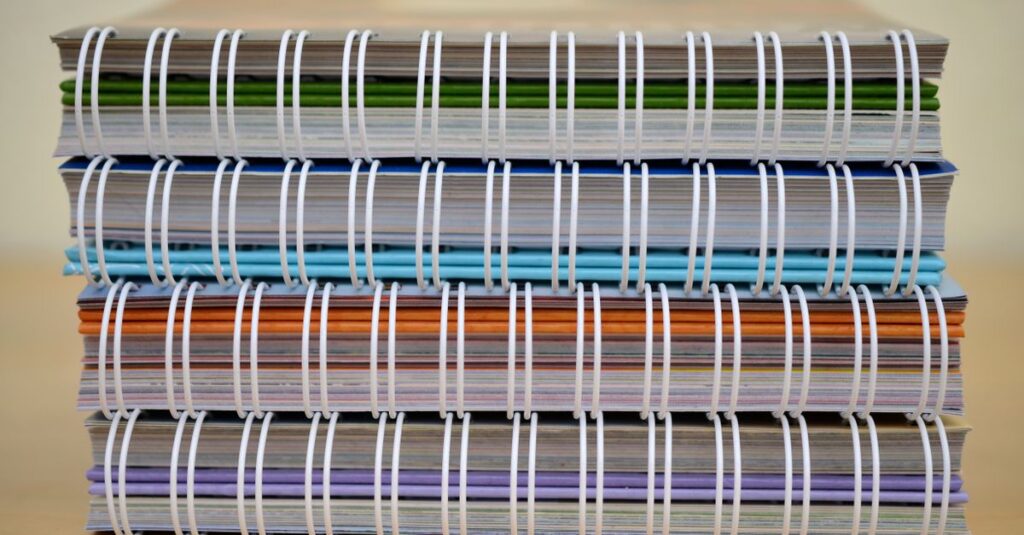
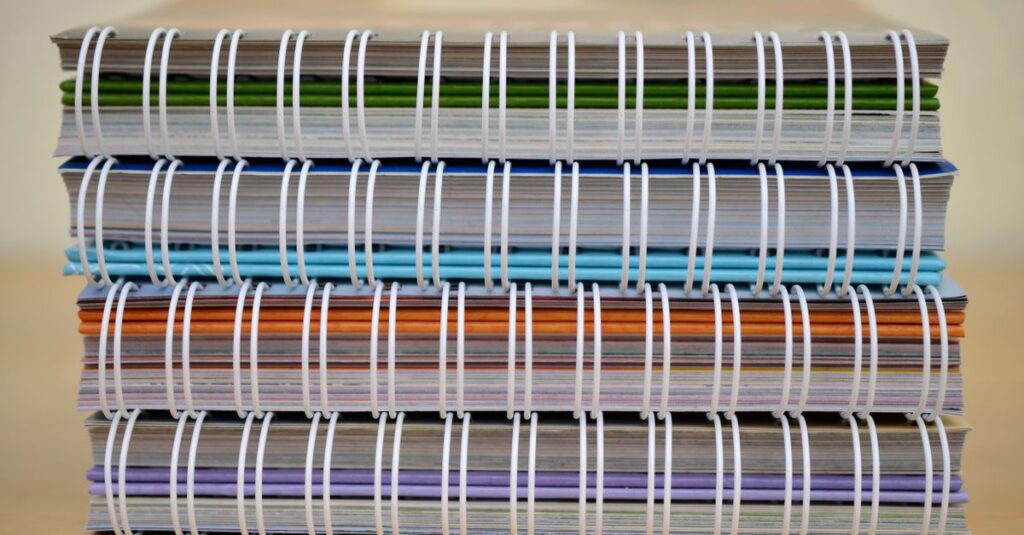
- Spiral Binding: The metal or plastic coil. Lays perfectly flat, 360 degrees. Great for art pads, technical notebooks, anything where you need the book to stay open on a desk. But the coils can get bent in a bag.
- Perfect Binding: Like a paperback book. Glued at the spine. Clean, professional look. Excellent for corporate gifts or branded notebooks. Not as durable for heavy, daily flipping as stitching.
The binding choice tells you how the book is meant to be used. Daily abuse? Go stitched. Desk reference? Spiral is your friend.
Ruling Types: This is where function gets specific.
SR (Single Ruled), DR (Double Ruled), UR (Unruled) — you know these. But did you know about Four Ruled for early handwriting practice? Or Center Broad Ruled for specific ledger formats? The ruling dictates the user’s behavior. You give a student a double-ruled book, you’re teaching them to write neatly within lines. You give a designer an unruled book, you’re giving them freedom.
Expert Insight
I was reading an article last month — some procurement blog — and one line stuck with me. The writer said the biggest cost in bulk stationery isn’t the purchase price, it’s the mismatch cost. Buying a beautiful, perfect-bound diary for warehouse inventory notes is a mismatch. Buying a flimsy 52-page book for a year-long project is a mismatch. Every mismatch is money you spent that didn’t solve the problem. Actually, it created a new one. I don’t have a cleaner way to put it than that.
Customization: When a “book for notes” becomes your book.
Here’s where it gets interesting for businesses. A generic notebook works. A custom notebook works for you.
Think about a corporate diary. Your logo on the cover. Your company’s fiscal year dates printed inside. Maybe even your key internal phone numbers on the back page. It’s not a stationery item anymore. It’s a brand tool. It’s a daily reminder for your team.
Or schools. The school crest. The student’s name and class pre-printed on the cover. The subject printed on the front. It organizes everything before the first day even starts. For a distributor? It’s private label manufacturing. Your brand on the cover, your product on the shelf. You’re not just reselling; you’re building your own line.
The process of custom printing these days isn’t the huge, expensive ordeal it used to be. Not if you work with a manufacturer who’s set up for it. That’s the real shift. You can order 1,000 custom books as easily as 10,000 standard ones. Which changes the game for smaller businesses and institutions.
The decision point is simple: is this purchase purely utilitarian, or is it also an extension of your organization’s identity? Both are valid. You just need to know which one you’re buying.
Bulk Notebooks vs. Retail Notebooks: A side-by-side look.
This is probably the most common confusion. A notebook you buy in a store and a notebook you order 5,000 of are different beasts. Let’s compare.
| Aspect | Retail Notebook (Store-bought) | Bulk/Institutional Notebook |
|---|---|---|
| Primary Goal | Attract an individual buyer. Style, impulse buy. | Serve a defined group’s functional need. Durability, consistency. |
| Paper Quality | Often varies. Can be lower GSM to keep shelf price down. | Specified and consistent. 54 GSM writing paper is standard for a reason. |
| Binding Focus | Looks good on shelf. May use cheaper glue bindings. | Withstands heavy, daily use. Stitched or robust spiral is common. |
| Customization | Rare. Maybe a choice of cover color. | Core feature. Logos, text, cover design, ruling, page count all adjustable. |
| Cost Driver | Marketing, packaging, retail margin. | Volume, paper cost, manufacturing efficiency. |
| Decision Maker | An individual with personal taste. | A manager responsible for budget, function, and user satisfaction. |
See? Different products, different worlds. Buying bulk like you’re picking one off a shelf is a sure way to overspend on the wrong features.
Navigating the order: How to talk to a manufacturer.
Look, I’ll be direct. When you call a manufacturer, have your specs ready. It makes everything ten times faster. Here’s what you need to know:
- Quantity: Roughly how many? (e.g., 5,000 units, 10,000 units).
- Size: King size, Long, Short, Account book? (Give them dimensions if you have them).
- Page Count: 92 pages? 200 pages? This is crucial for pricing.
- Ruling: Single Ruled (SR)? Unruled (UR)? Something else?
- Cover: Single color? Full-color print? Custom design?
- Binding: Got a preference? If not, tell them the use case and ask for their recommendation.
That’s it. With those six points, any decent manufacturer can give you a proper quote in minutes. Without them, it’s a game of 20 questions. And honestly? Most people know this already — they just don’t realize how much time it saves.
The question of “Made in India” and export.
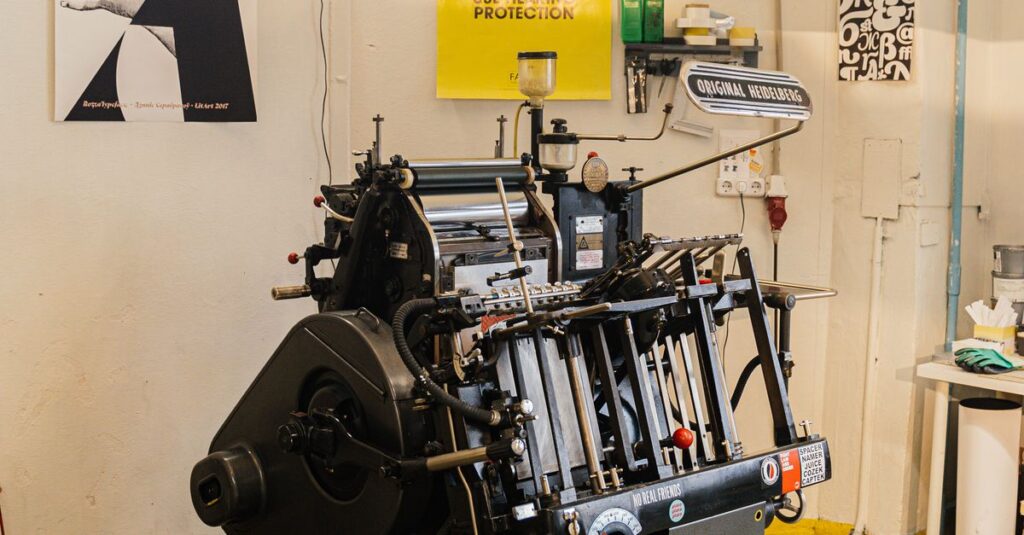
This comes up a lot, especially with international buyers. The Indian notebook manufacturing sector — particularly in places like Rajahmundry, where we are — is built on scale and skill. The cost structure is competitive, but the real advantage is experience. We’ve been doing this for nearly 40 years. The machines are calibrated, the processes are tight. For export markets like the Gulf, Africa, or Europe, the key is understanding their specifications. Paper whiteness, specific safety standards for children’s products, packaging for sea freight. It’s a headache, honestly. But it’s a solvable one if your manufacturer has done it before. You need to ask: “Have you shipped to [my country] before?” The answer tells you almost everything.
Frequently Asked Questions
What is the most durable type of binding for a book for notes?
For pure durability under daily, heavy use, stitched binding is king. The threads hold the pages in signatures, making it very hard for pages to fall out. Spiral binding is great for laying flat but the coil can get damaged if thrown around. Perfect binding (glued) looks clean but is the least durable for constant flipping.
What GSM paper is best for a standard writing notebook?
For a smooth writing experience with minimal ink bleed-through, 54 GSM paper is the industry standard for a reason. It’s the sweet spot between thickness (durability, feel) and cost for bulk orders like school or office notebooks. Go lower and it feels cheap; go higher and you’re paying for weight you might not need.
What’s the minimum order quantity for custom printed notebooks?
It varies a lot by manufacturer. Some might do 500, others 1,000 or more. It depends on how complex your custom print is. A simple logo stamp might have a lower MOQ than a full-color cover design. The key is to ask directly and provide your design files for a precise quote. Don’t assume.
What’s the difference between a short notebook and a long notebook?
It’s all about the dimensions and purpose. A short notebook (approx. 19.5cm x 15.5cm) is the classic school exercise book — portable, for daily classwork. A long notebook (approx. 27.2cm x 17.1cm) gives you more line length, better for subjects like mathematics, longer-form notes, or office meeting minutes. Different tools.
How far in advance should I place a bulk order for school notebooks?
As early as you can. I’m serious. The season before the academic year starts (Jan-April) is peak madness for every manufacturer. If you want the best pricing, guaranteed stock of specific papers, and a smooth delivery, try to place your order at least 3-4 months in advance. Last-minute orders get done, but they come with stress and potential compromise.
So, what is a book for notes, really?
It’s not one thing. It’s a set of very specific answers to a set of very specific questions.
What’s it for? Who’s using it? How long does it need to last? Answer those, and the specs — the size, the page count, the paper, the binding — almost write themselves. The mistake is starting with the product. Start with the problem. The job that needs doing. The rest is just finding the manufacturer who can build that solution at your scale, on your timeline, for your budget.
I don’t think there’s one perfect notebook. Probably there isn’t. But if you’ve read this far, you already know what you’re trying to solve — you’re just figuring out how to buy it without the usual guesswork and hassle.