You Need a Notebook That Actually Works. Here’s Why Most Don’t.
Look, I’ve talked to a lot of procurement managers — in schools, in corporate offices, even some distributors in the Gulf. It’s the same conversation, over and over.
They get an order. They need notebooks for writing Arabic. They think, “A notebook is a notebook.” They buy something standard. And then it shows up.
You open the first page. The ruling is all wrong — the lines are too close together, or they’re the wrong kind of ruling entirely. The paper is too thin, and the ink bleeds through because the script uses more ink. The binding? It gives up halfway through the school year, or a business quarter, and you’re left with a stack of loose pages. You know the feeling. The quiet frustration of buying something that’s supposed to be simple, only to find it’s completely unsuited for the job.
An Arabic notebook — and I’ll just say it — is not just a notebook labeled “Arabic.” It’s a tool engineered for a specific script and writing culture. If you’re sourcing notebooks for students, for corporate training, for government use where Arabic is the primary language, you need to know what you’re looking at. The right choice means everything works. The wrong one? It’s a headache, honestly. If you’ve ever had a bulk order of notebooks fail on you, this might be worth a look.
What an Arabic Notebook Actually Is (And Isn’t)
Let’s clear this up first. When people search for an “arabic note book,” they’re usually not looking for a notebook made *in* an Arab country. That’s a different search. They’re looking for a notebook *for* writing the Arabic script.
And that changes the design completely.
Think about the shape of the letters. Arabic script is cursive. It connects. It has a specific flow and vertical emphasis that’s different from, say, English or Hindi. A standard single-ruled notebook designed for English? It doesn’t support that flow. The lines are a constraint, not a guide. You get cramped writing, words that run into each other, or students having to use every other line just to make it legible.
So, what defines it? Three things. The ruling. The paper. The format.
The ruling is usually wider — we call it Broad Ruled (BR) or sometimes even Four Ruled (FR), which gives a much taller space between lines to accommodate the vertical loops and diacritical marks. The paper needs a higher GSM — I’d say nothing less than 60 GSM, honestly — because fountain pens and gel pens are common, and you can’t have ghosting or bleed-through. And the format often leans towards a Long Notebook or an Account Book size, something that gives a generous horizontal space for the connected script to run across the page.
That’s it. It’s a notebook built around the handwriting, not the other way around. Which most manufacturers, frankly, don’t think about until you ask them directly.
The Real-World Problem: Buying Blind for a School or a Business
I want to tell you about Amir. He’s a procurement manager for a network of private schools in Riyadh. 45. Been doing this for a decade. He placed a bulk order for 10,000 student notebooks from a general stationery supplier last year.
The notebooks arrived. Standard A4, 52 pages, single-ruled. Looked fine in the box. He distributed them to the schools.
A month later, the complaints started piling up. Teachers said the students’ writing was messy, spilling over the lines. The thin paper tore easily at the binding. Parents were asking why they had to buy supplementary notebooks so soon. The whole batch was, essentially, a write-off. A logistical and financial headache that could have been avoided with one specific question at the start: “Is this notebook designed for Arabic script?”
He didn’t know to ask. And the supplier didn’t know to specify. This is the gap that burns budgets and trust. You’re not just buying paper bound together. You’re buying a functional tool for a specific outcome — legible writing, durability, a full term’s worth of use. When the tool is wrong, the outcome fails. It’s that simple.
How to Spot a Manufacturer Who Gets It (And One Who Doesn’t)
Okay. So you need to source these. You’re talking to manufacturers. How do you know who actually understands this niche and who’s just selling you a rebadged standard notebook?
Ask about the ruling first. Don’t just accept “ruled.” Ask: “What is the exact spacing between the lines? Is it broad ruled or four-ruled?” A manufacturer who supplies Arabic notebooks will have this spec ready. They’ll talk about line spacing in millimeters. They might even have samples with Arabic writing on them to show you the alignment.
Second, paper talk. If they say “standard 54 GSM,” be wary. That’s often too thin. Push for 60 GSM or 70 GSM paper stock. Ask about opacity and ink absorption. A good test — though not always possible remotely — is to do a simple pen test. A quality paper for Arabic scripts won’t let a standard gel pen feather or bleed.
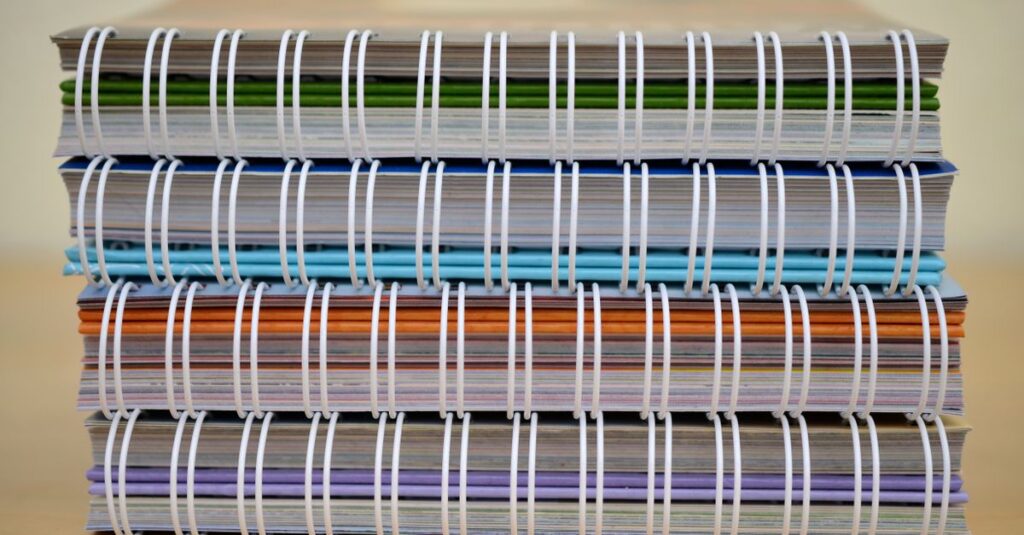
Third, binding. Arabic is read right-to-left. This seems obvious, but it affects the notebook’s orientation. Is the cover designed for a right-to-left opening? Is the spiral binding or stitching on the correct side so it doesn’t interfere with writing? These are tiny details that show intentional design.
Here’s the thing — a manufacturer who exports to the Gulf or North Africa will have all these answers. They’ll have production lines configured for it. A general notebook factory might say, “Sure, we can do that,” and then just print an Arabic title on a standard notebook. The difference is massive.
You need someone who’s done it before. Like, for example, a company that’s been supplying custom notebooks for international markets for years. They’ve already solved these problems.
Expert Insight
I was reading an industry report last year — one of those dry PDFs you download and skim. One line stuck with me. A researcher who studied stationery use in different linguistic cultures said something like: The most efficient tool is invisible. It disappears and lets the work happen. A poorly suited tool is a constant distraction. You’re fighting the notebook, not focusing on the writing.
I don’t have a cleaner way to put it than that. An Arabic notebook, when done right, should disappear. The student, the clerk, the executive — they shouldn’t be thinking about the paper or the lines. They should just be writing. That’s the real metric of quality, and most procurement checklists don’t have a box for that.
Your Options: Stock vs. Custom Arabic Notebooks
Let’s get practical. You basically have two paths: buying stock Arabic notebooks or going fully custom. Both have their place, and your choice depends on volume, budget, and how specific your needs are.
| Consideration | Stock Arabic Notebooks | Custom Arabic Notebooks |
|---|---|---|
| Lead Time | Short. Often ready to ship. | Longer. Requires design & production setup. |
| Cost per Unit | Lower. Economies of scale from standard runs. | Higher. Setup & customization add cost. |
| Branding | Usually generic or manufacturer's brand. | Your logo, colors, cover design. |
| Specification Control | Limited to available stock specs. | Full control: paper, ruling, binding, page count. |
| Best For | General school supply, quick replenishment. | Corporate gifts, branded training materials, institutions with strict standards. |
| Minimum Order | Lower. Can be a few hundred. | Higher. Usually starts at a few thousand units. |
If you’re a school district or a distributor supplying a general market, stock notebooks are your friend. But if you’re a corporation like a bank or a telecom company ordering diaries for your Middle Eastern offices, or a university with its own crest, custom is the only way to go. It’s about whether the notebook is a commodity or a brand extension.
And honestly? For large institutional orders, the line between the two blurs. A good manufacturer will often have “semi-custom” options — take a standard Arabic notebook shell and slap your logo on it. It’s a good middle ground.
The Manufacturing View: What Happens on the Factory Floor
Let me pull back the curtain for a second. I’ve been in this business a long time, and the difference between a standard run and an Arabic notebook run is in the setup.
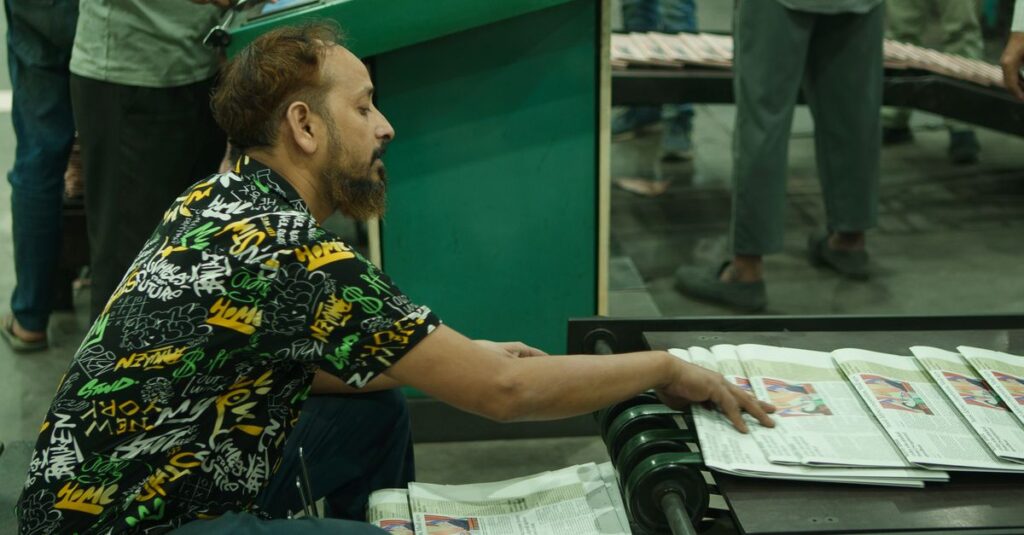
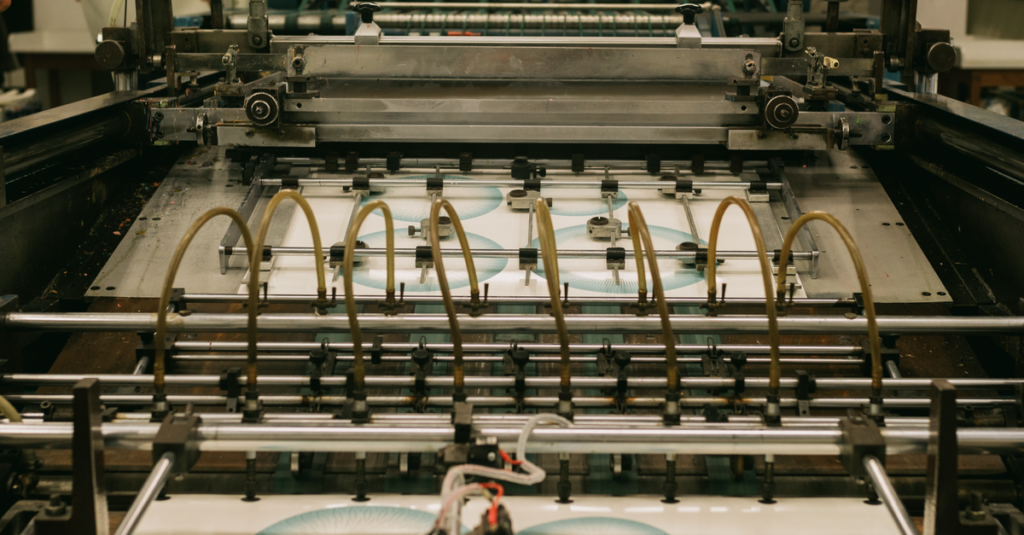
It starts with the ruling machine. The cylinders have to be changed to imprint the wider, four-ruled pattern. That’s a changeover that takes time. Then the paper — we’re pulling heavier GSM stock from a different part of the warehouse. The binding line might need an adjustment if it’s a right-to-left oriented book. These are small things, but in a factory pumping out 30,000 notebooks a day, a changeover is a real cost. That’s why some factories don’t like doing it for small orders. And that’s why you want a factory that has a dedicated line or regular schedule for this product. It means they’re optimized for it.
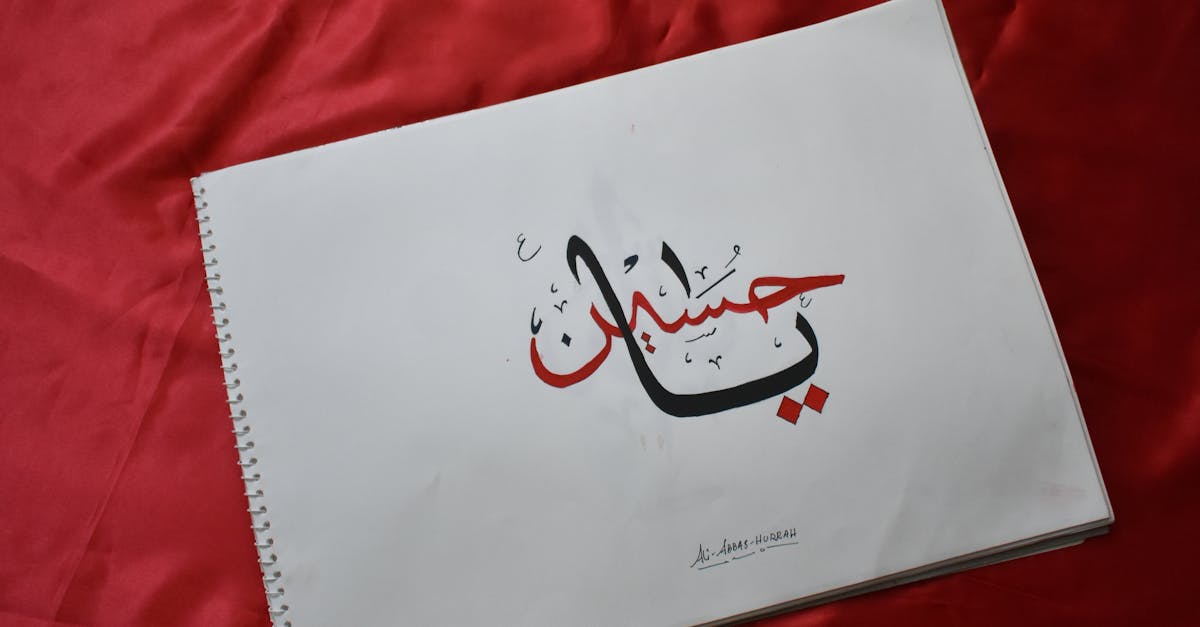
The cover printing is another point. Intricate Arabic calligraphy or geometric patterns require sharp, clean offset printing. You can’t have blurred edges. It’s a quality benchmark that separates professional printing from the amateur stuff.
I think the biggest thing most buyers don’t realize is that manufacturing is about rhythm. A factory that makes Arabic notebooks every week has the rhythm down. One that does it as a one-off is figuring it out on your dime and your timeline. The final product might look similar, but the consistency and the reliability won’t be there. That’s the hidden cost.
So, What Should You Do Next?
If you’ve read this far, you’re probably in one of two camps. Either you’ve been buying the wrong thing and now you know why, or you’re about to place a new order and you want to get it right this time.
Here’s my advice, straight from seeing this play out hundreds of times.
First, get a physical sample. Always. Don’t order 5,000 notebooks based on a PDF catalog. Ask the manufacturer to send you a sample of their actual Arabic notebook. Write in it. Use the pen you expect your end-users to use. Feel the paper. Try to tear a page out. This single step will tell you more than any spec sheet.
Second, ask for client references in similar markets. Have they supplied schools in the UAE? A corporate client in Saudi Arabia? A distributor in Egypt? They should be able to tell you, without hesitation.
Third, be clear about your timeline. Arabic notebook production isn’t always running. If you need 20,000 units by the start of a school term in September, you need to be talking to manufacturers in June, not August. Their production calendar fills up.
I don’t think there’s one perfect supplier for everyone. Probably there isn’t. But if you know what questions to ask and what to look for in a sample, you’ll find someone who can deliver a tool that disappears, and lets the real work happen. And maybe that’s the whole point of this.
If you want to see what a manufacturer with four decades of experience in tailored notebook production looks like, and maybe get that crucial sample in your hands, the conversation starts with a simple question.
Frequently Asked Questions
What is the difference between a regular notebook and an Arabic notebook?
The main differences are in the ruling and paper. Arabic notebooks have wider line spacing (Broad Ruled or Four Ruled) to accommodate the vertical, connected letters of the script. They also typically use heavier paper (60+ GSM) to prevent ink bleed from pens commonly used for Arabic writing. The binding is also often oriented for right-to-left use.
Can I get Arabic notebooks with my company logo printed on them?
Absolutely. This is called private label or custom notebook manufacturing. A good manufacturer will take your standard Arabic notebook specifications and add your logo, corporate colors, and even custom cover designs. It's perfect for corporate gifts, training materials, or branded school supplies. You just need to meet their minimum order quantity.
What is the typical lead time for ordering bulk Arabic notebooks?
It depends. For ready-made stock items, it could be 2-4 weeks including shipping. For fully custom notebooks where paper, ruling, and cover design are unique to you, lead time is usually 6-8 weeks from final approval. The key is to plan well ahead of when you actually need them, especially for back-to-school or fiscal year-start orders.
What paper quality (GSM) is best for Arabic notebooks?
For students and everyday writing, 60-70 GSM paper is a good, durable standard. It prevents see-through (ghosting) and handles fountain or gel pens well. For executive diaries or premium corporate notebooks, you might go up to 80-100 GSM for a thicker, more substantial feel. Avoid standard 52 GSM paper for serious Arabic writing use.
Do you export Arabic notebooks internationally?
Yes, many Indian manufacturers like us have strong export channels to the Middle East, North Africa, and other regions. We handle the packaging, documentation, and logistics for sea or air freight. The process is standard for bulk orders, but you need to factor in shipping time and any applicable customs duties in your destination country.