Introduction: The Google Search You’re Probably Making
You’re a procurement manager. Your boss wants 5000 custom diaries for the new financial year. Or you’re a principal, staring at a tender notice needing 20,000 notebooks for the next term. You type into Google: “best stationery shop near me.” You click. You see a map full of retail stores. And you get frustrated. Because you’re not looking for a shop. You’re looking for a source.
Here’s the thing — that search term is broken. It assumes you want to walk into a place and buy a few notebooks. It doesn’t know you need a factory that can run a print line for three weeks straight. It doesn’t understand the difference between buying a notebook and manufacturing one. And if this sounds familiar — you’re not alone. I hear it from schools, corporates, and distributors almost every week. If you’re searching for that kind of scale, the conversation changes completely.
Anyway. Let’s talk about what you’re actually looking for.
Why “Near Me” Doesn’t Matter (And What Does)
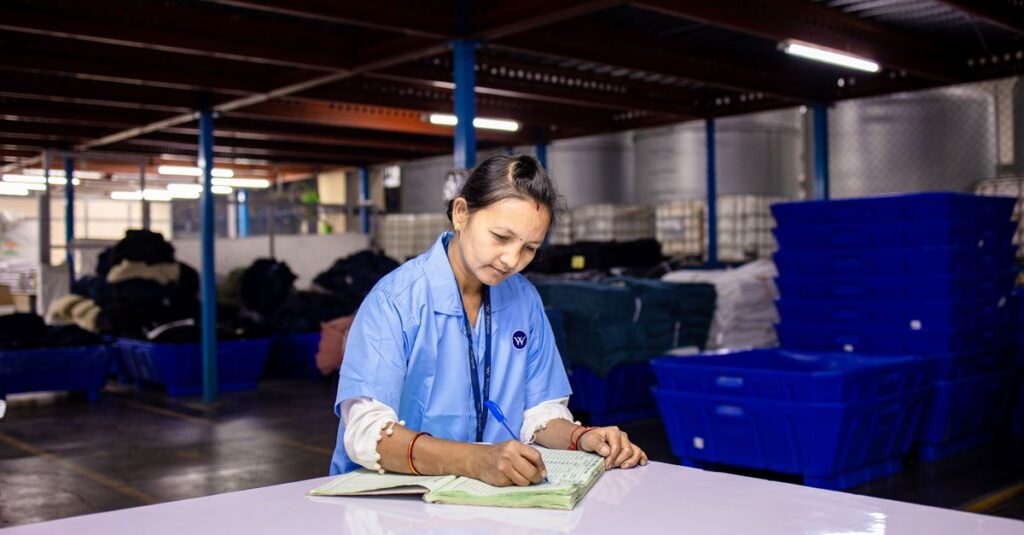
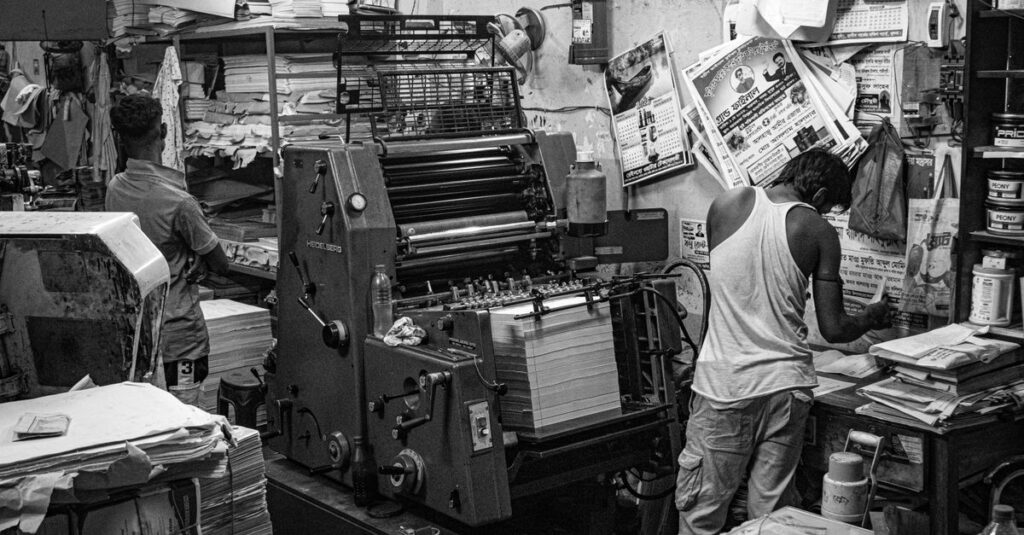
When a school or a corporate office searches for a stationery shop, proximity feels logical. You want to visit, check quality, maybe pick up samples. But for bulk orders — 10,000 units, 50,000 units — the shop’s location becomes almost irrelevant. What matters is the manufacturing location. The binding machine. The paper stockpile. The loading bay where trucks get filled.
Think about it this way: you’re not buying from a shelf. You’re commissioning a production run. The “near me” part shifts from a retail outlet to a reliable supply chain. You need a partner who understands deadlines, who can handle custom art files, who knows the GSM of paper you need for different ruling types. A retail shopkeeper might not. A manufacturer does.
Most people I’ve spoken to say they wasted weeks visiting local shops only to realize they couldn’t fulfill the order. They’d promise, then outsourced, then delayed. The headache, honestly. It’s real.
Expert Insight
I was talking to a procurement manager from a Hyderabad-based college last month — over a phone call, actually — and he said something I keep thinking about. He told me his team spent a month evaluating “local suppliers” based on distance. They chose the closest one. The delivery was late, the print quality was off, and the binding started failing within months. His lesson? “Distance is a convenience for samples, not a guarantee for production.” I don’t have a cleaner way to put it than that. The capability is what you’re buying.
The Real-Life Search: A Micro-Story
Anita, 42, procurement head for a government institution in Visakhapatnam. She got a tender for 15,000 graph books and 5,000 account books. She Googled “best stationery suppliers near me” and found three local dealers. One had a nice shop in Dwarakanagar. She visited, saw beautiful displays. He assured her he could handle it. Two months later, the books arrived. The graph lines were misaligned on 30% of them. The account book binding was loose. She had to reject the shipment. The dealer apologized — he had subcontracted to a small unit he didn’t control. She learned, painfully, that a nice shopfront doesn’t equal a controlled factory floor.
Her next search was different: “notebook manufacturers in Andhra Pradesh.”
What Bulk Buyers Actually Need (It’s Not a Shop)
Let’s be direct. If you’re ordering in thousands, your checklist changes. You need answers to questions a retail shop can’t usually answer.
- Daily Production Capacity: Can they make 30,000 notebooks a day, or 300?
- Paper Sourcing: Where does the paper come from? Is it consistent? What’s the GSM?
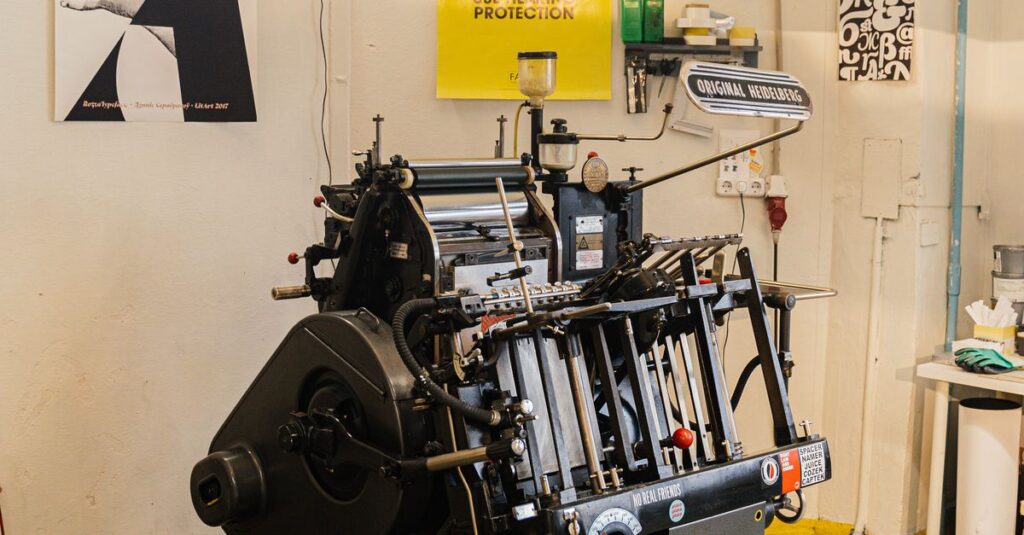
- Binding Method Control: Do they do stitching, spiral, perfect binding on-site?
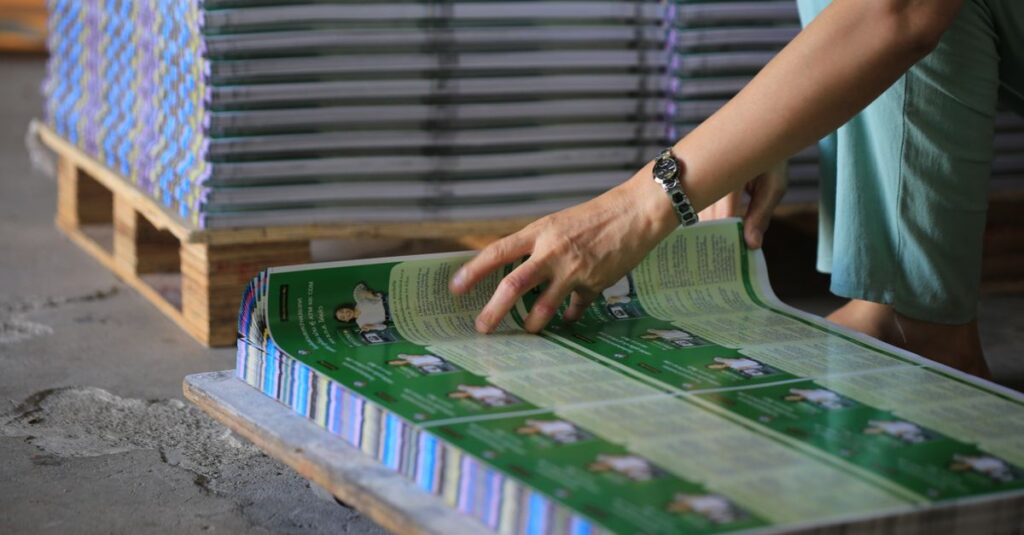
- Customization Depth: Can they take your logo, your layout, your color palette and replicate it exactly across every unit?
- Export Readiness: If you’re an international buyer, can they handle packaging, documentation, shipping?
A shop sells finished products. A manufacturer creates products based on your specs. That gap is the whole game.
And honestly? Most businesses realize this after the first failed order. You shouldn’t have to.
Stationery Shop vs. Notebook Manufacturer: A Comparison
| Feature | Local Stationery Shop (Retail) | Notebook Manufacturing Unit (Like Us) |
|---|---|---|
| Primary Function | Selling ready-made stock to end consumers | Producing custom notebooks from raw materials |
| Order Scale | Small batches (10s, 100s of units) | Bulk production (1000s to 100,000s of units) |
| Customization | Limited; maybe add a stamp or sticker | Full control: cover design, paper type, ruling, binding, packaging |
| Quality Control | Depends on supplier brands; no direct control | Direct oversight of every stage: printing, binding, finishing |
| Supply Chain | Buys from wholesalers/manufacturers | Owns or manages raw material sourcing (paper, ink, binding thread) |
| Lead Time | Quick pickup for available stock | Production timeline based on order size and complexity |
| Price per Unit | Higher (includes retail margin) | Lower (direct manufacturing cost, bulk economy) |
Look, I’ll just say it. If your requirement fits the left column, a local shop is perfect. If it fits the right column, you’re searching for the wrong thing. You need a manufacturer.
How to Redirect Your Search (Practical Steps)
So your next Google search shouldn’t be “best stationery shop near me.” It should be something else. Here’s how I’d break it down.
First, define your need. Are you ordering for a school? Corporate branding? Government tender? Export? The keyword changes.
- For schools/colleges: “bulk school notebook supplier,” “educational notebook manufacturer.”
- For corporates: “custom diary manufacturer,” “branded notebook printing.”
- For distributors: “OEM notebook production,” “private label notebook factory.”
- For international buyers: “notebook export from India,” “stationery manufacturing for overseas.”
Second, look beyond the map. A manufacturing unit might be in an industrial area — Rajahmundry, for instance — not a high-street shop location. Your visit might be to a factory floor, not a retail counter. That’s okay. Probably better.
Third, ask the questions that matter. I’ve heard this enough times now to know it’s not coincidence. Ask about daily capacity. Ask for a paper sample swatch. Ask to see a binding machine. Ask about their longest-running client. The answers tell you more than a shiny shopfront ever could.
The real search is for capability, not convenience.
The Emotional Shift: From Buyer to Partner
This is the part nobody says out loud. When you move from buying off a shelf to commissioning a production run, the relationship changes. You’re not a customer; you’re a client. Maybe a partner. There’s a trust thing that happens. You send a design file. They send a proof. You approve. They run the machines. You get updates. There’s a rhythm.
It’s less transactional. More collaborative. And for institutions that order year after year — schools, corporates — that continuity matters. You don’t want to search “best stationery shop near me” every August. You want one call. “Same as last year, but update the logo.” Done.
That’s the goal. To make your annual stationery order a simple, reliable process, not a yearly sourcing headache.
I think about this a lot. Because in our 40 years, the clients who stayed with us weren’t just looking for a product. They were looking for a process they could trust.
FAQ: What Businesses Really Ask
Frequently Asked Questions
Can a local stationery shop handle a 10,000 notebook order?
Usually, no. Most retail shops source from wholesalers or small manufacturers. They don’t control production capacity or quality at that scale. They’ll often subcontract, which adds risk. For orders above a few thousand, direct manufacturing units are a safer bet.
What’s the main advantage of working directly with a notebook manufacturer?
Control. You control the paper quality, the design, the binding method, and the timeline. You’re dealing with the people who run the machines, not a middleman. This usually means better pricing, consistent quality, and the ability to customize everything.
Is location important if I’m ordering in bulk?
For samples and initial meetings, yes — being able to visit is helpful. For actual production and delivery, less so. Most manufacturers ship nationwide. Your focus should be on their production capability and reliability, not just their proximity to your office.
What should I look for in a notebook manufacturer for my school?
Check their experience with educational products. Ask about ruling types (SR, DR, BR), standard page counts (52, 92, 200), and binding durability for student use. Ask if they can print school logos or crests. And get a sample of their standard notebook — feel the paper, check the stitching.
How long does bulk notebook production usually take?
It depends on order size and customization. A standard 10,000-unit order might take 10-15 working days from approval of proof. Complex custom designs or special paper can add time. Always ask for a production schedule upfront.
Conclusion
So if you’re typing “best stationery shop near me” into Google, pause. Ask yourself what you’re really ordering. A few boxes for the office store? Or a bulk supply for an institution? The answer changes everything.
For bulk, for custom work, for reliability — you need a maker, not a seller. That search term is about convenience. Your need is about capability. And that’s a different list of results altogether.
I don’t think there’s one perfect answer for every business. Probably there isn’t. But if you’ve read this far, you already know what you’re looking for — you’re just figuring out if it’s okay to skip the shop search and go straight to the source. It usually is.