What OEM Notebook Manufacturing Actually Means
You've probably seen the term OEM thrown around and nodded like you understood it. I did the same thing for years. It sounds technical. It sounds important. But here's what it really means: you walk into a factory with an idea, and they hand you back a finished product with your name on it. That's it. That's the whole thing.
OEM stands for Original Equipment Manufacturing. But in the notebook world, it's simpler than that. You tell us the size, the paper quality, the binding, the cover design, the logo placement. We make it. You sell it under your brand. No one knows we made it. Which is exactly the point.
For international buyers looking to source notebooks, this matters a lot. You're not just buying notebooks. You're buying the ability to call them yours. And if that sounds like something you need to understand better, this is worth reading.
How OEM Notebook Manufacturing Works Step by Step
I get asked this more than anything else. How does it even work? Do I ship you a design? Do you have templates? Do I need to fly to India and sit in a factory? Let me break it down.
Step 1: You Tell Us What You Need
- Size: A4, A5, Long, Short, King, Crown. Pick one.
- Pages: 52, 92, 200, 320. Whatever you need.
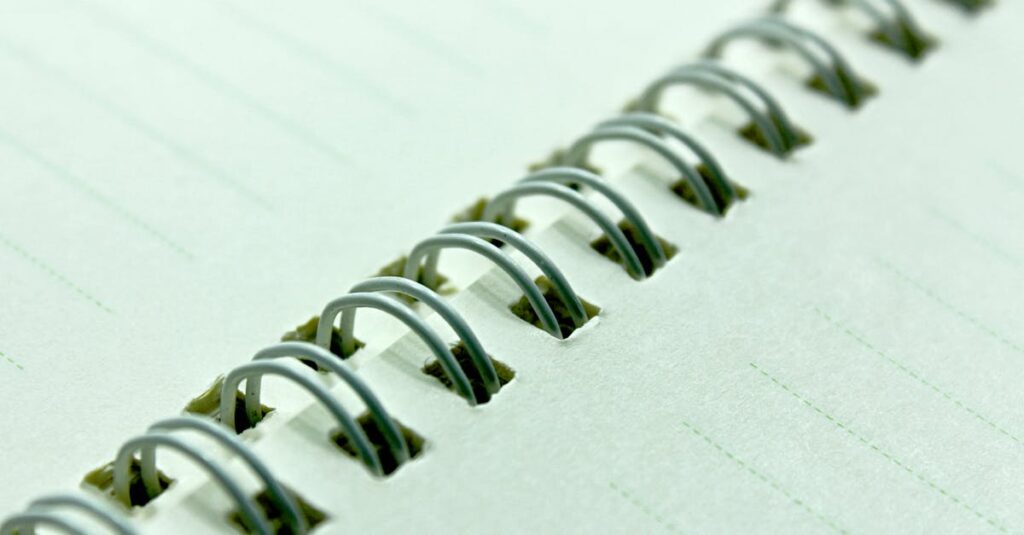
- Binding: Stitched, spiral, or perfect bound.
- Cover: You send a logo. We print it. Or emboss it. Or foil stamp it. Your call.
That's the first conversation. Usually happens over email. Sometimes a call. I've done it over WhatsApp at 10pm. It's not formal. It doesn't need to be.
Step 2: We Make a Sample
Before we run 10,000 units, we make one. You approve it. We adjust. You approve again. Then we go.
Step 3: Production Runs
Our factory in Rajahmundry pushes out about 30,000 to 40,000 notebooks a day. That sounds like a lot. It is. But each one gets checked. Paper quality. Binding strength. Cover alignment.
I remember once a buyer from Dubai asked if we could do something weird with the ruling — not single, not double, but something in between. We said yes. Made the sample. He approved. We ran 50,000 units. Not a single complaint.
And honestly? That's the part I like most. It's never the same thing twice.
What International Buyers Usually Get Wrong
Look, I'll just say it. Most buyers make the same three mistakes.
- They don't check paper quality. They see a price, get excited, place an order. Then the paper bleeds through on page two. Now you have 20,000 notebooks nobody wants. I've seen it happen. It's not pretty.
- They underestimate shipping timelines. Production is one thing. Customs, port delays, freight scheduling — that's another. If you need notebooks by August, start talking to us in April. Not July.
- They don't ask about binding strength. Spiral binding looks great. But if the wire is too thin, it bends after three months. Stitched binding lasts longer but costs more. There's no free lunch here.
I was talking to a buyer from Ghana last month. He said his previous supplier sent notebooks with pages falling out after two weeks. He asked if we could do better. I sent him a sample. He dropped it on the floor, stepped on it, picked it up. Pages stayed put. He ordered the same week.
Not saying that's the test you should run. But it worked.
OEM vs Private Label — What's the Difference?
People mix these up constantly. Including people who should know better. Let's settle it.
| Aspect | OEM Manufacturing | Private Label |
|---|---|---|
| Who designs the product? | You (or we work together) | We design, you brand it |
| Who owns the mold/tooling? | You (if customized) | We do |
| Minimum order quantity | Higher (custom specs) | Lower (existing designs) |
| Flexibility | High — everything can change | Limited to existing options |
| Price per unit | Varies by customization | Usually lower |
| Best for | Large orders, specific needs | Quick branding, smaller runs |
Expert Insight
I remember this one time — must have been 2018 — a buyer from Kenya wanted something specific. He wanted a notebook that could survive a rainy school term. Not waterproof, exactly. But close. We tried five paper combinations before we got it right. Spiral binding with coated paper. It worked. He ordered for three years straight after that. I don't think he ever knew how close we came to saying no on the first try. We almost did. Glad we didn't.
But that's the thing about OEM. You ask for something strange. We figure out if we can do it. Then we do it. Or we tell you honestly we can't. No time wasted.
A Real Story — Just So You Know This Isn't Theory
Let me tell you about Rajesh. He's 41. Runs a stationery distribution company in Lagos, Nigeria. He called me last year frustrated — his previous supplier kept sending inconsistent quality. Different paper shades. Loose binding. Covers that peeled.
He found us through a search for notebook manufacturers. Called. Emailed samples. Asked a hundred questions. I answered all of them. We sent samples. He approved. First order was 15,000 units — a mix of A4 exercise books and spiral notebooks with his company logo.
Delivery took 45 days. He called me after he received them. Said they were the best notebooks he'd ever imported. I don't say this to brag. I say it because this happens more than you'd think. There are a lot of bad suppliers out there. A lot. And buyers have been burned so many times they've stopped trusting anyone.
Rajesh still orders from us. Every quarter. And every time, he asks the same question: “Is the quality still the same?” Every time, the answer is yes.
I don't mind the question. It tells me he cares. And honestly? So do we.
What to Look for in an OEM Notebook Manufacturer
If you're reading this, you're probably comparing suppliers. I get it. There are a lot of options. India. China. Vietnam. Turkey. Each has pros and cons.
Here's what I'd look for if I were you.
- Experience matters. We've been doing this since 1985. That's not a flex. It just means we've seen enough to know what works and what doesn't.
- Ask for samples. If a supplier hesitates to send samples, walk away. Simple as that.
- Check the binding. Open a notebook flat. Does it stay open? Or does it snap shut? If it snaps shut, the binding is weak. Don't order.
- Ask about paper source. 54 GSM is standard for school notebooks. 70 GSM for diaries. Anything below 50 GSM is trouble.
- Communication speed matters. If they take three days to reply to your first email, imagine what happens when there's a problem with your order. Not worth it.
I'm not saying these things because we check all the boxes. I'm saying them because I've seen buyers ignore these and regret it. Every single time.
Frequently Asked Questions
What is OEM in notebook manufacturing?
OEM means a factory makes notebooks according to your specifications — size, paper, binding, cover, branding. You own the design. They do the production. You sell under your brand name.
What is the minimum order quantity for OEM notebooks?
It depends on the level of customization. For standard sizes with simple logo printing, we can work with 5,000 units. For fully custom notebooks with unique specifications, the minimum is usually higher. Contact us with your requirements.
How long does OEM notebook production take?
From sample approval to dispatch, expect 30 to 45 days for most orders. Shipping adds another 15 to 30 days depending on your location. Start early, especially for bulk orders.
Can you ship OEM notebooks internationally?
Yes. We export to Gulf countries, Africa, USA, UK, Europe, and Australia. We handle all export documentation and shipping arrangements. You just tell us where it needs to go.
What binding is best for OEM notebooks?
Stitched binding is the most durable and lasts the longest. Spiral binding lays flat and is great for diaries. Perfect binding looks premium but may not hold up as well over time. Choose based on your use case.
So Where Does This Leave You?
I've been writing this longer than I intended. But here's the truth — OEM notebook manufacturing isn't complicated. You just need a partner who does what they say. We've been doing it since 1985 and we're not stopping anytime soon.
If you're tired of suppliers who promise quality and deliver something else, maybe give us a try. I can't promise everything will be perfect. Manufacturing never is. But I can promise we'll be honest with you about what we can and can't do.
That's probably worth more than a perfect product anyway. Check what we offer. Or don't. But if you've read this far, you probably already know what you want. Just reach out when you're ready.