What Actually Makes a Notebook Manufacturer “Best” for Schools?
I was talking to a school principal last month — over chai, not some formal meeting — and she said something that stuck with me. “Every year, I order notebooks. Every year, half of them fall apart by October.” That's the real problem. Not price. Not design. Just durability. So when people search for “Best Notebook Manufacturers for Schools in India”, what they're really asking is: who won't waste my money? I've been in this business since 1985, and I'll tell you straight — not every manufacturer gets it right. Paper tears. Binding loosens. Covers peel. But a few of us actually care. If that sounds familiar, you might want to check out Sri Rama Notebooks. We've been doing this long enough to know better.
What to Look for in School Notebooks
You'd think a notebook is a notebook. Not true. There's a world of difference between something that lasts a term and something that lasts a week.
Paper Quality
Standard writing paper is around 54 GSM. That's fine for most schoolwork. But if you go lower, ink bleeds through. Higher GSM costs more and isn't necessary unless you're using fountain pens. At least in my experience, 54–60 GSM hits the sweet spot.
Binding Type
Stitched binding is the most durable for school notebooks. Spiral is okay for smaller books but students tend to bend them. Perfect binding looks neat but won't survive a rushed school bag. I'd say stick with stitched for anything over 100 pages.
Sizes and Rulings
Schools usually need:
- Long (27.2 cm × 17.1 cm)
- Short (19.5 cm × 15.5 cm)
- King (23.6 cm × 17.3 cm)
- A4 (for practical notebooks)
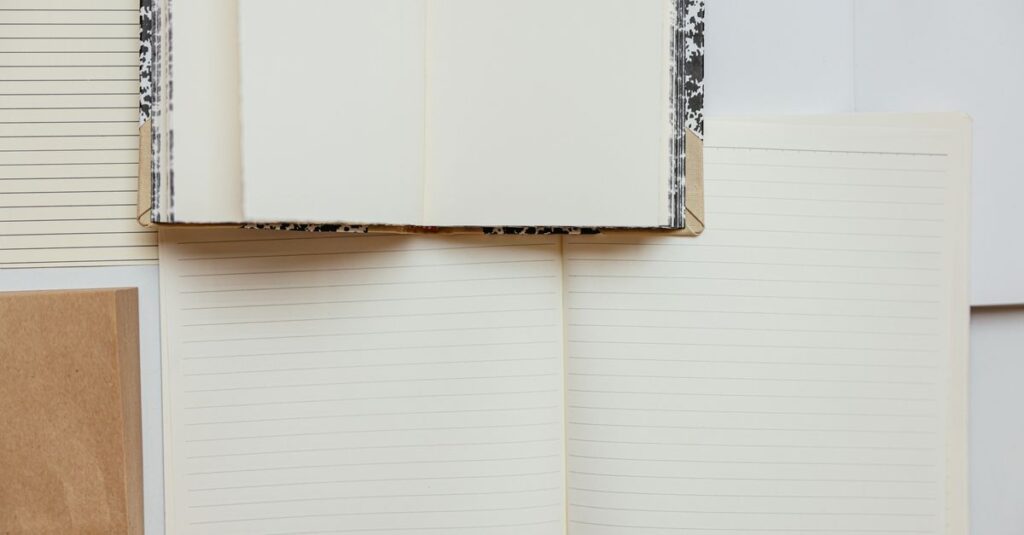
Ruling types matter too. Single ruled for general use. Four ruled for handwriting practice. Cross ruled for math. A good manufacturer should offer all options without a fuss.
The question isn't whether these features matter — it's whether you're going to check them before you order. Most people don't. And that's exactly why notebooks fall apart.
How to Evaluate a School Notebook Supplier — An Honest Comparison
Not all manufacturers are the same. Here's a quick table to show you the differences.
| Feature | Small Local Printer | Established Manufacturer (e.g., Sri Rama) | Large Corporate Producer |
|---|---|---|---|
| Daily production capacity | 1,000 – 5,000 notebooks | 30,000 – 40,000 notebooks | 50,000+ notebooks |
| Customization options | Limited – basic logo print | Logo, private label, OEM, embossing, foil stamping | Full range but high minimums |
| Paper quality consistency | Varies – depends on batch | Consistent – 54 GSM standard | Consistent but rigid |
| Binding quality | Stitched or stapled | Stitched, spiral, perfect | Mostly perfect binding |
| Price per notebook (bulk) | Low – but hidden defects | Competitive – good value for quality | Low – but high MOQ |
| Delivery lead time | Fast – but small batches | Reliable – pan-India and export | Slow – large batches only |
Now, I'm not saying small printers are bad. Some are great. But when a school needs 50,000 notebooks every year, consistency becomes everything. You don't want one batch with 50 GSM paper and the next with 60 GSM. That messes up the writing experience.
The Value of Customization for Schools
Schools don't just need any notebook. They need notebooks that say something. School name. Logo. Tagline. Maybe a custom cover with the school colors.
Let me tell you about Ravi. He's 45, works as a procurement officer at a government school in Vijayawada. Every year he orders notebooks for 2,800 students. Last year, he switched from a local supplier to a larger manufacturer because the local guy couldn't print the school emblem in the right shade of blue. Sounded small, but the students noticed. And honestly? So did the parents. Ravi told me that the logo alone improved the kids' sense of ownership — they took better care of the notebooks. I don't have a study to prove that. It's just what he said.
Customization also means you can choose the page layout — number of lines, margin width, space for name and class. All things that make a teacher's life easier.
Which is — okay, I'm going to say it — more important than most people think. Because a classroom runs on small details. Not grand gestures. A notebook that stays closed. A ruled page that doesn't bleed. A cover that doesn't curl up after two weeks.
Why Experience Matters — 40 Years in the Business
Expert Insight
I remember sitting with an old customer from a school in Rajahmundry maybe fifteen years ago. He was retiring, and he told me something I still think about. He said, “The first notebooks you supplied us — 1998 batch — some of them are still in the school library. Not as notebooks. As scrap paper. But the binding held.” He wasn't trying to be poetic. He was just stating a fact. That stuck with me because it wasn't about quality in the abstract. It was about a physical object that outlasted its purpose. This is why I believe experience isn't just a number on a website. It's knowing that 54 GSM paper behaves differently in humid weather. It's knowing that stitched binding with cotton thread lasts twice as long as synthetic. It's small things. But they add up.
Common Mistakes Schools Make When Ordering Notebooks
I see the same mistakes every year. Here are the big ones:
- Ordering the wrong size. Just because it's called “Long” doesn't mean it fits in the standard school bag. Measure your desks first.
- Ignoring binding type. Spiral notebooks for younger kids? Bad idea. They get caught in bags, pages rip out. Stitched is safer.
- Not checking GSM. Thin paper is fine for writing but not for erasing. If students use rough erasers, the paper tears. 54 GSM is the minimum.
- Assuming all manufacturers offer customization. Some do, but with hidden costs — like die charges for embossing. Ask upfront.
- Underestimating delivery timelines. A manufacturer producing 30,000 notebooks a day can handle a big order in 2 weeks. But if you order in peak season (April–May), expect delays.
And here's something I don't say often: sometimes the cheapest quote is the most expensive in the long run. Because you'll reorder sooner. Or replace damaged stock. I've seen schools spend 20% less on notebooks, then lose 30% to wastage. That's not a saving. That's poor planning.
Frequently Asked Questions
Frequently Asked Questions
What is the best paper GSM for school notebooks?
54–60 GSM is ideal for most school writing. It's thick enough to avoid ink bleed but thin enough to keep the notebook light. Avoid anything below 50 GSM — it tears too easily.
Which notebook binding is best for school students?
Stitched binding is the most durable for school use. Spiral works for small notebooks but gets damaged in bags. Perfect binding looks professional but won't survive rough handling.
Can I get custom logo printed on school notebooks?
Yes, most established manufacturers offer logo printing, private labeling, embossing, and foil stamping. Minimum order quantities vary — at Sri Rama, we can customize even for moderate bulk orders.
What sizes of notebooks do schools usually need?
Common sizes are Long (27.2×17.1 cm), Short (19.5×15.5 cm), King (23.6×17.3 cm), and A4. Many schools also use Crown size for notebooks. Check with your furniture dimensions before ordering.
How many notebooks can a manufacturer like Sri Rama produce daily?
Sri Rama Notebooks produces 30,000–40,000 bound notebooks per day. That means a school order of 50,000 can be completed in about 2 working days, plus customisation and packaging time.
Conclusion
If you're looking for the best notebook manufacturers for schools in India, don't just go by price. Check paper quality, binding, and whether they offer real customization. And remember — a manufacturer who's been around for decades probably knows what works. I don't have a perfect answer for every school. Every school has its own budget, its own needs. But if you've read this far, you're already thinking about the right questions. That's more than most people do. For bulk orders or to discuss your requirements, visit Sri Rama Notebooks.