Let’s Get One Thing Straight About the A3 Size Notebook
You search for “a3 size notebook” and what do you get? A bunch of confusion. Some sites sell sketchbooks. Others sell data binders. Nobody seems clear on what an actual A3 notebook is for.
I’ll say it plainly: an A3 notebook is 297mm x 420mm. That’s double an A4, if you hold them side by side. Big paper. Not for pocket diaries or school backpacks — unless your kid is carrying architectural plans.
The real question is: why do you need one? If you’re buying for a design studio, an engineering college, or layout work — then yes. But if someone tells you to get an A3 notebook for general note-taking, push back. It’s too big for most desks, honestly.
We make these at Sri Rama Notebooks, and I can tell you most buyers get the size wrong before they get it right.
What an A3 Size Notebook Actually Looks Like
Let me describe it so you don’t have to imagine. Open an A3 notebook flat. The page area is roughly the size of a large cutting mat. You can fit two A4 pages side by side with room to spare.
Common Uses That Actually Make Sense
- Architecture and engineering students — for drawing plans, elevations, sections
- Graphic designers making rough layouts at full size
- Artists doing large charcoal or marker work (though most use spiral bound for this)
- Corporate brainstorming sessions with big diagrams
- Teachers preparing large visual aids for classrooms
But here’s the thing nobody talks about: A3 notebooks are awkward to carry. They don’t fit standard bags. They don’t sit on a crowded desk. You need dedicated space. I’ve seen procurement managers order a hundred of these for a workshop, and half of them never got used because people couldn’t carry them home.
If you’re buying in bulk, consider that reality. It’s not about paper. It’s about how people actually work.
Inside the Notebook — Ruling, Binding, Paper
This is where most buyers lose money. They pick “a3 size notebook” from a catalog, ignore the specs, and end up with something unusable.
Ruling Options
We offer a few types for A3 notebooks. Not all work for all users.
- Unruled (blank): For sketching, diagrams, mind maps. Most common choice.
- Square grid: Architects love this. It helps with scaled drawings and alignment.
- Cross ruled: A middle ground — clean but not totally empty.
The mistake? Ordering single ruled A3 notebooks. The lines are too close for large handwriting or drawings. Don’t do it unless someone specifically asks.
Binding Type
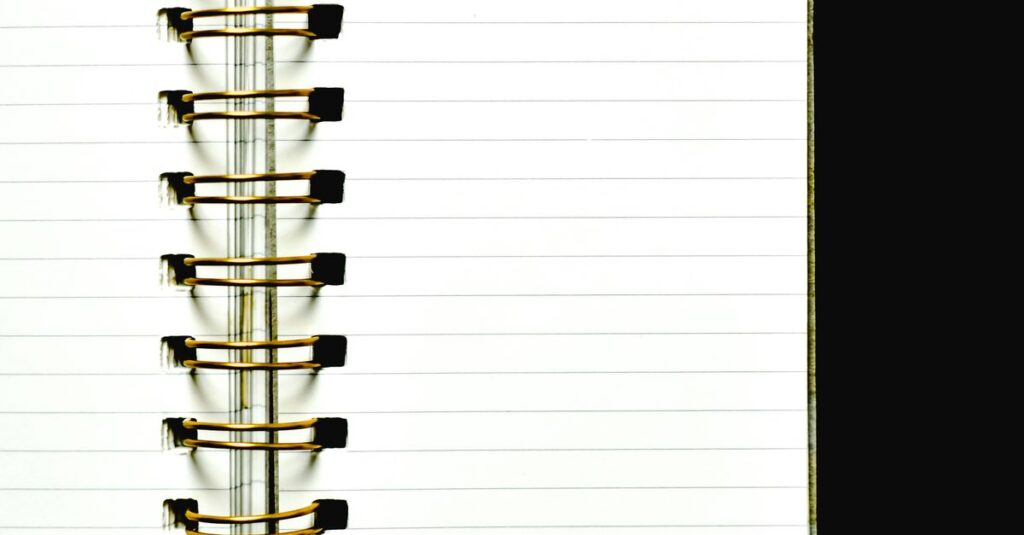
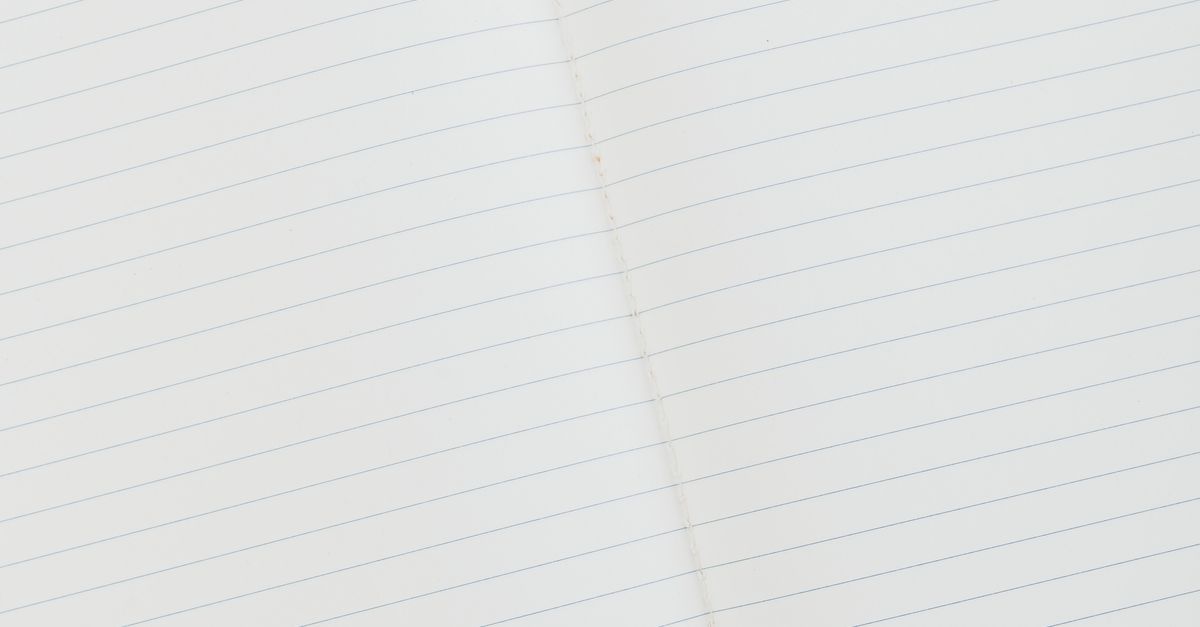
For A3, you want spiral binding or stitched binding. Spiral lets you fold the notebook flat. Stitched is more durable but won’t sit open as nicely. Perfect binding looks neat on shelves but breaks when people force it flat. I don’t recommend it for this size.
One more thing: paper GSM. For A3 notebooks used with markers or ink, go for 70 GSM minimum. Below that, bleed-through is real. If it’s pencil or dry media, standard 54 GSM works fine.
A3 Notebook vs A4 Notebook — Which One for Your Order?
This is the debate I hear every week from distributors. Here’s a frank comparison.
| Factor | A3 Notebook | A4 Notebook |
|---|---|---|
| Page size | 297mm x 420mm | 210mm x 297mm |
| Best for | Drawings, layouts, group work | Standard notes, reports, daily use |
| Portability | Poor — needs large bag | Easy — fits most bags |
| Desk space | Requires full desk | Comfortable on small desks |
| Typical users | Architects, artists, designers | Students, office workers, teachers |
| Bulk cost | Higher (more paper, bigger binding) | Lower (standard size) |
| Most common mistake | Ordering when A4 would suffice | (none as serious) |
The honest answer: only buy A3 if your team genuinely needs the space. A4 does 80% of the same jobs without the hassle.
Why Bulk Buyers Get Stuck
I got a call last month. A school chain in Vijayawada wanted 500 A3 notebooks for their art department. Seemed straightforward. Then they told me the budget.
They wanted the price of an A4 notebook for something twice the size. Paper isn’t cheap. Binding isn’t cheap. An A3 notebook uses roughly double the material. The math doesn’t lie.
Here’s what happens: when you squeeze the price too hard, manufacturers cut corners. They use thinner paper, weaker binding, cheaper covers. The notebooks fall apart in three months. Then you reorder. That’s not saving money.
If you’re a procurement manager, ask for a sample first. Not a photo. A physical sample. Check the paper thickness. Open and close the binding ten times. Write on both sides of a page. If it feels flimsy, it won’t last. And honestly? Most people skip this step. Don’t.
Real Story — The Architect Who Ordered Blind
Ravi, 34, architectural designer in Hyderabad. He needed 200 A3 notebooks for his team — presentation work, client meetings, project sketches. He ordered online from a random vendor. Lowest price.
When the boxes arrived, the binding snapped on the first open. Pages fell out. The grid lines were misaligned by 2mm. For architectural work, that’s a disaster. He called me (through a mutual contact) asking if we could fix it. We could, but he lost two weeks and half his budget.
He told me later, with a laugh that wasn’t really a laugh: “I thought a notebook is a notebook.” Not in this size. Not when precision matters.
I keep thinking about that call. He wasn’t trying to be cheap. He just didn’t know what to look for. Most people don’t.
Expert Insight
I remember watching an older craftsman at our factory — must have been around 2018, maybe 2019. He was checking A3 notebooks by hand, one by one, feeling the spine. I asked him why. He said “The big ones, they hide their flaws better. But when they break, they break loud.”
I didn’t fully get it then. Now I do. Large notebooks put more stress on binding. A small defect that would go unnoticed in an A5 size becomes a failure point in A3. The tolerances are tighter. Which means you can’t buy these the way you buy A4s or pocket diaries.
Frequently Asked Questions
Frequently Asked Questions
What is the exact size of an A3 notebook?
An A3 notebook measures 297mm by 420mm, or 11.7 inches by 16.5 inches. It is exactly twice the size of an A4 sheet when placed side by side. This is the ISO 216 standard — most countries follow this.
Can I write on both sides of an A3 notebook page?
Yes, but only if the paper GSM is 60 or higher. Cheaper notebooks with 50-54 GSM will show ink bleed on the other side. For double-sided use, choose 70 GSM or above. Our standard A3 notebooks use 60 GSM minimum.
Which binding is best for an A3 size notebook?
Spiral binding is the most practical choice for A3 notebooks. It allows the notebook to lie completely flat. Stitched binding is also durable but won’t fold back as easily. Avoid perfect binding for A3 — it cracks under the strain of large pages.
Where can I buy A3 notebooks in bulk for my school or office?
We manufacture A3 notebooks at our factory in Rajahmundry, India, with a daily production capacity of 30,000-40,000 units. We supply to schools, institutions, and distributors across India and export to the Gulf, Africa, USA, and Europe. Contact us for bulk pricing.
Are A3 notebooks only for artists and architects?
Not exclusively, but that’s the primary market. A3 notebooks are also used by teachers creating visual aids, engineers reviewing large blueprints, and teams during brainstorming sessions. For everyday note-taking, A4 or A5 notebooks are more practical due to easier portability.
Here’s Where I Land on This
An A3 size notebook is a tool, not a statement. It works for specific jobs. For everything else, it’s overkill.
Two things to take away: first, check the paper and binding before you order in volume. Second, make sure your team actually needs the space. I’ve seen too many bulk orders sit in storage rooms, untouched.
I don’t think there’s one perfect way to buy these. Every use case is different. But if you’ve read this far, you’re probably the kind of person who wants to get it right — not just check a box. That matters more than you think.
If you want to talk specs or request a sample, Sri Rama Notebooks is where we do this for real.