What Exactly Is A4 Stationery?
Here's a thing I've noticed over the years. People ask for a4 stationery all the time. But when I ask them what they actually mean by it — the answers get fuzzy. Some mean A4 paper. Some mean notepads. Some mean the whole category of office paper products in that size.
And honestly? They're all right, in a way. But if you're buying in bulk — say for a school, or a chain of offices, or a government department — the fuzziness costs you money. You end up with the wrong product, the wrong paper weight, or something that doesn't bind properly.
So let's be clear. A4 stationery refers to any paper product — notebooks, pads, sheets, or printed materials — that uses the A4 paper size: 210 mm by 297 mm. That's the international standard. It's the size of most office documents, school assignments, and corporate letterheads outside the US.
If you're a procurement manager or a wholesaler, this matters. Because not all A4 products are made the same way. And not every manufacturer who says they make A4 stationery actually gets the details right. That's where companies like Sri Rama Notebooks come in — but I'm getting ahead of myself.
First, let's look at what the actual options are.
The Different Types of A4 Stationery You Can Order
I'll be honest — when I started in this business, I thought A4 stationery was just one thing. Notebooks. That's it. I was wrong.
Here's a breakdown of the main types of A4 stationery products, especially the ones people order in bulk:
- A4 Notebooks — Spiral bound, stitched, or perfect bound. Used in offices, schools, and for corporate diaries.
- A4 Writing Pads — Tear-off pads, usually with a cardboard backing. Popular for meetings and classrooms.
- A4 Loose Sheets / Paper Reams — For printers, copiers, and bespoke printing jobs.
- A4 Account Books / Ledgers — Larger volumes, often with specific ruling for accounting.
- A4 Drawing Books — Thicker paper for art classes and studios.
Each of these has different paper requirements. A drawing book needs heavier paper — 100 GSM or more. A writing pad can get away with 60-70 GSM. And an account book needs paper that doesn't bleed when you use a pen on both sides.
I remember a call I got last year from a distributor in Visakhapatnam. He said, “I need A4 notebooks. Just notebooks.” I asked him, “For what?” He paused. Then he said, “Actually, it's for a government tender — they want account books.” Different product entirely. We got him the right stuff, but it was a close call.
The lesson: don't just say “A4 stationery.” Say what specifically you need. It saves everyone time.
A4 Stationery vs. Other Paper Sizes — A Quick Comparison
I get asked about sizes a lot. Especially by buyers who are used to US letter size or the old foolscap format. So here's a simple table that shows how A4 stacks up against other common sizes.
| Size Name | Dimensions (mm) | Common Use | Key Difference from A4 |
|---|---|---|---|
| A4 | 210 x 297 | Standard office, school, corporate | Reference size |
| A5 | 148 x 210 | Personal diaries, pocket notebooks | Half the size of A4 |
| A3 | 297 x 420 | Posters, charts, architectural plans | Double the size of A4 |
| US Letter | 216 x 279 | US offices and schools | Slightly wider, shorter |
| Long Size | 272 x 171 | Traditional Indian notebooks | Narrower, taller |
| Crown Size | 184 x 134 | School exercise books | Much smaller |
If your orders go to international markets — the Gulf, Europe, Australia — you almost always need A4. If it's local schools in India, you might mix A4 with other sizes. I've seen institutions order a mix of A4 notebooks for teachers and Long size notebooks for students. It's common.
What to Look for When Buying A4 Stationery in Bulk
Now we get into the messy part. Buying in bulk is not like picking up a notebook from a store. You have to know what you're looking at. I've seen enough purchase orders go wrong to have a few opinions about this.
Here are the things I check — and the things I think you should ask about:
Paper GSM and Quality
The heavier the paper, the more expensive it is. But also the more durable. For A4 notebooks used for writing, 60-70 GSM is standard. For corporate diaries or premium school notebooks, 80 GSM is better. Anything under 60 GSM, and you risk ink bleeding through the page. Not ideal if someone is writing on both sides.
There's also the brightness of the paper. Off-white paper is cheaper and easier on the eyes. White paper looks more premium but can cause glare. I personally prefer off-white for notebooks. But that's me.
Binding Type
This is where a lot of bulk buyers mess up. They order A4 stationery with the wrong binding for the use case.
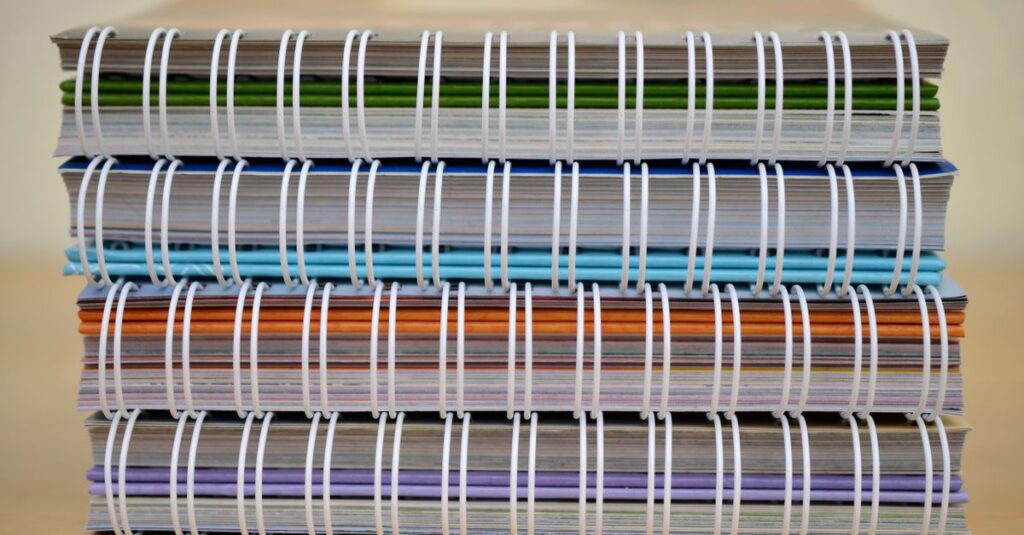
- Spiral binding — Lies flat. Great for notebooks that need to stay open on a desk. Less durable in a bag.
- Stitched binding — Strong. Lasts forever. But doesn't always lie flat. Good for account books and registers.
- Perfect binding — Glued spine. Clean look. Works for corporate diaries. Can fall apart if overstuffed.
I've had buyers ask for stitched binding in a spiral notebook. It's not a thing. You pick one.
Customization and Branding
Most bulk buyers want their logo on the cover. That's fine. But check: can the manufacturer do foil stamping? Embossing? Full color printing? Not all of them can. We do all three, by the way. But again — that's me talking.
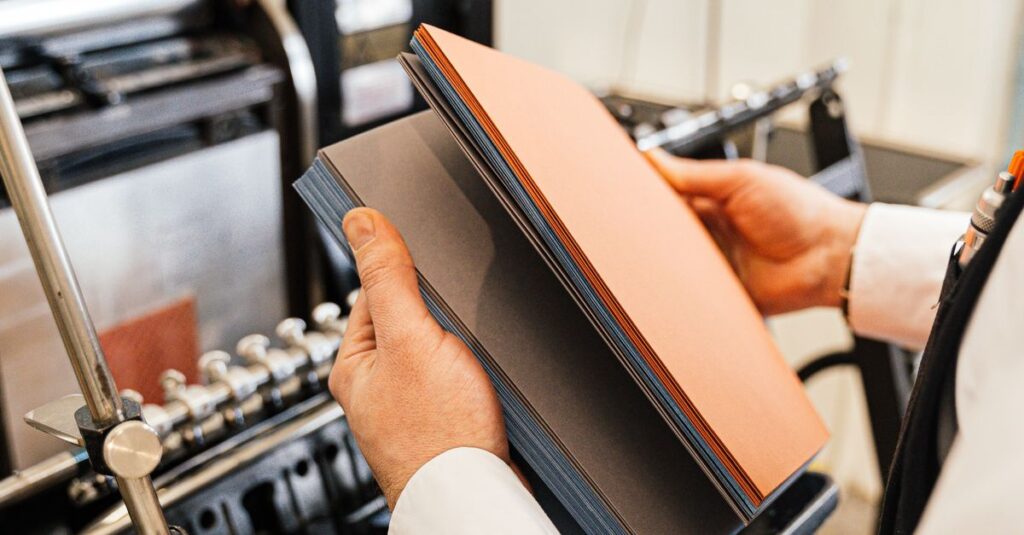
The point is: before you place the order, get a sample. Not a photo. An actual physical sample. Paper feels different in hand than it looks on a screen. I can't tell you how many times a sample has saved an order from going sideways.
Expert Insight: What Manufacturing Capacity Tells You
I was talking to a buyer from Dubai last month — really sharp guy, knew his stuff. He said something that stuck with me. He said, “I don't just ask what a factory can make. I ask what they make every day.”
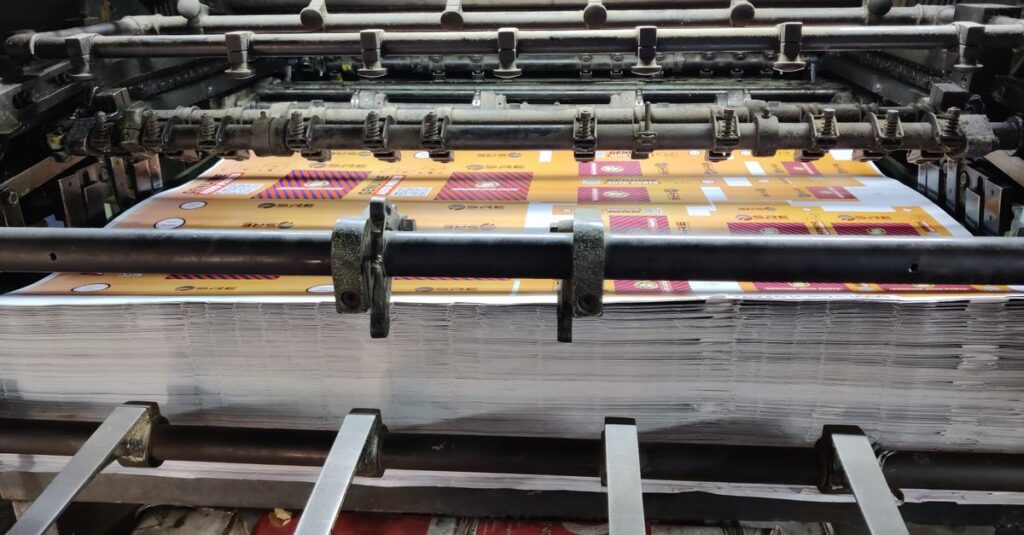
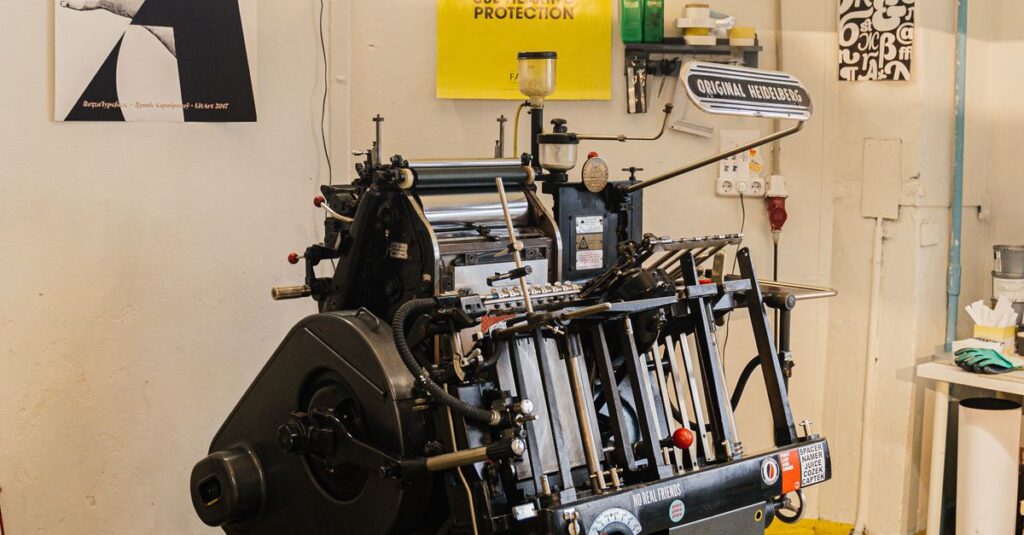
That's smart. Because a manufacturer can say they make A4 stationery. But if their daily production is 5,000 units and you need 100,000 in a month — that's a red flag. They'll either delay you, or the quality will slip because they rush. At Sri Rama Notebooks, we produce around 30,000 to 40,000 notebooks a day. That gives us room. That means we can handle large orders without cutting corners.
It's not the only thing that matters. But it's one of the things nobody talks about until it becomes a problem.
Real-Life Story: When a School Order Went Wrong — and Right
Let me tell you about Ravi. He's 42, a procurement officer for a chain of private schools in Chennai. Last year, he ordered A4 notebooks from a local supplier — 15,000 units for the new academic year. The supplier delivered two weeks late, and the paper quality was so thin that ballpoint pens bled through every page.
Ravi was stuck. The students needed the books. His director was furious. He called us on a Thursday, kind of desperate. He said, “Can you make 15,000 A4 notebooks with 80 GSM paper, stitched binding, and our school logo on the cover? And can you do it in three weeks?”
We said yes. We delivered on time. He's been ordering from us for two years now. I don't tell this story to brag. I tell it because it's a reminder that quality matters most when people are watching. And in a school, trust me — they notice.
Frequently Asked Questions
What is A4 stationery used for?
A4 stationery is used for office documents, school assignments, corporate notebooks, account books, and printed reports. It's the standard size across most countries outside the US and is preferred because it fits easily into bags, shelves, and filing cabinets.
What paper weight is best for A4 notebooks?
For everyday writing, 60-70 GSM works well. For premium products like corporate diaries or notebooks used with fountain pens, 80-100 GSM is better to prevent ink bleed. Thicker paper costs more but improves the user experience considerably.
Can I get custom logos printed on A4 stationery?
Yes. Most bulk manufacturers offer logo printing, embossing, and foil stamping on A4 notebook covers. You should always request a physical sample before placing a large order to confirm print quality and color accuracy.
What is the difference between A4 and A5 stationery?
A4 is 210 mm x 297 mm. A5 is 148 mm x 210 mm — exactly half the size. A4 is better for detailed notes, reports, and official documents. A5 is more portable and suits personal diaries or pocket notebooks. Choose based on the user and the purpose.
How many A4 notebooks can a manufacturer produce daily?
It varies. Smaller units may produce 5,000-10,000 per day. Larger factories, like Sri Rama Notebooks, produce 30,000-40,000 units daily. Always ask about production capacity when placing a bulk order to ensure the timeline is realistic.
Conclusion
Here's what I want you to remember. A4 stationery is not one product. It's a category. And buying it well means knowing which specific product you need, what paper quality works, and what binding fits the use. If you skip those details, you end up with notebooks nobody wants to use.
The second thing: talk to a manufacturer who actually makes the stuff. Not a trader. Not a middleman. Someone who can show you a sample and tell you when it will ship. I don't think there's a perfect formula for choosing the right supplier. But experience — their experience and yours — counts for a lot.
If you've got a bulk order in mind and you want to talk it through, Sri Rama Notebooks is a good place to start. We've been doing this since 1985. We've made the mistakes so you don't have to.