You're ordering fifty thousand notebooks. You've got specs ready, the paper GSM picked, the cover design signed off. Then the question hits: what book printing equipment does your manufacturer use? And why should you care?
Most people don't ask. I've seen procurement managers skip this completely. They assume all printing machines are the same. They're not. Not even close. The equipment decides whether your logo bleeds off the cover, whether the ruling lines are crisp, and whether the binding holds up after a month of use. If you're placing bulk orders, you need to know what's running on the factory floor.
This isn't about becoming a printing engineer. It's about knowing what to look for when you talk to a manufacturer like Sri Rama Notebooks. Because the machine matters as much as the paper.
What Is Book Printing Equipment Exactly?
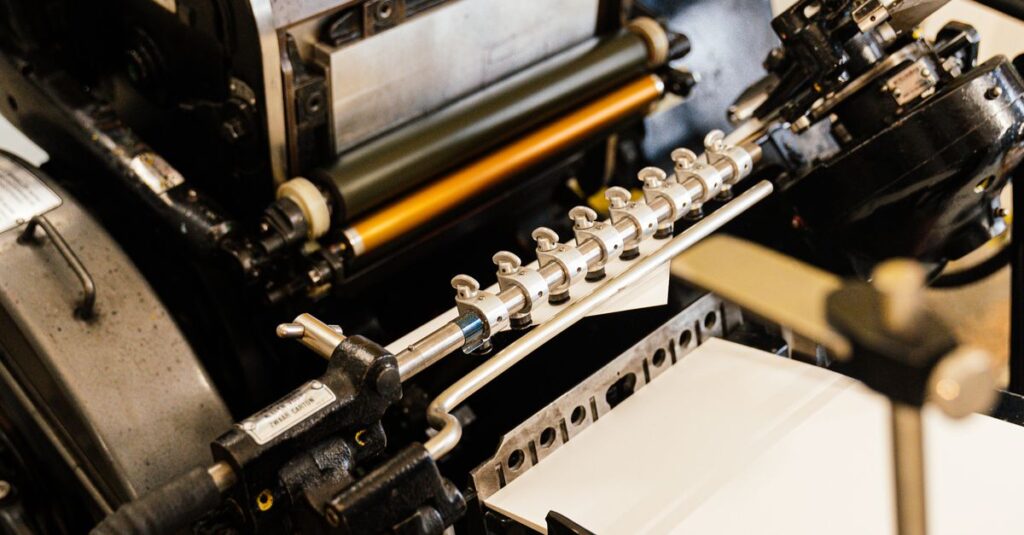
Let me put it simply. Book printing equipment covers the machinery that turns paper reams into finished notebooks, diaries, or any bound product. We're talking offset printing presses, digital printers, collators, binding machines, trimmers, and folding equipment. Each piece does something different.
Offset presses use plates and ink rollers. They're the workhorses for long runs. Digital printers work more like giant office printers — quicker setup, better for short runs or variable data like corporate diaries with different names. Then you've got stitching machines for stapling, perfect binding lines for glue-bound books, and spiral binding machines for wire-o notebooks.
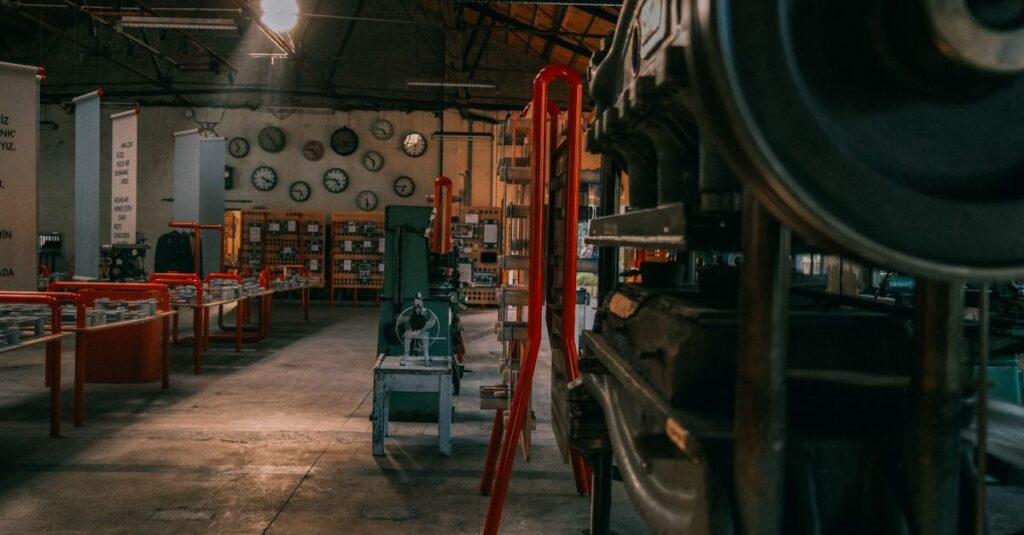
Here's the thing. Most factories don't have everything. They specialise. A low-cost manufacturer might have one old offset press and a manual binder. A serious operation will have multiple presses, automated binding lines, and quality control stations. The difference shows up in the final product. Every time.
I think — and I could be wrong — that buyers underestimate how much equipment variety affects consistency across huge orders. You can get 10,000 notebooks that look perfect. Then the next 10,000 have misaligned covers. That's usually a machine issue, not a human one.
Types of Book Printing Equipment You Should Know
I've walked through dozens of factories. Here's the equipment that actually matters for bulk notebook production.
- Offset Printing Press — Best for high-volume runs. Handles 10,000+ copies efficiently. Produces sharp, consistent colour across the whole print run.
- Digital Printing Press — Zero setup time. Great for small batches, custom covers, or personalised diaries. Slower per sheet than offset, but you can change the design mid-run.
- Perfect Binding Machine — Glues the spine of the book block. Common for paperback notebooks, account books, and thicker pads.
- Saddle Stitching Machine — Staples along the fold. Used for thinner booklets, scribbling pads, and memo books.
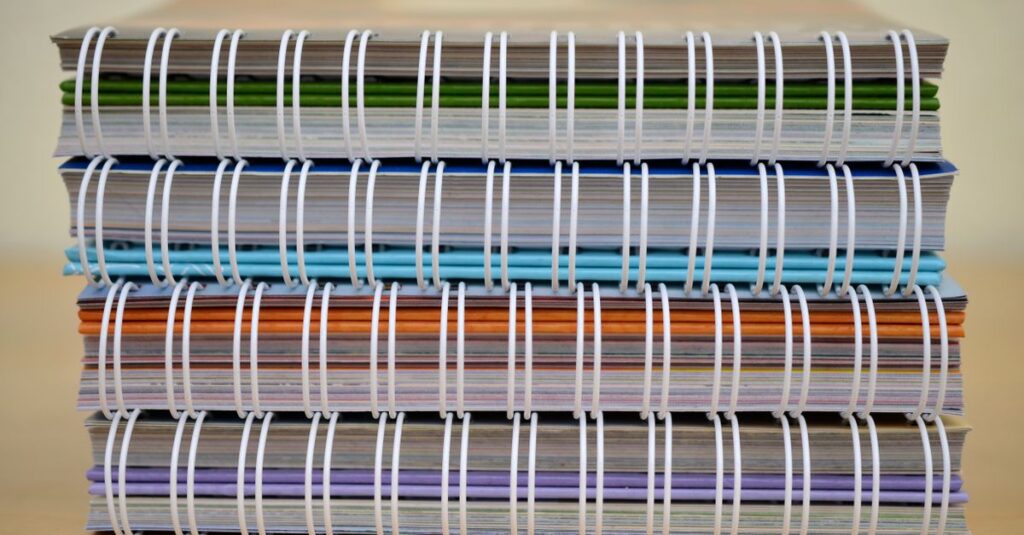
- Spiral Binding Machine — Punches holes and inserts wire coils. Popular for corporate diaries and custom planners.
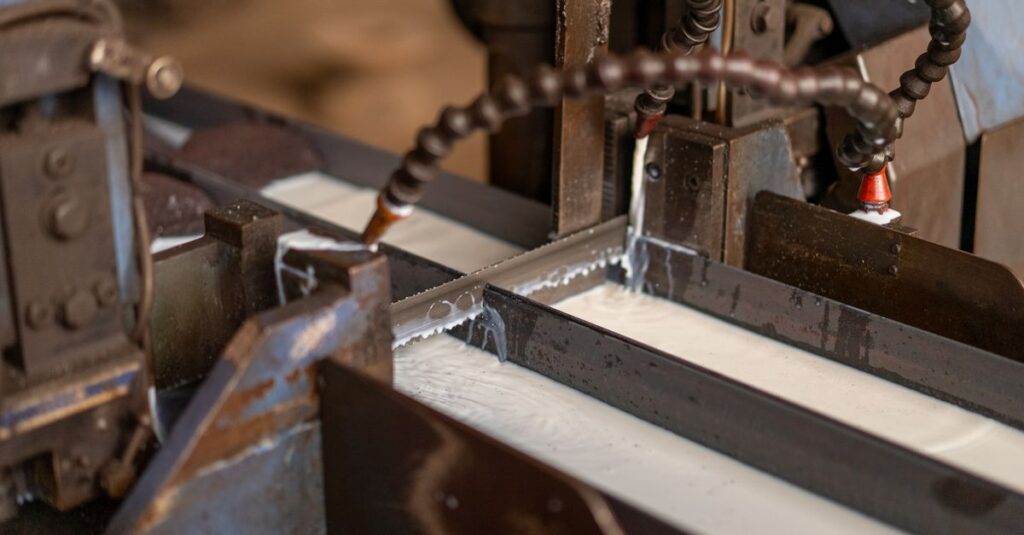
- Paper Cutter / Guillotine — Trims stacks of paper to exact size. Precision here determines whether all pages align.
- Folding Machine — Creates sharp creases for covers and inserts. Reduces manual labour and inconsistency.
Each machine serves a purpose. But the smart question isn't just what they have — it's what condition those machines are in. An old offset press that hasn't been serviced in years will give you muddy colours. A digital printer without proper calibration will have banding. Trust me, I've seen it happen.
Expert Insight: A Memory from the Factory Floor
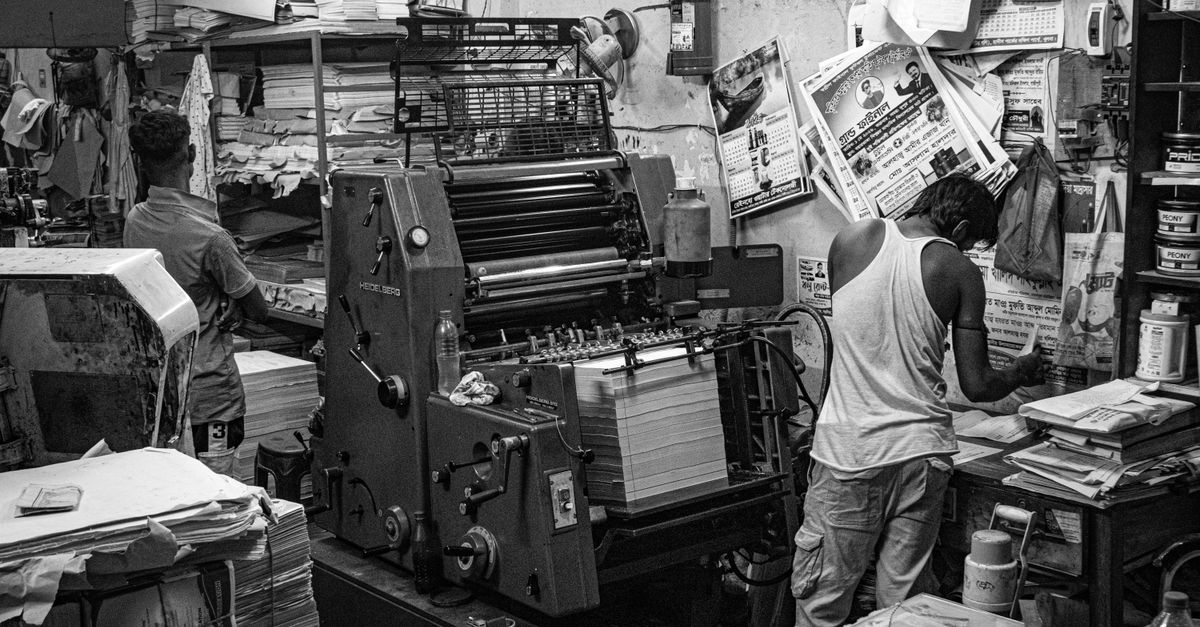
I remember back in 2012 when a buyer from a big institutional chain visited our plant. He was polite but skeptical. He walked past our offset press — a Heidelberg, still running strong after 15 years — and asked, 'Can your equipment handle 100-page notebooks with a four-colour cover?' Our senior pressman just smiled and showed him a sample from the day before. It was a school notebook with a full-bleed design. The buyer stared at it for a while. Then he asked, 'What's the maintenance schedule on these machines?' That's when I knew he understood.
Offset vs Digital: Which Book Printing Equipment Fits Your Order?
You'll hear people argue about offset versus digital like it's a holy war. It's not. Each has a place. The real question is your order size and turnaround time.
| Factor | Offset Printing Press | Digital Printing Press |
|---|---|---|
| Run Size | Best for 500+ copies | Ideal for 1 – 500 copies |
| Setup Time | 30-90 minutes per plate (colour setup) | Minimal – no plates needed |
| Cost per Unit | Decreases with volume | Stays flat regardless of quantity |
| Colour Consistency | Very high – Pantone matching possible | Good – but can vary between printers |
| Paper Compatibility | Wide range (thin to thick) | Limited – usually 80-300 GSM |
| Variable Data | Hard (each page same) | Easy (different text per copy) |
If you're ordering 20,000 corporate diaries with a fixed cover and same pages inside, offset is the winner. If you need 200 custom notebooks with individual names on the cover, digital makes more sense. Many big manufacturers — including us — run both to cover every situation.
And here's a nuance people miss. Even within offset, there are different types. Sheet-fed offset is common for notebooks. Web offset, used for high-speed printing on rolls, is rarely used because you lose flexibility. So when you ask about book printing equipment, ask if they use sheet-fed offset and for what paper sizes.
A Real Example: When Equipment Made the Difference
Rajesh, 42, works as a procurement officer for a group of 15 schools in Vizag. Last year he ordered 30,000 long notebooks. He went with the cheapest quote — factory used a single-colour offset press and manual binding. The first batch had covers that were half a millimetre off. Students complained. Teachers complained. He had to reprint 8,000 notebooks at his own cost.
This year he called us. He didn't just ask about price. He asked about our printing press make, the binding line automation level, and how often we calibrate colour. I walked him through our setup. He placed the order. The notebooks came out perfect. That's not a sales pitch. It's what happens when the buyer understands the machine behind the product.
How to Evaluate a Manufacturer's Book Printing Equipment
You don't need to be a mechanic. You just need three things.
- Ask for make and model. A manufacturer who mentions 'Heidelberg' or 'Komori' or 'Manroland' is probably serious. If they say 'it's a Chinese press, don't worry' — dig deeper. Not all Chinese presses are bad, but you want specifics.
- Request a pre-production sample. Not a dummy — a real printed sheet from the exact equipment. Check colour registration, paper dust, and bleed edges.
- Visit the factory if possible. Look at the machine floor. Is it clean? Are operators checking sheets as they come out? Are spare parts stored nearby? That tells you about maintenance culture.
I've been in factories where the equipment is 30 years old but spotless, running perfectly. I've also seen brand new machines that are already breaking down because nobody cares. The equipment matters. But the people running it matter just as much.
Frequently Asked Questions
What is the most common book printing equipment for notebooks?
For bulk notebook production, sheet-fed offset printing presses are the most common. They handle large paper sizes like 27×17 cm, print both sides, and deliver consistent colour across thousands of copies. Most Indian manufacturers use Heidelberg or Komori offset presses.
How long does it take to print 10,000 notebooks with good equipment?
Depending on the press and setup, a single offset press can print 5,000–8,000 sheets per hour. For 10,000 notebooks (assuming 80 pages each), printing alone takes about 2–3 days. Binding adds another 1–2 days. A well-equipped factory can complete the order in under a week.
Can I use digital book printing equipment for large orders?
Possible but not cost-effective for runs above 1,000 copies. Digital presses have lower per-page cost for small quantities but become expensive compared to offset for large volumes. Use digital only if you need variable data or extremely short runs.
What should I look for in a manufacturer's printing equipment?
Check the press make and age, whether they have colour calibration tools, and the condition of binding machines. Ask for maintenance records or a factory tour. Equipment in good hands produces reliable quality. Also confirm they have backup machines in case of breakdown.
Does book printing equipment affect paper quality or thickness?
Indirectly, yes. Some presses handle thicker paper (like 200 GSM covers) better than others. The feeder mechanism, roller pressure, and drying system all limit the paper thickness. If you need heavy paper, ask if their equipment supports it. Most offset presses work fine up to 300 GSM.
Conclusion: What You Really Need to Know
Book printing equipment isn't just technical jargon. It's the factor that decides whether your notebooks look professional or like a cheap knockoff. Two things matter: the type of press (offset for bulk, digital for short runs) and the condition of the machines. Don't be shy about asking for details. A good manufacturer will be happy to show you.
I don't think there's one perfect setup for everyone. Probably there isn't. But if you've read this far, you already know what you need to check next time you're placing an order. And if you want a factory that's been running quality equipment since 1985, Sri Rama Notebooks is worth a call.