What Bulk Printing Actually Means for Notebooks
You've probably searched for 'bulk printing' and gotten a thousand different explanations. Some too technical. Some too vague. And honestly? Most of them miss the point if you're buying notebooks.
Here's what I've learned in 40 years of making notebooks in Rajahmundry. Bulk printing isn't just about quantity. It's about consistency across thousands of units. If you order 10,000 notebooks with your logo on them, every single one should look the same. Not almost the same. Exactly the same. And that's harder than it sounds.
Most people I talk to assume bulk printing means you just run a machine and out come the notebooks. It's more complicated than that — and if you're ordering in volume, you should know the difference.
How Bulk Printing Actually Works in a Notebook Factory
Walk into any real printing unit and the first thing you'll notice is the smell. Ink. Paper dust. Machine oil. It's not clean. It's not quiet. And the bulk printing process itself is a headache if you're not prepared.
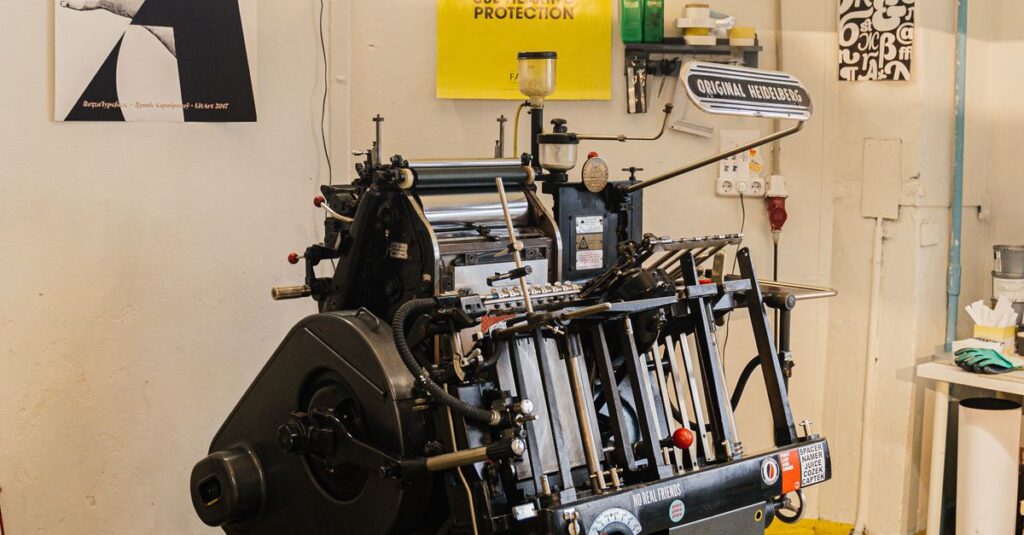
The Offset Printing Setup
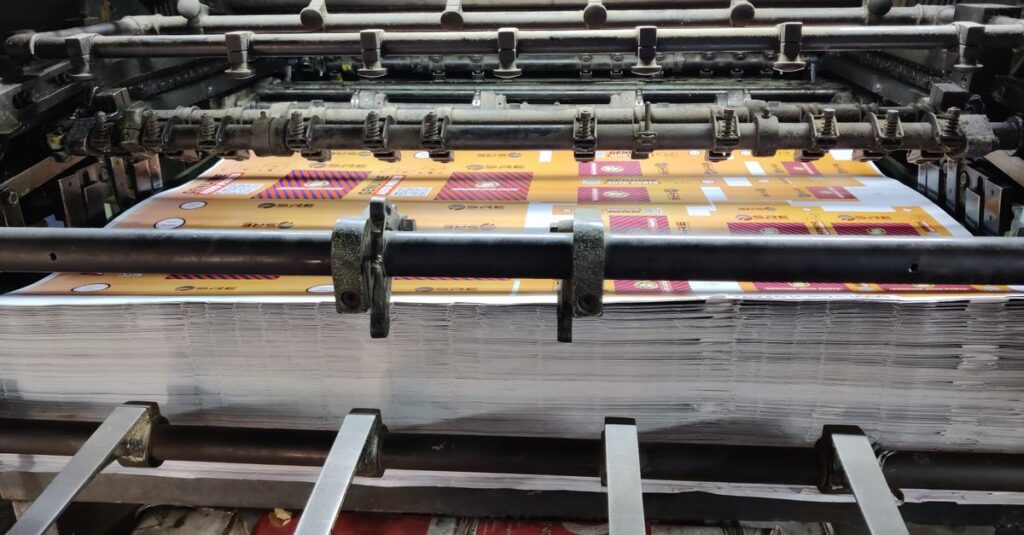
For bulk printing, offset is the standard. Digital is faster for small batches, but for anything over 500 units, offset gives you better color consistency and lower per-unit cost. The machine doesn't care about your deadline. It runs at its own pace. You make plates, mount them, adjust the ink flow, run test sheets, adjust again. Then you run. And run. And run.
What Can Go Wrong
- Color drift — the first notebook doesn't match the last one because ink density changes over a long run
- Paper jams — at high speeds, paper quality matters more than you think
- Alignment issues — one millimeter off in printing means the logo sits crooked on every single cover
- Drying problems — ink that hasn't cured properly smudges inside the packaging
I remember a batch we did for a school in Visakhapatnam. 20,000 notebooks. The logo was perfect on sheet one. By sheet 15,000, the blue had shifted. We caught it. Most manufacturers wouldn't.
And that's the thing about bulk printing — the difference between good and bad isn't visible on day one. It shows up six months later when someone opens a notebook and the ink has faded.
What You Should Look for When Ordering Bulk Printing
If you're a procurement manager or running a school, you probably don't visit factories. I understand. But here are the questions you should ask before signing any bulk printing order.
| What to Check | Why It Matters |
|---|---|
| Print resolution (minimum 300 DPI) | Low resolution means your logo looks blurry when enlarged on a notebook cover |
| Color matching (PMS or CMYK) | Your brand blue should be the same on paper as it is on your website |
| Proofing process | Always ask for a physical proof before the full run — digital proofs lie |
| Ink type (soy-based vs solvent) | Solvent inks fade faster under sunlight; soy-based lasts longer |
| Coatings (matte or gloss lamination) | Protects the print from scratches and handling during transport |
I've seen buyers choose the cheapest quote and end up with notebooks where the logo started peeling before they reached the students. Not because the printer was bad. Because nobody asked about the coating.
Look, I'll be direct — if a printing company can't send you a real physical proof, walk away. A PDF isn't a proof. It's a suggestion.
The Real Cost of Bulk Printing (Not What You'd Expect)
Everyone asks about price. But the question isn't 'how much does bulk printing cost.' The question is 'what are you paying for.'
Here's a story. Rajesh, 41, ran a stationery distribution business in Guntur. He ordered 50,000 notebooks from a manufacturer who quoted him 30% less than anyone else. The bulk printing was done in three days. Fast, right? Six weeks later, his customers started complaining. The print on the covers was smudging. The paper quality was inconsistent. He lost three contracts. He called me six months after that. Wanted to know if we could fix it. We couldn't. The notebooks were already sold.
Cheap bulk printing costs more in the long run. Not because the printer is dishonest. Because they cut corners on things that aren't visible — ink quality, drying time, paper GSM, plate maintenance.
Three things that drive the real cost of bulk printing:
- Paper quality — 54 GSM vs 70 GSM changes the price by about 15-20% but changes the feel completely
- Ink coverage — full-bleed printing uses more ink and takes longer to dry
- Binding after printing — stitched binding takes more time than perfect binding, so the printing schedule has to account for that
I think — and I could be wrong — that most buyers don't ask about drying time. But that's where the quality lives. Rushed drying means smudging. Period.
Custom Bulk Printing – When Standard Isn't Enough
Sometimes you don't just want a logo on a cover. You want something specific. Custom paper sizes. Special ruling. Embossed logos. Foil stamping. It changes the bulk printing process entirely.
Expert Insight
I was talking to a supplier from Chennai last month — over chai, not a meeting — and he said something that stuck with me. He said the problem with bulk printing isn't the printing. It's the setup. Every custom element adds another adjustment. Another plate change. Another ink mix. Another test run that eats into the margin. 'Custom work pays less per unit,' he said, 'but it keeps the factory running during slow weeks.' He wasn't complaining. He was explaining how the business actually works. And he's right. Custom bulk printing isn't a loss leader. It's a different kind of value — one that buyers don't always see until they need it.
When to Go Custom
- You want a specific page layout that standard notebooks don't offer
- Your brand has unique color requirements that need special ink mixing
- You need embossing or foil stamping alongside printed logos
- The notebooks are for a corporate gift or event where presentation matters
Custom bulk printing takes longer. Usually 7-10 extra days for setup and approvals. But the result is something that feels like yours, not something generic off a shelf.
Which is a trade-off. Speed vs uniqueness. Cost vs quality. Pick two. You never get all three.
Bulk Printing vs Digital Printing – The Honest Comparison
There's a lot of confusion about this. Let me clear it up in one paragraph. Digital printing is faster for small batches — under 500 units. No plates, no setup time. But the per-unit cost stays the same whether you print 10 or 1000. Bulk printing (offset) has a higher setup cost but the per-unit price drops as the quantity goes up. If you need 5000 notebooks, offset is cheaper. If you need 200, go digital.
Most factories won't tell you this, but digital printing on notebooks doesn't hold up as well over time. The ink sits on top of the paper rather than absorbing into it. It can crack at the spine if the notebook is used heavily. At our facility, we usually recommend offset for anything above 1000 units.
Frequently Asked Questions
What is the minimum quantity for bulk printing of notebooks?
Most factories start bulk printing at around 500 to 1000 units. At Sri Rama Notebooks, we can handle bulk printing orders starting from 1000 notebooks. Smaller quantities are better suited for digital printing, which has a different cost structure.
How long does bulk printing take for 10,000 notebooks?
For a standard bulk printing order of 10,000 notebooks, expect 10 to 15 working days. This includes printing, drying, binding, and packing. Custom work with special inks or embossing can add another 5 to 7 days depending on the complexity.
Can I get a sample before the full bulk printing run?
Yes, always ask for a physical proof before approving the full bulk printing run. A printed sample on the actual paper stock lets you check color accuracy, alignment, and paper quality. Digital proofs on screen are not reliable for final approval.
What paper weight is best for bulk printed notebooks?
54 GSM is standard for school notebooks. For corporate diaries or premium notebooks, 70 to 80 GSM paper holds ink better and feels more substantial. Heavier paper also reduces show-through when writing on both sides of the page.
Does bulk printing include cover customization?
Most bulk printing services include cover printing as part of the package. You can choose between full-color print, single-color logo, embossing, or foil stamping. The cover material also affects the final look — 300 GSM art card with gloss lamination is a common choice.
One Last Thing About Bulk Printing
Here's what I know after four decades of doing this. Bulk printing is not a commodity. It's a partnership. The manufacturer who takes your order and disappears is not the one you want. The one who calls you to say the blue ink shifted slightly and asks if you want a reprint — that's the one worth working with.
I don't think there's one perfect way to do bulk printing. Probably there isn't. But if you've read this far, you already know the difference between a cheap quote and a good deal. The rest is just finding someone who cares as much as you do. Sri Rama Notebooks has been doing bulk printing since 1985. Give us a call if you want to talk it through.