First, Let's Be Honest About What You're Looking For
You're here because someone asked for a classmate exercise book. Maybe a school procurement list landed on your desk. Maybe a distributor called saying they need 10,000 notebooks by next month. And now you're trying to figure out what that actually means — paper quality, binding, size, whether you can get a logo printed on the cover.
I've been in this business since 1985. And I can tell you: most people who search for a classmate exercise book aren't looking for one notebook. They're looking for a supplier who can deliver hundreds or thousands — and not screw it up.
So here's what I'll do. I'll walk you through what actually matters when you're buying these in bulk. Not the marketing fluff. The real stuff. And if you want to skip straight to talking to someone who can help, Sri Rama Notebooks has been doing this for forty years. Just saying.
What People Actually Mean When They Say “Classmate Exercise Book”
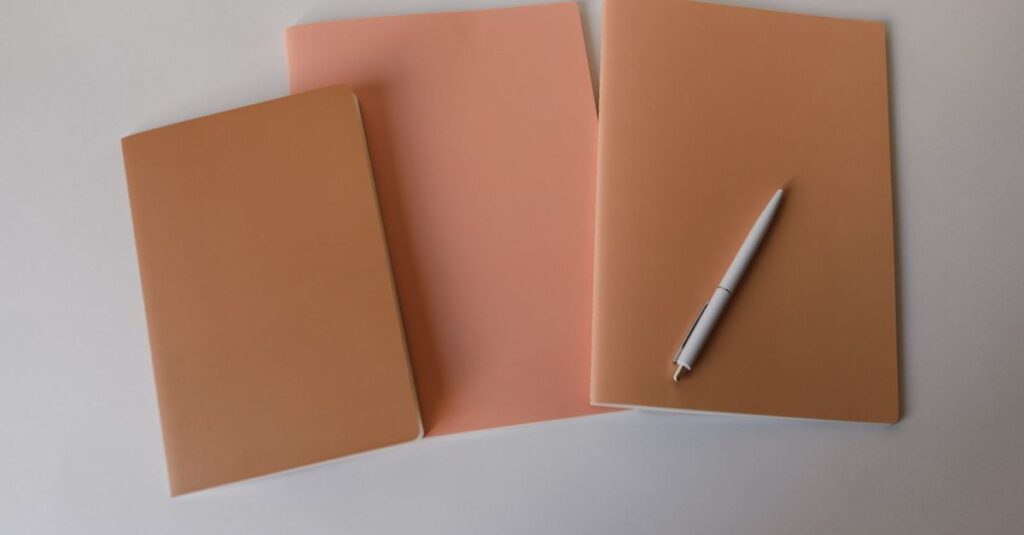
Here's the thing about this keyword. Nine times out of ten, when someone says “classmate exercise book,” they're not referring to a specific brand. They mean a type of notebook — the standard school exercise book. The classmate exercise book is just shorthand for a ruled notebook that students use daily.
But that shorthand comes with expectations. And those expectations are surprisingly specific:
- Thick enough paper that ink doesn't bleed through
- Stitching that doesn't fall apart after two months
- A cover that doesn't peel off by mid-term
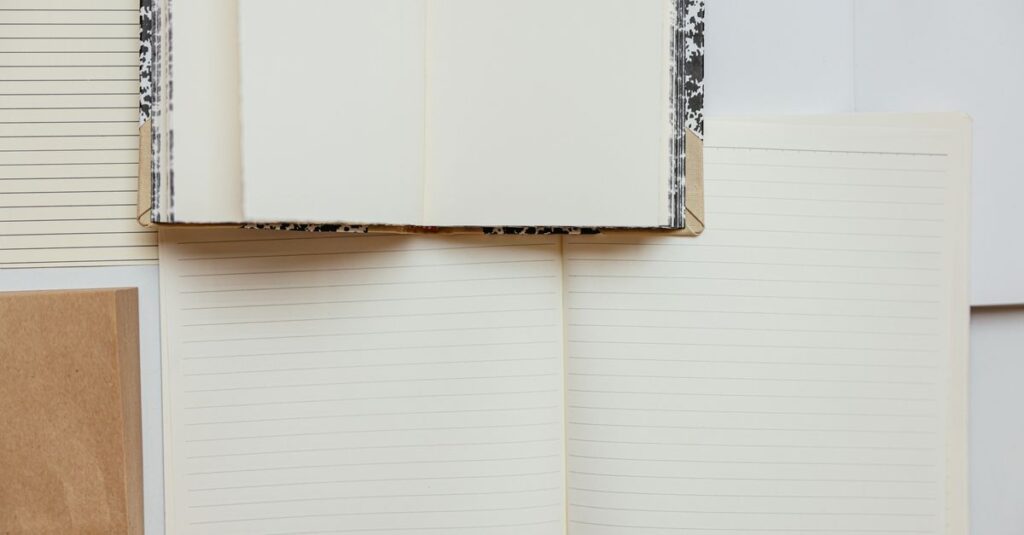
- Ruled pages — usually single ruled, sometimes four-ruled for younger kids
- And a price that makes sense for bulk orders
That's it. Not complicated. But you'd be surprised how many manufacturers mess this up. They cut corners on paper weight. They use glue that dries brittle. They print rulings that are too faint to see. And then the school complains, and you're stuck in the middle.
(I've heard that story enough times now that I know it's not coincidence. It's bad manufacturing.)
Anyway. Where was I.
The point: if you're ordering a classmate exercise book in bulk, the name doesn't matter as much as the spec. And the spec has three parts.
The Three Non-Negotiables in a Bulk Notebook Order
Paper: The Thing Everyone Ignores Until It's Wrong
Paper is boring. Nobody thinks about it until they write on it and the pen bleeds through to the next page. Then suddenly it's the only thing anyone talks about.
For a standard classmate exercise book, you want around 54 to 60 GSM paper. That's the sweet spot for writing — smooth enough that a gel pen doesn't drag, thick enough that ballpoint doesn't ghost through. You can go higher if you're dealing with fountain pens, but for general school use, that range works.
I was talking to a procurement manager from a school in Vizag last month — over the phone, actually — and she said something I keep thinking about. She said: “I don't care if the cover is fancy. The kids are going to draw on it anyway. I just want the pages to stay in.” That makes sense, right?
Binding: The Part That Breaks First
Most school notebooks use stitched binding. It's old-school, but it works. The pages are sewn together in sections, then glued into the spine. It lies flat. It doesn't pop open. And if it's done right, it lasts the entire academic year.
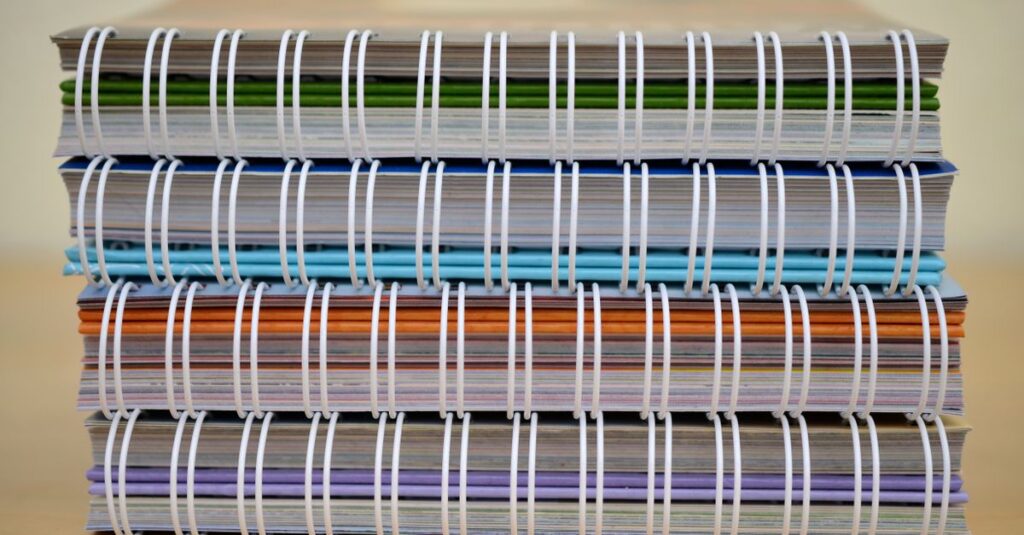
Spiral binding is another option — easier to tear pages out, but also easier for pages to accidentally come out. For a classmate exercise book used by a 12-year-old who shoves it into a backpack with a water bottle and three textbooks? Stitched is safer.
One thing I'll say about our factory: we don't rush the binding line. 30,000 to 40,000 notebooks a day, and every single one goes through the same check. If a stitch is loose, it gets pulled out and re-done. I know that's not the most efficient way to do it. But I'd rather lose an hour of production than send out notebooks that fall apart.
This is probably the part where I should mention that we do custom binding too — spiral, perfect, stitched, any size from A4 to crown. Take a look at the product page if that matters to you.
Cover and Printing: The First Thing People Judge
Look, I know the cover seems superficial. But here's the truth: when a school principal opens a box of notebooks, they look at the cover first. If the color is off, or the logo is misaligned, or the lamination is peeling at the corner — that's the impression.
For a classmate exercise book, you don't need anything fancy. A 250 GSM paperboard cover with matte lamination is standard. It's sturdy enough to survive a school year, and it takes logo printing well.
We do embossing, foil stamping, custom cover design — all of that. But nine times out of ten, schools just want their name printed clearly in one color on the front. Simple. Clean. Readable.
Which brings me to something I should probably admit: Earlier I said the name of the notebook doesn't matter. That's not quite fair. What matters is consistency. If you're ordering a classmate exercise book for a chain of schools, every single batch needs to look identical. Same shade of blue. Same ruling thickness. Same spine width. That's harder than it sounds.
Comparison: Stitched vs Spiral Binding for School Notebooks
| Feature | Stitched Binding | Spiral Binding |
|---|---|---|
| Durability | High — pages stay in for months | Medium — coils can bend or snap |
| Lay-flat ability | Good — opens flat with use | Excellent — pages fold completely around |
| Tear-out ease | Difficult — needs scissors | Easy — just uncoil and pull |
| Backpack survival | Excellent — no exposed parts | Good — coils can snag on fabric |
| Cost per unit (bulk) | Lower — simpler materials | Higher — metal or plastic coil adds cost |
| Best for | Schools, daily use, exams | Art classes, notebooks that need page removal |
The choice really comes down to how the notebook will be used. If it's going into a kid's bag and getting thrown around, stitched wins. If it's for a subject where pages get torn out regularly — like drawing or math practice — spiral might make more sense. Most schools go stitched. For good reason.
What a Real Bulk Purchase Looks Like
Let me tell you about a guy named Ramesh. He's 52, runs a stationery distribution company in Kakinada. He's been in the business for twenty-two years. Every April, he places an order for 15,000 classmate exercise books across six different sizes — long, short, crown — and has them delivered to twelve schools before June.
He told me once: “The first year I did this, I went with the cheapest supplier I could find. Saved maybe two rupees per notebook. By October, I had three principals calling me asking why the covers were peeling. I had to replace 2,000 notebooks out of my own pocket. Never again.”
That's the thing about bulk orders. The cheapest option is rarely the cheapest in the long run. And the best supplier isn't the one with the flashiest website — it's the one who picks up the phone when you call in November with a rush order.
I think about that conversation a lot. Not because it was unusual — it wasn't. It was just honest.
Expert Insight: A Memory About Paper
What I Learned After 40 Years
I remember a specific batch we produced in 2008. I can't tell you why that particular one stuck in my head — maybe because it was a hot summer and the humidity was making the paper curl. We had to stop the line and adjust the rollers. The paper wasn't bad paper. It was just the wrong GSM for the weather that week.
That taught me something: paper is alive. It reacts to temperature, to moisture, to how long it sits in a warehouse. The same 54 GSM sheet that works perfectly in December can warp in July if the factory doesn't adjust. I'm not saying every manufacturer knows this. But the ones who've been doing it for a while? They know.
The question isn't whether you can find someone to print a classmate exercise book for you. It's whether they'll still be around when you need a reorder in six months. And whether the second batch will look exactly like the first.
Frequently Asked Questions
Frequently Asked Questions
What is a classmate exercise book exactly?
It's a standard ruled notebook used in schools. Usually around 54 to 60 GSM paper, stitched or spiral binding, with a printed cover. The term is used generically for any notebook that meets school supply specs — not just one brand.
What size is a standard classmate exercise book?
Most common are Long size (27.2 cm × 17.1 cm) and Short size (19.5 cm × 15.5 cm). King size and Crown size are also used. It depends on the school's requirement and the grade level of students.
Can I get a classmate exercise book with my school logo printed on it?
Yes. Most manufacturers offer custom cover printing. You can print a logo, school name, or any design on the front cover. Options include offset printing, foil stamping, and embossing. Minimum order quantities apply — typically 500+ units.
How many pages does a classmate exercise book usually have?
Common page counts are 52, 92, 120, 200, and 240 pages. For daily school use, 92 to 200 pages is standard. Thicker notebooks are used for subjects that need more writing space across the year.
Where can I buy classmate exercise books in bulk?
You can order directly from manufacturers like Sri Rama Notebooks in Rajahmundry, India. They produce 30,000 to 40,000 notebooks daily and supply schools, distributors, and institutions locally and internationally.
Final Thoughts — No Conclusions, Just Questions
I've been writing about notebooks for a long time now. And what I keep coming back to is this: a classmate exercise book is a simple thing. Paper, stitching, a cover. But making thousands of them, consistently, year after year, with no complaints — that's not simple. That takes a factory that actually cares about the details.
If you're ordering for a school or a chain of schools, ask the tough questions. What GSM is the paper? Who does the binding? What happens if a batch has defects? Don't assume the answers are obvious. They're not.
I don't think there's one right supplier for everyone. Probably there isn't. But if you've read this far, you already know what you're looking for — you're just trying to find someone who won't let you down. If you want to talk to a manufacturer who's been doing this since 1985, Sri Rama Notebooks is here.