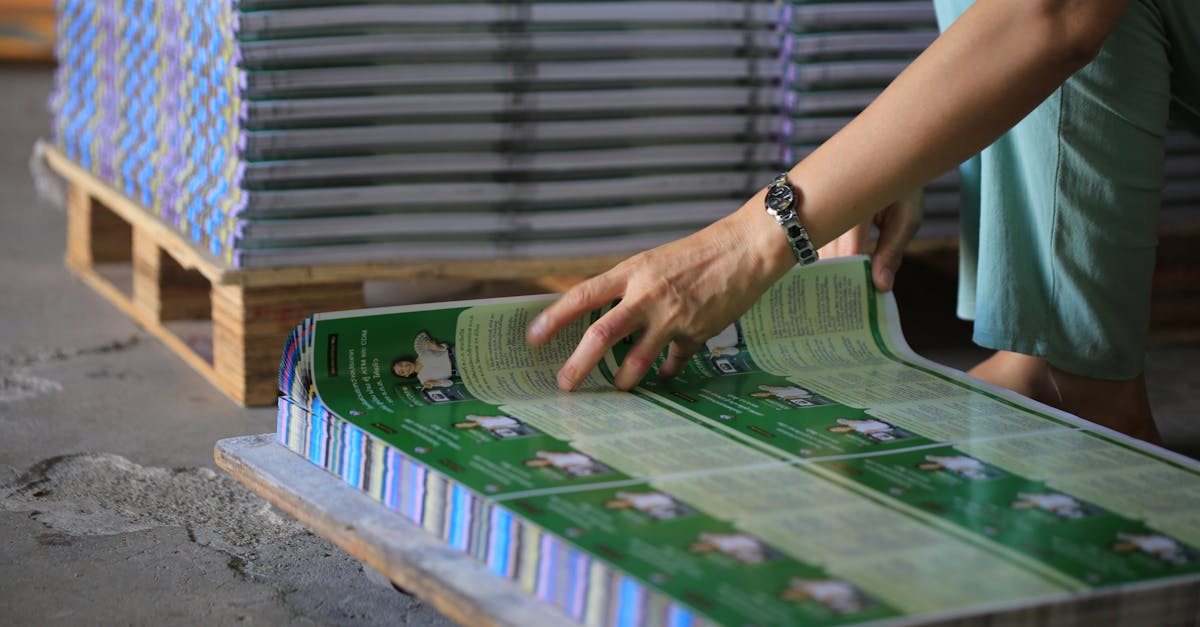
What Large Scale Printing Factory Operations Actually Look Like
Most people think a printing factory is just big machines running non-stop. And yeah, that’s part of it. But the part nobody talks about — the part that keeps me up some nights — is how everything can go wrong in thirty seconds. Paper jams. Ink inconsistencies. Binding misalignments. One mistake and you’ve got five thousand unusable notebooks.
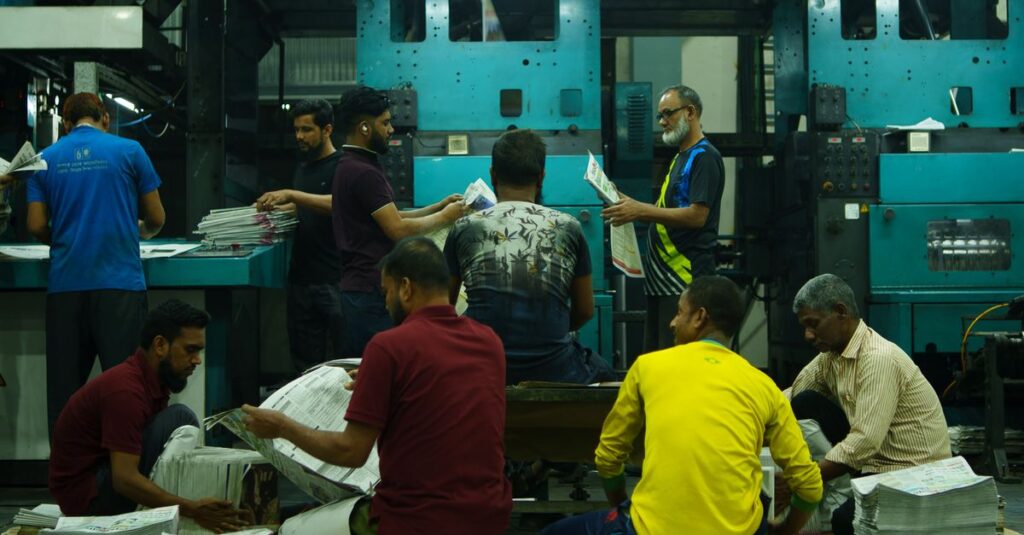
I’ve been at Sri Rama Notebooks long enough now to know that large scale printing factory operations aren’t about the machines. They’re about the people who watch those machines like hawks. The guy who catches a color shift before it ruins a run. The woman who spots a tension issue in the paper feed two seconds before it snaps. That’s where the real operation lives.
And let me be clear — I’m talking about a place that pushes through 30,000 to 40,000 units daily. That’s not a small print shop. That’s a full-scale production line feeding into schools, corporate offices, and export containers headed to the Gulf, Africa, the UK, and the US.
So yeah. The operations matter. But not the way you probably think.
How Raw Paper Becomes a Finished Notebook — The Real Workflow
Here’s the thing about large scale printing factory operations — they start long before any machine gets turned on. It starts with paper stock. If the paper quality is inconsistent, nothing downstream will fix it. That’s just physics.
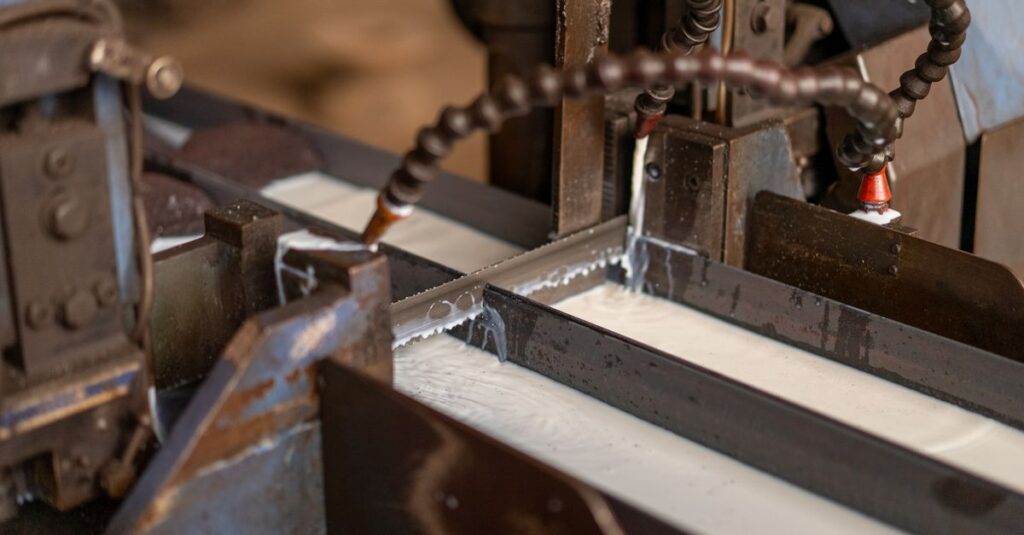
At our facility in Rajahmundry, we bring in paper in massive reams — and I mean massive. Each reel weighs somewhere around a ton. The first operation is unwinding that reel into sheets, then cutting them down to size. King size. Long. Short. A4. A5. Crown. Each size means a different setup, a different cutting pattern, a different waste percentage you have to account for.
Printing — Where Precision Meets Speed
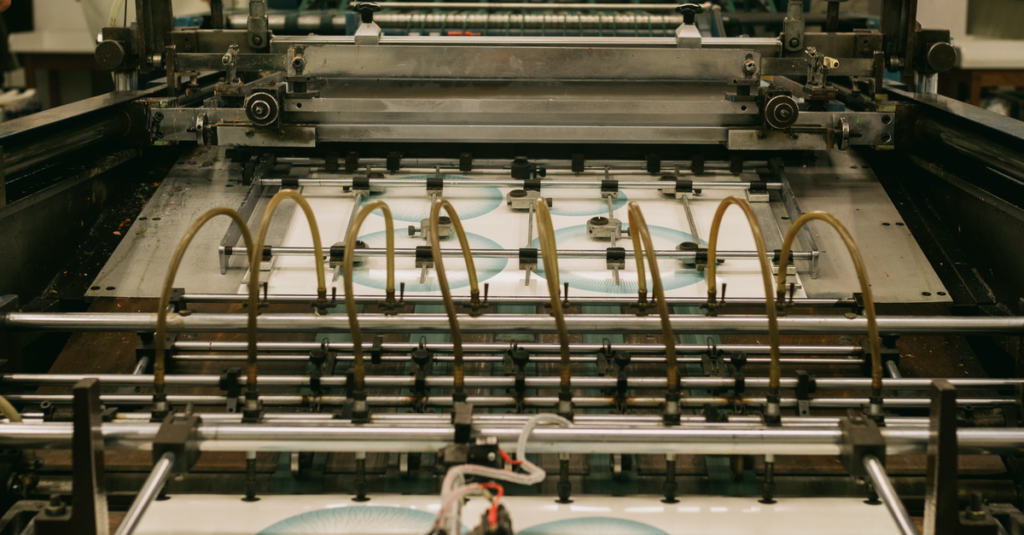
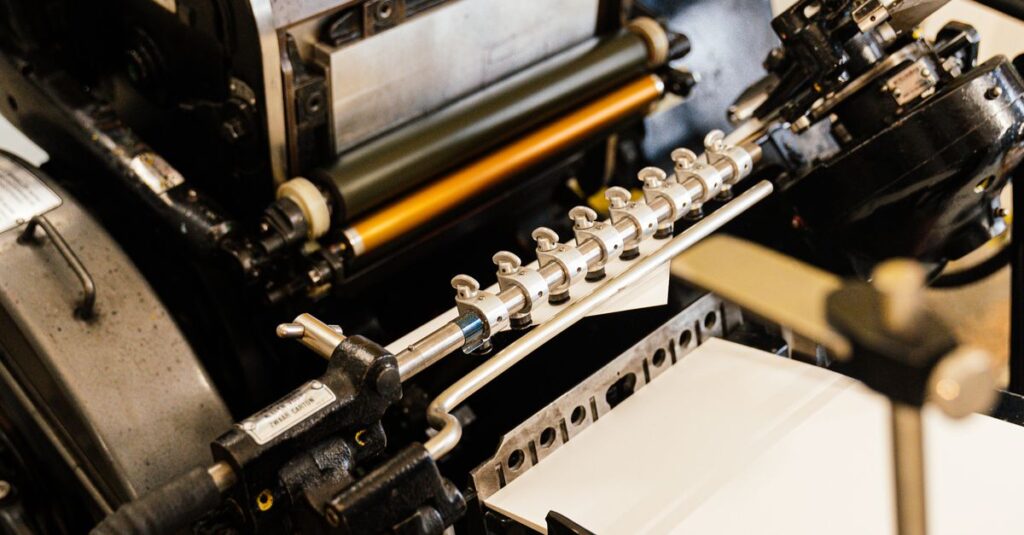
Once the paper is cut, it hits the offset printing presses. This part is loud. Like, you-can’t-hear-yourself-think loud. The presses run at speeds that would terrify anyone who isn’t used to them. Pages fly through at hundreds per minute, and each one has to match the proof exactly.
We print rulings mostly — Single Ruled, Double Ruled, Four Ruled, Cross Ruled. But for corporate diaries and custom notebooks, we’re printing logos, cover designs, sometimes full-color interiors. The ink has to dry. The registration has to be perfect. And if it’s off by even half a millimeter?
You scrap the whole run.
I’m not exaggerating.
- Paper reel unwinding and cutting
- Offset printing with color matching
- Drying and stacking
- Cover printing and lamination
- Folding and collating
That’s the basic flow. But the basic flow doesn’t tell you about the stress when a press goes down at 2pm on a Friday with a 40,000-unit order due Monday. That’s a different kind of math.
Binding — The Part That Separates Good Factories from Bad Ones
Binding is where large scale printing factory operations get really interesting. Because printing errors are visible immediately. Binding errors sometimes don’t show up until the notebook is in someone’s hands, three months later.
I remember a conversation with a distributor from Hyderabad — let’s call him Ramesh, 47, works out of Secunderabad. He told me about a batch he received once from another supplier. Looked great on the outside. But within two weeks, pages started falling out. Not the whole notebook — individual signatures just letting go. His school clients were furious. He lost three contracts because of it.
That story stuck with me because it’s the kind of thing you can’t see on a factory tour. You have to know what to look for.
We use three binding methods at our plant:
- Stitched binding — industry standard for school notebooks. Strong if done right, weak if the stitching tension is off.
- Spiral binding — common for corporate diaries and premium notebooks. Requires precise hole punching.
- Perfect binding — for high-end books and diaries. Glue-based, which means temperature and humidity matter a lot.
Expert Insight
I was talking to our production manager last month — he’s been here since the early 2000s — and he told me something I keep thinking about. He said the biggest operational mistake new factories make isn’t technical. It’s rushing the curing time on perfect binding glue. They want to get the books out the door faster, so they reduce the drying period. And six months later, the spines crack. He said, “The machine will do what you tell it to. The problem is when you tell it the wrong thing.” I don’t have a better way to put it than that.
Offset Printing vs Digital Printing — A Real Comparison
People ask me all the time about printing methods. Which one is better? The answer, predictably, is “it depends.” But let me lay it out in a way that actually helps.
| Factor | Offset Printing | Digital Printing |
|---|---|---|
| Best for | Large runs (5000+ units) | Small runs or prototypes |
| Cost per unit | Lower at scale | Higher per unit, no setup cost |
| Setup time | 30-60 minutes per color | Almost zero |
| Color accuracy | Excellent with Pantone matching | Good but less consistent |
| Paper options | Wide range of stocks | Limited to what the printer feeds |
| Durability | Ink bonds to paper — very durable | Toner sits on surface — can flake |
For the kind of volume we do — 30,000 to 40,000 notebooks a day — offset is the only real option. Digital makes sense for proofs, small test runs, or quick turnaround custom orders. But for large scale printing factory operations, offset printing is where the economics and quality come together. At least in my experience.
The Quality Control Loop That Most People Don’t See
Here’s a hard truth about large scale printing factory operations — you can automate printing, but you cannot automate quality. Not fully. Machines can check for registration errors and paper jams, but they can’t feel whether a notebook binding has the right amount of give. They can’t tell if the paper has a slight curl that will annoy a student writing on page 47.
Our QC process has four checkpoints. Every batch goes through all four. First, the paper inspection before it enters production. Second, the press check — every 30 minutes during a run, someone pulls a sample and compares it to the proof. Third, binding inspection — random sampling from each pallet. Fourth, a final visual check before packaging.
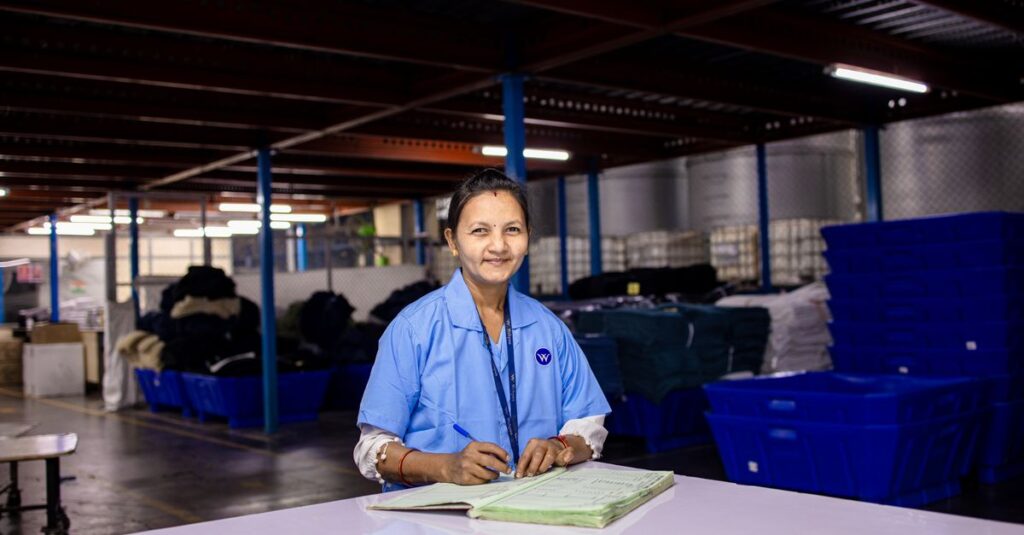
But the most important checkpoint isn’t a checkpoint. It’s the people. The operators who’ve been doing this for fifteen years and know, just know, when something sounds wrong on a press. You can’t write that into a workflow document.
Frequently Asked Questions
Frequently Asked Questions
How do large scale printing factories handle tight deadlines?
They rely on parallel workflows and buffer stock. While one batch is being printed, another is being cut, and a third is being bound. But honestly? Tight deadlines still cause chaos. The difference between a good factory and an average one is how they respond when things inevitably go wrong.
What’s the minimum order quantity for bulk printed notebooks?
It varies by factory, but for offset printing, you’re usually looking at 1000 units minimum. Below that, the setup cost makes each notebook too expensive. For large scale printing factory operations, the efficiency comes from long runs with minimal changeovers.
How long does it take to manufacture 10,000 custom notebooks?
Typically 7 to 14 working days, depending on complexity. Simple ruled notebooks with a single-color cover print are faster. Full-color covers with foil stamping or embossing add time. The largest variable is drying time for inks and adhesives.
Can I visit a printing factory before placing an order?
Most legitimate factories welcome visits. At Sri Rama Notebooks in Rajahmundry, we regularly host distributors and corporate buyers who want to see operations firsthand. It’s always better to see the actual production line than to rely on photos.
What makes large scale printing factory operations different from small print shops?
Volume and consistency. Small shops can handle 100 notebooks beautifully. Large factories have to make 10,000 notebooks that all look identical. The operational challenge is maintaining quality across a long production run, not just making one perfect sample.
Some Final Thoughts on Factory Operations
Look, I’ve been writing about this for a while and I still don’t think I’ve captured the full picture. Large scale printing factory operations are messy. They’re loud. They’re stressful. And when they work well, they look effortless — which is the biggest lie of all.
Two things I’ve learned that matter most: First, paper quality determines everything downstream. Second, the people running the machines matter more than the machines themselves. That’s probably not what you expected to hear. But it’s what I’ve seen, day after day, for years.
If you’re sourcing notebooks in bulk and wondering what separates a reliable operation from a risky one — come see for yourself. Or at least, ask the right questions before you commit. The answers will tell you everything.
Call us at +91-8522818651 or check out Sri Rama Notebooks.