What Does Paper Have to Do With Printing?
I'll be honest with you — I used to think paper was paper. Back when I started at the factory in Rajahmundry, I figured the ink did all the heavy lifting. The paper was just… there. A surface. An afterthought.
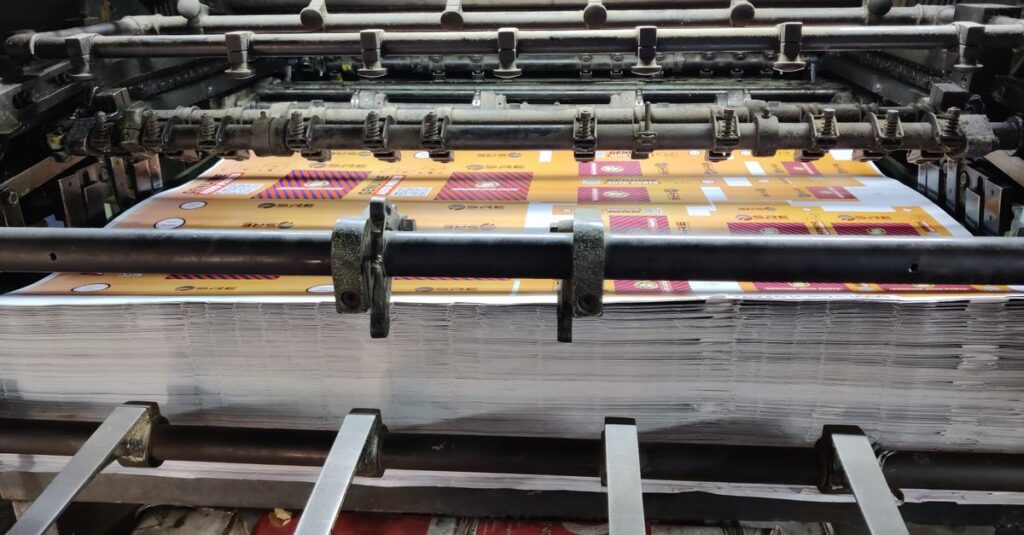
Then I watched a print run go wrong on a batch of 92-page notebooks for a school order. The ink bled through every single page. Looked like someone had spilled tea on it. The principal called. The distributor was angry. And I had to sit there and explain how paper quality impacts commercial printing results to a man who just wanted his notebooks delivered.
That was the day I learned. Paper isn't passive. It's the foundation. And if the foundation is weak, nothing else holds. Whether you're ordering corporate diaries for your company or bulk notebooks for a chain of schools, the paper you choose decides how your print turns out — sharp or muddy, professional or cheap. If you're sourcing in bulk, you need a manufacturer who understands this. That's where Sri Rama Notebooks comes in.
Why GSM Alone Isn't the Answer
Most buyers walk in asking one question: “What GSM is this?” As if GSM is the entire story. It's not. Not even close.
GSM — grams per square meter — measures weight. Heavier paper is usually thicker. That's true. But a 70 GSM sheet made from recycled pulp will behave completely differently from a 70 GSM virgin wood fiber sheet. The recycled one might have shorter fibers. It absorbs ink faster. It feathers at the edges. The virgin fiber sheet holds a clean line. Same weight. Different world.
The Real Factors
Here's what I pay attention to now, after thirty-plus years of watching paper fail or fly:
- Surface finish: Smooth paper holds finer detail. Rough paper gives texture but loses sharpness in small type.
- Opacity: The lower the opacity, the more you see the print on the other side. Bad opacity = ghosting.
- Porosity: How fast does ink soak in? Too fast and it spreads. Too slow and it sits on top, smudges.
- Brightness: Brighter paper makes colors pop. Duller paper makes everything look flat.
I remember this one time — we had a client from Hyderabad who wanted a premium look for their corporate diaries. They insisted on 100 GSM. We ran samples on two different 100 GSM papers. One looked rich. The other looked like newspaper. Same number. Completely different result. The GSM number tells you weight. It doesn't tell you quality. That's the thing nobody says out loud.
How Paper Quality Affects Ink Behavior
Let me tell you about Ravi. Ravi's 42, runs a procurement desk for a college in Vizag. Last year, he ordered 5,000 custom printed notebooks for their annual event. The design was clean — logo, some text, a bit of color.
The first batch came in, and Ravi almost sent it back. The logo edges were fuzzy. The text looked like it was vibrating. He called me frustrated. “Same ink,” he said. “Same design. What changed?”
What changed was the paper. The printer had swapped to a lower grade stock without telling him. Cheaper paper fibers absorb ink unevenly. The ink wicks along the fibers — spreads out in tiny, unpredictable ways. High-end print paper is designed to control that wicking. The coating on the paper surface holds the ink where it lands.
I think — and I could be wrong — that most buyers don't realize how much the paper dictates the final look. They assume the printer does all the work. But the printer is only as good as the surface it prints on. It's like buying a high-end sound system and playing it through a pair of old car speakers. You can tweak the EQ all day. It won't fix the hardware.
Ravi's story has a happy ending. We re-ran the job on proper stock. The design looked the way it was supposed to. He got his notebooks. But I see this mistake every year. The question isn't whether paper matters. It's whether you find out the hard way.
The Relationship Between Paper and Binding
This is the part most commercial printers don't talk about — because it makes their job harder. Paper quality doesn't just affect how the ink sits. It affects how the book is built.
Thin, low-GSM paper — say 50 GSM or below — is a nightmare for perfect binding. The hot glue doesn't grab the fibers properly. Pages fall out after a few months. I've seen account books from other manufacturers lose their first 10 pages within a year. Not because the binding was bad. Because the paper was too thin to hold the glue.
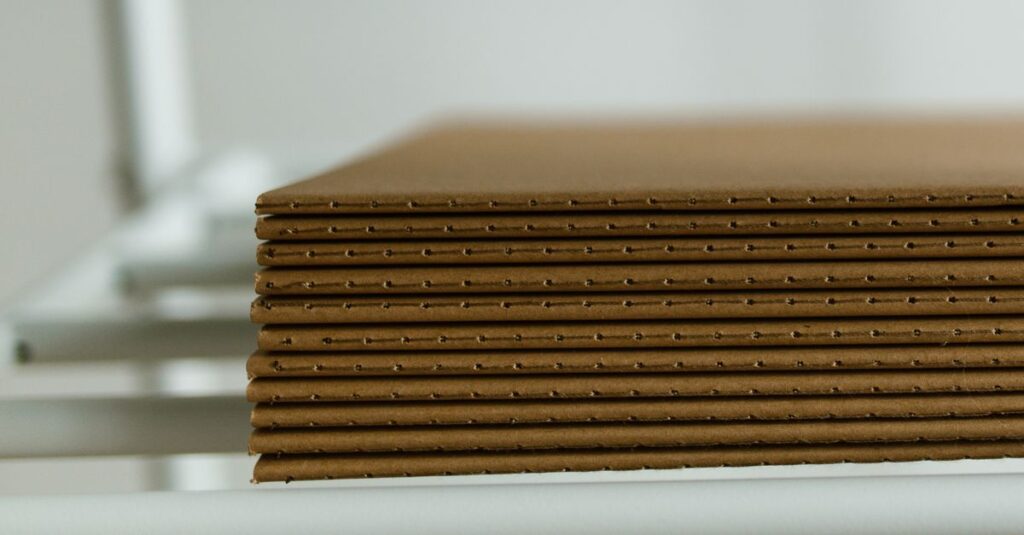
Stitched binding handles thinner paper better. But even then, if the paper has too much coating or filler, the stitching needle creates micro-cracks along the fold. That paper will crack at the spine after a few opens and closes. Paper isn't just a printing surface. It's a structural material.
Here's a rough comparison that might help you choose:
| Paper Type | Recommended GSM | Best For | Binding Notes |
|---|---|---|---|
| Writing paper (standard) | 54–60 GSM | School notebooks, scribbling pads | Stitched or spiral. Avoid perfect binding. |
| Premium offset paper | 70–80 GSM | Corporate diaries, printed stationery | Works with all binding types. Good opacity. |
| Coated paper (gloss/matte) | 90–120 GSM | Brochures, premium covers, inserts | Perfect binding only. Poor fold durability. |
| Thick card stock | 200+ GSM | Covers, dividers, index pages | Requires scoring before folding or binding. |
The right paper and binding combination makes a product last. The wrong one makes it fall apart. And nobody remembers the name of a notebook company that fell apart.
A Quick Expert Insight
I was talking to a paper supplier from Kerala last month — over chai, not a meeting — and he said something I keep thinking about. He said: “Paper carries a memory. If you treat it badly in the mill, it remembers in the print shop.” I laughed at first. But it's true. How the paper was dried, how it was calendered, how it was stored — all of it shows up later. You can't fix bad paper with good ink. The paper already decided how it was going to behave.
Paper and Color Accuracy — A Match Made in Hell or Heaven?
If you've ever ordered branded notebooks with a specific color — like a corporate blue or a school maroon — you've probably felt that moment of dread when the box opens and the color is… wrong. Not a little wrong. Visibly wrong. Like someone washed it once.
Nine times out of ten, that color shift has nothing to do with the printer's settings. It's the paper. Paper with a warm undertone (yellowish) will shift blues toward green. Paper with high optical brighteners (very white) will make warm colors look dull. The paper is essentially mixing its own color into every print.
This drives commercial buyers crazy. They approve a proof on one paper stock. The production run happens on different paper. And suddenly the branding guidelines don't match. The logo is the wrong shade. The annual report looks like a photocopy of a photocopy. The paper quality sets the baseline for color. Everything else adjusts around it.
I've seen procurement managers spend hours negotiating a 2 paisa per notebook discount — then lose thousands in brand consistency because they compromised on paper. The math doesn't work in their favor. It never does.
The Hidden Cost of Bad Paper
Let me be direct about this. Cheap paper feels like a good deal when you're placing the order. But it costs more in ways you don't see on the invoice.
- Waste during printing: Bad paper jams machines, tears on the press, absorbs unevenly. Every failed sheet costs money.
- Returns and replacements: If the print quality is poor, clients don't blame the paper. They blame you. And they want their money back.
- Brand damage: A notebook with bleeding ink, ghosting, or fuzzy text doesn't say “quality.” It says “we cut corners.” People notice.
- Storage issues: Low-grade paper absorbs moisture faster. In humid climates — like Andhra Pradesh, where we are — that paper warps, curls, and becomes unprintable within months.
I don't have a perfect calculation for this. But I can tell you from experience: the cheapest paper in the room is never the cheapest option. Add up the waste, the lost time, the unhappy clients. That 10% paper savings disappears fast.
We run 30,000 to 40,000 units a day at our factory. I've seen both sides of this equation. The difference between good paper and bad paper isn't subtle. It's the difference between a client who reorders and one who doesn't answer your calls.
Frequently Asked Questions
What GSM paper is best for commercial printing of notebooks?
For printed notebooks and diaries, 70 to 80 GSM is the sweet spot. It holds ink well, offers good opacity so text doesn't show through, and works with most binding types. Going below 60 GSM risks bleed-through and weak binding.
Does paper brightness really affect print quality?
Yes, it does. Brightness is measured on a scale up to 100. Brighter paper (95+) makes colors look more vivid and text sharper. Duller paper (80–85) absorbs more light and makes everything look muted. For corporate printing, aim for 90+ brightness.
How can I test paper quality before placing a bulk order?
Ask for a printed sample on the exact paper you're considering. Look for ink bleed on the edges of text. Hold a page up to light to check opacity. Fold it — does the paper crack? Scrunch it — does it tear easily? Physical testing reveals more than any spec sheet.
Can the same paper work for both writing and printing?
Most standard notebook paper (54–60 GSM) works for writing but not for high-quality printing. The fibers are too loose. For printed materials like branded diaries or account books, use offset or machine-finished paper designed to hold ink without spreading.
Does humid weather affect paper quality and printing results?
Absolutely. Paper absorbs moisture from the air, which makes it swell, curl, and feed unevenly through printers. In humid climates, store paper in climate-controlled rooms and use paper with higher density (more compact fibers) that resists moisture absorption.
So What's the Takeaway?
Paper quality isn't a detail. It's the whole foundation. If the paper is wrong, the printing will never look right — no matter how good the design or how expensive the machine. Buyers who understand this save money in the long run. Buyers who don't end up paying twice. Once for the order. Once for the redo.
I don't think there's a single perfect paper. Every project has its own needs. But I know this much: if you start with good paper, everything else gets easier. The printing. The binding. The customer's reaction when they open the box. That last one matters more than the GSM number ever will. If you're looking for a manufacturer who gets this right, Sri Rama Notebooks has been doing it since 1985.