Why Printing Is Getting a Second Look
Look, I’ll be honest. When someone starts talking about “sustainability” in printing, my first reaction is usually a sigh. It sounds like marketing fluff. But then I spent a week talking to procurement managers—people who actually order notebooks and diaries in bulk—and something shifted.
They’re not asking about green trends because they want to look good. They’re asking because their clients are asking. And their budgets are shrinking while paper costs are climbing. So the question becomes: how do you print smarter without cutting corners?
That’s where Sustainable Commercial Printing Trends 2026 actually matters. Not as a buzzword. As a way to keep your business running without bleeding money or waste. I’ve been in this industry since 1985, and I’ve never seen the pressure shift this fast. If you’re ordering custom notebooks or corporate diaries for next year, you need to know what’s coming. Sri Rama Notebooks has been watching this closely, and here’s what we’re seeing.
What the Shift to Eco-Friendly Materials Actually Looks Like
Everyone talks about recycled paper. But here’s the thing—not all recycled paper is the same. Some of it feels rough. Some of it tears too easily. And if you’re printing a corporate diary for a CEO who writes with a fountain pen, rough paper is a disaster.
So what’s changing?
FSC-Certified Papers Are Becoming the Baseline
The Forestry Stewardship Council certification was a niche thing five years ago. Now? I get emails weekly from buyers asking if we can supply FSC-certified notebooks. We can. But the real shift is that suppliers are being forced to prove it. It’s not enough to say “we use eco-friendly paper.” You need the paperwork. And honestly, that’s a good thing.
Soy-Based and Vegetable Inks
This is one I’m excited about. Traditional petroleum-based inks are terrible for the environment. They offgas, they’re hard to recycle, and they smell like a chemical spill. Soy-based inks? They print cleaner, they’re easier to de-ink during recycling, and they actually produce sharper colors on uncoated paper. We’ve been testing them on some of our custom notebooks and the results are solid. Not perfect. But solid.
Here’s what buyers should ask for in 2026:
- FSC or PEFC certified paper stock
- Soy-based or vegetable-based inks
- Water-based laminations instead of plastic ones
- Minimal packaging—no individual plastic wrapping
The list isn’t long. But missing even one of these can undo your entire sustainability claim. And corporate clients notice. I had a procurement officer from a bank tell me last month—she opened a sample box of diaries and immediately threw away half because the plastic wrapping was non-recyclable. That’s the level of scrutiny now.
Waste Reduction in Production: The Part Nobody Talks About
Here’s an uncomfortable truth: commercial printing creates a lot of waste. Setup sheets, misprints, overruns. I’ve seen print runs where 15% of the paper ended up in the bin. That’s money. That’s trees. And it’s completely avoidable if you know what to look for.
Print-on-Demand vs Bulk Runs
I’m not saying print-on-demand is always better. For bulk orders of 10,000 school notebooks, it makes no sense. But for corporate diaries? Companies are starting to print smaller batches twice a year instead of one massive run. Less inventory sitting around. Less waste. And you can update designs or messaging mid-year. We’ve had clients shift to quarterly runs and they tell me the savings in storage alone cover the extra setup costs.
Lean Manufacturing in Print
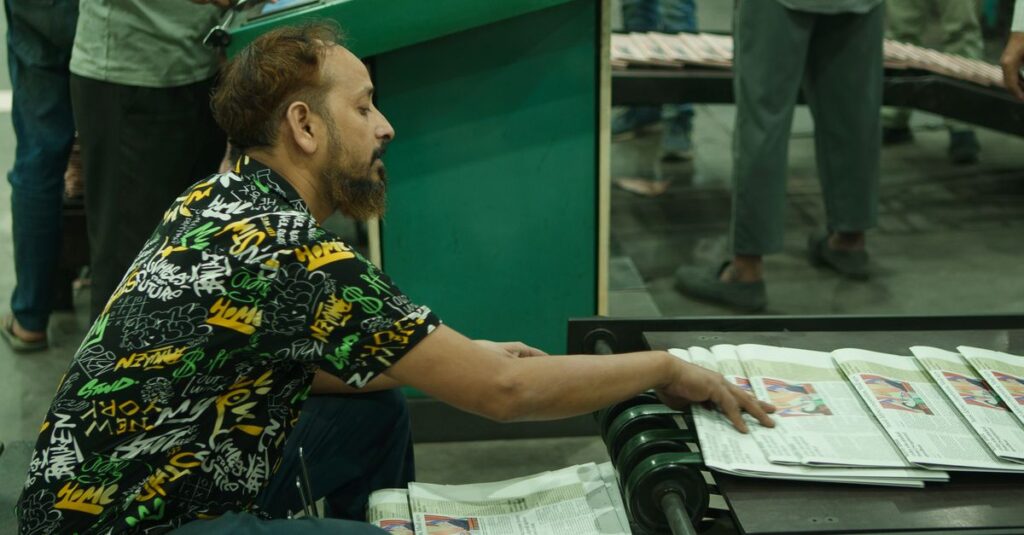
This is a term I stole from the auto industry, but it works here. The idea is simple: every minute your press is running, you should be making saleable product. Not test sheets. Not setup waste. Our factory runs about 30,000 to 40,000 units daily, and we’ve gotten the waste rate down to under 3% by doing things like digital pre-flighting and automated cutting. Sounds boring. Saves a fortune.
I was talking to a colleague in Hyderabad last year—he runs a mid-size print shop—and he told me his biggest cost wasn’t paper. It was disposal. Paying someone to haul away scrap paper. That stuck with me. Because reducing waste isn’t just environmental. It’s operational. And that’s the angle most sustainability articles miss entirely.
Digital Integration: Printing Meets Data
This one sounds techy, but it’s actually simple. The biggest trend I’m seeing for 2026 is how printing connects to digital systems. QR codes on notebooks that link to onboarding documents. Custom diaries with embedded NFC tags for corporate events. Even variable data printing—where each notebook in a batch has a unique name or code printed on the cover.
Why This Matters for Sustainability
Because digital integration reduces reprints. If you can update a document digitally instead of reprinting 5,000 brochures, you’ve saved paper, ink, transport, and time. I’ve seen companies move their training materials entirely to QR-code-linked pages. Printed once. Updated forever. That’s the kind of sustainability that actually works in the real world.
We’re doing this now for a few corporate clients—adding scannable codes inside diary covers that link to company portals. The feedback has been good. But I’ll be honest: the technology is still clunky. Not every QR scanner works on every phone. It’s getting better. But it’s not seamless yet.
Expert Insight
I remember reading an article from a print industry analyst—I think it was from 2023 or early 2024—and they said something that stuck with me. They said the most sustainable print run is the one you don’t have to redo. That’s it. No complicated framework. No carbon offset math. Just: get it right the first time. I don’t have a cleaner way to say it than that. And I think about it every time we start a new production run.
Comparison: Traditional Printing vs Sustainable Printing (2026)
Let me put this side by side. Not to say one is always better. But if you’re comparing options, here’s the real picture.
| Aspect | Traditional Printing | Sustainable Commercial Printing |
|---|---|---|
| Paper Source | Standard bleached pulp | FSC-certified or recycled content |
| Ink Type | Petroleum-based solvents | Soy or vegetable-based |
| Waste Rate | Often 10-15% per run | Target under 5% |
| Packaging | Plastic wrap, styrofoam | Minimal, biodegradable, or none |
| Carbon Consideration | Rarely measured | Tracked and offset where possible |
| Cost per Unit | Lower upfront | Slightly higher, better lifecycle cost |
The cost difference? Real but shrinking. I’ve seen prices for soy-based inks drop nearly 20% in the last two years. And FSC paper is maybe 5-8% more than standard. When you factor in waste savings and client retention, it often breaks even within a year.
A Real Conversation About Supply Chains
Let me tell you about Ravi. He’s 42, works as a procurement manager for a mid-size educational trust in Vijayawada. Orders about 15,000 notebooks a year for three schools. He called me last November, frustrated. His usual supplier had raised prices by 18% and couldn’t guarantee delivery dates. He said, “I don’t care if the paper is recycled or not. I just need it to arrive on time and not fall apart after two months.”
That’s the real conversation. Sustainability matters, but reliability matters more. What I told him—and what I’ll tell you—is that the two aren’t separate. A sustainable supply chain is usually a more reliable one. Because if a supplier is managing waste, tracking materials, and using efficient processes, they’re also managing their production schedule better. They’re not scrambling for raw materials at the last minute. They’re not overproducing and then dumping stock.
Ravi ended up placing a trial order with us. 5,000 notebooks with FSC paper and soy ink. They arrived on time. Teachers didn’t complain. He placed the follow-up order for the remaining 10,000 last month. That’s how sustainability actually wins—not through idealism, but through showing up when you say you will.
Frequently Asked Questions
Frequently Asked Questions
What does sustainable commercial printing actually mean?
It means using materials and processes that reduce environmental harm. This includes FSC-certified paper, vegetable-based inks, waterless printing, minimal packaging, and waste reduction in production. For notebooks and diaries, it means choosing suppliers who can prove these practices.
Will sustainable printing increase my costs?
Slightly upfront—maybe 5-10% more for certified materials and eco-inks. But you often save in reduced waste, lower disposal fees, and better client retention. Many corporate buyers now prefer sustainable options, which can justify the small premium.
Can I get custom logos and branding on sustainable notebooks?
Yes. Eco-friendly printing does not limit customization. You can still get foil stamping, embossing, screen printing, and digital variable data. The difference is the base materials and inks used. We do custom sustainable notebooks regularly.
Are soy-based inks as durable as regular inks?
For most applications—notebooks, diaries, account books—they perform equally well. They resist smudging and fading when properly cured. The one caveat: some soy inks dry slower on coated paper. For uncoated notebook paper, they work great.
How do I verify a printer’s sustainability claims?
Ask for certificates: FSC or PEFC for paper, and material safety data sheets for inks. Request waste tracking reports if available. Visit the factory if you can. A genuine sustainable printer will show you their processes, not just their marketing brochures.
Final Thoughts
I don’t think there’s one perfect way to do sustainable commercial printing. Different orders need different approaches. A school notebook and a corporate diary have very different requirements. What I do know: the trends for 2026 are pushing toward transparency, not just green labeling.
Buyers are smarter now. They’re asking better questions. And suppliers who can’t answer those questions will lose business. If you’re planning bulk orders for next year, start asking about materials now. Not because it’s trendy. Because it’s becoming the standard. And the standard doesn’t wait for anyone. Sri Rama Notebooks