What Digital Transformation Actually Means for Print Shops
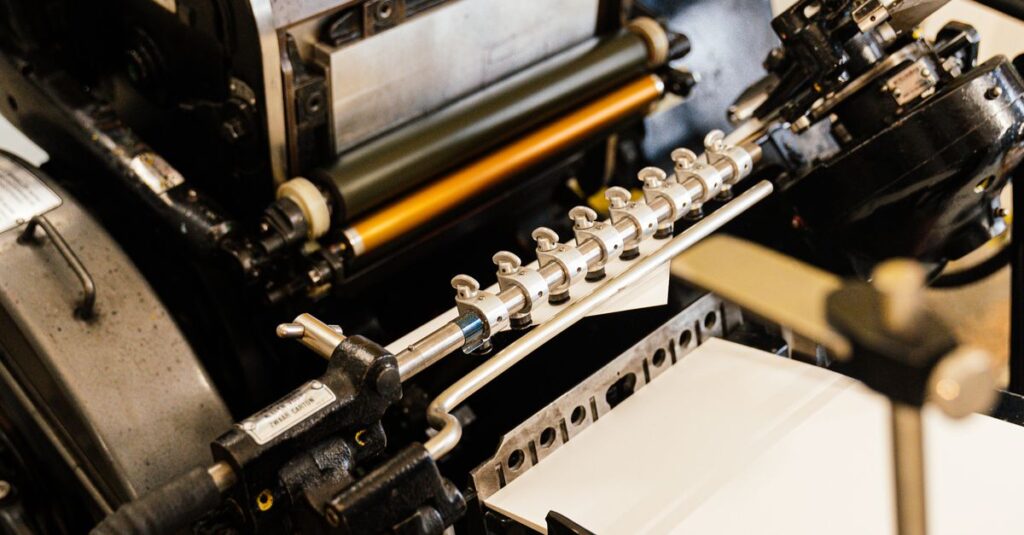
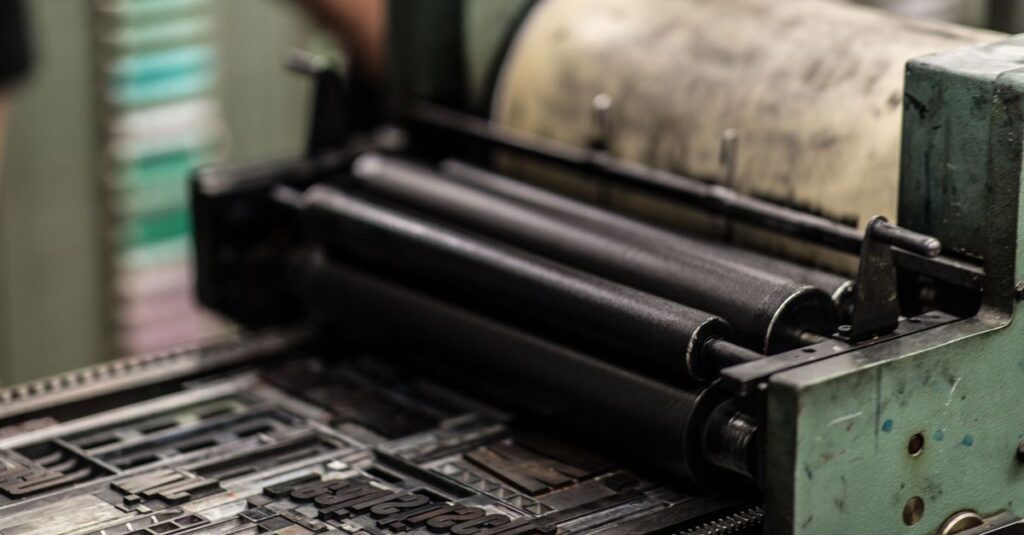
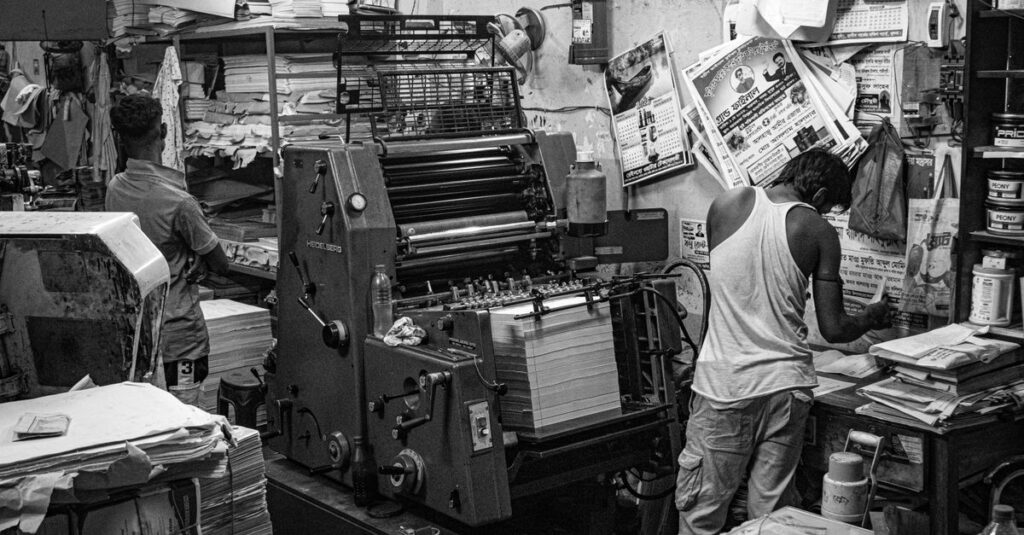
I was talking to a printer in Vijayawada last month. He's been running offset machines since the 90s. He said something that stuck with me: “The machines haven't changed much. But everything around them has.”
That's the thing about digital transformation in commercial printing industry — it's not always about buying a new press. Sometimes it's about how you take orders. How you talk to customers. How you manage inventory so you're not sitting on 10,000 unsold notebooks. In 1985, when we started at Sri Rama Notebooks, orders came by phone or a handshake. Now? It's spreadsheets, emails, ERP systems, and WhatsApp groups that never stop buzzing.
And honestly? The companies that refuse to change — they're struggling.
Where the Old Way Falls Apart
Let me give you an example. We used to track raw paper inventory on paper. Yes, ironic. A notebook manufacturer tracking paper stock in a register book. It worked fine until it didn't. Someone would forget to update a page, and suddenly we'd run out of 52 GSM for the long notebooks. Production would stop for half a day.
That half-day cost money. Not just in idle machines, but in missed delivery dates.
Here's what happens when you digitize these processes:
- You know exactly how much paper you have — real time
- You can predict when to reorder based on historical demand
- Mistakes drop because you're not relying on someone's handwriting
- Customers get accurate delivery dates — not guesses
Most people think digital transformation is about flashy software. It's not. It's about not losing money because someone forgot to sharpen their pencil.
Expert Insight
I remember reading a report from some industry body — I forget which one, maybe the Printing Industries of America — and they had this stat about print businesses that adopted digital workflow tools. I think it was something like a 30% reduction in production errors. Don't quote me on the exact number. But I've seen it with my own eyes. When we moved our order management to a simple digital system, the misprint rate dropped. Not because the machines got better. Because the information going into them was accurate.
The question isn't whether you need this. It's whether you can afford to wait.
A Tuesday Morning in Rajahmundry
Sheena, 34, works as a procurement manager for a chain of 12 schools in Hyderabad. On a Tuesday morning, she realized she needed 4,000 notebooks — logo printed, stitched binding, short size — delivered in three weeks.
Three years ago, this would have meant calling five manufacturers, waiting for quotes, chasing them for samples, and praying the delivery showed up on time. Now? She sends a single WhatsApp with a PDF of the requirements. The manufacturer's system picks it up, generates a quote, and confirms production capacity in under an hour.
She told me she drinks her coffee while it happens. That didn't use to be the case.
The Comparison That Matters: Offset vs Digital Workflow
People confuse printing technology with workflow. They're different things. Here's a comparison table that actually matters in digital transformation in commercial printing industry:
| Factor | Traditional Workflow | Digitally Integrated Workflow |
|---|---|---|
| Order taking | Phone calls, physical order forms | Email, WhatsApp, online forms, API |
| Proofing | Physical print proofs couriered back and forth | Digital PDF proofs with mark-up tools |
| Inventory management | Handwritten stock registers | Cloud-based ERP with real-time updates |
| Production scheduling | Whiteboard with magnets | Gantt charts, automated rebalancing |
| Customer communication | Phone calls, waiting | Automated status updates, tracking links |
| Error rate | 5-8% on complex orders | Under 1% |
I'm not saying every print shop needs a million-dollar ERP system. I'm saying the days of managing a 40,000-unit-per-day factory with a diary and a pen are ending. Faster than most people realize.
Who Benefits Most When Print Goes Digital
Here's a truth that doesn't get said enough: Digital transformation in commercial printing industry isn't just for the printer. It's for the buyer.
If you're a school ordering notebooks for next year, or a corporate office needing branded diaries — the digital shift means you get better information. Faster. You don't have to call and ask where your order is. You can see it. The manufacturer can tell you exactly which machine it's on, how many pages are printed, and when binding starts.
Think about what that does to trust.
When you can see the process, you stop worrying. And when you stop worrying, you stop calling. Which means the production team stops being interrupted every 45 minutes. Which means your order actually gets done faster.
It's not complicated. It's just connected.
The Part Nobody Talks About
Digital transformation is expensive. Not just the software — but the time. The training. The week where your old system is down and the new one isn't working yet and everyone's frustrated.
I won't pretend it's easy. It's a headache.
But here's what I've seen happen when it works: A distributor in Dubai places an order at 10 PM his time. Our system picks it up automatically. The production team sees it when they start at 8 AM. The paper allocation happens. The cover design file is checked. By lunchtime, the first 500 notebooks are printed.
That's not a fantasy. That's how it works now when the systems are in place.
— Actually, that's not quite fair. The first time we tried this, the system crashed at 11 PM and nobody noticed until morning. So there's that. But we fixed it. And now it works.
The question isn't whether digital transformation works. It's whether you're willing to go through the messy middle to get there.
Frequently Asked Questions
Frequently Asked Questions
What is digital transformation in commercial printing industry?
It's the shift from manual, paper-based processes to digital systems for order management, production planning, inventory tracking, and customer communication. Think of it as replacing hand-written job tickets with software that talks to the machines.
Do small print shops need digital transformation?
Not necessarily a full ERP. But even a small shop benefits from digital quoting, automated proof approvals, and basic inventory tracking. The goal is to reduce errors and response time — not to buy fancy software.
How does digital transformation help bulk notebook buyers?
Buyers get faster quotes, accurate delivery timelines, and real-time order tracking. You don't need to chase the manufacturer for updates. The system gives you visibility, which reduces anxiety and improves planning.
Is digital printing replacing offset printing?
No. Digital transformation is about workflow, not technology. Offset is still the best for long runs. But digital workflows make offset printing more efficient by reducing setup errors and improving communication between departments.
How do I choose a digitally transformed printer?
Ask how they handle orders, proofs, and updates. If they say 'we email PDF quotes within an hour' and 'you can check your order status online' — that's a good sign. If they still rely on phone calls and physical proofs, they're behind.
Three Things I'd Want You to Take Away
First — digital transformation isn't about buying a new printing press. It's about connecting the parts of your business that were disconnected. Second — this benefits the buyer as much as the printer. Better information, faster decisions, fewer mistakes. Third — the messy middle is real. It's frustrating. But the other side is quieter and more predictable.
I don't think there's a perfect way to do this. Every factory is different. Every market has its own rhythm. But if you're looking for a partner who has been through this — who started in 1985 with a handshake and now manages orders across six time zones — Sri Rama Notebooks might be worth a conversation.
Or just look at the systems. See if they make sense. That's the only way to know.