What Does Catalogue Printing Mean for a Notebook Order?
Let me be honest with you. Most people looking for catalogue printing aren't looking for a glossy booklet about your products. They're looking for someone who can print their actual order. Their catalogue of notebooks. Their school list. Their corporate diary batch.
And here's where things get messy — because catalogue printing sounds simple. But it's not. I've seen procurement managers spend two weeks calling printers, only to realize nobody can handle 10,000 notebooks in 12 days with custom covers and spiral binding. That's a real problem.
I write for Sri Rama Notebooks. We've been printing notebooks since 1985. This is what I know.
Why Catalogue Printing for Notebooks Is Different
Look. Printing a brochure and printing a notebook are two different animals. Brochures are flat. Notebooks have binding, paper weight, ruling types, cover thickness. A catalogue printing company that does brochures might not know the difference between a stitched binding and a perfect binding. And they won't tell you that. Because they want your order.
What Matters in Notebook Printing
The thing about catalogue printing — when we're talking notebooks — is that every detail changes the price and timeline. Here's what you need to think about:
- Paper GSM: 54 GSM is standard for school notebooks. Go higher and your cost jumps. Go lower and kids complain about ink bleeding.
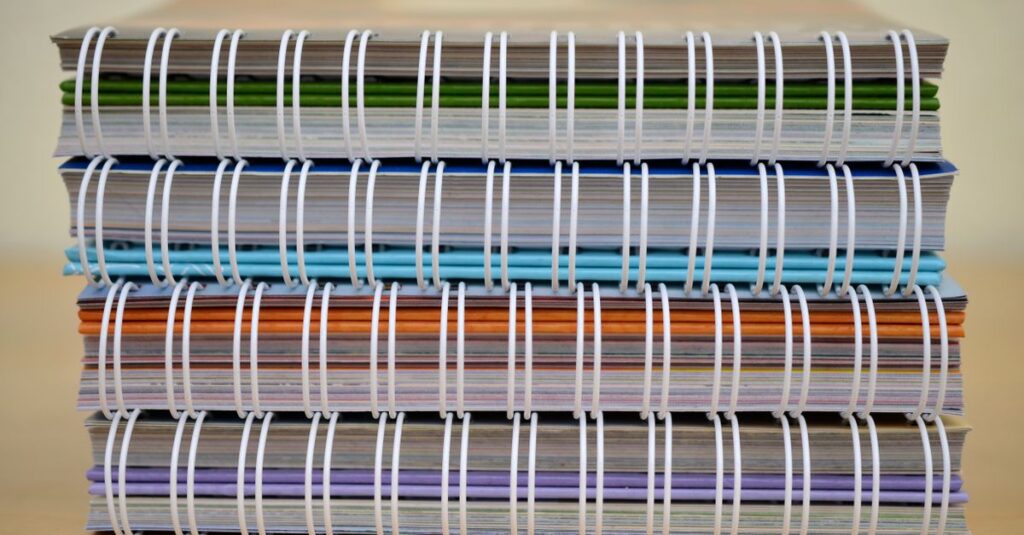
- Binding type: Stitched binding is cheaper and lays flat. Perfect binding looks clean but costs more.
- Cover finish: Matte lamination looks premium. Glossy is cheaper. Embossing? That's a whole different process.
I don't think most buyers know this until they've placed their third order and finally understand why their first batch cost more than expected.
So what's the real cost of getting it wrong? Let me tell you a story.
A Real Example: The School That Ordered Blindly
Rajan, 42, runs a school supply store in Visakhapatnam. He's been at it for eight years. Last April, he needed 5,000 long notebooks with his school's logo printed. He went to a local catalogue printing shop — the kind that prints wedding cards and flyers.
They quoted him a price. He paid upfront. Two weeks later, the notebooks arrived with covers peeling off. The spiral binding was uneven. The logo looked like someone printed it on a home printer.
I met Rajan at a trade fair in Rajahmundry. He told me he lost the contract. The school went with another supplier. He still had 4,200 defective notebooks in his godown.
He now checks three things before placing any order: (1) does the printer specialise in notebooks, (2) what's their daily capacity, and (3) can I visit the factory?
Catalogue Printing vs Notebook Manufacturing: A Comparison Table
| Aspect | General Catalogue Printer | Notebook Manufacturer (like Sri Rama) |
|---|---|---|
| Paper handling | Standard paper only | 54 GSM, 70 GSM, 100 GSM options |
| Binding | Staple or perfect binding only | Stitched, spiral, perfect, O-ring |
| Custom covers | Basic print | Foil stamping, embossing, matte/glossy lamination |
| Bulk capacity | 500–1000 pieces max | 30,000–40,000 units per day |
| Ruling types | Unruled only | SR, DR, FR, UR, BR, OSR — 8 ruling types |
| Export experience | Rarely | Gulf, Africa, USA, UK, Europe, Australia |
The difference isn't subtle. It's the difference between buying shoes from a general store and buying them from someone who makes shoes.
How to Evaluate a Catalogue Printing Partner for Notebooks
Here's what I've learned from watching buyers make this decision. Most people rush. They get a quote, compare two prices, and pick the cheaper one. And then they call me three months later asking if we can fix someone else's mess.
Nine times out of ten, the problem isn't the price. It's that the buyer didn't ask the right questions early enough.
Questions to Ask Before You Place an Order
- What's your daily production capacity? If they can't answer immediately, they're probably a small shop.
- Do you handle the binding in-house? Outsourced binding = quality control issues.
- Can you do custom ruling layouts? If your school needs a specific ruling, are they ready for that?
- What's the lead time for a bulk order of 10,000 units? If they say 15 days, ask yourself if that's realistic.
I'm not saying every general printer will mess up. I'm saying the ones who specialise in notebooks know things that general printers don't. They know that 54 GSM paper behaves differently in humid weather. They know that spiral binding has a left-handed version.
Expert Insight
I was talking to a production manager from Guntur last month. He told me something that stuck. He said — the buyers who complain the most are the ones who didn't ask for a sample. Not a digital proof. An actual physical sample. He said those buyers always, always come back for a second order. The ones who skip samples? They're the ones shouting on the phone two weeks later. I don't have a cleaner way to put it than that.
What Catalogue Printing Means for Your Brand
Your notebooks carry your name. Or your school's name. Or your company's logo. That's not just printing — that's your reputation. Every time someone opens that notebook, they see your cover. If the printing is faded, or the cover is peeling, or the pages are falling out? That's what they remember. Not your brand. The peeling cover.
I've seen this happen. A corporate client in Hyderabad ordered 2,000 diaries for a new year campaign. Nice design. Good paper. But the foil stamping on the cover was misaligned on about 15% of the units. They didn't catch it until after distribution. You know how many calls they got? A lot.
The thing is — catalogue printing isn't just about putting ink on paper. It's about consistency. If you order 10,000 notebooks, every single one should look the same. The cover colour. The binding. The page alignment. If one unit is off, it's your name on it, not the printer's. That's the part nobody tells you in the quote.
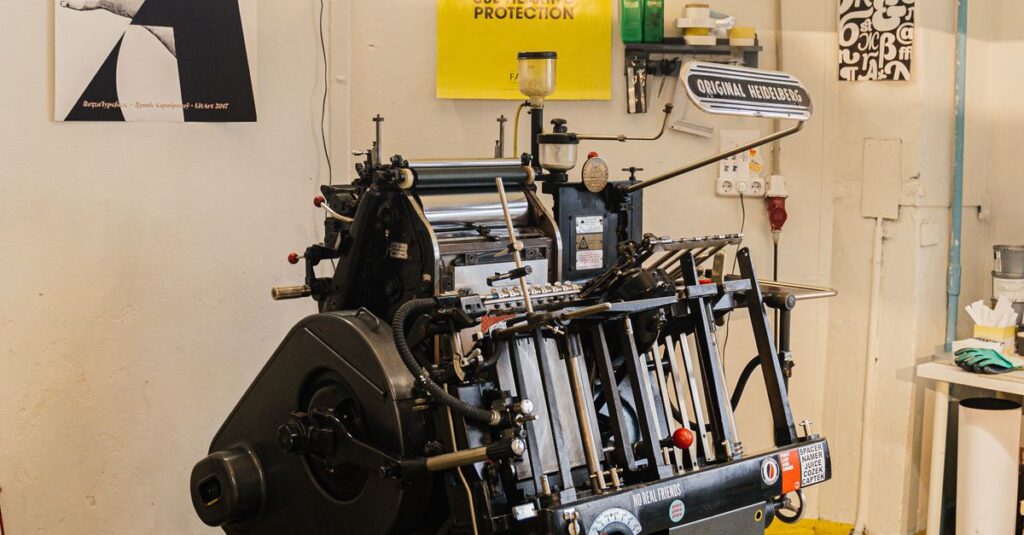
And here's another thing I've noticed. Buyers often don't realise that printing methods vary. Offset printing is great for quantity — it gives consistent quality across thousands of copies. Digital printing is fine for small batches. But if you mix them up? You'll see a difference. The colours won't match. The finish won't be uniform.
Which brings me to something else worth understanding.
I think — and I could be wrong — that most people searching for catalogue printing are actually looking for reliability. They want someone who will deliver exactly what they ordered, on time, without surprises. They've been burned before. And they're hoping this time will be different.
Frequently Asked Questions
What is catalogue printing for notebooks?
It's the process of printing custom notebooks in bulk — covers, pages, and binding — according to a specific order. Schools, corporates, and distributors use this to get branded notebooks with their logo, ruling type, and size preferences.
How long does catalogue printing take for a bulk order?
For an order of 10,000 notebooks, expect 15–20 working days depending on customisation. Simple covers and standard sizes are faster. Embossing, foil stamping, or custom ruling adds time. Always ask for a timeline before confirming.
What's the minimum quantity for custom catalogue printing?
Most notebook manufacturers start at 500–1,000 units for custom covers. For private label or OEM orders, the minimum is usually higher — around 2,000–3,000 units. Smaller quantities might cost more per unit due to setup charges.
Can I get a sample before placing a bulk catalogue printing order?
Yes. Reputable manufacturers offer physical samples before production. This is the best way to check paper quality, cover finish, and binding. Never rely only on digital proofs. A sample tells you what you're actually getting.
What's the difference between catalogue printing and regular printing?
Catalogue printing for notebooks involves specialised processes like binding, ruling, and cover lamination. Regular printing is for flat materials like brochures. Notebook printing requires specific machinery and experience that general printers don't always have.
So Where Does That Leave You?
If you're reading this, you're probably trying to figure out who to trust with your order. And that's fair. There are a lot of options out there. Some are good. Some will take your money and deliver something that looks nothing like what you asked for.
Two things I'd say — check the capacity. If a printer can't handle your volume, they won't tell you upfront. And ask for a physical sample. Not a PDF. An actual notebook you can hold in your hand.
I don't think there's one right answer here. Probably there isn't. But if you've read this far, you already know what to look for. Talk to Sri Rama Notebooks if you want to see how we approach it. We've been doing this since 1985. We'll tell you straight.