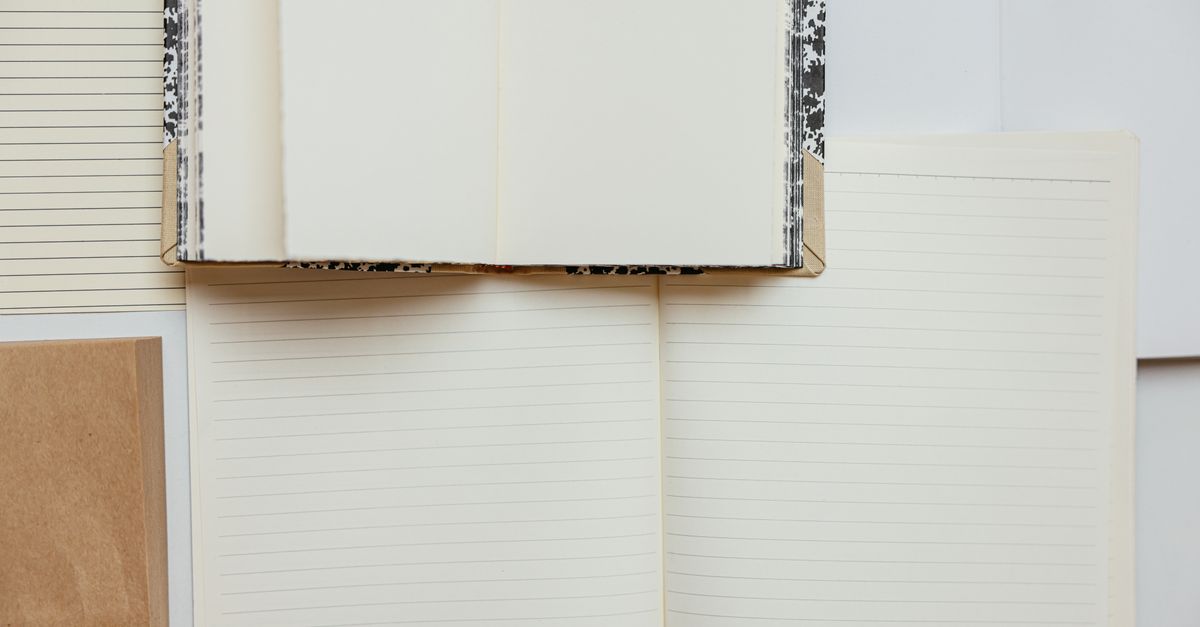
What Exactly Is a Combination Notebook?
You ever open a notebook and wish you had graph paper on the left and ruled on the right? That's the whole point of a combination notebook. It's one book with different ruling types inside. Simple idea, but surprisingly hard to find if you're buying in bulk.
Most notebooks stick to one ruling — single ruled, graph, blank. But a combination notebook contains two or more paper types bound together. Maybe you need lined pages for notes and dot grid for diagrams. Or blank pages for sketches next to ruled for writing. The idea is flexibility without carrying two books.
At Sri Rama Notebooks, we make these in all sizes — King, Long, A4, A5. 52 pages up to 320. The tricky part is the binding. Different paper weights need a spine that doesn't wrinkle or tear. We've been doing it since the 90s, so we know what works.
Schools and colleges love them for subjects like biology (ruled + blank for diagrams) or math (graph + ruled). Corporates use them for brainstorming sessions — one half notes, the other sketches. It's not a niche product anymore. It's becoming standard.
Common Ruling Combinations
- Lined + Graph
- Lined + Blank
- Lined + Dot Grid
- Graph + Blank
- Three-way: Lined + Graph + Blank
- Corner ruling (ruled on top, blank bottom)
The truth is, you can mix almost anything. But some combinations work better than others. That's where experience matters.
Why Bulk Buyers Are Choosing Combination Notebooks Now
Here's something I've noticed over the last five years. Procurement managers used to order separate notebooks for different purposes. Five hundred ruled notebooks for English. Five hundred graph for math. That's two SKUs to manage, two deliveries, twice the paperwork.
Then someone decided to combine them. One SKU. One order. One book that does both jobs.
The savings aren't just in logistics. Students don't carry two notebooks for one subject. Classrooms need less storage. And honestly — less waste. How many half-used graph notebooks have you seen thrown away? A lot.
I remember talking to Anita, a school principal from Kakinada — 47 years old, runs a school with 1200 students. She said: “My teachers kept asking for mixed-ruled notebooks. I didn't even know they existed until last year. Now we order nothing else.”
That's the shift. Not just convenience. It's smarter buying.
But here's the catch — not all manufacturers can do combination notebooks well. The binding needs to be precise. The paper alignment must match. If the rulings are off by a millimeter, the notebook looks cheap. And cheap doesn't work for institutions.
I think that's why we get so many repeat orders. Because we obsess over the small stuff.
Comparison of Popular Combination Notebook Ruling Types
| Ruling Combination | Best For | Common Uses | Paper GSM Needed |
|---|---|---|---|
| Lined + Graph | Math, Science, Finance | Notes + Graphs, Data tables | 60–70 GSM |
| Lined + Blank | Art, Biology, Design | Notes + Sketches, Diagrams | 54–60 GSM |
| Lined + Dot Grid | Planning, Bullet Journals | Agendas + Free writing | 70–80 GSM |
| Graph + Blank | Engineering, Architecture | Schematic drawings + Calculations | 70–80 GSM |
| Triple (Lined+Graph+Blank) | Comprehensive notebooks | Multi-subject, Corporate diaries | 60–70 GSM |
GSM matters because different rulings sometimes need different paper thickness. Graph paper bleeds less if it's heavier. Blank pages for sketching need more absorbency. We adjust according to the combination — it's not one-size-fits-all.
Expert Insight — Why Binding Is the Make-or-Break
I remember when we first started making combination notebooks back in the early 90s. The old man — our founder — insisted on a specific binding that wouldn't split at the spine when different paper types were used. Took us months to get it right. But that obsession stuck with us.
Most manufacturers use standard stitching. But when you have ruled paper on one side and blank on the other, the paper texture changes. The spine takes uneven stress. If the binding is weak, pages fall out within a month. We use reinforced stitching and sometimes perfect binding for thicker combinations. It costs more, but the notebooks last.
I don't have a stat for how many returns we've saved because of this. But I can tell you — it's a lot.
Customizing Your Combination Notebook for Bulk Orders
If you're buying 5000 notebooks, you're probably not looking for off-the-shelf products. You want your logo on the cover. Maybe a specific color scheme. Or a custom page layout where the first 40 pages are ruled and the last 20 are blank.
Here's what we can do at Sri Rama Notebooks:
- Logo printing (offset or foil stamping)
- Custom cover design with your branding
- Private label / OEM with your company name on the back
- Custom ruling placement — specify which pages get which ruling
- Binding choice: stitched, spiral, or perfect binding
- Paper GSM selection (54 to 80 GSM)
The key thing is to plan ahead. Combination notebooks take a bit longer to manufacture because we have to collate different paper stocks. But if you give us a 2-week lead time, we can handle up to 40,000 units per day.
I've worked with distributors who thought custom combination notebooks would be too expensive. Then they saw the per-unit cost after bulk discount. Usually it's only 5–10% more than a standard single-ruling notebook. For the flexibility you get, that's a deal.
One last thing: if you're ordering for a school or college, ask about our educational pricing. We do that.
Frequently Asked Questions
What is a combination notebook?
A combination notebook is a single book that contains two or more different ruling types — for example, lined pages on one side and graph on the other. It's designed for users who need multiple formats without carrying separate notebooks.
What ruling combinations are available for bulk orders?
Common combinations include lined + graph, lined + blank, lined + dot grid, and triple combination (lined + graph + blank). We can also create custom layouts — for instance, alternating pages or sections with different rulings.
Can I get custom covers and logos on combination notebooks?
Absolutely. We offer logo printing, foil stamping, embossing, and full custom cover design. Private label and OEM options are available. Just share your artwork and we'll handle the rest.
What sizes do you offer for combination notebooks?
We make King (23.6 x 17.3 cm), Long (27.2 x 17.1 cm), Short (19.5 x 15.5 cm), A4, A5, and Crown sizes. All sizes can be made as combination notebooks. Minimum order is usually 500 units but we can discuss for schools.
How long does it take to manufacture bulk combination notebooks?
Typically 2–3 weeks depending on quantity and customization. Our daily production capacity is 30,000–40,000 notebooks, so large orders move quickly. Rush orders are possible with prior discussion.
Final Takeaways — Not Everything Needs a Conclusion
Combination notebooks aren't for everyone. But if you manage procurement for a school, college, or corporate office, they solve a real problem: one book, multiple uses, less hassle.
I don't think there's a universal best combination. It depends on what your users need. Talk to your teachers or employees. You might be surprised what they ask for.
If you're curious about pricing or samples, reach out to us. We've been doing this long enough to help you figure it out.