So, What Are Field Notes, Anyway?
Let’s be honest — you’ve heard the term “field notes” tossed around. It sounds fancy, like something an archaeologist or a detective would scribble in. But if you’re a procurement manager or a business owner looking to order notebooks, you’re probably wondering what the heck it actually means for you. Because you’re not buying notebooks for a romantic expedition; you’re buying them for inventory checks, site surveys, meeting scribbles, and client notes.
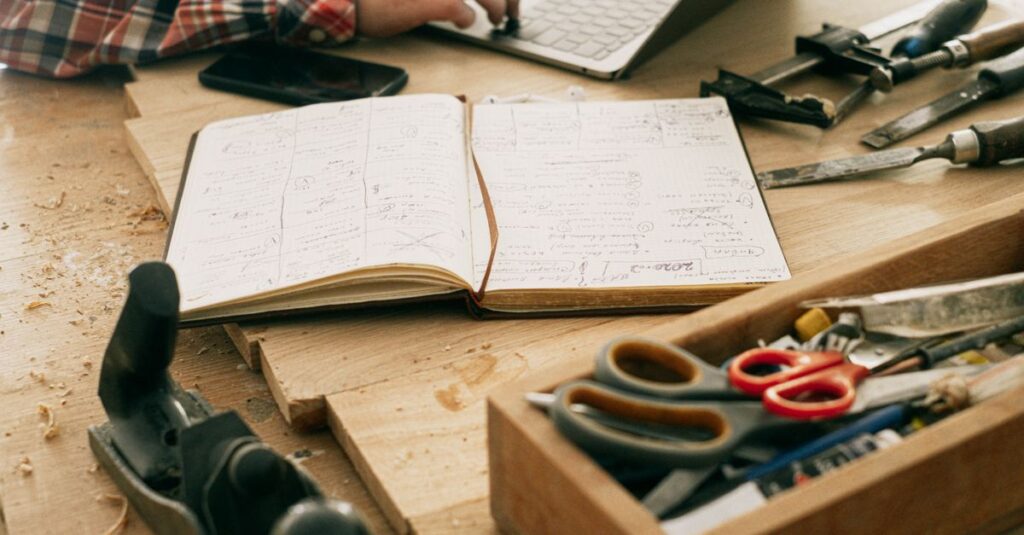
And that’s the point. Field notes aren’t a special product. They’re a use case. It’s just a notebook you take out of the office, into the “field” — the warehouse, the construction site, the supplier’s factory. The paper has to survive dust, maybe a splash of coffee. The binding has to hold up when it’s shoved into a toolbox or a backpack. It’s work.
I’ve talked to dozens of buyers over the years — from schools ordering notebooks for outdoor science projects to construction firms needing pads for site supervisors. The question isn’t “What are field notes?” It’s “What notebook works for my team’s actual, messy day?” If you’re looking for notebooks that can handle that, you might want to see what we make. Not because we call them “field notes,” but because we know what they need to be.
The Daily Reality: Where These Notebooks Actually Go
Think about a typical Tuesday for a procurement manager. You’ve approved an order for 500 notebooks. They’re delivered. And then… where do they end up? This isn’t abstract.
Let me tell you about Rajesh. He’s 42, works for a mid-sized electrical components distributor in Hyderabad. His warehouse team uses notebooks — they call them “stock books” — to jot down incoming shipment details, scratch out quick calculations, note damaged items. The notebooks sit on a greasy workbench, get folded back, pages torn out. They’re not decorative. They’re tools.
Or schools. I remember a college in Vijayawada ordering 2000 notebooks for their agriculture department. Students used them during field trips — writing down soil observations, sketching plant structures. The covers got muddy, the pages damp. But the notes had to stay legible.
This is the real use case. A “field note” notebook is just a notebook that’s designed to be used hard. Not archived. Not displayed. Used.
Expert Insight
I was reading an old industry journal last month — something from the printing trade — and one line stuck with me. A veteran binder said something like: “The best notebook isn’t the one with the fanciest cover. It’s the one that opens flat on a uneven surface and doesn’t fall apart.” I don’t have a cleaner way to put it than that. For field use, that’s the only thing that matters.
What To Look For (And What To Ignore)
So if you’re evaluating notebooks for field use, here’s what actually matters. And I’ll be direct about what doesn’t.
The Binding: This is probably the biggest reason a notebook fails in the field. Spiral binding? It gets bent, the coil snags on things. Perfect binding (like a glued paperback)? The pages start detaching if you fold it back too often. In my experience, stitched binding — where the pages are actually sewn together — lasts the longest under rough handling. It’s a headache, honestly, for manufacturers because it’s slower, but it’s durable.
The Paper: GSM (paper weight) is talked about a lot. For field notes, you don’t need premium 100 GSM paper. You need paper that doesn’t tear easily and doesn’t let ink bleed through from the other side. Around 54-60 GSM writing paper — the standard for most school notebooks — is often perfectly adequate. It’s tough enough, and it’s cost-effective for bulk orders.
The Cover: Thick, hard covers are great for diaries that sit on a desk. For a notebook tossed into a bag? A flexible, yet stiff cover works better. Something that can bend a little without creasing permanently.
Size: This is practical. A King Size (23.6 x 17.3 cm) notebook is a popular choice for field use — big enough for decent notes, small enough to carry easily. Long notebooks (27.2 x 17.1 cm) are good for more detailed logs, like engineering sketches.
What to ignore? Don’t get swayed by overly decorative covers or specialty ruling that your team won’t use. Most field work uses simple single ruled (SR) or unruled (UR) pages. Broad ruled (BR) is good for larger handwriting. Focus on function.
The Manufacturing Angle: What Goes Into a “Field-Ready” Notebook
From the factory floor, making a notebook that survives the field isn’t about adding features. It’s about not skipping steps. I think about this a lot.
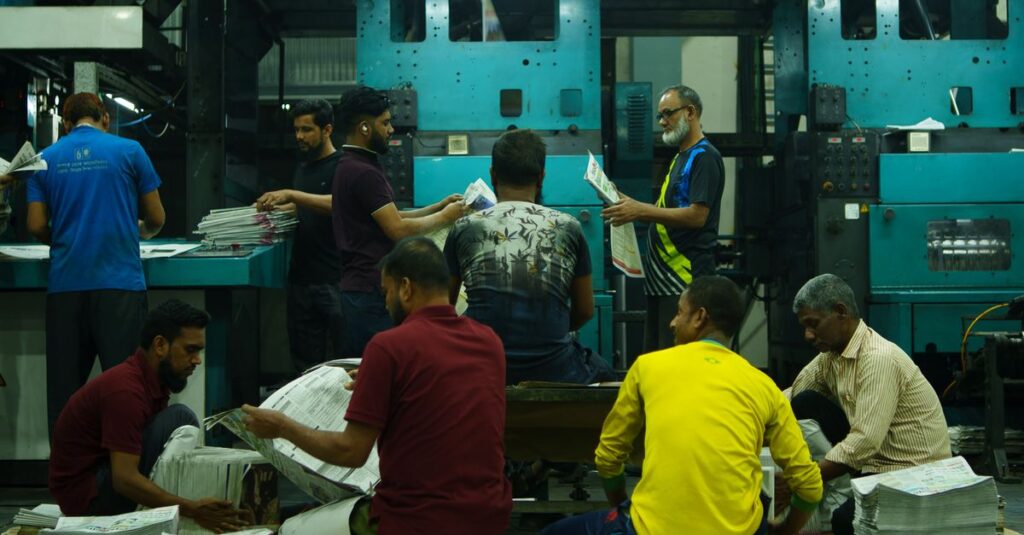
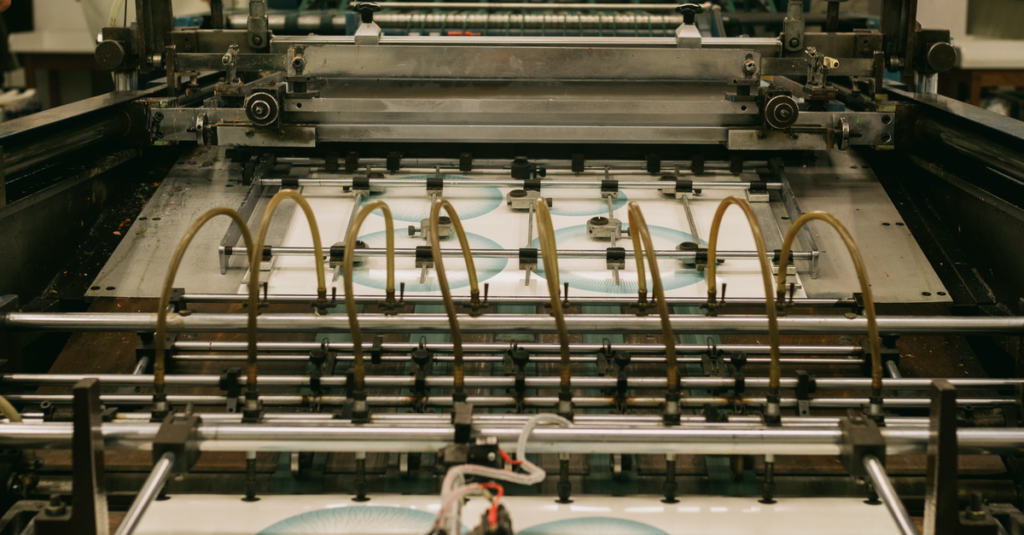
We run a production line that can do 30,000 to 40,000 bound notebooks a day. When we get an order for, say, 10,000 notebooks for a construction company, the process is the same as for school notebooks — but the quality checks are different. We look at the stitch tension. We check that the cover laminate won’t peel off with moisture. We make sure the paper grain is aligned so it doesn’t curl easily in humid conditions. (Rajahmundry gets humid, so we know this well.)
Customization here is interesting. It’s not about fancy logos for branding. It’s about adding practical things — maybe a space on the cover for the user’s name and department, or a pre-printed grid on the first page for a stock tally. That’s the kind of custom printing that actually helps.
And packaging. For field notes that might be shipped to multiple site offices, the packaging needs to be sturdy enough so the notebooks don’t get crushed in transit. We’ve learned that over decades of supplying to distributors who then send them out to retail shops or direct to sites.
Field Notes vs. Corporate Diaries: A Quick Comparison
| Feature | Field Notes / Work Notebooks | Corporate Diaries / Office Notebooks |
|---|---|---|
| Primary Use | On-site work, rough handling, temporary records | Desk use, meeting notes, client presentations, archival |
| Binding Priority | Durability under stress (stitched binding preferred) | Aesthetic, flat opening (perfect binding common) |
| Paper Quality | 54-60 GSM, tear-resistant, ink bleed control | 70+ GSM, smoother finish, often higher whiteness |
| Cover Design | Functional, flexible, often matte finish | Premium, hardcover, often glossy or textured |
| Customization | Practical: name fields, pre-printed grids, department codes | Branding: company logo, embossed titles, year imprints |
| Cost Focus | Cost-effective for bulk, replaceable | Perceived value, longevity on desk |
| Common Sizes | King Size, Long Size, A5 | A4, Executive sizes, often larger |
Look, the table makes it pretty clear. They’re different tools for different jobs. Ordering the wrong type is a waste of money — and a frustration for the people using them.
How Bulk Buying Changes Everything
When you’re ordering 500, 2000, or 10,000 notebooks, the “field notes” conversation shifts completely. You’re not picking a notebook. You’re specifying a supply item.
The questions become: Can we get them all with the same ruling so training is easy? Can the covers be color-coded for different departments (blue for warehouse, green for quality check)? Is the price per unit low enough that we can issue them freely without budget fuss? Can they be delivered in phased batches to different locations?
This is where working directly with a manufacturer — not just a stationery shop — takes the edge off. Because you can talk about the production run. You can ask for a mix of sizes and rulings in the same order. You can even get them packed in separate boxes for separate delivery addresses. We do that all the time for schools and corporate offices with multiple branches.
I’ve heard this enough times now from procurement managers: the biggest headache isn’t the product, it’s the logistics. Getting the right notebook to the right place at the right time. That’s a supply chain thing, and it’s something we’ve built into our process over 40 years. If you’re managing bulk orders, talking to a manufacturer directly cuts out a lot of middleman confusion.
Frequently Asked Questions
Are “field notes” a specific type of notebook?
No, not really. It’s more of a term for how a notebook is used. Any sturdy, portable notebook used for on-site work, data collection, or outdoor notes can be called a field notebook. The specifications depend on the actual work environment.
What is the best binding for notebooks used in rough conditions?
Stitched binding. It’s where the notebook sections are sewn together with thread. It holds up against frequent folding, page tearing, and general rough handling much better than glued (perfect binding) or spiral binding, which can deform.
Can we get custom field notes with our company logo?
Absolutely. Private label or custom printed notebooks are common. But for field use, think about placement — a logo on the cover is fine, but maybe also add a space for the user’s name or a department code for better accountability on site.
What paper GSM is sufficient for outdoor or industrial use?
54 to 60 GSM writing paper is usually sufficient. It’s tough enough to resist tearing, cost-effective for bulk orders, and prevents most ink bleed. Higher GSM (like 70+) is often unnecessary and increases cost.
How do we order bulk field notes for multiple locations?
Work directly with a manufacturer who can handle split shipments. Specify the quantities for each delivery address upfront. They can produce the entire order in one run but pack and dispatch them separately, saving you time and logistics hassle.
Closing Thought
At the end of the day — and I mean at the literal end of a workday — a field notebook is just a tool that did its job. It got scribbled in, maybe got dirty, and the information got transferred somewhere else. Its value is entirely in that use.
When you’re sourcing them, you’re not buying a product. You’re buying a workflow aid. So the specs you choose should come from asking the people who will carry them: What size fits in your pocket? Do you need blank pages for sketches? Does the cover need to be waterproof?
I don’t think there’s one perfect notebook for every field. Probably there isn’t. But if you’ve read this far, you already know what your team needs — you’re just figuring out if someone can make it reliably, in bulk, and get it to you. That’s the real ask. If that’s where you are, it’s worth having a conversation.