The Problem with a “Good” Notebook
Okay, let’s be real for a second. You’re looking to buy good notebooks. Probably in bulk. For a school, an office, maybe a government institution.
And you’ve got a list. GSM paper weight. Page count. Cover thickness. The usual stuff. But here’s the thing – those specs, the ones on every manufacturer’s website, don’t tell the full story. I’ve been in this business since 1985, and the gap between a notebook that looks good on a spec sheet and one that lasts an entire school year? It’s wider than you think.
The frustration – and I see this all the time with procurement managers – is ordering 10,000 notebooks only to have the binding give out by March, or the pages ghosting with ballpoint pen. It’s not just a waste of money. It’s a logistical headache. You’re the one who has to answer for it. So what are you actually looking for? If this sounds familiar, our team has a pretty good idea of what makes a notebook work in the real world.
Beyond GSM: The Paper Quality Nobody Talks About
Right. Everyone asks for GSM – grams per square meter. It’s a number. 54 GSM, 70 GSM, 100 GSM. Good notebooks need good paper weight, sure. But I’ll tell you what matters more: the finish and the opacity.
Think about a student writing with a gel pen, or an accountant using a fountain pen. If the paper is too smooth, the ink smudges. Too rough, and the writing experience is terrible. The paper has to have just enough tooth to grab the ink without bleeding through. And opacity? That’s about whether you can see the writing from the other side of the page. A high-GSM paper with poor opacity is useless – you can’t use both sides.
Most suppliers won’t bring this up. They’ll just quote you the GSM and move on. But when you’re buying for a classroom of 40 kids, or an office that goes through hundreds of notepads a month, this is the difference between a re-order and a complaint.
Look, the secret isn’t a magic number. It’s consistency. Can your manufacturer guarantee that every single sheet in every single notebook, from the first to the ten-thousandth, feels exactly the same to write on? That’s the real question. The rest is just marketing.
The Binding: Where Most Notebooks Fail
This is where we separate the good from the great. And honestly, it’s where most bulk buyers get it wrong. You check the cover, you flip through the pages, it looks fine. But binding is about survival.
A notebook isn’t just sitting on a shelf. It’s thrown in a backpack. It’s dropped. It’s stuffed in a drawer. The spine gets bent and re-bent a hundred times. The binding has to take that punishment. There are three main types you’ll see, and they’re not created equal:
- Stitched Binding (Saddle Stitch): The classic. Wires or thread run through the center fold. It’s durable, lies flat, and for most standard school notebooks and office notepads, it’s the workhorse. It’s what we use for probably 70% of our bulk orders. Reliable. Boring, maybe, but it works.
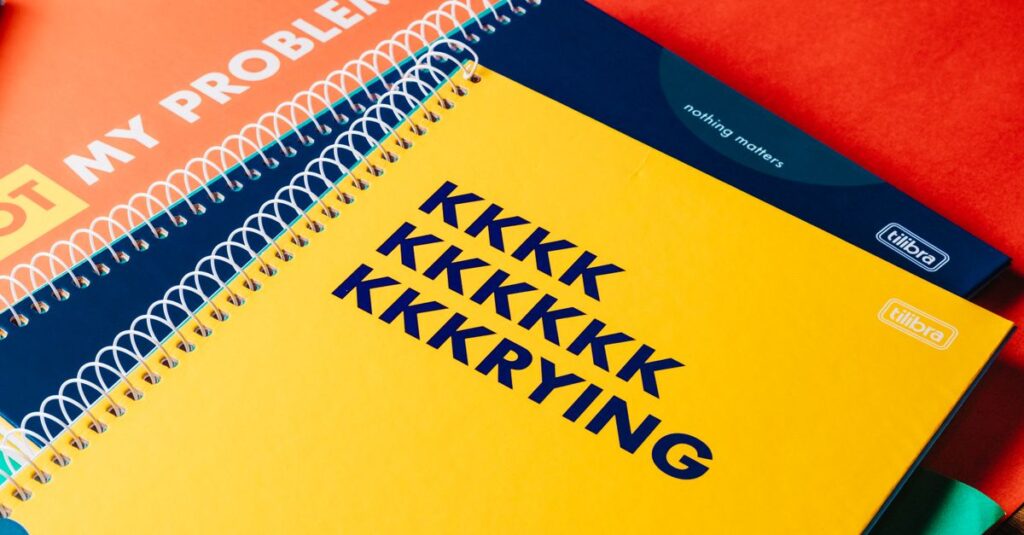
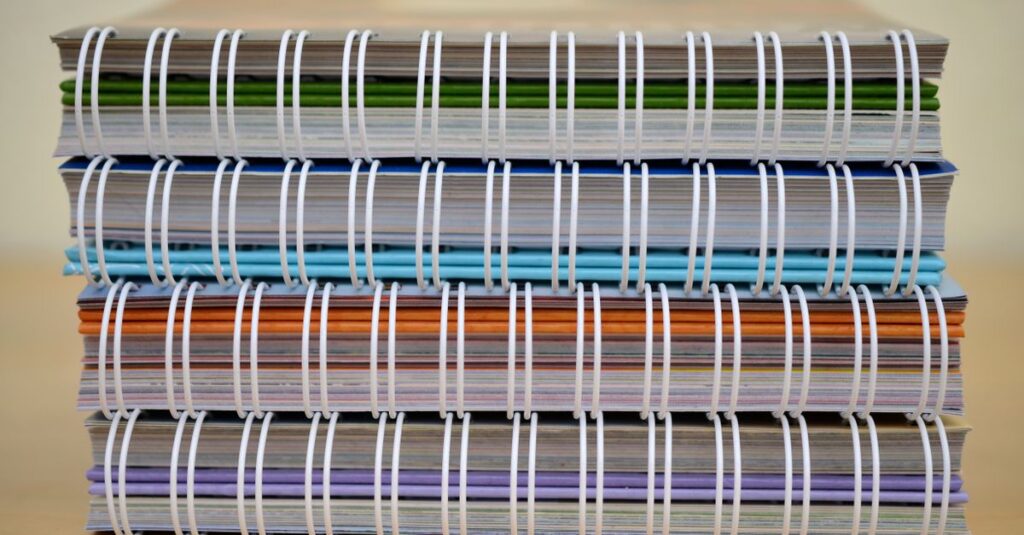
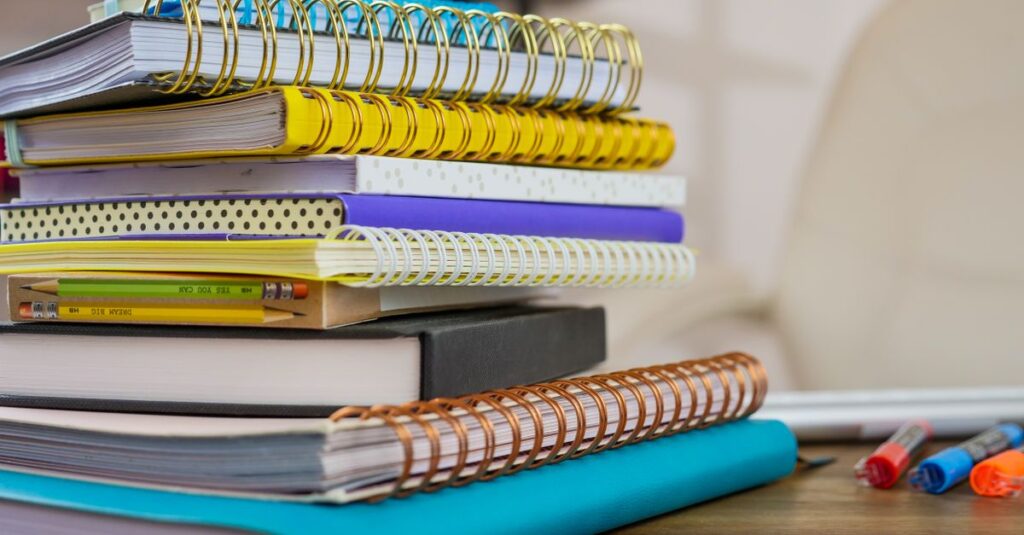
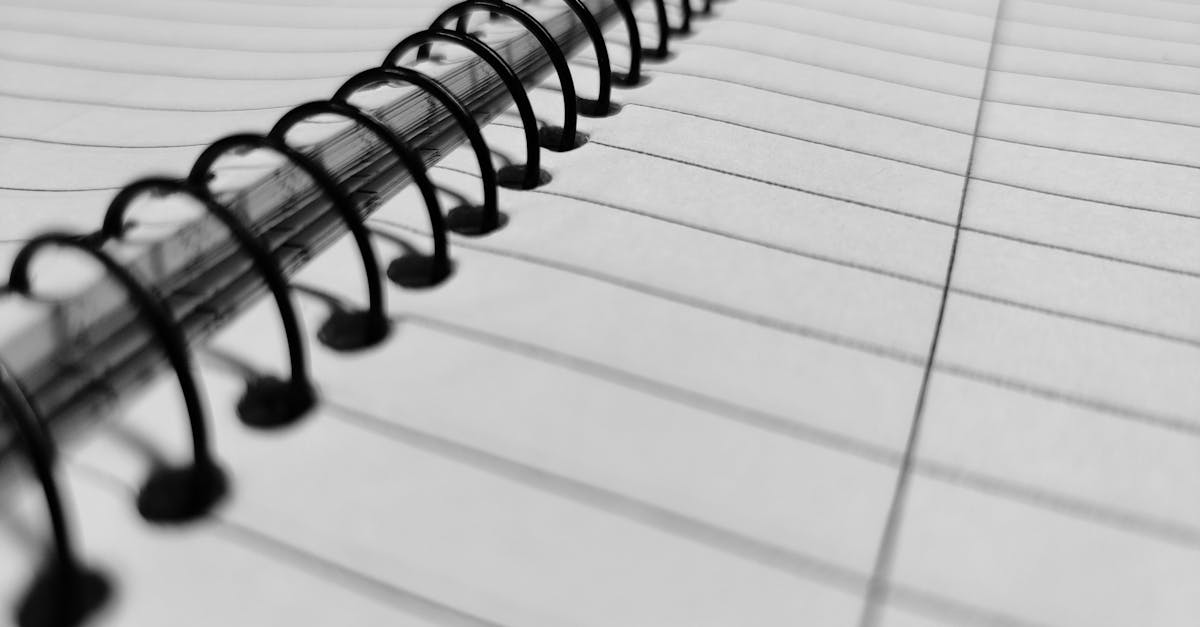
- Spiral Binding (Wire-O): The metal or plastic coil. Great for lying completely flat, 360 degrees. Perfect for drawing books, lab notebooks, anything where you need to fold the book back on itself. The catch? The coils can get bent in a bag, and if they do, pages don’t turn smoothly anymore. It’s a trade-off.
- Perfect Binding (Glued): Like a paperback book. Pages are glued at the spine. It looks clean, professional. Excellent for corporate diaries or premium notebooks. But – and this is a big but – cheap glue fails. It cracks. Pages fall out. A good perfect binding uses flexible, strong adhesive that allows the spine to flex without breaking.
I remember a client, a college in Hyderabad, ordered 5,000 spiral notebooks from a new supplier. By the second month, the deans office was flooded with complaints – bent spirals snagging on bags, pages tearing. They weren’t bad notebooks. They were just the wrong binding for how students actually used them. They thought they were getting a premium feature. They got a headache.
Expert Insight
I was talking to one of our bindery supervisors last week – a guy who’s been stitching notebooks longer than I’ve been running the company. He said something that stuck with me. He said the sound of a well-stitched notebook is different. A clean, solid *thump* when you tap the spine on a table. A cheap one sounds hollow, like it’s already coming apart. It’s not a spec you can put on a sheet. It’s something you learn to hear after forty years. I don’t have a cleaner way to put it than that.
The Cover: More Than Just a Pretty Face
A cover isn’t just about branding your logo (though that’s important). It’s armor. For a school notebook, it’s going to be taped, drawn on, and live at the bottom of a bag with half a lunch in it.
Thickness matters – measured in points or GSM for board – but so does the lamination. A glossy laminate looks shiny and new, but it scratches easily. A matte laminate hides wear and tear better. Then there’s the actual printing. Is the ink smudge-proof? Will your company logo rub off after a week in someone’s hands?
And custom covers… that’s a whole other ball game. We do a lot of custom printing for schools and corporates. The art file you send us needs to be print-ready, high-resolution. A pixelated logo blown up to cover size looks, well, cheap. It undermines the whole product. A good notebook manufacturer should guide you through this, not just take your file and run with it.
The truth is, the cover is the first impression. If it feels flimsy, the whole product feels flimsy. Even if the inside paper is fantastic.
The Bulk Buyer’s Checklist (What to Actually Ask For)
Forget the glossy brochure. When you’re talking to a manufacturer, these are the questions that get you real answers. This is what separates a vendor from a partner.
- Ask for a physical sample, not just a PDF spec sheet. Write in it. Bend it. Try to tear a page out. Seriously.
- Ask about lead time under pressure. “What happens if we need an urgent repeat order of 2,000 units in the middle of the school term?” Their answer tells you about their capacity and their priorities.
- Ask about their paper mill source. Consistency comes from a stable supply chain. If they’re buying scrap paper from ten different places, your notebooks won’t be uniform.
- Ask for a client reference in a similar field. A manufacturer supplying a local university has different experience than one supplying a retail chain.
- Ask about the packaging for shipment. How are 10,000 notebooks bundled? Is it just shrink wrap, or are they boxed and palletized to survive cross-country trucking?
These aren’t rude questions. They’re professional ones. Any manufacturer who gets defensive isn’t confident in their process. And you shouldn’t be confident in their product.
Stitched vs. Spiral: A Practical Breakdown
Let’s make this simple. Here’s how it usually breaks down for bulk buyers.
| Feature | Stitched Binding | Spiral Binding |
|---|---|---|
| Best For | Standard school notebooks, office notepads, account books. High-volume, everyday use. | Drawing books, technical notebooks, planners, any book that needs to lie completely flat. |
| Durability | Excellent for repeated opening/closing. Spine is flexible but strong. Pages won’t fall out. | Good, but the spiral coil is the weak point. Can bend/deform in transport or rough use. |
| Lay-Flat Ability | Lays flat nicely, but not a full 360-degree fold. | Lays perfectly flat, can be folded completely back on itself. |
| Cost (Bulk) | Generally more cost-effective for large runs. Faster production. | Slightly more expensive due to the coil insertion process. |
| Perceived Value | Standard, reliable, trusted. The classic look. | Often seen as more “premium” or “specialized” by end-users. |
| Our Recommendation | For 90% of institutional bulk orders. It’s the proven workhorse. | When the lay-flat function is a non-negotiable requirement for the user. |
Nine times out of ten, for a bulk order of basic notebooks, stitched is the way to go. It’s just more resilient to the chaos of real life.
So, What *Really* Makes a Good Notebook?
It’s not one thing. It’s the absence of a single point of failure.
Good paper that doesn’t ghost. Strong binding that won’t quit. A cover that protects. And a manufacturer who understands that you’re not just buying a product – you’re buying reliability. You’re buying the certainty that you won’t get a frantic call six months down the line.
At the end of the day (cliché, I know), a good notebook disappears. It becomes a tool that works so well, the user doesn’t even think about it. The student focuses on the notes, not the paper. The accountant focuses on the figures, not the binding. That’s the goal. Everything else is just details on a purchase order.
I don’t think there’s one perfect formula. Probably there isn’t. But if you’ve read this far, you already know the difference between a cheap notebook and a good one. You’re just figuring out which supplier understands that difference as well as you do.
Frequently Asked Questions
What GSM paper is best for school notebooks?
For everyday student use – writing with ballpoint, pencil, maybe gel pen – a 54 to 70 GSM paper is the sweet spot. It’s opaque enough to write on both sides, has a good writing feel, and keeps the overall notebook weight (and cost) manageable for bulk orders. Much lighter, and you get bleed-through. Much heavier, and you’re paying for thickness you don’t need.
Is spiral binding or stitched binding more durable?
For general, rough-and-tumble use? Stitched binding, every time. Spiral binding is great for laying flat, but the metal or plastic coil is the weakest link. It can bend in a backpack, which then snags and makes pages hard to turn. Stitched binding distributes stress along the spine and is far more resilient to the drops and crushes of daily life.
What should I look for in a bulk notebook supplier?
Three things: consistency, communication, and capacity. Can they deliver the same quality in every batch? Do they answer your questions clearly and proactively? And do they have the production muscle (and backup plans) to meet your deadline, especially for large school or corporate orders? Always, always ask for samples from a previous production run.
Can I get custom logos printed on bulk notebooks?
Absolutely. Most manufacturers, including us, offer custom printing. The key is providing a high-resolution vector file (like an AI or EPS) of your logo. This ensures it prints sharply at any size on the cover. Don’t just send a JPEG from your website – it’ll look blurry and unprofessional when printed large.
What’s the minimum order quantity for custom notebooks?
It varies wildly. For a standard design change (like adding your logo to an existing notebook style), it can be as low as 500-1000 pieces. For a completely custom notebook from scratch – unique size, paper, ruling, cover design – the MOQ is higher, often 2,000-5,000 units, to make the setup costs worthwhile. Always ask upfront.