Here’s Why a Corporate Notebook Isn’t Just a Notepad
I know, I know. You’re probably thinking, “It’s a diary. It has pages. You write in it.” Right?
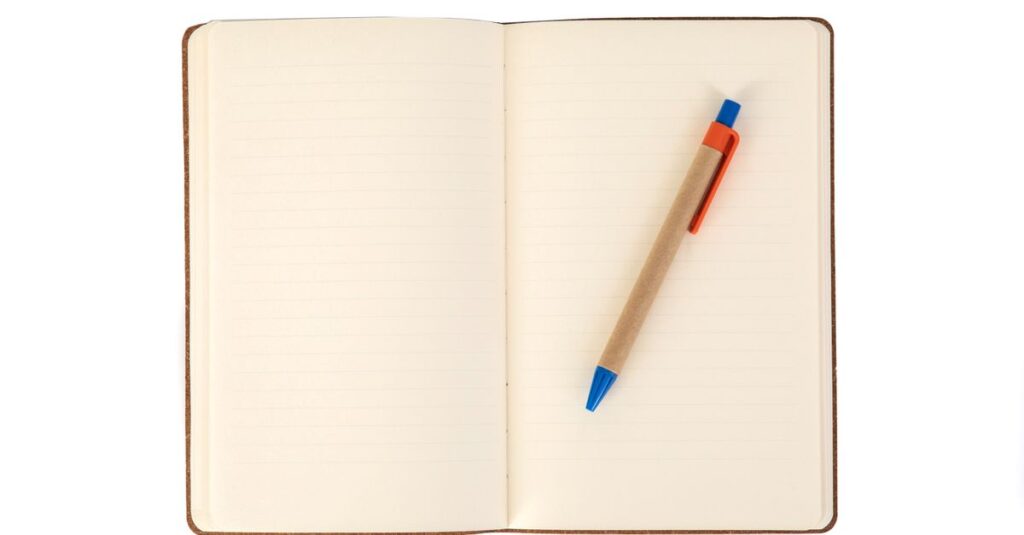
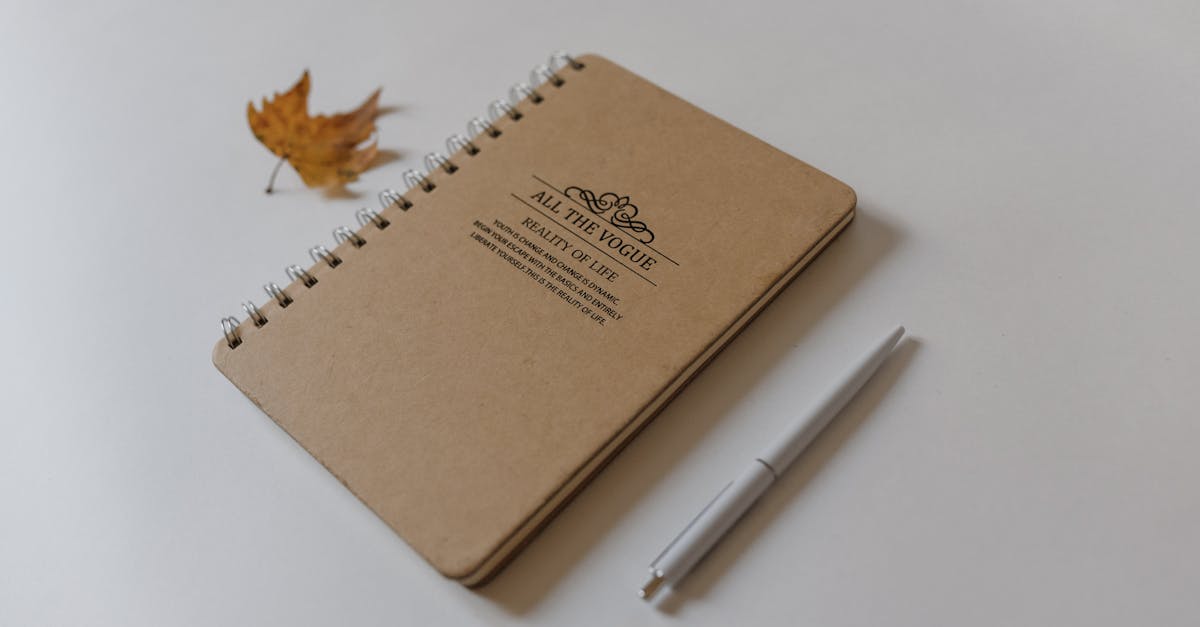
But walk into any serious CEO’s office. Or a senior manager’s desk at a firm in Hyderabad or Chennai. The notebook they pull out during a meeting isn’t from some random stationery shop. It’s something else. Thicker paper. A cover that doesn’t bend. Their logo stamped in the corner. It feels substantial. Heavy, in a good way. That’s an executive diary. It’s not just a place for notes; it’s a piece of the company’s front door, handed to someone who represents it.
For 40 years, we’ve been making these things in Rajahmundry. And the shift in the last decade? It’s not subtle. Businesses used to order diaries because, well, it was a thing you did for New Year. Now, they order them because they’ve figured out it’s the one physical object their team uses every single day. It’s branding you can’t close a tab on. If you’re a procurement manager looking at corporate gifts or a business owner wanting to project a certain image, you’re not just buying stationery. You’re buying a daily reminder. The trick is finding a manufacturer who gets that difference.
(Over chai last week with a client from Vizag, he said something that stuck: “The cheap diary we gave last year? Ended up in the drawer. The good one from you? On the desk. Every time.” That’s it. That’s the whole point.)
What Actually Makes a Diary ‘Executive’?
Let’s be direct. An executive diary isn’t defined by a fancy name. It’s defined by things that don’t break, tear, or embarrass you in front of a client.
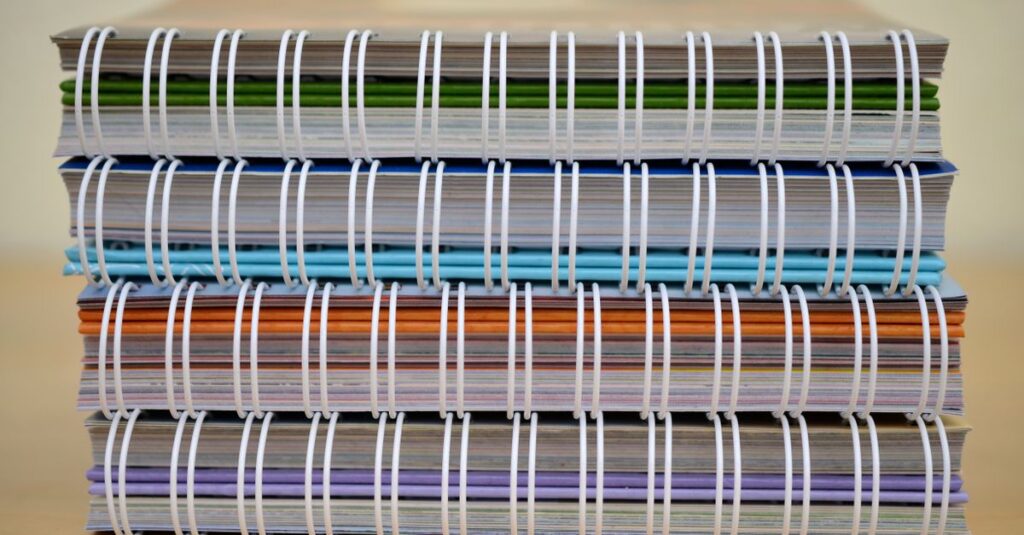
First, the build. It needs to survive a year of being stuffed in briefcases, knocked off desks, and opened three dozen times a day. That means a rigid cover board — not flimsy cardstock. It means binding that doesn’t give up. At our factory, for these, we almost always use perfect binding (for that clean, book-like spine) or spiral binding with a metal coil (for the ones that need to lie completely flat). Stitched binding is great for school books, but for a premium feel? Perfect binding wins.
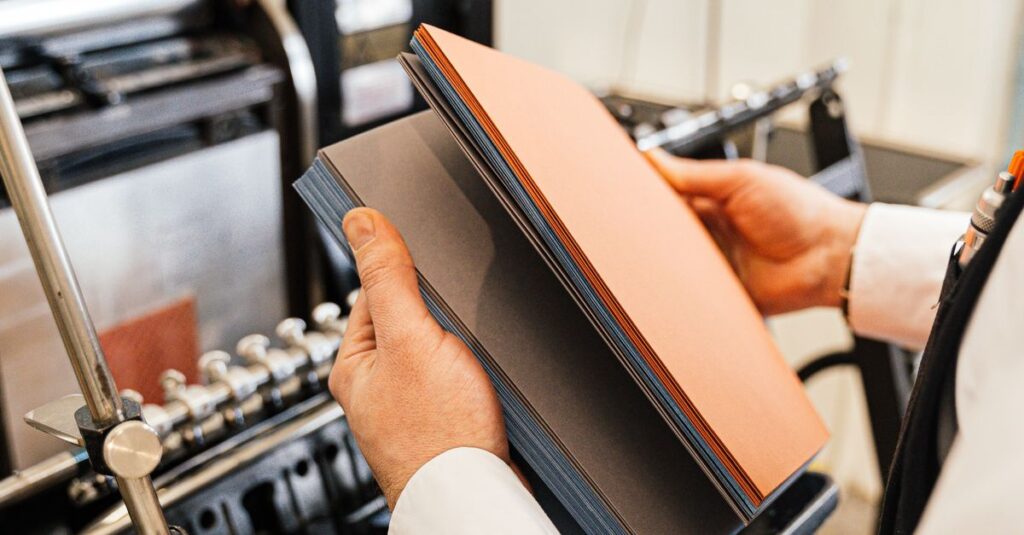
Then, the paper. This is where most mass-market diaries fail. You can’t have ink bleeding through from one page to the next. It looks cheap. Unprofessional. Executive diaries use heavier paper, usually 70 GSM or above. Smooth. A pleasure to write on. The ruling? Clean, precise lines. Often with subtle branding like a logo or company name as a watermark on every page.
And the extras — the stuff that makes it a tool, not just paper. A ribbon bookmark. An elastic closure to keep it shut. Maybe an inner pocket for business cards. A printed fore-edge (the side of the pages) with the year or company name. These aren’t just “features.” They’re signals. They say, “We thought about this.”
I think the biggest mistake companies make is ordering the same 92-page, thin-paper diary for the whole office. Give that to your intern, fine. Give it to your VP? You’re missing the point completely.
The Real Use Case: More Than Just Taking Notes
Look, the functional use is obvious. Meetings. To-do lists. Brainstorming. But an executive diary’s real job is often quieter.
It’s a credibility prop. Pulling out a well-made, branded diary in a negotiation sets a tone before you even speak. It’s unspoken professionalism. It’s also a loyalty tool. Giving a high-quality diary to your top performers or clients isn’t a gift; it’s an artifact. It stays on their desk for 365 days, your logo in their line of sight. Every. Single. Day.
Let me tell you about Priya. She runs a mid-sized architecture firm in Bangalore. Ordered 50 custom executive diaries for her team and key clients two years ago. She called us back last month, not just to reorder, but because a potential client had seen her project manager’s diary during a site visit and asked where they got it. That diary literally brought in a new enquiry. That’s not marketing. That’s tribal signaling.
For schools and colleges buying in bulk for their administration? It’s the same principle. The registrar’s office using a shoddy notebook versus one with the institution’s crest embossed on the cover — it changes the perception of the entire interaction. It’s about institutional pride.
Expert Insight
I was reading an old industry report a while back — can’t remember the publisher, honestly — about branded merchandise. One line stuck with me. It said the “stickiness” of a promotional item isn’t about how flashy it is, but how useful it is. The more integrated into daily workflow, the higher the recall. A pen gets lost. A t-shirt gets worn on weekends. But a diary? It’s a work tool. Its branding is seen in the most focused moments of someone’s workday. The researcher called it “passive, high-frequency exposure.” I just call it smart.
It means the more capable someone is, the more they’ll appreciate a tool that doesn’t fight them. And they’ll remember who gave it to them.
Corporate Diary vs. Standard Office Diary: A Side-by-Side Look
Here’s the breakdown. Most people think a diary is a diary. They’re wrong.
| Feature | Standard Office Diary | Executive / Corporate Diary |
|---|---|---|
| Primary Purpose | General note-taking, mass distribution. | Brand representation, senior staff, key clients. |
| Paper Quality | Usually 54-60 GSM. Functional, can show bleed-through. | 70 GSM or higher. Smoother, opaque, premium writing feel. |
| Cover & Binding | Softcover or thin hardcover. Simple stitching or glue. | Rigid, thick cover board. Perfect binding or heavy-duty spiral. |
| Customization | Maybe a logo stamp on the cover. | Full custom cover design, embossing/debossing, branded endpapers, page watermarks. |
| Extra Features | Basic. | Ribbon bookmark, elastic closure, inner pocket, printed fore-edge, gilt edges. |
| Perception | Utility item. Disposable. | Professional tool. Kept and used daily. |
| Typical Page Count | 92-200 pages. | 200-320+ pages. Built to last a full year of heavy use. |
See the gap? It’s not about price first. It’s about intent. One is a commodity. The other is an asset.
How to Order Yours: The Non-Nonsense Guide for Buyers
If you’re a procurement manager staring at a “stationery” line item, this is for you. Ordering bulk executive diaries isn’t like ordering pens. Here’s how to not get it wrong.
First, know your specs. This isn’t the time for “just make it nice.” You need to decide:
- Size: A5 is the sweet spot for portability and writing space. A4 if it’s meant to stay on a desk.
- Page Count: 200 pages is a good start for a yearly diary. 320 if your team writes novels.
- Paper: Insist on 70 GSM or higher. Ask for a sample sheet. Write on it with the pen your executives use.
- Binding: For a classic, premium look — perfect binding. For ultimate lay-flat functionality — metal spiral binding with a thick plastic cover.
- Customization Level: Logo on cover? Full cover design? Company info pre-printed on first page? Watermark on every sheet?
Second, work with a manufacturer, not just a reseller. A reseller will give you a catalog. A manufacturer, like us, will ask you these questions and then figure out how to build it. They’ll talk about paper grain, glue types, coating options. The boring stuff that makes the product not fall apart.
Third, always, always get a physical dummy. Before you print 500 units, get a blank sample made with the exact paper, cover, and binding. Hold it. Use it for a week. Does it feel right? This step has saved more clients from regret than anything else. A good manufacturer will offer this without you even asking.
I’ve seen orders go sideways because someone approved a PDF design without seeing how gold foil looks on dark blue leatherette. It’s a different thing in your hand.
The Manufacturing View: What You’re Actually Paying For
Let me pull back the curtain for a second. When you pay a bit more for a properly made executive diary, where does that money go? It’s not profit margin magic. It’s process.
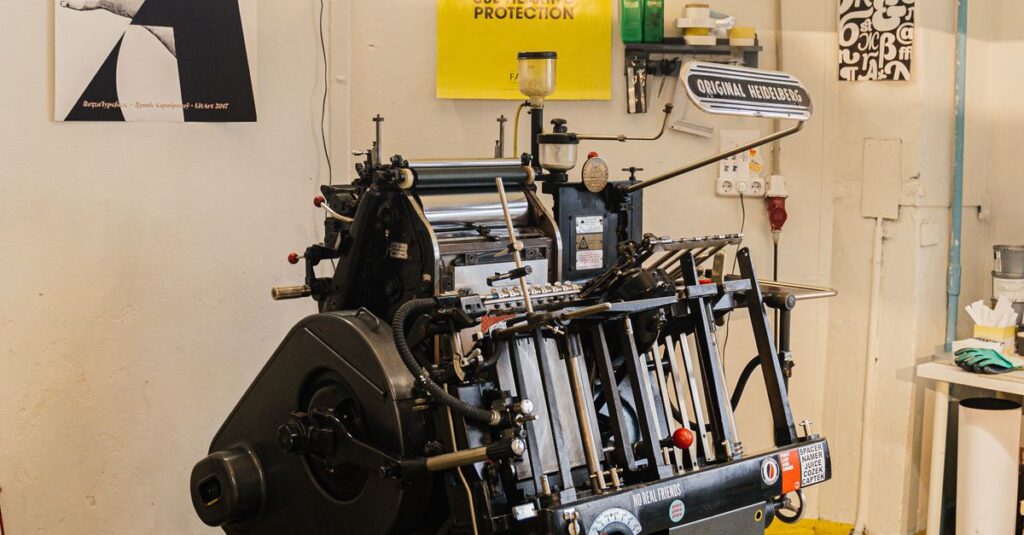
It starts with the paper roll. Heavier paper means fewer sheets per roll, more cost. Then the printing. Custom page layouts with logos, calendars, time zones? That’s not a standard print run. It needs precise setup. The cover printing often involves special techniques like foil stamping or embossing — extra machines, extra time.
Then the binding. Perfect binding requires a spine to be milled, glued, and fitted precisely. A rushed job leads to pages falling out. The quality check is different, too. We don’t just count if pages are there; we check alignment of the print, the crispness of the foil, the smoothness of the paper edges.
And honestly? The biggest cost people don’t see is the setup. Creating the design templates, making the cutting dies, setting up the binding line for a specific thickness — that’s fixed cost. It’s why ordering 50 diaries has a much higher per-unit cost than ordering 500. The machine time and labor are almost the same.
So when a manufacturer gives you a quote, you’re not just paying for materials. You’re paying for the skill to put them together in a way that lasts. You’re paying for the machine operator who knows exactly how much glue to apply so it holds but doesn’t ooze. You’re paying for the 40 years of knowing that a spiral coil needs a 0.5mm extra margin on the punched holes or it’ll catch when you turn the page.
That’s the stuff you can’t see in a picture online.
FAQs: What Buyers Actually Ask Us
Frequently Asked Questions
What is the typical lead time for a bulk order of custom executive diaries?
For a standard order of 500-1000 units with a custom design, plan for 4-6 weeks from final design approval. This includes production, quality checks, and packing. Smaller orders might be quicker, and complex finishes like hand-tooling add time. Always ask for a timeline upfront and get a sample first to avoid revisions later.
Can you print our company’s calendar, holidays, and contact info inside the diary?
Absolutely. That’s one of the main points of a custom corporate diary. We can pre-print your fiscal year, company holidays, key contacts, and even maps or emergency info on the inner pages. It turns a generic notebook into a tailored company tool. We work with your provided data to layout these pages cleanly.
What’s the minimum order quantity (MOQ) for a fully customized executive diary?
Our standard MOQ starts at 100 pieces for full customization (cover design, inside pages, etc.). For simpler jobs like just adding a logo to a standard diary style, we can sometimes go lower. But honestly, below 100, the per-unit cost gets high because the setup cost is spread over fewer items.
Which is better for an executive diary: spiral binding or perfect binding?
It depends on use. Spiral binding (metal coil) lets the diary lay perfectly flat on a desk, which is great for referencing while typing. Perfect binding gives a cleaner, more traditional ‘book’ look and feels more premium. It’s also more durable for long-term storage. For a daily carry, many prefer spiral. For a formal desk piece, perfect binding wins.
Do you ship executive diaries internationally for corporate clients?
Yes, regularly. We supply to corporate and institutional clients in the Gulf, Africa, the US, UK, and other regions. We handle export documentation, palletizing, and sea/air freight logistics. The key is factoring in shipping time (2-8 weeks depending on mode) to your overall project timeline.
Wrapping This Up
So, an executive diary. It’s not a notebook. It’s a decision. A decision to not give your team something that ends up in a drawer. A decision to have your brand sit proudly on a desk, not hidden away.
It’s about the weight in the hand, the paper that doesn’t fight the pen, the binding that survives a year in a bag. For procurement folks, it’s moving a line item from “stationery expense” to “branding tool.”
I don’t think every employee needs one. But the ones who do — your leaders, your client-facing team, your long-term partners — they’ll notice the difference. And they’ll remember who provided it. That’s the real return. Not the cost per unit, but the impression per day.
If you’ve read this far, you’re probably past the “do we need these?” stage and onto the “how do we get good ones?” stage. That’s the right place to be. The next step is just a conversation about specs.