

Honestly, most people have no idea what these are.
I was talking to a procurement manager for a large technical college last week — over WhatsApp, actually — and he sent me a frantic message.
“I need 500 notebooks with tiny squares. Grids. For math students.”
I knew exactly what he meant. He needed graph notebooks. But his search? “notebooks with tiny squares” is probably how it started. If you’re here, you might be the procurement person, the school administrator, the distributor who just got a weird request. You’re looking for something specific, but the language around it is messy. You want the real thing, not the Amazon knock-off that falls apart in a semester. You need bulk, you need it to be right, and you probably need it yesterday. Right?
If that sounds familiar, seeing how a real manufacturer handles this might be worth a look.
What a Graph Notebook Actually Is (It’s Not Just a “Notebook”)
Let’s clear this up first. A graph notebook, or graph book, isn’t just any notebook. It’s a specific tool. The pages are printed with a light, consistent grid of horizontal and vertical lines, creating a field of small squares. This isn’t decorative. It’s functional. It provides a built-in scale for precision.
Think of it like graph paper, but bound into a book. The ruling is usually called “cross-ruled” or “CR” in the industry. The squares can vary in size — 5mm is standard for school use, but you can get 2mm, 4mm, 10mm. That detail matters more than most people think.
The paper quality needs to be good. Not amazing, but good. Around 54 GSM is typical — thick enough that ink doesn’t bleed through from a sharp pencil or a technical pen, but not so thick that the book becomes a brick. The binding has to survive being shoved in a backpack, opened flat on a desk a thousand times, and possibly having pages torn out cleanly. Which is a whole other thing.
And that’s the point most suppliers miss: this isn’t stationery. It’s equipment.
Expert Insight
I was reading an old engineering textbook from the 70s a while back, and the preface had a line that stuck with me. It said something like, “The first tool of an engineer is a clear thought; the second is a reliable means to record it.” They were talking about slide rules and drafting tables, obviously. But the principle? It’s the same. A flimsy graph book with misaligned grids isn’t a “reliable means.” It’s a frustration. It introduces error. In my experience, the people who order these — the teachers, the lab managers, the lead architects — they know this intuitively. They’re not buying paper. They’re buying a foundation for work that needs to be exact. I don’t have a cleaner way to put it than that.
Who Really Uses These? (The List Is Longer Than You Think)
Most people picture a high school math nerd. That’s part of it, but it’s maybe 30% of the story. The real users are everywhere once you start looking.
- Schools & Colleges: Math, physics, chemistry, and engineering students. For graphs, diagrams, geometric proofs, circuit designs. A single grade level might need thousands.
- Engineering Firms: For quick sketches, site measurements, schematics. The pocket-sized ones are weirdly popular here.
- Architects & Design Studios: Preliminary sketches, floor plan concepts, scaling. They often prefer larger formats.
- Laboratories & Research Facilities: Recording data plots, charting results. Consistency page-to-page is non-negotiable.
- Artists & Illustrators: For perspective drawing, comic book panel layouts, storyboarding. The grid is a guide, not a constraint.
- Fabrication & Woodworking Shops: Patterns, measurements, scale drawings of projects.
Here’s a thing I’ve noticed: the more technical the field, the more picky they are about the grid alignment. A math teacher will notice if the squares are off by half a millimeter. An architect will lose their mind. It’s not them being difficult — it’s the work demanding it.
I remember a call from a technical institute in Hyderabad. They’d received a shipment from another supplier where the grid was slightly skewed after page 50 in every book. The entire batch was useless. They weren’t angry; they were exhausted. That’s the emotion here. Not anger. Fatigue from dealing with a tool that fights you.
Graph vs. Other Rulings: A Quick, Honest Comparison
You’ll get options. Let’s break down what you’re actually choosing between.
| Feature | Graph Notebook (Cross-Ruled) | Single-Ruled Notebook |
|---|---|---|
| Primary Use | Precision work: graphs, charts, diagrams, math, technical drawing. | General writing: notes, essays, journals. |
| Page Layout | Grid of small squares (e.g., 5mm x 5mm). | Horizontal lines only. |
| Key Advantage | Built-in scale for alignment & proportion. Makes freehand drawing precise. | Clean, unobstructed lines for fast writing. |
| Common User | Student (STEM), engineer, architect, lab tech. | Student (general), office worker, writer. |
| Bulk Order Complexity | Higher. Grid alignment must be perfect. Paper GSM often needs to be better. | Lower. More standardized, fewer quality pitfalls. |
| Customization Need | Often. Schools want logos, specific square sizes, custom covers. | Less frequent. Usually just logo stamping. |
| Price Point (Bulk) | Slightly higher due to precise printing and better paper. | Standard, most competitive. |
The takeaway? Don’t buy graph ruling for a literature class. Don’t buy single-ruled for an engineering workshop. It seems obvious, but you’d be surprised how many bulk orders get this wrong because someone just clicked the cheapest option. The wrong notebook actively makes the job harder.
What to Look For When Ordering in Bulk (The Real Checklist)
Look, if you’re ordering 500 or 5,000 of these, you can’t just go by a picture on a website. You need to ask questions. Most suppliers hate this. A manufacturer will answer them before you ask.
- Grid Alignment & Consistency: Ask for a sample. Check if the grid lines up perfectly from page 1 to page 100. Hold pages up to the light. The squares should match. This is the number one failure point.
- Paper GSM & Opacity: “What’s the GSM?” If they hesitate, walk away. 54-60 GSM is the sweet spot for graph work. Do a pen test on the sample. If you can see it clearly from the back, it’s too thin.
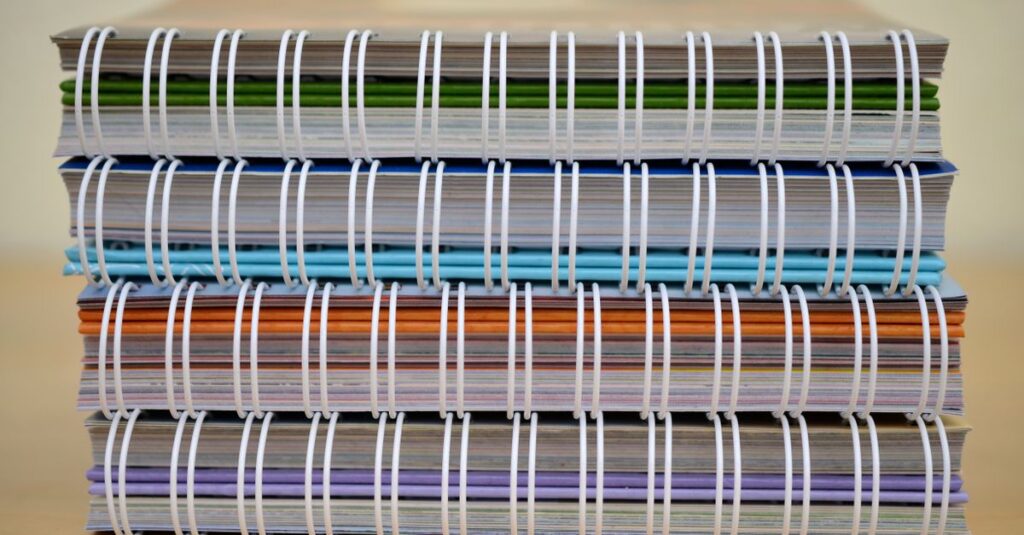
- Binding Durability: Stitched binding is best for lay-flat use. Spiral binding is good but can snag. Perfect binding (glued) can crack if the book is forced open. What’s their standard? Can they do others?
- Square Size: 5mm is standard. But do your users need 4mm for detailed work or 10mm for younger students? This isn’t a minor detail.
- Cover Stock: Is it thick card? Will it survive a term? A flimsy cover tells the user the contents are also low-grade.
I think the most common mistake buyers make is prioritizing unit price over everything else. Sure. But a notebook that falls apart or has misprinted grids isn’t cheap at any price. It’s a waste of budget and a logistics nightmare to replace. The real cost isn’t the price per book. It’s the price per usable book.
Seeing the different specifications laid out clearly helps, I find. It turns a fuzzy request into a concrete spec sheet.
The Customization Question: Logos, Covers, and Private Label
This is where it gets interesting — and where most local stationery shops can’t help you.
Schools want their crest on the cover. A corporate training firm wants their logo subtly on each page. A distributor wants to build their own brand with private label notebooks. This isn’t just printing a logo on a stock book. It often means customizing the grid color (light blue vs. light grey), the cover design, the page count, even the size.
Three things happen when you go custom:
First, you need a manufacturer, not just a wholesaler. Someone with in-house printing and binding who can adjust the machine settings. Second, you need to plan for a slightly longer lead time. Maybe 4-6 weeks instead of 2. Third — and nobody says this — it often ends up cheaper per unit in the long run if your volumes are steady, because you’re cutting out the middleman’s margin on a generic product.
Anyway. I was dealing with a private university in Bangalore last year. They wanted a specific shade of green for their cover, their motto embossed, and a 4mm graph instead of 5mm for their engineering freshmen. We did a run of 10,000. The initial setup took time. But now it’s their standard issue. They order twice a year. The students associate that specific book with their program. It’s not just a notebook anymore. It’s part of the brand. Which is… a lot for a bunch of paper, but that’s how it works.
The Real-Life Story (Why Details Matter)
Kavita, 42, procurement officer for a chain of coaching institutes in Mumbai. She ordered 2,000 graph notebooks for their IIT-JEE prep batches from a new online supplier. Price was 15% lower. The books arrived. Looked fine. Two weeks later, the calls started. The grids were printed in a dark, smudgy grey that distracted from pencil work. The paper was so thin that notes from the previous page ghosted through, making complex calculus problems look messy and confused. Students complained. Teachers were furious. Kavita spent the next month arranging replacements, dealing with refunds, and apologizing. Her “great deal” cost her reputation, countless hours, and in the end, more money. The silence in her office when she opened that first complaint email had weight. She didn’t need to be told it was a problem. She just had to fix it.
Don’t be Kavita.
How to Actually Get These Made (A Practical Roadmap)
So you need graph notebooks. In bulk. Here’s how to not get lost.
- Step 1: Nail Your Specs. Be the expert. Decide: Size (A4? Long book? Crown size?). Page count (92 pages? 200?). Square size (5mm?). Paper GSM (54? 60?). Binding type. Cover type. Quantity.
- Step 2: Source Samples. Contact 2-3 actual manufacturers, not just e-commerce sites. Talk to someone who runs the machines. Ask for physical samples of their standard graph notebook. Test them.
- Step 3: Talk Customization. If you need logos, special covers, or private label, discuss it now. Get a mock-up. Get a price for your exact quantity.
- Step 4: Clarify Logistics. Lead time? Payment terms? Packaging? Delivery? Who handles shipping? Is export documentation available if you’re an international buyer?
- Step 5: Start Small (Maybe). If it’s a huge order or a new supplier, consider a pilot run of 500-1000 books before committing to 10,000. It’s an insurance policy.
Most people skip to Step 4 and wonder why things go wrong. The work is in Step 1. Getting the specification right in your own head — and on paper — means you can communicate it. And that changes everything.
Frequently Asked Questions
What is the standard square size in a graph notebook?
For most school and general use, 5mm squares are the standard. They offer a good balance between space for writing and precision for drawing. However, you can find 2mm (very fine), 4mm, and 10mm sizes depending on the manufacturer and the specific need—like detailed technical work or younger students.
Can I get a graph notebook with my company logo on it?
Absolutely. This is a common request for schools, coaching centers, and corporate firms. A proper notebook manufacturer can print your logo on the cover, and even on each page if required. It’s called private label or custom notebook manufacturing. You’ll need to provide a high-resolution logo and discuss cover design options.
What’s the difference between a graph notebook and a drawing book?
Completely different. A graph notebook has a printed grid of lines making squares. A drawing book typically has blank, unruled pages (sometimes with a slight texture). Graph notebooks are for structured, precise work like math or diagrams. Drawing books are for freehand art, sketching, or painting.
How many pages should a bulk order graph notebook have?
It depends on the user. For a school term, 92 or 200 pages is common. For a full academic year or a project notebook, 240 or 320 pages might be needed. Account for how quickly the book will be filled. A manufacturer will offer these standard page counts—52, 92, 200, 240, 320, even 700 pages for record books.
What paper quality is best to prevent ink bleed-through?
Look for paper around 54-60 GSM (Grams per Square Meter). This is the standard for quality writing paper. It’s thick enough that fountain pen ink or sharp pencil won’t show through clearly on the other side, but it’s not overly bulky. Always ask for the GSM and test a sample with the pens your users will actually use.
Wrapping This Up
Look, at the end of all this, a graph notebook is just a tool. But the right tool matters. It’s the difference between a student feeling organized and a student feeling frustrated. Between a clean architectural sketch and a messy one. Between an order that gets you praised and an order that gets you phone calls.
It’s not about finding the cheapest supplier. It’s about finding the one who understands that the tiny squares need to be perfect, that the binding can’t fail, and that your logo on the cover represents more than just a name.
I don’t think there’s one perfect supplier for everyone. Probably there isn’t. But if you’ve read this far, you already know what you’re looking for — you’re just figuring out if it’s okay to be picky about it. (It is.)