Let’s Talk About That Notebook You’re Trying to Get Made
Okay, let me guess — you’ve probably typed “hard binding near me” into your phone while staring at a sample notebook that fell apart in three months. Or maybe you’re the person from a school or office staring at a purchase order for a thousand notebooks, and you need to know this stuff won’t disintegrate before the year is even over. The binding is the whole thing. It’s what holds the book together. And I’m not just talking about glue.
Here’s what I see all the time: someone gets a quote for cheap notebooks, the order arrives, and the covers are curling, pages are coming loose, and it looks like a mess by the second use. That’s not just annoying — it reflects badly on you. If it’s a corporate gift, it feels cheap. If it’s for students, it doesn’t last the term. The search for “hard binding” is really a search for something that lasts. You’re not just looking for a local printer; you’re looking for a guarantee. If you’re tired of flimsy notebooks, it might be time to look at how the pros do it.
Right. So let’s break this down.
What “Hard Binding” Actually Means (It’s Not One Thing)
First thing: “hard binding” is a bit of a catch-all term people use. They usually mean a notebook that feels substantial, doesn’t bend easily, and has a cover that protects the pages. But in the factory? That can mean three different binding methods, and the one you choose changes everything about the book’s life, feel, and cost.
The main types you’ll hear about are:
- Perfect Binding: This is what most corporate diaries and thicker notebooks use. The pages are stacked, the spine is roughened, and a strong, flexible glue is applied. Then a pre-printed cover is wrapped around it. It looks clean and professional.
- Case Binding: This is the hardcover book method. The inner pages are sewn together into signatures, then glued to a fabric spine. That whole block is then cased into a rigid cover board that’s covered in paper or leather. This is the most durable — think library books, high-end journals.
- Lay-Flat or Otabind: A hybrid. The pages are glued with a special flexible glue and often have a strip of fabric, but the cover isn’t fully attached to the spine. This lets the book open completely flat on a desk, which is a dream for note-takers.
The confusion happens because all of these feel hard. But their guts are different. A perfect-bound notebook can still have a soft cover, which technically makes it “hard binding” in terms of spine construction, but not in the rigid-cover sense people imagine. You need to know which part you care about most: the rigid cover, or the unbreakable spine.
Why Your Last Order Probably Failed (The Glue Problem)
I was talking to a procurement manager from a college last week — over a very rushed phone call, actually — and he was furious. His last batch of 5,000 notebooks for the new academic year started shedding pages within weeks. The binding just gave up. This is the part nobody says out loud: most binding failures come down to two things: bad glue and rushed drying time.
Think about it. A notebook is just paper and adhesive. If the glue is low-grade, or the temperature/humidity in the factory is off when it’s applied, the bond never sets right. It might feel okay when it’s new, but as soon as it experiences real-world stress — being shoved in a backpack, left in a hot car, pulled open roughly — it fails. The pages come away cleanly from the spine, like they were never attached at all.
And a lot of smaller shops cut corners here. They use cheaper adhesives to save cost, or they don’t let the glued blocks cure properly before attaching the cover. They’re trying to turn orders around fast. The result is a notebook that’s basically pre-broken. You just don’t know it yet.
Nine times out of ten, when someone searches for “hard binding near me,” they’re reacting to this exact experience. They got burned by a weak bond. They don’t just want a hard cover; they want a bond that survives.
Meet Anitha (Or Someone Just Like Her)
Anitha is 38, a procurement officer for a chain of private schools in Hyderabad. Her job is to source everything from lab equipment to stationery for 15 schools. Every summer, the notebook order is her biggest headache. She needs 40,000 units across different grades, with specific rulings and page counts. The books have to last from June to March. Last year, her usual supplier switched to a new glue, and by October, teachers were complaining about pages falling out. Parents were emailing. Her phone wouldn’t stop.
She spent three days googling “hard binding notebook manufacturer,” “bulk notebooks durable binding,” getting quotes, asking for samples. She needed someone who understood that a notebook isn’t just a product; it’s a tool that gets battered for nine months. She needed the binding to be the last thing to fail. She told me the stress gave her a migraine that lasted two days. I believe her.
Perfect Binding vs. Case Binding: What’s Right for Your Order?
Let’s get practical. You’re comparing quotes and specs. This table breaks down the two most common “hard binding” methods for bulk orders. It’s not about which is “better,” but which solves your specific problem.
| Feature | Perfect Binding | Case Binding (Hardcover) |
|---|---|---|
| Best For | Corporate diaries, premium softcover notebooks, catalogs, thicker books (200+ pages). | Library books, high-end journals, record books, account ledgers meant to last years. |
| Durability | Very good for desk use. Spine can crack if forced to open too wide repeatedly. | Maximum durability. The sewing + casing makes it extremely resilient to heavy handling. |
| Lay-Flat Ability | Moderate. Won’t open completely flat without spine stress. | Good. Sewn signatures allow it to open fairly well. |
| Cost Implication | More cost-effective for bulk. Faster production process. | More expensive. Labour-intensive sewing and casing process. |
| Perceived Value | Professional, clean, modern. | Classic, premium, institutional quality. |
| Turnaround Time | Faster. Gluing and wrapping is a quicker line process. | Slower. Multiple steps (sewing, gluing, casing) take more time. |
For most institutional buyers — schools, corporate bulk orders — a well-executed perfect binding is the sweet spot. It’s durable enough, looks professional, and keeps the cost per unit manageable. Case binding is for when the notebook itself is a keepsake or a permanent record. The choice isn’t about quality; it’s about matching the binding to the book’s mission.
The Factory Floor Reality (What You’re Actually Paying For)
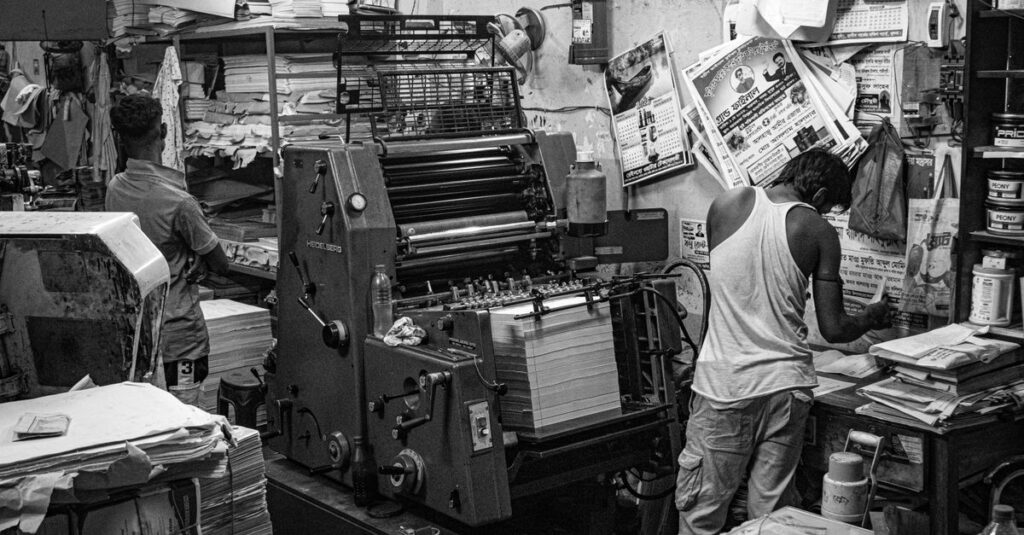
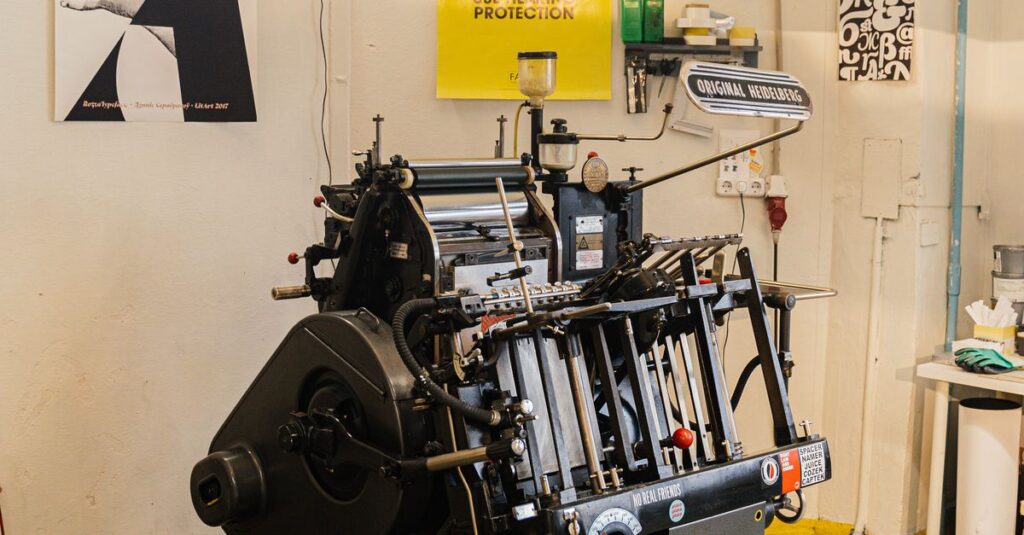
Look, I’ll be direct. When you’re comparing manufacturers for “hard binding near me,” you’re really comparing their process control. Anyone can buy a perfect binding machine. The difference is in the tiny, boring details that most salespeople won’t tell you about.
What matters:
- Grain Direction of the Paper: Paper has a grain, like wood. If the pages are cut with the grain running the wrong way relative to the spine, the book will never open nicely and the binding will be under constant stress. Good manufacturers check this. Cheap ones don’t.
- Spine Preparation: Before glue touches paper, the spine edge needs to be roughened (milled) to create more surface area for the glue to grip. If this step is skimped on, the bond is weak from day one.
- Glue Application & Curing: Is it a hot melt glue or a PUR (Polyurethane Reactive) glue? PUR is more flexible and durable, but it’s more expensive and needs precise moisture control to cure. Then, the glued block needs to sit — to cure — before the cover goes on. No curing time means a rushed, weak bond.
You’re not just paying for glue and cardboard. You’re paying for the time, the climate control in the factory, and the operator who knows to check the grain direction. That’s what makes a binding actually hard — in the sense of being tough, not just stiff.
Expert Insight
I was reading an old industry manual last month — one of those dense technical ones — and one line stuck with me. It said the strength of a bound book isn’t tested when it’s new on the shelf. It’s tested on the ten-thousandth opening. The binding has to survive the repetitive stress of being opened, closed, flipped through, and pressed flat, over and over. The adhesive needs memory. The spine needs to flex without breaking. Most manufacturers design for the first opening, for how it looks in the box. The good ones are thinking about the ten-thousandth. I don’t have a cleaner way to put it than that. It’s a different mindset entirely.
How to Vet a “Hard Binding” Manufacturer (Ask These Questions)
So you’ve got a few companies shortlisted from your “near me” search. Don’t just ask for a price list. Have a conversation. Ask them these specific things. Their answers will tell you everything.
- “What type of adhesive do you use for your perfect binding, and what’s the curing process?” If they can’t answer in detail (e.g., “We use a hot melt with a 24-hour cure”), be wary. Vague answers mean a vague process.
- “Can you provide a physical sample of a similar bulk order you’ve done?” Not a glossy showpiece. Ask for an actual notebook they made for a school or office. Put it through its paces. Bend it. Open it roughly. Try to pull a page from the middle.
- “What’s your maximum page count for a perfect-bound notebook without compromising durability?” There’s a limit. Thicker books need stronger glue and sometimes reinforcement. If they say “any amount,” they’re not being honest.
- “How do you handle grain direction in the paper?” This is a technical check. If they understand the question and have a process, it’s a very good sign. It shows they care about the fundamentals.
This isn’t about being difficult. It’s about spending your organization’s money on something that won’t become a problem you have to answer for later. A good manufacturer will welcome these questions. They prove you know what you’re looking for. And honestly, it makes their job easier, because you’re both aiming for the same result: a notebook that lasts.
If you’re navigating this for a big order, seeing how a dedicated manufacturer breaks down their process can save you a lot of guesswork.
Beyond “Near Me” — Why Location Matters Less Than You Think
I get it. “Near me” feels safe. You can visit. You can see the operation. But here’s the twist: for bulk notebook manufacturing, especially for institutions, the most capable factory might not be in your city. Stationery manufacturing clusters in specific industrial areas where the entire supply chain — paper mills, glue suppliers, machine technicians — exists. Rajahmundry, for example, has been a hub for paper and printing for decades.
The real question isn’t “Are you nearby?” It’s “Can you reliably get a truckload of quality notebooks to my location, on time, and within budget?” Modern logistics are such that a factory 500 km away with a streamlined supply chain can often be more reliable and cost-effective than a local printer who’s outsourcing the actual binding work.
What you should be looking for is not geographic proximity, but process proximity. Can you talk to the people who run the binding line? Can you get updates? Do they understand institutional procurement cycles? That connection is more valuable than a 20-minute drive. Because when there’s an issue with the binding at month six, you need someone who picks up the phone and knows exactly which batch, which glue lot, which machine operator was on shift. That’s real proximity.
Frequently Asked Questions
What is the most durable type of binding for school notebooks?
For school use, where notebooks get thrown in bags and used daily, a well-made perfect binding with a sturdy cover is the standard. It offers the best balance of durability and cost for bulk orders. Case binding is overkill and too expensive for annual student use.
Can you do hard binding on thin notebooks (52-92 pages)?
Yes, but it’s tricky. Thin books have less spine surface area for glue to grip, so the adhesive quality and spine preparation have to be perfect. A cheap binding on a thin notebook fails fastest. It often needs a specific grade of flexible glue to hold the few pages securely.
What’s the lead time for a bulk order of hard-bound notebooks?
It depends on complexity, but for a standard order of 10,000+ units, plan for 4-6 weeks. This includes paper sourcing, printing, binding, curing time, and quality checks. Rushing it below 3 weeks almost always means compromising on the binding cure time.
Is hard binding the same as hardcover?
Not exactly. People often use “hard binding” to mean any durable binding. “Hardcover” specifically refers to case binding, where a rigid board cover is wrapped in material. A notebook can have a durable perfect binding (hard binding) but still have a soft, laminated cover.
How do I know if a binding is good from a sample?
Test it. Open it to the middle and press it flat — does the spine crack loudly? Try to gently pull a centre page from the top — does it feel loose? Look at the spine’s edge — is the glue evenly applied, or are there gaps? A good binding feels secure, opens reasonably well, and has no visible weaknesses.
Wrapping This Up
At the end of all this, searching for “hard binding near me” boils down to a simple need: you want notebooks that don’t break. You want to place one order, get one delivery, and be done with it until next year. No complaints, no loose pages, no wasted budget.
The takeaway isn’t a secret brand or a magic glue. It’s about paying attention to the process behind the product. It’s choosing a manufacturer who talks about grain direction and cure time, not just price per unit and delivery dates. That’s the difference between a notebook that’s just bound, and one that’s hard bound — built to last.
I don’t think there’s one perfect answer for every order. Probably there isn’t. But if you’ve read this far, you already know what a bad binding feels like — you’re just figuring out how to make sure your next order isn’t it.
If the idea of working with a manufacturer that’s been thinking about the ten-thousandth opening since 1985 sounds like a headache you could avoid, it might be worth a quick conversation.