You Ordered a Thousand Notebooks. By Month Three, Half Are Falling Apart.
Right? You’ve seen it. A school principal showing you a stack of notebooks from last term, covers ripped off, pages loose. Or a corporate manager holding a flimsy diary that looks like it survived a war zone — not a fiscal year. The conversation always starts with a sigh. Then the real question: why didn’t the binding hold up?
If you’re buying notebooks in bulk — for a school, an office, a whole district — you’re not just buying paper. You’re buying something that needs to last. It needs to survive backpacks, desk drawers, daily travel, and maybe a coffee spill or two. And that’s where binding becomes the only thing that matters. Because a notebook that falls apart is a waste of money. And trust.
Hard binding isn’t just a manufacturing term. It’s a promise of durability. And I’ve been on the factory floor long enough to see the difference between a binding that lasts and one that fails. If you’re looking to make sure your next bulk order doesn’t end up in pieces, you should start with understanding how notebooks are actually built.
It’s Not “Hard” Like a Rock. It’s Hard Like a Deadline.
First, let’s get the name straight. “Hard binding” — people hear it and think of a rigid, unbendable cover. That’s part of it, but that’s not the point. The real point is the spine. Think of it like a backbone. A floppy, soft-bound notebook has a weak spine. It can’t support the weight of its own pages after heavy use. A hard-bound notebook has a reinforced spine that holds everything together, page after page, month after month.
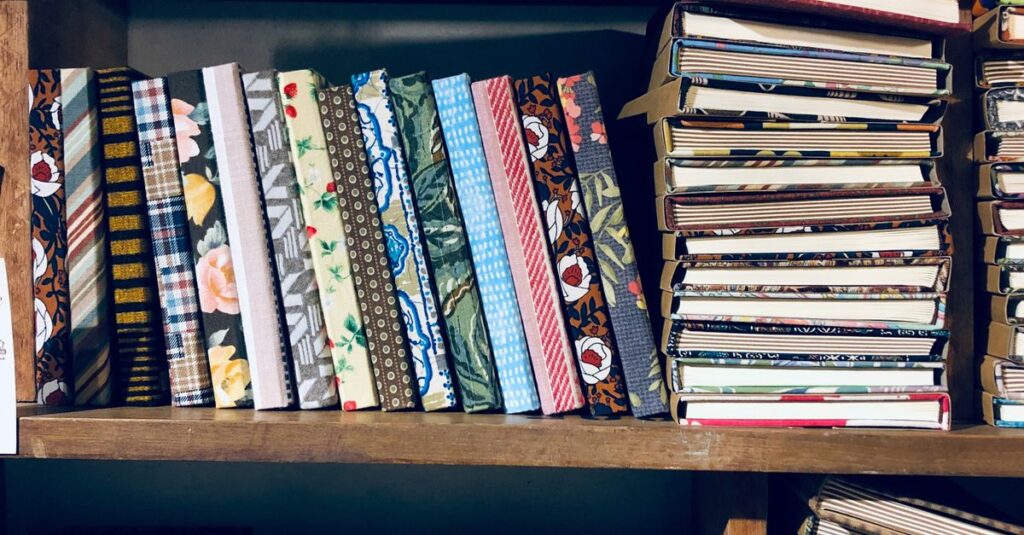
The process is pretty straightforward, but the execution is where most cheap manufacturers cut corners. You take the inner pages — the “book block” — and you attach them to a hard cover. Not with just glue. With a combination of stitching, glue, and sometimes a fabric strip called a “backing strip” or “super.” This creates a hinge. That hinge is what allows the book to open flat without cracking the spine. A bad hinge fails. A good one lasts for years.
Here’s what you’re actually paying for with proper hard binding:
- Durability: The cover protects the pages from bending, tearing, and general wear.
- Lay-flat ability: A well-bound hardcover notebook will open and stay open on any page. No fighting with it to keep it flat while you write.
- Professional appearance: Let’s be honest. A hard-bound corporate diary feels substantial. It conveys quality. A floppy one feels disposable.
- Long-term archiving: For record books, account books, or any notebook that needs to be stored and referenced later, hard binding is non-negotiable.
And honestly? Most people don’t think about this until they have a pile of failed notebooks on their hands. By then, the budget’s spent and the trust is broken.
The Day the School Notebooks Failed
I remember a call from a procurement officer for a chain of schools in Hyderabad. Let’s call him Ravi. He’d ordered 15,000 Long notebooks for the new academic year from a different supplier. By the end of the first semester, teachers were complaining. Covers were detaching. Pages were coming loose. Kids were taping them back together.
Ravi was frustrated — and embarrassed. He sent me a box of the failed books. I opened one. The “hard” cover was just thick paperboard with a cheap laminate. The spine glue was brittle and had cracked. The inner pages were only glued at the edge, with no reinforcement. It was hard binding in name only. A textbook example of cost-cutting that backfired completely.
We had to rush a replacement order for the second semester. The difference wasn’t just the cover. It was the spine reinforcement, the quality of the adhesive, and the way the pages were gathered and sewn before being cased in. Ravi’s story isn’t unique. I hear a version of it every quarter.
Not All “Hard” Binding Is the Same. Here’s How to Tell.
When you’re evaluating a manufacturer’s hard binding, you need to look past the sales sheet. Ask questions. Better yet, ask for a sample and try to break it. Gently, of course.
Here’s what to check for in a sample:
- The Hinge: Open the book to the middle. Does the cover bend smoothly at the spine, or does it resist and crack? A good hinge is flexible but strong.
- The Gap: Look at the space between the cover and the first page (the “gutter”). Is it tight and even, or is there already a gap where glue has failed?
- The “Throw-Up”: This is a factory term. Hold the book by the cover and let it hang open. Do the pages sag away from the spine? They shouldn’t. They should stay firmly attached.
- The Cover Material: Is it genuine binder’s board (a dense, durable paperboard) or just thick cardboard? You can feel the difference. Binder’s board doesn’t warp easily.
- The Edge of the Pages: Are they even and clean, or ragged? A clean, guillotine-cut edge suggests care in production.
If you’re talking to a salesperson and they can’t explain their binding process in simple terms — what adhesive they use, how they reinforce the spine, what their cover board is made of — that’s a red flag. They might be buying pre-bound books and just slapping a custom cover on them.
For businesses that need branding, the binding is the foundation. You can have a beautiful custom cover design, but if the binding fails, that beautiful design ends up in the bin.
Expert Insight
I was talking to our head binder, Suresh, who’s been doing this since the 90s. We were looking at a batch of account books. He pointed to the spine and said, “The secret isn’t in making it hard to open. It’s in making it easy to open … a thousand times.” He tapped the hinge. “This flex? This is where the life of the book is. If it’s too stiff, it cracks. Too loose, it falls apart. You have to get it just right.” He smiled. “It’s like chai. Everyone makes it, but only some make it right.” I don’t have a cleaner way to put it than that.
Hard Binding vs. Other Types: A Quick Reality Check
Okay, so hard binding is durable. But is it always the right choice? Not necessarily. It depends on the use case. Let’s be practical.
| Binding Type | Best For | Durability | Cost (Relative) | Lay-Flat? |
|---|---|---|---|---|
| Hard Binding (Case Binding) | Corporate diaries, record books, premium notebooks, library books. | Very High – Made for long-term, heavy use. | Highest | Yes, when done correctly. |
| Spiral/Coil Binding | Student notebooks, sketchbooks, manuals where pages need to turn 360°. | Medium – Coils can bend or snag, covers are often soft. | Medium | Yes, perfectly. |
| Perfect Binding (Softcover) | Magazines, catalogues, cheaper paperback notebooks. | Low – Pages are glued at spine only, prone to falling out. | Lowest |
See the trade-off? Hard binding costs more because it uses more material and more labor. But for an institution ordering notebooks that need to last a full year or more, that higher upfront cost saves money on replacements. It’s simple math, but you’d be surprised how many buyers only look at the unit price.
Spiral binding is great for flexibility, but those metal or plastic coils aren’t as professional for a corporate setting, and they can get crushed in a packed bag. Perfect binding … well, I wouldn’t use it for anything that needs to survive more than light, occasional use. It’s in the name. It’s “perfect” for being cheap, not for being durable.
Who Actually Needs Hard Binding? (Spoiler: It’s More Than You Think)
Let’s get specific. If you’re in one of these roles, you should be thinking about hard binding as your default for bulk orders.
- Corporate Procurement Managers: Employee diaries, board meeting notebooks, client gift journals. These represent your company. They need to look and feel premium all year long.
- School/College Administrators: Not for every student notebook, but definitely for master record books, library reference notebooks, lab books, or premium notebooks for older students.
- Government Offices: Ledgers, logbooks, official registers. These often have legal or archival significance. They can’t afford to disintegrate.
- Stationery Distributors: If you’re supplying to businesses or high-end retailers, a durable hard-bound line is a must-have in your catalogue. It’s a quality tier that commands a better margin.
The thread here is longevity and perception. You’re not buying a consumable. You’re buying a tool that has to perform reliably. When we work with international buyers, this is the first thing they ask about. They can’t afford shipping costs on replacements. So the binding has to be right, the first time.
Making the Decision for Your Next Order
Look. I’m not saying every notebook you ever buy needs hard binding. That’s overkill. But you need to match the binding to the job. Ask yourself these three questions before you finalize a quote:
- What’s the lifecycle? Is this a one-term school notebook or a five-year corporate record? The answer dictates the binding.
- What’s the abuse level? Will it live on a desk, or will it be thrown in a bag, a car, a site office daily?
- What does it represent? Is it a branded item where quality reflects on your organization? If yes, don’t cheap out on the binding.
Once you know that, talk to your manufacturer. Be specific. Don’t just say “hard cover.” Ask about spine reinforcement. Ask about the cover board GSM. Ask for a video or photos of their binding line. A confident manufacturer will show you. A hesitant one will give you vague promises.
Most of the problems I see come from a mismatch. Someone orders a cheap perfect-bound notebook for a heavy-use job because the picture looked good. Or they pay for hard binding for a short-term promotional notebook where it wasn’t needed. Both are wastes. The goal is fit. Not just price.
Frequently Asked Questions
Is hard binding the same as hardcover?
Yes and no. “Hardcover” usually refers to the rigid cover. “Hard binding” (or “case binding”) refers to the complete method of attaching that hard cover to the pages with a reinforced spine. All hard-bound books are hardcover, but a cheap hardcover might not have durable hard binding.
Can you do custom printing on hard-bound notebooks?
Absolutely. In fact, hard binding is ideal for custom corporate notebooks and diaries. The hard cover is a perfect surface for foil stamping, embossing, or high-quality offset printing of your logo and design. The durability means your branding lasts as long as the book itself.
What is the strongest type of notebook binding?
For overall, long-term durability, a well-executed hard binding (case binding) is the strongest. It combines stitching, gluing, and a hard cover for maximum protection. Some specialized methods like Smyth sewing are even stronger, but they’re rare and very costly for standard notebooks.
Is hard binding worth the extra cost for school notebooks?
For standard student exercise books? Probably not. The cost adds up fast. But for specific uses — like a final-year project book, a master teacher’s register, or a school diary meant to last the whole year — it can be worth it. It comes down to how long you need the book to survive daily student use.
How many pages can a hard-bound notebook have?
A lot. The limitation isn’t the binding method itself, but the thickness of the spine. A good hard binding can easily handle 300, 400, even 700 pages for thick account books. The key is the hinge design and the quality of materials used to handle that thickness without splitting.
The Bottom Line on Hard Binding
It’s not a mystery. Hard binding is about building a notebook that endures. It costs more because it does more. For a procurement manager, the question isn’t just “What’s the price per unit?” It’s “What’s the cost per day of use?” A cheap notebook that fails in three months is more expensive than a durable one that lasts a year.
I don’t think there’s one perfect answer for every situation. Probably there isn’t. But if you’ve read this far, you already know the notebooks you’re ordering need to be reliable. You’re just figuring out how to make sure they are.
The simplest way to know? Get a sample. Test it. Bend it, open it, use it like your end-user will. The book will tell you everything you need to know about its binding. If you want to see what a difference proper construction makes, it’s worth getting a few samples in your hands.