Okay, let’s be honest for a second.
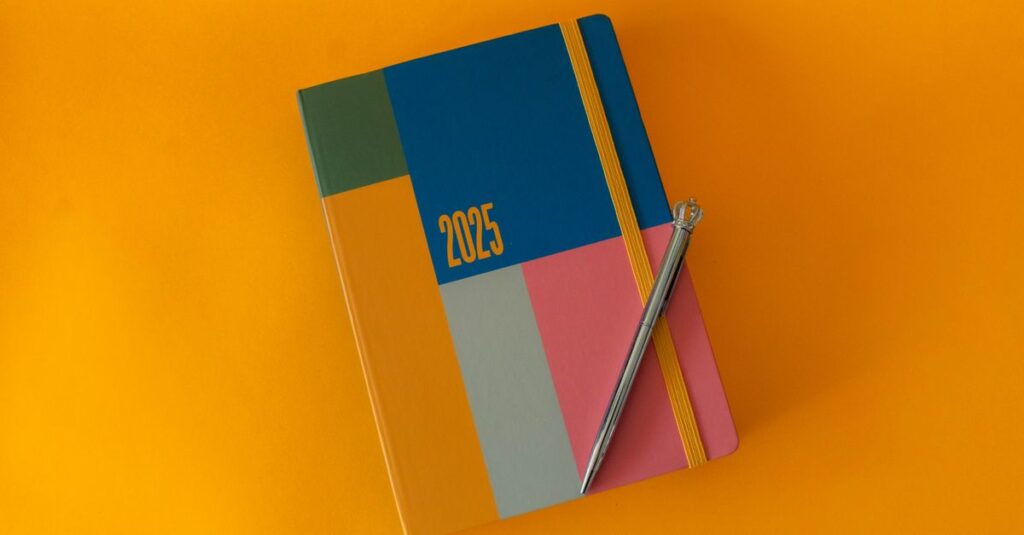
You typed “nearby printout shop” into Google. You probably need to get something printed — maybe a training manual, course books, a stack of branded diaries, or a few hundred presentation dossiers. Something you can hold in your hand and distribute. Time is tight. Budget is a thing. That’s the mood.
Here’s the sharp turn, though: A local copy shop might help you get 50 printouts in a binder. But if you’re a procurement manager, a school administrator, or someone ordering for a whole institution, you’re not just looking for ink on paper. You’re looking for a manufacturing partner. The kind that can take your logo, your layout, your specific page requirement — and turn it into 10,000 identical, durable, professional notebooks.
The confusion between a quick-print shop and a full-scale manufacturer is where most business buyers lose time and money. It’s a headache, honestly. I’ve seen it. We get calls all the time from people who went to a local shop first, paid too much for a poor-quality batch, and then had to start the whole search over. If this sounds like the corner you’re in, you might want to look at what actual notebook manufacturing entails.
Right. Let’s break this down.
Why “Nearby Printout Shop” Is Probably the Wrong Search
You want convenience. I get it. Someone down the road can do a job in 24 hours. It feels safe. You can walk in and see the machine.
But think about the scale. A local print shop runs on digital printers and maybe a small binder. They’re built for short runs — 10 copies, 100 copies. The paper is whatever’s in the tray. Binding is usually a cheap plastic coil or a basic staple. For a corporate event handout? Fine. For 5,000 student notebooks that need to survive a school year? Not a chance.
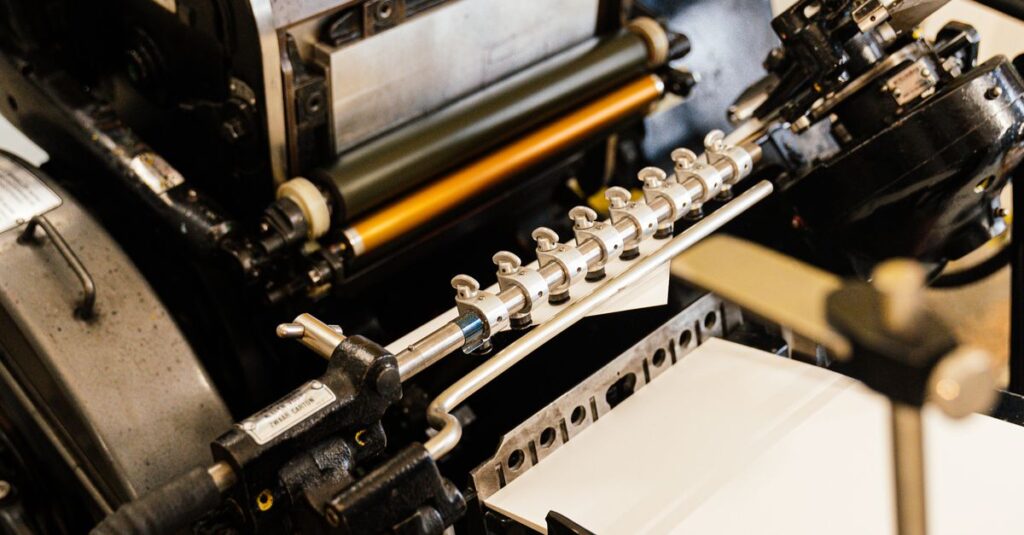
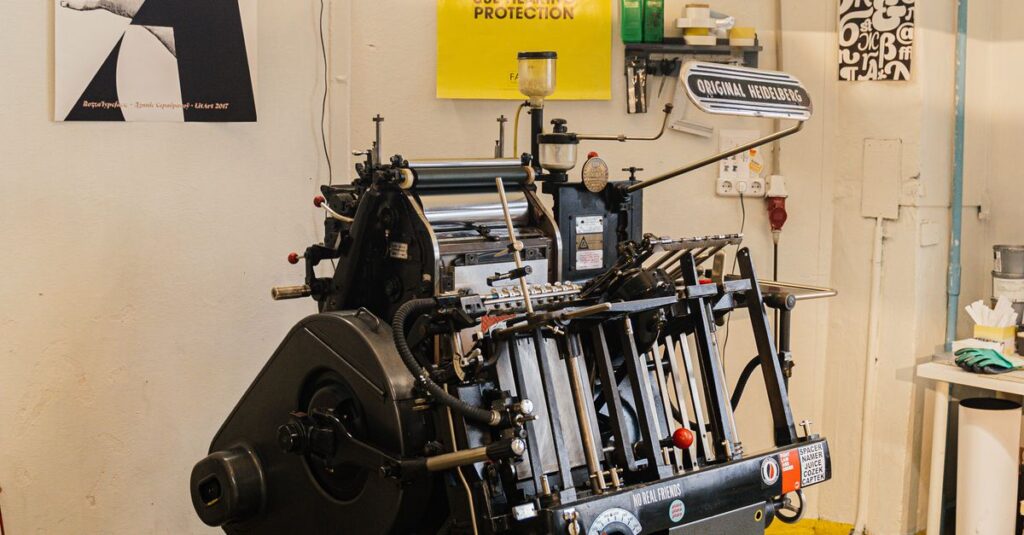
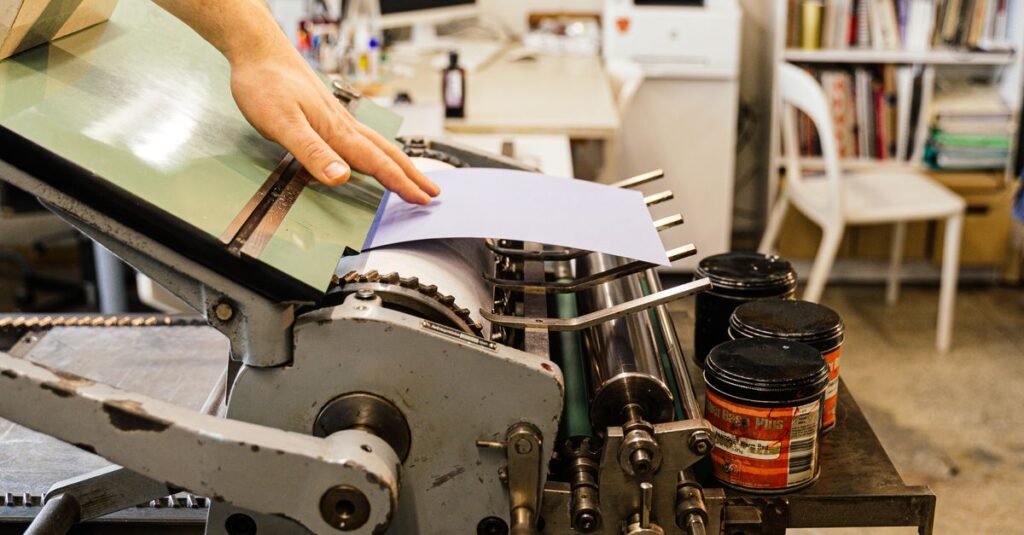
What you’re actually stepping into is the gap between commercial printing and industrial manufacturing. A print shop applies ink. A manufacturer sources paper in bulk, uses large-format offset presses, cuts, folds, stitches or perfect-binds with industrial machines, and packages for distribution. They think in pallets, not in pages.
So your first question shouldn’t be “Who’s close?” It should be “What do I actually need made?”
Real-Life Micro-Story
I was talking to Arjun last week. He’s a procurement head for a chain of coaching institutes in Hyderabad. He needed 8,000 custom-made workbooks for the new academic session. He went to a big-name printout shop in his neighborhood. Got a quote that made his eyes water. The samples felt flimsy — the cover curled after a week.
He called us, frustrated. Over the phone, we talked about paper GSM (that’s grams per square meter — the stuff that makes a notebook feel substantial), about stitch binding vs. perfect binding for books that get thrown in bags, about sourcing paper directly from mills. His relief was almost physical. He wasn’t just buying printouts. He was buying durability, volume efficiency, and a supply chain. The location of the factory became the last thing on his mind.
Anyway. The point is, proximity matters less than capability. Especially when you’re buying in bulk.
What You’re REALLY Looking For: The Manufacturing Checklist
Forget “nearby.” Let’s build a list of what to actually look for. If you’re ordering for a school, corporation, or as a distributor, these are the boxes that need ticking.
- Volume Capacity: Can they handle 5,000 units? 50,000? What’s their daily output? A real manufacturer will have a clear answer, like 30,000-40,000 notebooks a day.
- Paper & Material Sourcing: Do they buy paper in reels from mills? This is the only way to control quality and cost for bulk orders. Ask about GSM options (like 54 GSM for writing, heavier for covers).
- Binding Methods: This is huge. Stitched binding is the classic, durable way for school notebooks. Spiral binding lays flat but isn’t as rugged. Perfect binding (glued spine) is clean for corporate diaries. They should explain the pros and cons.
- Customization Depth: Can they print your full-color logo on the cover? Can they set up custom page layouts — single ruled, double ruled, graphs? Can they change the header/footer on every page? A print shop can slap a logo on a template. A manufacturer builds the template around you.
- Packaging & Logistics: How do 10,000 notebooks get to you? Are they bundled, boxed, palletized? Do they arrange transport? This is where a factory, even if it’s a few cities away, often beats the local guy who hands you a carton.
The question isn’t about distance. It’s about whether they can solve your entire problem, not just the ink-on-paper part.
I think — and I could be wrong — that most institutional buyers don’t even know to ask these questions. Which is how you end up with a subpar product and a blown budget.
Print Shop vs. Notebook Manufacturer: A Side-by-Side Look
This is the part nobody says out loud. Let’s put it in a table so it’s painfully clear.
| Aspect | Local Printout Shop | Bulk Notebook Manufacturer |
|---|---|---|
| Core Service | Digital printing, photocopies, small binding jobs | Industrial manufacturing of notebooks, diaries, from raw paper to finished product |
| Ideal Order Size | 1 – 500 copies | 500 – 500,000+ units |
| Paper Quality | Limited stock, often standard office paper (70-80 GSM) | Multiple options (e.g., 54-100 GSM), sourced directly from paper mills for consistency |
| Binding Durability | Basic staples, plastic coil, weak glue | Industrial stitching, robust perfect binding, durable spiral wire |
| Customization | Usually just cover printing on existing templates | Fully custom: cover design, page layout, ruling type, paper grade, packaging |
| Cost Per Unit (Bulk) | High (economies of scale don’t apply) | Low (volume purchasing of materials, automated production) |
| Best For | Prototypes, urgent small batches, one-off documents | Academic year supplies, corporate gifting, retail distribution, institutional stationery |
See the difference? It’s not even the same sport.
How to Actually Find the Right Supplier (The Step-by-Step)
So, your search for a “nearby printout shop” has just evolved. Good. Here’s what to do now.
First, get your specs crystal clear. Not just “notebooks.” How many? What size — Long (27×17 cm), Short (19×15 cm), A4? How many pages — 92, 200, 240? What ruling — Single Ruled (SR), Unruled (UR), Four Ruled (FR) for accounting? What’s the GSM? Do you have a print-ready cover design? Nail this down. It turns you from a browser into a serious buyer instantly.
Second, search for notebook manufacturers or bulk diary suppliers. Look at their websites. Do they show a factory? Do they list their machinery? Talk about paper sourcing? If all you see is stock photos of happy people holding generic notebooks, move on. You want the gritty details — the kind of operational transparency that builds trust.
Expert Insight
I was reading an industry report last month — one line stuck with me. It said something like the single biggest predictor of a successful bulk stationery order isn’t the printer quality, it’s the manufacturer’s control over the paper supply chain. The more direct their line to the paper mill, the better the cost, the consistency, and the delivery time.
I don’t have a cleaner way to put it than that. When you control the raw material, you control everything. When you’re just buying sheets and printing on them, you’re at the mercy of a dozen other suppliers.
Third, ask for physical samples. Always. Not just a PDF, not just a photo. A real notebook. Feel the paper. Write on it with a pen. Throw it in a bag and carry it around for a day. Does the binding hold? Does the cover tear? This is the only test that matters.
And finally, think about logistics. A manufacturer 500 km away with a dedicated logistics partner will often get a pallet to your door faster and cheaper than you can arrange a tempo from across town. Seriously.
When Going Local Actually Makes Sense (And When It Doesn’t)
Look, I’m not saying never use the guy around the corner.
If you need 20 bound reports for a board meeting tomorrow, God bless your local print shop. If you’re testing a new diary design and want three different physical prototypes by tomorrow afternoon, that’s their world. Speed and ultra-low minimums.
But the moment your order has more than two zeros, the economics and physics change. The local shop’s machinery isn’t built for it. Their paper costs are retail, not wholesale. Their binding won’t last. You’ll pay three times the price per unit for one-tenth the durability.
It’s a mismatch. And it leaves everyone frustrated — you with a poor product, them with an order that wrecked their schedule.
The real shift is admitting that you’re not sourcing a service. You’re sourcing a product. And you source products from factories.
Frequently Asked Questions
What’s the main difference between a printout shop and a notebook manufacturer?
A print shop is set up for short-run digital printing and small binding jobs. A notebook manufacturer is a factory that makes notebooks from scratch — sourcing paper, large-format printing, industrial binding, and bulk packaging. For orders over 500 units, the manufacturer is the only viable option for quality and price.
I need custom notebooks for my school. What should I ask a potential supplier?
Ask about paper GSM (aim for 54 GSM or higher for writing), binding type (stitched is best for heavy use), minimum order quantity, ability to print custom covers and page layouts, and sample turnaround time. Always, always get a physical sample before placing a large order.
Is it more expensive to order from a manufacturer far away?
Nine times out of ten, no. For bulk orders, the per-notebook cost from a manufacturer is so much lower that it easily covers shipping. You also get far better durability and customization. The total value is higher, even if the factory isn’t in your city.
Can I get a sample before placing a big order for printed diaries?
Any reputable manufacturer will provide a physical sample, often for a small fee that’s deducted from your final order. This is non-negotiable. It lets you test quality firsthand. If a supplier won’t send a sample, consider it a major red flag.
What notebook binding is best for corporate diaries?
For a professional, sleek look, perfect binding (a glued spine) is standard. It allows for printing on the spine and lays flat when open. For workbooks or manuals that need to lay completely flat, spiral binding is better, though it’s less formal.
Finding More Than Just a Shop
So, you searched for a nearby printout shop. What you probably needed was a solution to a larger problem: getting a professional, durable, cost-effective branded stationery product into the hands of your students, employees, or customers.
That’s not geography. That’s capability. That’s finding a partner who understands paper, binding, volume, and deadlines. The good news? Those partners exist. They might not be on your street, but in the age of samples-by-courier and production transparency, they might as well be.
The hardest step is shifting the search. From “who’s close” to “who can actually do this.” Once you make that jump, the options get clearer, the prices get realistic, and the quality becomes something you can count on.
I don’t think there’s one perfect answer for every buyer. But if you’re reading this, you’re likely ordering in serious volume. You already know what a flimsy notebook feels like. The question is whether you’re ready to skip the middleman and go straight to the source.
If you want to see what that looks like — the factory floor, the material options, the actual process — we’ve been doing it for 40 years. It might be worth exploring what a true manufacturer can offer for your next big order.