The Local Search Habit That’s Costing You Money
You need notebooks. A thousand of them. Maybe five thousand. You have a budget, a deadline, and a responsibility to get the best value for your school, your office, or your business.
So you go online. Your first search is automatic, almost instinctual. “Printing shop near me.” You want someone local. Someone you can visit. Someone you can talk to face-to-face. It feels responsible. It feels safe.
I’m going to tell you something you might not like. That instinct is probably costing you a lot of money. And it’s locking you into options that are, at best, mediocre.
Here’s the thing — when you’re ordering notebooks in bulk, you’re not buying a cup of coffee. You’re buying a manufactured product. The quality isn’t decided by the person behind the counter. It’s decided by the machinery in the factory, the paper in the warehouse, and the decades of experience in binding and printing. Proximity means nothing. Actually, it means less than nothing. It’s a distraction.
If you’re a procurement manager or a business owner, you know this drill. You’ve probably done it. The real question isn’t who’s closest. It’s who can actually do the job right.
What “Near Me” Really Means (And What It Doesn’t)
Let’s break down that search. “Near me” implies three things you think you need:
- Quick pick-up or delivery.
- A physical store to walk into.
- Local accountability.
For a box of pens or a single notepad? Sure. Makes sense. For 10,000 custom notebooks with your logo, specific ruling, and a 700-page count? Not a single one of those points matters.
Quick delivery? A national manufacturer with a proper logistics chain can ship to you faster than a local shop can produce the goods. We ship from Rajahmundry to Delhi, Mumbai, Bangalore — often in 3-5 days. A local printer might take two weeks just to source the paper.
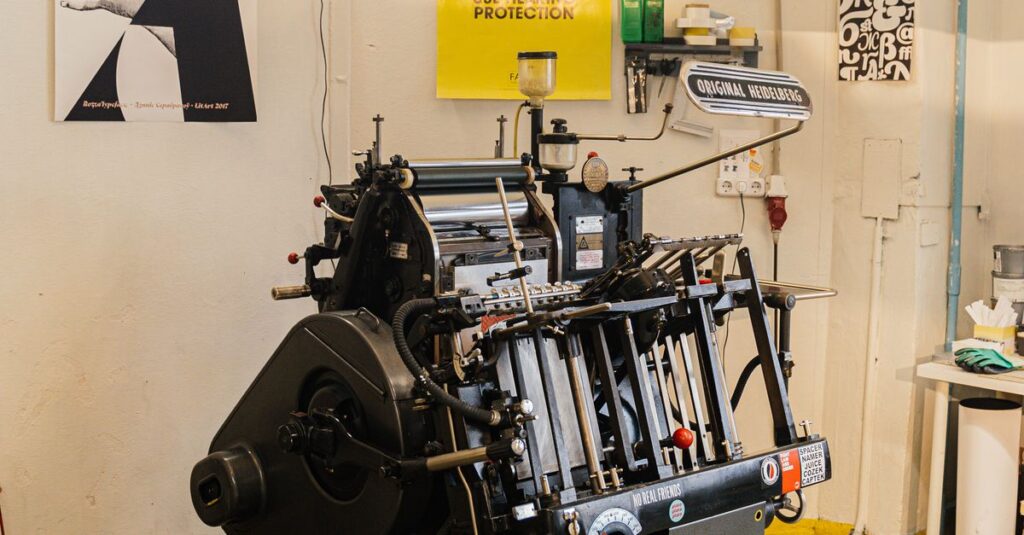
A store to walk into? What are you going to see? A sample notebook, maybe. You won’t see the four-color offset press. You won’t see the binding machine that stitches 40,000 notebooks a day. You’ll see a retail counter. That’s not where your product is made.
Local accountability? This is the biggest myth. Accountability comes from capability, not geography. A local shop that messes up your order is just as incapable as a distant one. The difference? A professional manufacturer has the systems — and the financial stake — to fix it. A local shop might just apologize.
I’ve talked to dozens of corporate buyers who started with a local search. They ended up with thinner paper, inconsistent color printing, and binding that failed within a month. The conversation always starts with, “Well, they were so convenient…”
Convenience is overrated. Quality is underrated.
The Four Things You Should Be Searching For
Okay, so what should you actually look for? If you’re searching for a bulk notebook supplier, your keywords should change completely.
Instead of “near me,” you need to think about these four things. They’re the real drivers of value.
1. Manufacturing Capacity (Not Shop Size)
Can they actually make what you need? A local printing shop often outsources the manufacturing. They take your order, send it to a factory somewhere else, add their margin, and deliver it to you. You’re paying for a middleman.
A real manufacturer — like us — has the factory. The presses, the binding lines, the paper stocks. Our capacity is about 30,000 to 40,000 bound notebooks per day. That means your 5,000-unit order isn’t a crisis; it’s a standard production run. It gets done right, on time, and at a cost that reflects actual production, not brokerage.
Look for words like “manufacturer,” “production facility,” “factory.” Avoid “print shop,” “retail outlet,” “local printer.”
2. Paper & Binding Knowledge (Not Just Printing)
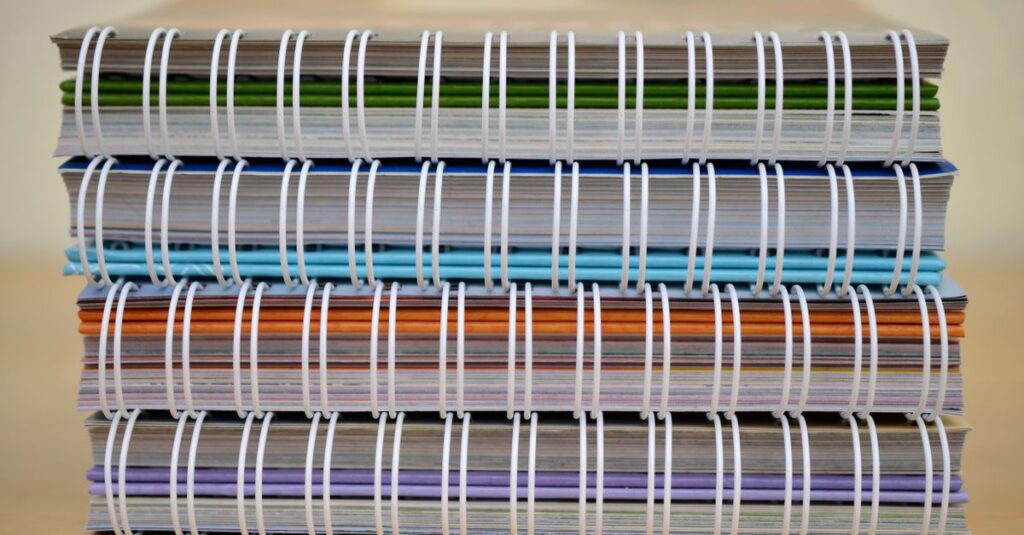
Notebooks aren’t about printing. They’re about paper and binding. If your supplier doesn’t talk about GSM (paper weight), ruling types (SR, DR, BR), and binding methods (stitched, spiral, perfect) in their first conversation, walk away.
Most local shops just ask, “How many pages? What color cover?” They don’t know that 54 GSM paper is standard for writing, but 70 GSM is better for heavy ink. They don’t know that spiral binding is great for art books but terrible for long-term archiving. They don’t know that center broad ruled (CBR) is what primary schools actually need, not just single ruled.
Your search should include terms like “notebook GSM,” “binding types,” “custom ruling.” That’s how you find experts.
3. Customization Depth (Not Just Logo Slapping)
Putting your logo on a cover is easy. Customizing the entire notebook — that’s hard. It’s also what you probably need.
Think about: custom page layouts for your accounting team, specific header formats for school notebooks, private label manufacturing where your brand is on every component, not just the cover. A local shop might offer “custom printing.” A manufacturer offers “custom notebook manufacturing.”
The difference is everything. Manufacturing means we control the paper, the ruling, the page count, the cover material, the binding, the packaging. Printing means they put a design on a pre-made book.
Search for “private label notebooks,” “OEM notebook production,” “fully custom notebooks.”
4. Supply Chain Reliability (Not Just Delivery)
This is the big one. A local shop is one link in a chain. If their paper supplier fails, your order fails. If their binding subcontractor is busy, your order waits.
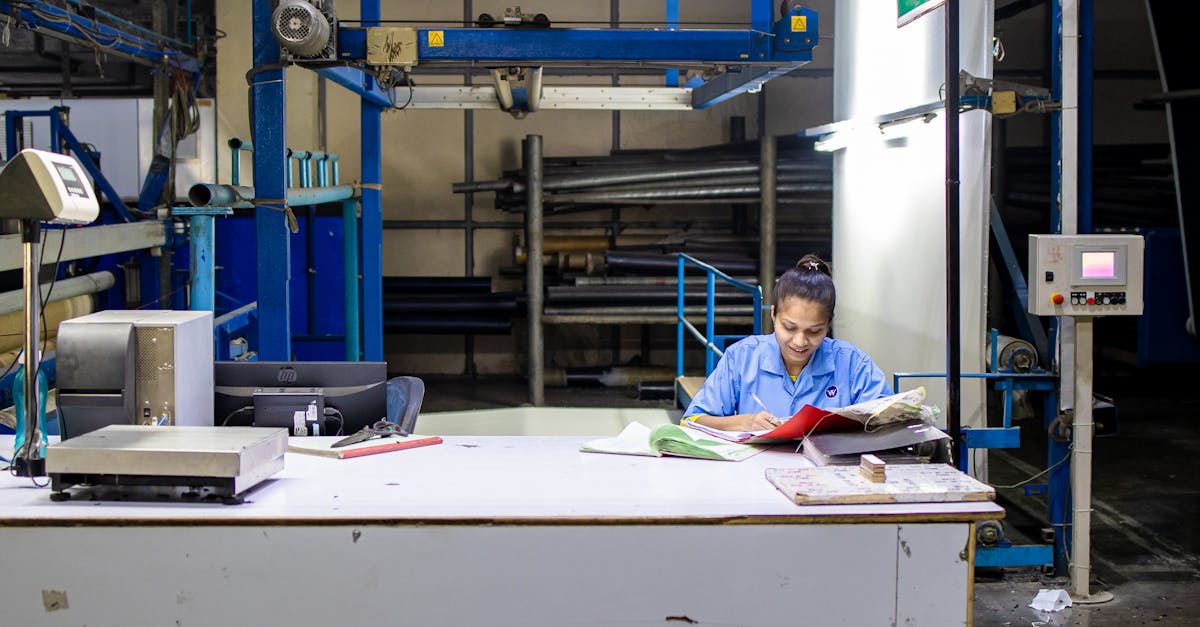
A manufacturer controls — or at least manages — the entire chain. We source paper directly from mills. We have binding machines on-site. We have packaging and logistics partners integrated into the process. Your order doesn’t depend on three different businesses aligning; it depends on one business executing.
For schools, corporations, government institutions — this reliability is non-negotiable. Term starts on a date. A conference happens on a date. You can’t say, “The local shop had a delay.”
Search for “bulk notebook supplier,” “stationery supply chain,” “notebook export experience.”
Look, I’ll be direct. The “near me” habit is a relic of retail shopping. Bulk procurement is a different game. You’re not buying a service; you’re buying a product that requires industrial production. And industrial production doesn’t happen in your neighborhood. It happens in industrial areas. Like Rajahmundry. Like our factory.
A Quick Comparison: Local Shop vs. Professional Manufacturer
Let’s make this tangible. Here’s what you’re really choosing between.
| Factor | Local Printing Shop “Near Me” | Professional Notebook Manufacturer |
|---|---|---|
| Core Business | Retail printing, small jobs | Industrial notebook production |
| Paper Source | Third-party wholesaler | Direct from paper mills |
| Binding | Outsourced or simple methods | On-site stitching, spiral, perfect binding |
| Customization | Cover printing only | Full product design: paper, ruling, pages, cover, binding |
| Capacity | Few hundred units per week | 30,000-40,000 units per day |
| Price for Bulk | Higher (middleman margins) | Lower (direct manufacturing) |
| Supply Chain Risk | High (multiple dependencies) | Low (integrated control) |
| Export Experience | None or limited | Direct experience (Gulf, Africa, USA, Europe) |
The table makes it obvious. But I think the real difference is in the mindset. A local shop is trying to fulfill an order. A manufacturer is trying to build a product. That changes everything.
Expert Insight
I was talking to a procurement manager from a large school chain last month. Over a very bad coffee at his office, actually. He said something that stuck.
He told me his first year, he sourced all notebooks from a local printer. The price was okay. The delivery was fine. The notebooks fell apart by December. The pages started tearing. The covers faded.
His mistake? He thought durability was about the binding. It’s not. It’s about the entire production process — the paper quality, the glue, the stitching tension, the curing time. A local shop doesn’t control any of that. They buy a pre-made notebook and print on it. The durability was decided six months earlier in a factory they’ve never visited.
The researcher — or the engineer, really — would say the product integrity is upstream. You can’t fix it downstream. I don’t have a cleaner way to put it than that.
What This Looks Like in Real Life
Let’s take a fictional but very real example.
Meet Anita. 42. Procurement head for a mid-sized corporate firm in Hyderabad. She needs 2,000 custom diaries for the new financial year. Logo on the cover, specific internal layout for expense tracking, premium feel.
Her first thought: “Find a good printing shop in Hyderabad.” She finds one. They’re friendly. They show her samples. They promise four-week delivery. The price seems fair.
Six weeks later, the diaries arrive. The logo is off-center on 300 of them. The paper feels thin — the pens almost tear through. The “premium feel” is absent. She’s frustrated, but the event is in two days. She uses them.
Three months later, the binding on many diaries has failed. Pages are loose. Her team is complaining.
Anita’s mistake wasn’t choosing a bad vendor. It was choosing a type of vendor. A retail printer can’t produce a premium, custom diary. They can only decorate a standard one. The quality was predetermined at the factory that made the base diary. She never met that factory. She never could.
The next year, she searched for “custom diary manufacturer India.” Not “near me.” The difference wasn’t just quality. It was control.
This happens every single day. Probably to someone you know.
How to Actually Find the Right Supplier
So, if you’re done with the “near me” trap, here’s what you do. A simple, actionable shift.
First, change your search terms. Use these:
- “Notebook manufacturer India”
- “Bulk notebook supplier”
- “Custom notebook printing factory”
- “Private label stationery manufacturer”
- “School notebook wholesale”
Second, look for specific evidence on their website. Do they show:
- Factory photos? (Not just a shop front)
- Paper specifications? (GSM, types)
- Binding machine descriptions?
- Export information? (If they export, they meet higher standards)
- A product range that includes manufacturing — like different ruling types, page counts, sizes?
Third, ask three questions in your first enquiry:
- “Do you manufacture the notebooks yourselves, or do you source them from another factory?”
- “Can I customize the paper ruling and page count, not just the cover?”
- “What is your daily production capacity?”
The answers will tell you everything. If they hesitate on the first question, you’re dealing with a broker. If they say “yes” to the second, you’re dealing with a manufacturer. If the third answer is a specific number (like 30,000 units), you’re dealing with an industrial supplier.
It’s not complicated. It’s just a different set of criteria. The goal is to find the source, not the seller.
A Quick Note on International Buyers
If you’re reading this from outside India — maybe the Gulf, Africa, the US — the “near me” thought doesn’t even apply. You’re already looking at distance.
But the mistake is similar. You might look for a local distributor in your country. Someone who imports and sells. Again, you’re adding a layer. You’re paying for their margin, their storage, their handling.
Working directly with a manufacturer like us means you get the same price a bulk buyer in India gets. You get the same customization options. And you get shipping directly to your port or doorstep. The logistics are handled, but the product is direct.
It’s a different mindset. You’re not buying from a stocklist. You’re commissioning a production run. That’s how you get consistency across years, across orders.
I think the biggest shift for international buyers is realizing that distance isn’t a barrier anymore. It’s a normal part of global supply. Our notebooks are in schools in Dubai, offices in Nairobi, stores in London. Not because a local shop there stocks them. Because we shipped them directly.
FAQ
Frequently Asked Questions
Isn’t a local printing shop more reliable for communication?
Actually, no. A professional manufacturer has dedicated client managers for bulk orders. You get a direct line, a specific contact, and systems for updates. A local shop might have one person handling everything — from small flyers to your bulk order. When they’re busy, your order waits. Direct manufacturers prioritize bulk clients because that’s their core business.
What if I need to see samples before ordering?
Manufacturers send samples. We send them daily — by courier. You get them in 2-3 days. Seeing a sample isn’t about visiting a shop; it’s about getting the actual product in your hands. A shop sample might be a generic book they printed on. A manufacturer’s sample is the exact product you’re ordering, made in the factory.
Doesn’t shipping from a distant manufacturer cost more?
Often, it costs less. Because the product cost is lower (no middleman margin), the total — product + shipping — is frequently cheaper than buying from a local shop. Plus, manufacturers have shipping contracts for bulk goods. We ship pallets, not boxes. The per-unit shipping cost is minimal.
I have a very specific, unique notebook requirement. Can a manufacturer do that?
Yes. That’s what manufacturers do. Local shops work with standard, pre-made products. Manufacturers can change the paper, the size, the ruling, the binding, the cover material. If your requirement is unique, you need a factory, not a printer.
How do I verify if a company is a real manufacturer?
Ask for factory photos or a video tour. Ask about their machine capacity (like stitching machines per day). Ask if they source paper directly. And ask for a breakdown of the production process for your specific order. A real manufacturer will describe each step — from paper cutting to binding to packing. A shop will describe “ordering” and “printing.”
So, What Should You Search For?
Let’s be clear. I’m not saying every local printing shop is bad. Some are excellent for small jobs, for quick prints, for retail needs.
But if you’re ordering notebooks in bulk — for a school, a corporation, a government order, a wholesale business — you’re not in the retail category. You’re in the industrial procurement category. Your needs are different. Your risks are bigger. Your value equation is about total cost, total quality, and total reliability.
The “near me” search satisfies a psychological need for closeness. It doesn’t satisfy a business need for capability.
Change the search. Look for the maker, not the seller. Look for the factory, not the shop. Look for the capacity, not the convenience.
I don’t think there’s one perfect supplier for everyone. Probably there isn’t. But if you’ve read this far, you already know what you’re looking for — you’re just figuring out if it’s okay to ignore the “near me” habit and look for the real source.
Maybe start by looking at what a manufacturer actually offers. It’s a different list altogether.