So, you need notebooks. A lot of them.
Right. You’re not buying one notebook for yourself. You’re the person responsible for getting notebooks for 500 students by next month. Or ordering corporate diaries for an entire company. Or finding a reliable supplier for your stationery distribution business. Your Google search bar probably looks something like “navneet note book supplier” or “navneet notebook bulk order.”
The pressure is different here. It’s not about finding a pretty journal. It’s about quality that won’t get you complaints from teachers. It’s about pricing that makes your procurement committee nod. It’s about delivery dates you can actually bank on. You’re looking for a manufacturer, not a retailer. And that changes everything.
If that’s where you’re at, this is for you. I’ve been in this industry long enough to see what makes an order go smoothly and what makes it a logistical headache. Let’s talk about what you’re really looking for when you search for a Navneet notebook manufacturer.
The “Navneet” Search: What You’re Actually Looking For
Let me be direct. When you type “Navneet notebook,” you’re probably not searching for the brand Navneet itself. You’re using it as a shorthand. You want the qualities Navneet represents: consistent quality, standard sizes, reliable paper. But you might need a manufacturer who can provide that same reliability, maybe with your logo on it, and possibly at a better price point for bulk.
Here’s the thing — the notebook market is crowded. Every other company claims to be the best. But for institutional buyers, “best” doesn’t mean fancy. It means no surprises. The paper shouldn’t bleed. The binding should survive a school bag. The ruling should be straight. It sounds basic, but you’d be shocked how many suppliers mess up the basics when you scale to thousands of units.
What you’re looking for is a partner, not just a vendor. Someone who understands that your reputation is on the line with every notebook you distribute. You need someone who gets that a delayed shipment isn’t just an invoice issue — it’s 500 students without books on the first day of class.
Three Things That Separate Real Manufacturers from Middlemen
This is where most buyers get tripped up. You think you’re talking to a factory, but you’re actually talking to a broker. Here’s how to tell the difference.
1. They Talk Paper & Binding, Not Just Price
A middleman will lead with the per-unit cost. A manufacturer will ask you about GSM. They’ll want to know if you need 70 GSM writing paper or if 54 GSM is sufficient for your use case. They’ll discuss binding types — stitched for durability, spiral for lie-flat use, perfect binding for a cleaner look. They have opinions on paper grain direction and ruling alignment. If they can’t explain why they use a certain stitch count or adhesive, walk away.
I was talking to a procurement manager from a Hyderabad college last month — over a very bad Zoom connection, actually — and she said something that stuck: “The cheap ones always cost me more. Teachers complain, pages fall out, and I’m the one dealing with the replacement chaos.” She’s right.
2. They Have a Real Production Capacity
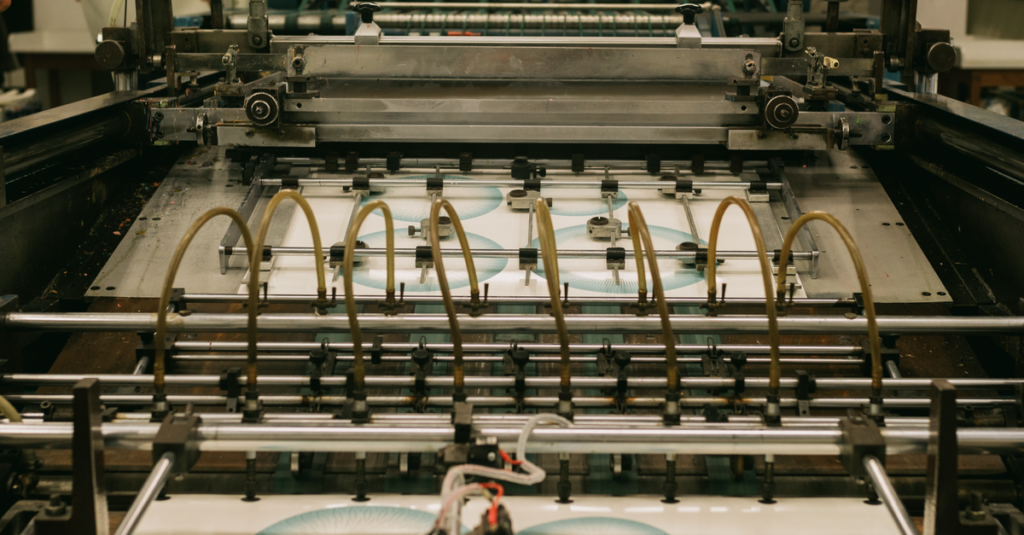
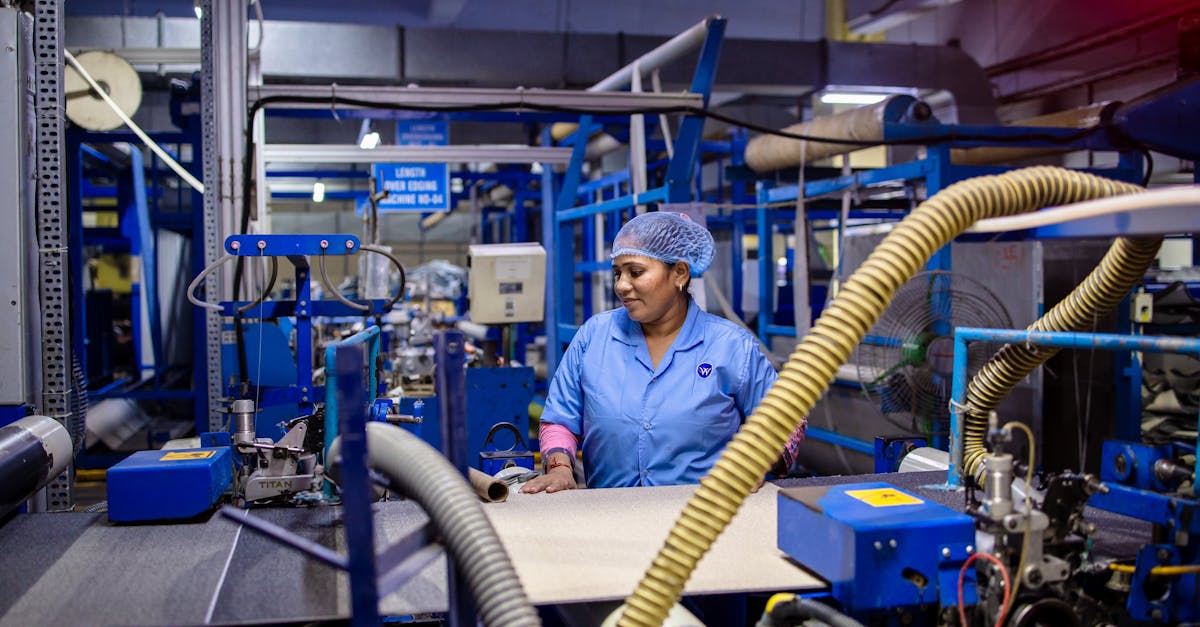
Anyone can promise you 10,000 notebooks. Can they produce them? A real manufacturer knows their daily output down to the last book. They’ll tell you their production cycle — from paper cutting to binding to packing. They can handle a rush order because they have the machinery and the floor space, not because they’re going to outsource it to three different smaller units and hope it all comes together.
Ask them: “What’s your lead time for 20,000 A4 single-ruled notebooks?” If they hesitate, or give you a generic “2-3 weeks,” probe deeper. A real factory knows.
3. Customization is a Conversation, Not a Menu
Private label and custom printing are where manufacturers truly shine. It’s not just about slapping a logo on a cover. A good manufacturer will guide you. They’ll ask about your brand colors and suggest Pantone codes. They’ll advise on cover material based on how the notebook will be used. They’ll show you samples of different ruling layouts — single, double, four-ruled for accounting — because they understand the end-user’s need.
Think about it this way: if you’re ordering corporate diaries, the paper quality needs to handle fountain pens without feathering. If it’s for school kids, the cover needs to be tough. A manufacturer gets this. A reseller just has a catalog.
Expert Insight
I was reading an industry report a while back — can’t remember the publisher now — and one line hit hard. It said that for bulk institutional buyers, the single biggest factor in supplier satisfaction wasn’t price. It was communication. Specifically, proactive updates when there’s a delay in raw material. The good manufacturers have relationships with paper mills. They see supply chain hiccups coming. The rest just call you on the delivery date to say it’s not coming. Don’t quote me on the exact percentage, but the difference in stress levels is… profound.
The Bulk Notebook Decision Matrix: OEM vs. Stock vs. Custom
Not all bulk orders are the same. Your needs dictate the right type of supplier. Here’s a breakdown that might help you figure out where your order fits.
| Factor | OEM / Private Label | Standard Stock Notebooks | Fully Custom |
|---|---|---|---|
| Best For | Brands, corporations, schools with a logo | General distribution, quick replenishment | Unique products, special promotions |
| Lead Time | Longer (4-8 weeks) | Shortest (1-3 weeks) | Longest (6+ weeks) |
| Cost Per Unit | Medium | Lowest | Highest |
| MOQ (Min Order Qty) | Usually high (5,000+ units) | Flexible (can be lower) | Very high (10,000+ units) |
| Key Question | “Is my brand identity worth the extra cost and time?” | “Do I just need reliable, standard notebooks fast?” | “Is this a signature product that defines my offering?” |
Most institutional buyers I work with start with stock notebooks for general supply and gradually move into OEM for their core branded materials. It’s a balance between budget, time, and brand impact.
A Real-Life Snapshot: Why This Stuff Matters
Let me tell you about Ramesh. He’s 42, runs procurement for a chain of coaching centres in Vijayawada. He used to buy from whoever gave him the cheapest quote. Then one semester, two thousand notebooks showed up with crooked ruling. The pages were cut wrong. You couldn’t write on them properly.
The supplier vanished. Ramesh had to source replacements in three days. He paid a premium, lost money, and his director was furious. Now, he visits the factory. He checks the paper stock. He tests samples himself. He cares less about saving two rupees per book and more about sleeping the week before classes start.
His story isn’t unique. It’s the rule.
Questions You Must Ask Before You Place That PO
Look, I’ll just say it. Don’t just email for a price list. Have a conversation. Here are the questions that separate the serious from the superficial.
- “Can I see your facility or a detailed video walkthrough?” A real manufacturer is proud of their setup. They’ll show you.
- “What’s your process for quality check on a bulk order?” Listen for specifics. Is it a random sample? A full check on certain parameters?
- “Who are your paper suppliers?” This tells you about their raw material consistency. Good manufacturers have long-term relationships with mills.
- “What happens if there’s a defect in the shipment?” Their answer should be immediate and clear. Replacement policy, timelines, who bears the freight.
- “Can you provide references from similar institutional clients?” A school, a corporate, a distributor. Talk to them.
And honestly? The way they answer is as important as what they say. Confidence comes from experience. Vagueness comes from hoping you won’t ask.
This is where a company’s history matters. A manufacturer that’s been around since 1985 has seen paper shortages, freight crises, and every kind of client request. That institutional memory is worth its weight in gold when your order is on the line.
The Export Angle: If You’re Looking Beyond Borders
Maybe you’re reading this from the Gulf, or Africa, or Europe. You need a reliable Indian manufacturer who can handle export documentation, ocean freight, and consistent quality for your market. The game changes again.
You’re not just buying notebooks; you’re buying a supply chain partner. You need someone who understands HS codes, fumigation certificates, and the palletization requirements for different ports. The manufacturer needs to have an export department, not just a salesperson who says “yes, we export.”
I think the biggest pitfall here is assuming all Indian manufacturers are the same. They’re not. The ones who regularly ship to the Middle East know about the humidity challenges there — they’ll suggest different paper or packaging. The ones who ship to Europe are used to stricter compliance. It’s a whole different layer of expertise.
Wrapping This Up
Finding a navneet notebook manufacturer — or rather, a manufacturer that meets that standard — boils down to three things. Consistency. Communication. Capacity. Everything else is just detail.
The cheapest option is almost never the cheapest in the long run. The one that answers your emails at 11 PM might just be desperate, not dedicated. The one with the slickest website might not have the strongest binding machine.
I don’t think there’s one perfect supplier for everyone. Your perfect match depends on your volume, your need for customization, and your risk tolerance. But if you’ve read this far, you know the difference now. You know what questions to ask. You know the red flags.
The rest is about making the call and seeing if they deliver on their promises. Sometimes, you just have to run that first pilot order and see. If you’re evaluating options and want to see what a manufacturer with four decades in the game looks like, it might be worth starting a conversation. Even if just to benchmark.
Frequently Asked Questions
What is the minimum order quantity (MOQ) for custom Navneet-style notebooks?
It varies wildly. For basic private label (just your logo on a standard book), MOQs can start around 2,000-5,000 pieces. For fully custom designs, paper, and size, expect 10,000 units or more. Always ask upfront — a good manufacturer will be clear about this to avoid wasting your time.
How long does production take for a bulk school notebook order?
For standard stock notebooks (like common ruled sizes), a reliable factory can often produce and dispatch 30,000-40,000 units within 2-3 weeks. For custom orders, factor in design approval and plate making, pushing it to 4-8 weeks. Rush jobs are possible but cost more and stress the supply chain.
Can I get samples before placing a large bulk order?
Any reputable manufacturer will insist on it. You should receive physical samples of the exact paper, binding, and print quality. Don’t accept “similar” samples or just a PDF proof. Test the sample yourself — write on it, bend it, see if the spine holds. This is your single best quality check.
What’s the difference between 54 GSM and 70 GSM paper in notebooks?
GSM is grams per square meter — it’s paper thickness. 54 GSM is standard for everyday school/office writing; it’s thinner but functional. 70 GSM is heavier, more opaque, and feels more premium. It prevents ink bleed-through better. For corporate diaries or higher-end books, 70 GSM is common. The choice affects cost and weight.
Do manufacturers handle packaging and delivery for bulk orders?
The good ones do. They should offer bundling (e.g., 10 notebooks in a shrink wrap), master carton boxing, and palletization for large shipments. They’ll either have their own logistics or partner with reliable freight services. Clarify packaging specifications and who arranges and pays for final freight — it’s a major part of the total cost.