Honestly, It's Not Just for Labs Anymore
Here’s a confession — I've been making notebooks for four decades. And the term “laboratory notebook” still makes most people picture a scientist scribbling formulas in a sterile room. That’s not wrong. But it’s only about 10% of the story. If you're a procurement manager ordering diaries for your team, or a school administrator buying for a science department, you're probably searching for “laboratory notebooks” because you know you need something specific, durable, and meant for serious, repeatable work. You’re not just buying paper. You’re buying a system for recording things that matter.
The real problem: you need something built to handle daily use, with paper that doesn't bleed, binding that won't fail, and a format that makes sense for the person actually writing in it. And you're likely ordering in bulk, which means the stakes are higher. A bad batch isn't just an annoyance; it's a logistical headache and a waste of budget. I’ve seen it happen. The frustration is real — pages falling out, ink smudging, covers that peel after a month. It feels cheap. And it makes the whole exercise of record-keeping feel… disposable.
If that sounds familiar, looking at how a manufacturer actually builds these things is probably a good place to start. Because the difference between a generic notebook and a proper lab book isn't just the title on the cover. It's in the guts.
What Actually *Is* a Laboratory Notebook? (The Unsexy Truth)
Let’s cut through the jargon. A laboratory notebook, at its core, is a bound, permanent, and chronological record of work. Its primary job is traceability. Someone should be able to pick it up five years from now, follow the numbered pages, and understand exactly what was done, observed, and concluded on a given Tuesday. That’s the non-negotiable part.
But here’s where it gets practical for anyone outside a literal lab. The features that make a notebook good for science are the same features that make it indispensable for:
- Quality Assurance Teams: Tracking batch tests, inspections, and compliance checks.
- Engineering & R&D Departments: Sketching prototypes, logging calculations, and documenting iterations.
- Field Technicians & Auditors: Recording on-site measurements, observations, and client signatures.
- Academic Institutions: For physics, chemistry, biology, and even advanced design courses where process matters as much as the result.
The common thread isn't the subject matter; it's the need for integrity in the record. A regular notepad allows for pages to be torn out. A proper lab book does not. Its binding and page numbering are designed to show if anything is missing. That’s the first thing you should look for.
A Tuesday in Mumbai
I was on a call with a procurement head for a mid-sized chemical plant in Vashi last month. Let’s call him Rakesh. He was frustrated. Their previous supplier’s “lab notebooks” had perfect binding that started failing in the humid monsoon air. Pages were coming loose in the middle of critical audit trails. His team was literally taping them back in. He said something that stuck with me: “We’re not just buying stationery. We’re buying proof.” He needed durability he could trust. The conversation shifted from price-per-unit to paper GSM, binding thread count, and acid-free paper. Right. Because the cost of a failed notebook isn't the ₹50 you lost on it; it's the hour of an engineer’s time spent reconstructing data, or the doubt cast during an external audit.
Key Features to Look For (Beyond the Label)
When you’re evaluating options for a bulk order, don’t just take the word “Laboratory Notebook” on the catalog page at face value. Dig into the specs. Here’s what actually matters:
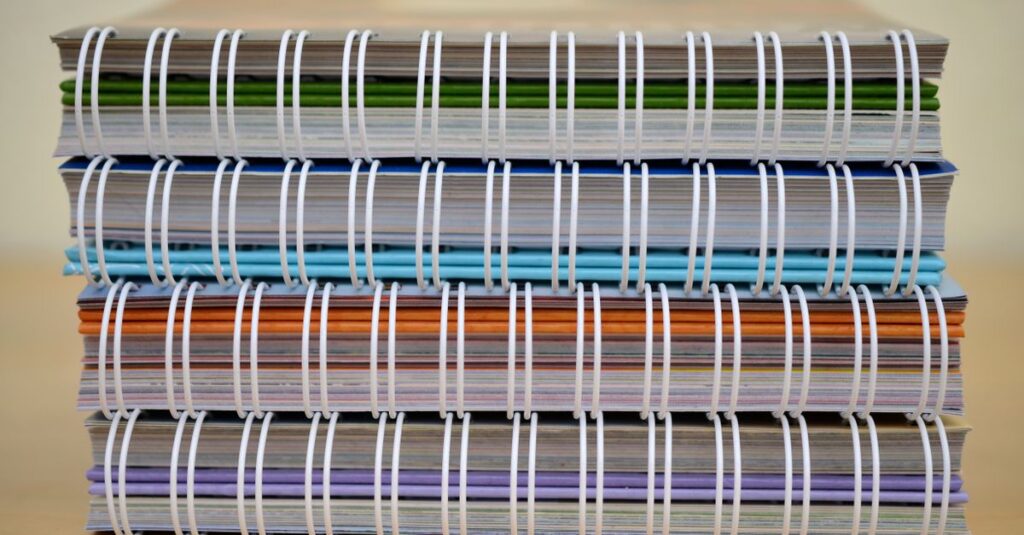
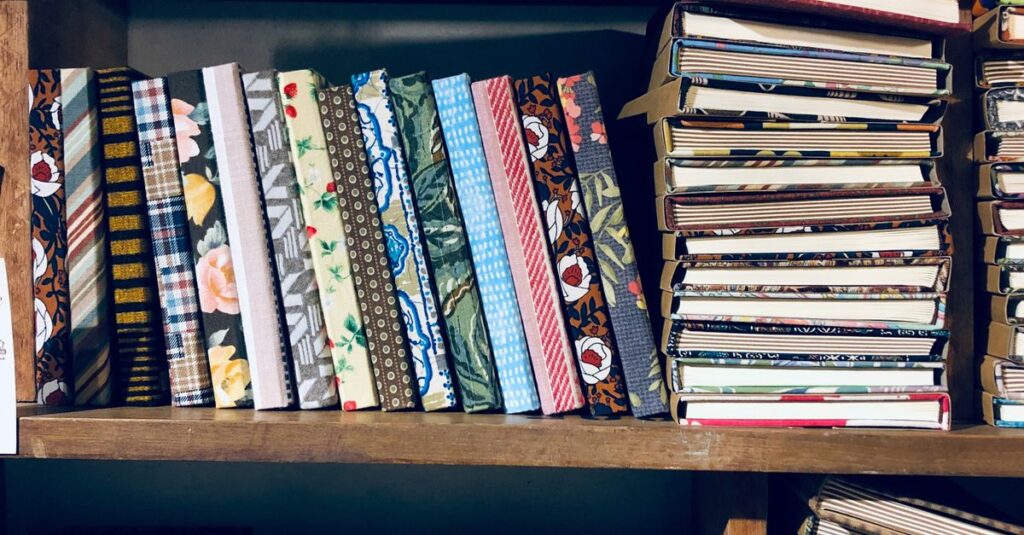
1. Binding is Everything. Perfect binding (where pages are glued at the spine) is common and cheap, but it's the first point of failure under heavy, frequent use. For a true workhorse, you want stitched binding. Threads hold the sections (called “signatures”) together. It lays flat, allows the book to be opened fully, and withstands being tossed in a bag or handled daily. Spiral binding is another option — great for laying completely flat — but it’s less permanent-looking and can snag.
2. Paper Quality & Ruling. This is where most bulk buyers get tripped up. The paper needs to be opaque enough that ink or pencil doesn't show through from the other side (ghosting). A standard 70-80 GSM paper is often the minimum for this. Then there’s ruling. Lab books famously use quadrille ruling (small squares, like graph paper) for plotting graphs and data tables easily. But you also see numbered pages, pre-printed tables for dates/witnesses, or even specialized rulings like cross-ruled (CR) for accounting-style entries in industrial settings.
3. Cover Durability. A flimsy cardstock cover won't last a quarter. Look for thick, laminated covers or even leatherette for extreme conditions. It needs to protect the contents. Simple.
4. Page Count & Size. Is this for quick daily logs (92 pages might suffice) or a year-long project (240+ pages)? Size matters for portability vs. workspace. A standard “Long” size (27×17 cm) gives more room for diagrams than a “Short” notebook.
Think about it this way: you’re not buying a product. You’re buying a tool. And the tool needs to fit the job, not the other way around. This is why customization isn't a luxury for corporate orders; it's a necessity. Getting the ruling, header, page numbering, and even company logo printed exactly to your operational needs removes friction for the end-user. They just open it and work.
Expert Insight
I was reading an old industry journal recently — one of those trade things nobody reads — and there was a line from a factory manager that I keep coming back to. He said, “The notebook is the cheapest part of any experiment, but the most expensive to get wrong.” He wasn't talking about the rupee cost. He meant the cost of lost data, of confusion, of time spent deciphering bad records. The notebook itself is a small capital expense. The information that goes into it is the real asset. Your choice of notebook either protects that asset or jeopardizes it. I don't have a cleaner way to put it than that.
Laboratory Notebook vs. Standard Corporate Diary: A Real Comparison
Look, I make both. I sell both. They are different tools for different jobs. Confusing them is where budgets get wasted and people get frustrated. Let's break it down.
| Feature | Laboratory Notebook | Standard Corporate Diary / Notebook |
|---|---|---|
| Primary Purpose | Permanent, chronological record of work & process. Legal/documentary value. | Planning, note-taking, scheduling. Ephemeral or personal reference. |
| Binding | Stitched or robust spiral. Designed to show tampering, lay flat, endure. | Often perfect-bound or staple-bound. Lighter use, may not lay flat. |
| Paper | Higher GSM (70-100+), often acid-free to prevent yellowing. Ruled for data (quadrille, cross-ruled). | Standard writing paper (50-70 GSM). Rulings are single or double lines for text. |
| Pages | Numbered sequentially. Often includes signature/witness lines. Cannot be removed without detection. | Not numbered. Pages can be torn out cleanly. |
| Cover | Durable, hard-wearing. Often hardcover or thick laminated card. | Varies widely – can be soft, flexible, or stylish. |
| Best For | R&D, QA/QC, engineering, field data, academic lab courses, audit trails. | Meeting notes, daily to-do lists, personal journals, client contact logs. |
The big takeaway? If your team needs to prove what they did and when they did it, you need the left column. If they’re planning their week, the right column is fine (and usually cheaper). Giving a scientist a floral-patterned diary is a mismatch. Giving an account manager a 200-page quad-ruled lab book is overkill. Match the tool to the task.
How to Source Them in Bulk (Without the Headache)
Okay, so you know you need proper lab-style notebooks. Maybe 500 of them. Maybe 5,000. How do you actually get them without the quality lottery? Here’s the process, from my side of the factory floor.
First, define the exact spec. Don’t just say “lab notebook.” Write it down:
- Size: King Size (24×17 cm) or Long (27×17 cm)?
- Page Count: 200 pages? 320?
- Paper: 70 GSM? 80 GSM? Acid-free?
- Ruling: Quadrille (Graph)? Cross Ruled (CR)? Broad Ruled (BR)?
- Binding: Stitched? Spiral? If spiral, metal or plastic coil?
- Cover: Art card? Laminated? Hardbound? Color?
- Custom Printing: Do you need a header on each page? A company logo on the cover? Sequential numbering?
This list is your bible. It turns a vague request into a manufacturing work order. It also lets you compare quotes from different suppliers apples-to-apples.
Second, ask for physical samples. Any reputable manufacturer will send you a dummy or sample notebook based on your spec. Feel it. Write in it with the pen your team uses. Try to tear a page out subtly. Does the binding resist? Does the ink feather? This step saves you from catastrophic bulk mistakes.
Third, understand the lead time. Custom manufacturing isn't Amazon Prime. It takes time to set up the print plates, source the specific paper, bind, and pack. A standard item might be 2-3 weeks. A fully custom job from scratch might be 4-6 weeks. Plan accordingly. Rush jobs cost more and risk quality.
Finally, think about logistics. Are you shipping to one location or multiple branches? Who handles customs if you’re exporting? A good manufacturer should help you figure this out. For instance, we regularly pack and ship palletized orders directly to school districts or corporate HQs, which cuts out middleman handling and damage.
The goal is a seamless handoff: you give a clear spec, we build to that spec, and the notebooks arrive on time, exactly as promised. It sounds simple. It requires a lot of communication on both ends. But that’s the job.
Why Customization Isn't a Gimmick (It's a Force Multiplier)
Earlier I said matching the tool to the task was key. Customization is how you perfect that match. It’s not about putting a fancy logo on the cover (though that’s nice for branding). It’s about removing every single bit of friction from the user’s workflow.
Imagine a quality control notebook where every page has a pre-printed table at the top: Date, Batch #, Inspector, Parameter 1, Parameter 2, Pass/Fail, Signature. The inspector doesn't draw lines. They just fill in blanks. It’s faster, neater, and ensures all required data is captured every single time. That’s customization. Or an engineering logbook where the quadrille ruling is a specific shade of light blue that photocopies clearly. Or a student lab manual that has the school’s safety rules printed on the inside cover.
This is where working directly with a manufacturer pays off. You can tweak these details. You can say, “Can we make the margin wider for binding?” or “Can we use a brighter white paper for better contrast?” When you’re ordering a thousand units, these small changes have a massive compound effect on usability and compliance.
Most people don't realize how much wasted time and error comes from using a generic tool for a specialized job. Customization fixes that. It turns a commodity into a precision instrument.
FAQs About Laboratory Notebooks
Frequently Asked Questions
What is the standard size for a laboratory notebook?
There’s no single global standard, but common professional and academic sizes are similar to A4 (roughly 21×30 cm) or our “Long” size (27×17 cm). The key is having enough space for diagrams, tables, and calculations. Portability matters too, so A5 or “King Size” (24×17 cm) is also popular for field work. You choose based on whether the user needs maximum workspace or needs to carry it around easily.
What paper quality (GSM) is best for lab notebooks?
You want paper that doesn’t let ink bleed through. I’d recommend a minimum of 70 GSM writing paper for pencil or ballpoint pen. If your team uses fountain pens or heavy markers, go for 80-100 GSM. The paper should feel substantial, not flimsy. Acid-free paper is a bonus for permanent records, as it won’t yellow and become brittle over decades.
What’s the most durable binding for heavy daily use?
For absolute durability and a “permanent record” feel, stitched binding is the gold standard. The sections are sewn together, then glued, so the book can take a beating and still lay flat. Spiral (wire-o or plastic coil) binding is also very durable and allows the book to fold back on itself completely, which is great for bench work. Avoid cheap perfect binding (glue-only) for critical use — it fails first.
Can we get our company logo and custom headers printed?
Absolutely. That’s one of the main reasons businesses come to a direct manufacturer like us. We can print your logo on the cover, and custom headers, footers, page numbers, or even pre-printed tables on every interior page. It streamlines your team’s process and reinforces branding. You just need to provide the print-ready artwork and finalize the layout during the sampling stage.
What’s the typical lead time for a bulk custom order?
It depends on the complexity and quantity. For a standard ruled notebook with a simple logo, expect 3-4 weeks from order confirmation to dispatch. For a fully custom design with special paper, rulings, and page layouts, allow 5-6 weeks. Always factor in sampling and approval time (1-2 weeks) before full production begins. Don’t wait until the last minute — good manufacturing can’t be rushed without compromising quality.
So, What Now?
Look, the notebook is a simple object. Deceptively simple. But the choice you make — generic or specific, flimsy or durable, off-the-shelf or custom — sends a signal. It tells your team, your students, or your auditors how much you value the work that goes into it. The record matters. The process matters. The tool should honor that.
I don’t think there’s one perfect notebook for every single need. Probably there isn’t. But if you’ve read this far, you already know what your people need — you’re just figuring out how to get it made reliably, at scale, without the drama. That’s the real job. And honestly, that’s the part we’ve been figuring out here in Rajahmundry since 1985.
If you want to cut out the guesswork and talk specs, paper samples, and logistics directly with someone who runs the factory floor, that’s a conversation worth having. No jargon, just practical answers.