You’re in charge of ordering notebooks for the whole school district. Or maybe you’re the procurement manager for a corporation that needs 5,000 branded diaries for the new year. You’ve got the specs down: size, paper, ruling.
Then someone says, “And what about the labels?”
That’s when the real headache starts. Because labels printing isn’t just “sticking a piece of paper on.” It’s about adhesive types that survive a monsoon, or paper that won’t yellow in six months, or getting a glossy finish that doesn’t peel off the first time someone touches it. Get it wrong, and the entire batch looks cheap. Unprofessional. And that’s on you.
I’ve been in the notebook manufacturing game long enough to see this confusion play out a hundred times. Let’s talk about labels printing for notebooks and stationery like you’re sitting across from me at our factory in Rajahmundry, and you’ve just asked me directly: “What do I actually need to know?” If this sounds familiar, our approach to printing might be worth a look.
What “Labels Printing” Actually Means in Notebook Manufacturing
Right. So first, let’s clear something up. When you hear “labels printing,” you might think of those little stickers on jam jars. For notebooks, it’s… more. A label here is the entire branding and information interface on the product. It’s the cover, the spine, sometimes even the back. It’s not an add-on; it’s the face of the thing.
The job of a label on a notebook is brutal, honestly. It needs to survive being stuffed into a backpack, stacked under fifty other books in a warehouse, and sit on a shelf under fluorescent lights for months without fading. It needs to feel good to the touch — that texture matters. And it needs to communicate everything from the brand logo to the page count to the ruling type, clearly and without clutter.
Nine times out of ten, the problem I see is that businesses treat it as an afterthought. They finalize the notebook, then ask for a “nice label.” But the label dictates so much of the production flow. The paper thickness affects how the binding machine grips it. The adhesive type determines how long it needs to cure before packaging. It’s not the last step; it’s a core part of the process from day one.
The Micro-Story: The School Label That Didn’t Stick
I remember a school principal from Visakhapatnam, Mr. Sharma. He’d ordered 10,000 Long Notebooks for his students. The notebooks were perfect — good paper, strong binding. But he’d gone with the cheapest paper label option to save a few rupees. By the time the monsoon humidity hit, the labels on the top notebooks in the storage room had started to curl at the edges. Not all of them. Just enough that it looked sloppy. He was embarrassed handing them out. It wasn’t about the cost anymore; it was about the message it sent. “We cut corners.” He told me later, over a cup of chai, that he’d rather have paid 3% more upfront. That detail stuck with me.
Breaking Down the Components: It’s More Than Just Paper
So what are you actually buying when you order printed labels for notebooks? You’re buying a system. Let’s break it down into the parts nobody talks about until there’s a problem.
The Paper Stock: The Foundation
This is where most of the variation lives. You’ve got options, and each one tells a different story.
- Art Paper (Glossy/Matt): The standard for corporate diaries. That sleek, premium feel. The glossy finish makes colors pop, but it shows fingerprints. Matt is more elegant, scuff-resistant. Both need a good laminate overlay for real durability.
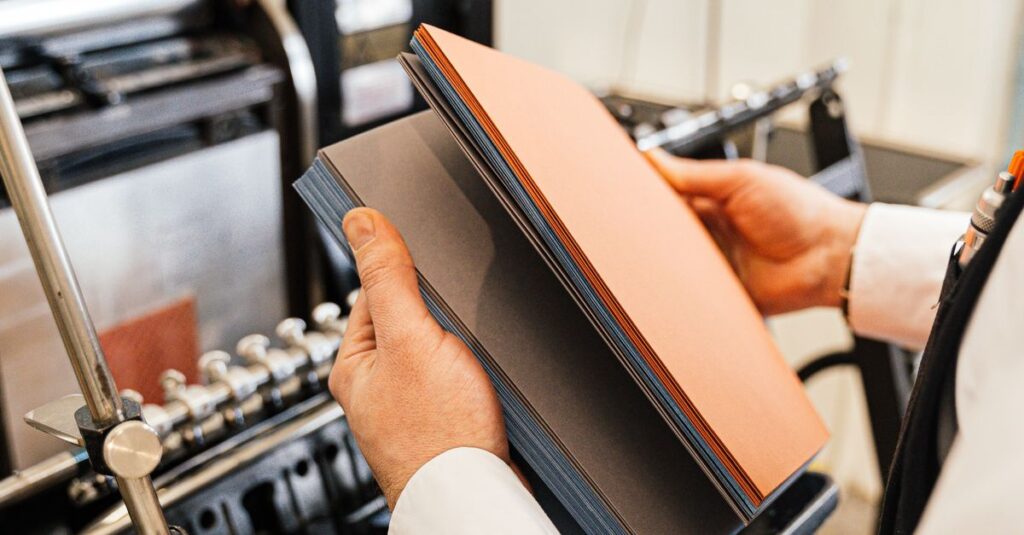
- Color Board: Thick, rigid. This is what you feel on a high-end hardbound diary. It doesn’t bend. It commands attention. But it’s more expensive and requires specific machines to apply.
- White Card: The reliable workhorse for school notebooks and account books. Durable, takes print well, has a slight texture. It’s the balance between cost and sturdiness.
- Specialty Stocks: Things like textured linen paper, recycled kraft paper. These are for brands wanting a specific, tactile identity. They feel amazing, but the printing process has to be adjusted — sometimes you can’t get the same vibrant colors.
The weight matters too. We measure in GSM (grams per square meter). A flimsy 80 GSM label will feel cheap. A 250 GSM color board feels substantial. Your choice here is the first signal of quality.
The Adhesive: The Invisible Hero (or Villain)
This might be the most important part. The best paper in the world is useless if it falls off.
- Permanent Adhesive: Once it’s on, it’s on. Designed for a permanent bond. Used for almost all notebooks. The key is the “tack” — how sticky it is initially. Too much, and you can’t reposition it during application. Too little, and it bubbles up later.
- Removable Adhesive: Rare for notebooks, but used sometimes for promotional stickers or sample labels on covers. Comes off cleanly. Not what you want for the main label.
- The Application: It’s not just slapping glue on. The adhesive needs to be applied evenly, or you get bubbles and “tenting” where the label lifts in the center. A good manufacturer uses automated systems that apply precise pressure and heat for a perfect bond.
Heat and humidity are the enemies. A cheap adhesive will give up. A good one is formulated for the climate — especially important in a place like India, or for exports to the Gulf.
The Printing Process: Offset vs. Digital & Why It Matters
How the ink gets on the paper changes everything — cost, quality, lead time.
| Factor | Offset Printing | Digital Printing |
|---|---|---|
| Best For | Large bulk runs (10,000+ labels) | Short runs, prototypes, variable data |
| Setup Cost & Time | High. Requires printing plates. | Low. Virtually no setup. |
| Cost Per Unit | Very low for large quantities. | Higher per unit, flat across quantities. |
| Color Quality & Consistency | Superior, vibrant, perfectly consistent across the run. | Very good, but can have minor variances. |
| Turnaround Time | Longer (due to setup). | Extremely fast. |
| Customization | Fixed design for the entire run. | Can change design label-to-label (e.g., individual names). |
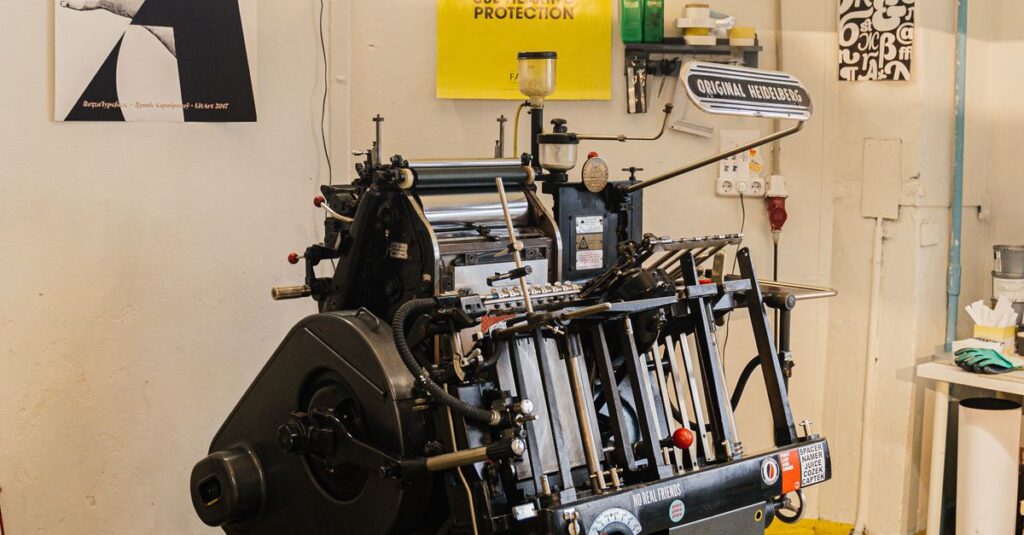
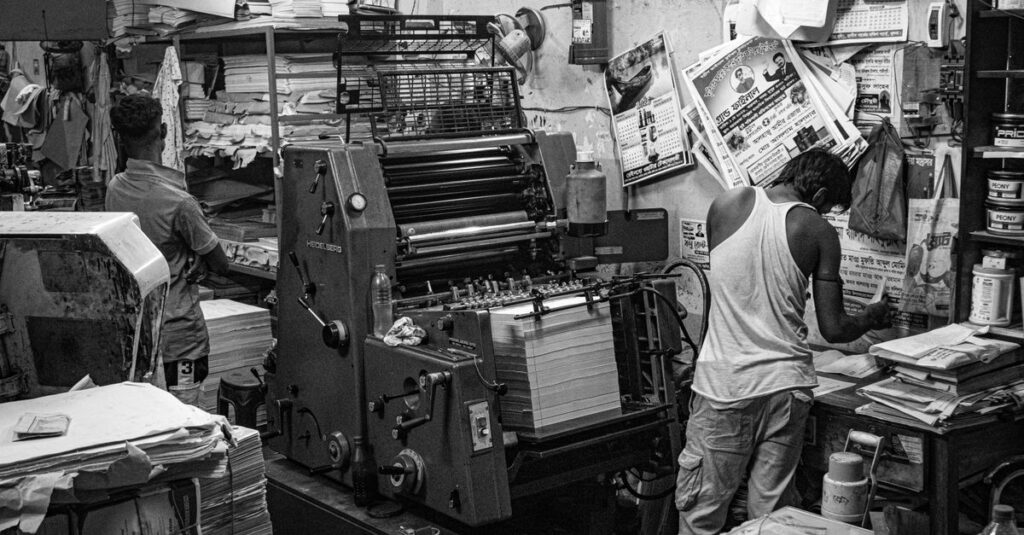
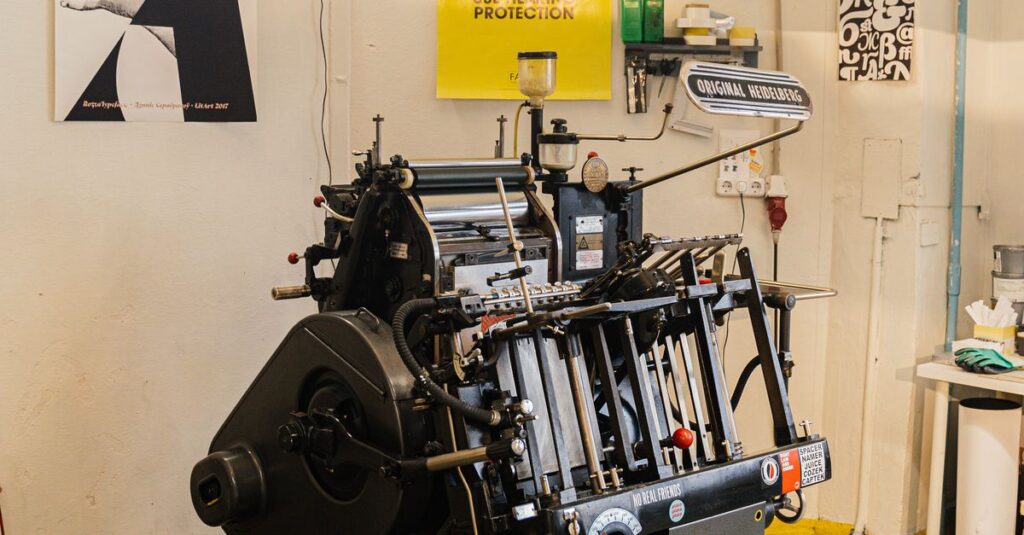
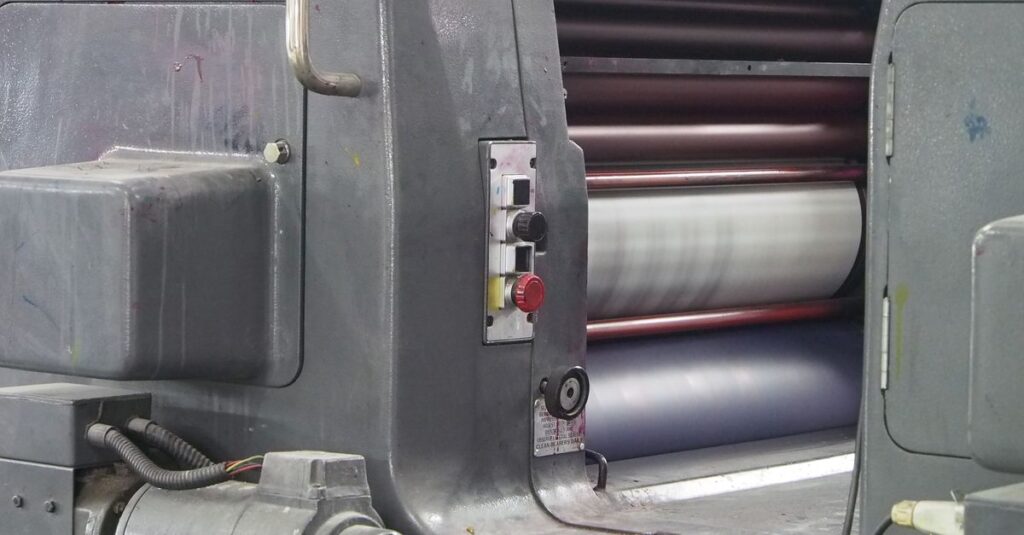
Here’s my blunt take: For 95% of bulk notebook orders — schools, corporate diaries, standard exports — you want offset printing. The color is richer, the cost plummets at scale, and the consistency is non-negotiable when you’re stacking thousands of identical notebooks. Digital is fantastic for testing a design or doing a small, super-custom run where every diary has a different employee’s name. But for the core business? Offset is king.
Expert Insight
I was reading an industry thing last month — from a paper technologist, not a marketer — and one line stuck with me. He said the perceived quality of a notebook is determined in the first three seconds of handling. The weight in the hand. The sound of the cover opening. And the texture of the label under the thumb. The brain decides “premium” or “cheap” before a single word is read. I don’t have a cleaner way to put it than that. Your label is that first, silent salesperson.
Navigating the Order: Questions You Must Ask Your Manufacturer
Alright, so you’re ready to place an order. Don’t just send a PDF and a quantity. Have the conversation. These are the questions that separate a smooth order from a painful one.
- “Can you provide laminated samples of the paper stocks?” Don’t judge by un-laminated swatches. Lamination changes the feel and durability completely.
- “What adhesive do you use for my destination climate?” If you’re shipping to Dubai, the answer should be different than for shipping to Scotland.
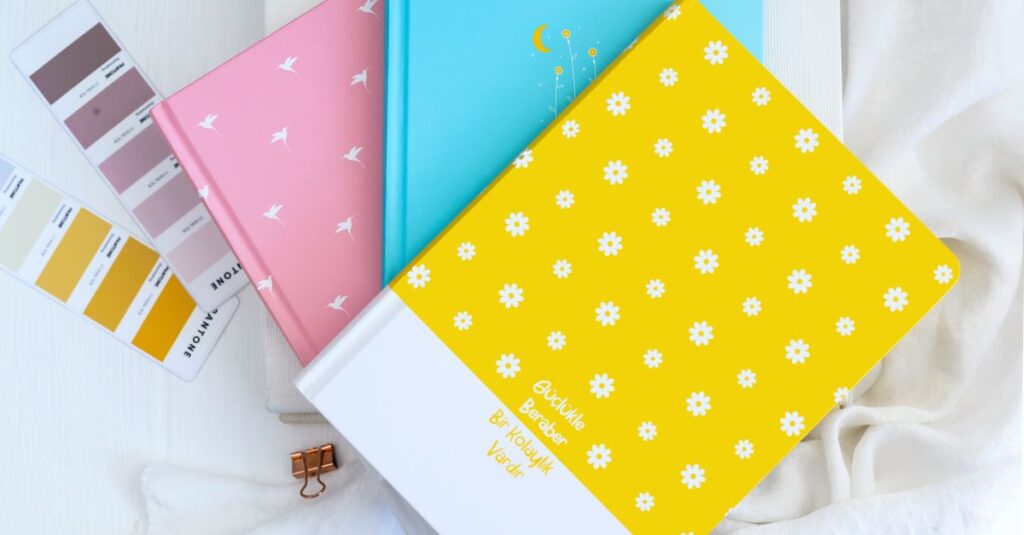
- “What’s your process for color matching?” The blue on your screen is not the blue on their press. They should work with a Pantone guide or a physical sample you approve.
- “What is the lead time for label production vs. notebook assembly?” Labels often need to be ready before binding starts. Understand the critical path.
- “How do you handle over-runs and under-runs?” There’s always a small variance. Is there a tolerance (e.g., +/- 5%)? Who bears the cost?
Look. A good manufacturer won’t be annoyed by these questions. They’ll be relieved you know what you’re doing. It means fewer problems later. The factory that says “Don’t worry, we’ll handle it” is the one that worries me.
Common Pitfalls (And How to Avoid Them)
Let’s talk about where it goes wrong. I’ve seen these play out enough times to call them patterns.
Pitfall 1: Designing for Screen, Not for Print. You create a beautiful design with tiny, thin fonts and subtle gradients. It looks amazing on your Retina display. On a printing press, that thin font disappears. The gradient bands. Always, always get a physical proof before the full run.
Pitfall 2: Ignoring the Spine. On a thick, 700-page account book, the spine is prime real estate. It’s what people see on the shelf. Not putting your logo or title there is a missed opportunity. But the spine design has to account for curve and thickness precisely.
Pitfall 3: The “More is More” Design. Cramming every bit of information, logo, tagline, and graphic onto the cover. It looks busy and cheap. Clean, confident design reads as premium. What’s the one thing you want the user to see? Make that dominant.
Pitfall 4: Not Planning for the Next Batch. You order 20,000 notebooks. They sell out. You need another 20,000 in six months. If you didn’t keep a record of the exact paper stock and Pantone colors used, matching it will be a nightmare. The new batch will be slightly off. Keep a physical archive of your labels.
Anyway. The goal isn’t perfection. It’s avoiding the obvious, costly mistakes that make your product feel less than it is.
Conclusion
Labels printing for notebooks is a detail. But in manufacturing, the details are everything. It’s the difference between a product that feels considered and one that feels churned out. It’s about understanding that the paper, the adhesive, and the ink are a single unit working under pressure — literally and figuratively.
For procurement managers and bulk buyers, your job isn’t just to buy labels. It’s to buy the right combination of durability, aesthetics, and functionality that aligns with your brand’s promise — whether that’s to students, employees, or clients. Ask the hard questions upfront. Judge by physical samples, not promises.
I don’t think there’s one single “right” answer for every labels printing project. Probably there isn’t. But if you’ve read this far, you’re not just looking for a vendor; you’re looking for a partner who gets that the label isn’t an afterthought. It’s the handshake. And maybe that’s the conversation we should have.
Frequently Asked Questions
What’s the most durable type of label for school notebooks?
For everyday school use, a white card stock (around 210-250 GSM) with a matt laminate overlay is the sweet spot. The card resists bending, and the laminate protects against scuffs, spills, and the general chaos of a school bag. Glossy looks flashier but shows scratches more easily.
How do you ensure color consistency in bulk labels printing?
We use the Pantone Matching System (PMS) as the standard. You provide a Pantone number, and we use those specific ink mixes. For offset printing, we run a press check, pull physical samples, and approve them before the full run starts. Digital is less consistent for huge batches, which is why offset is preferred for bulk.
Can you print labels with variable data (like individual names)?
Yes, but it depends on the scale. Digital printing is perfect for this — we can change names, numbers, or codes on each label without stopping. For offset printing, the data is fixed for the whole run. If you need 10,000 diaries each with a unique name, digital is the only practical way.
What’s the lead time for custom printed labels?
It varies wildly. For a simple, repeat job, maybe 5-7 days after design approval. For a new, complex design with special paper, laminates, and color matching, allow 2-3 weeks. The key is the proofing cycle — the back-and-forth to get your sign-off. That’s where most of the time goes.
Is it cheaper to print labels separately and apply them later?
Almost never. That adds two extra handling steps (printing + manual application), doubling the chance for errors and damage. Integrated manufacturing — where labels are printed and applied in-line with the notebook production — is faster, more consistent, and ultimately more cost-effective for bulk orders.