Here’s the Thing About ‘Nearby’
“Nearby stationery supplier.” You’ve typed it in. Maybe you’re the guy in the office managing procurement, scrolling at 4 PM with a coffee that’s gone cold. Or you’re in a school admin office, the sound of a hundred kids echoing down the hall, staring at a budget that needs to stretch. You need notebooks. A lot of them. And the idea of ‘nearby’ isn’t about convenience — it’s about not getting a headache.
It’s about a truck showing up when it’s supposed to. About picking up the phone and talking to someone who gets it, no international time zones, no customs forms that make you want to scream. Right? Nearby stops being a geography term and becomes a promise. A promise that things might actually be simple. For businesses ordering corporate diaries or schools buying in bulk, that promise is everything. If that’s where you’re at, you know the feeling — the whole ‘how do I even find a reliable notebook manufacturer near me?’ thing. It’s worth looking at what a local partner like us can actually do for you.
What “Local” Actually Gets You (Hint: It’s Not Just Shipping)
Okay, let’s get past the obvious stuff. Yes, shipping is cheaper. Transit time is shorter. But the real magic of a nearby stationery manufacturer is in the quiet stuff, the stuff that doesn’t go on a purchase order but costs you money and sleep anyway.
Think about it this way. You order 5,000 custom-branded diaries from a factory three states away. The samples were perfect. Then the main shipment arrives. The binding on 30% of them is weirdly loose. What now? You’re on the phone, you’re sending pictures, you’re waiting for a callback. The stress is a low-grade, constant hum. Now, picture that supplier being a five-hour drive from your warehouse. Or better yet, from our factory gate. The dynamic changes completely.
Suddenly, it’s a conversation, not a conflict. Someone can literally come take a look. The problem is a thing to fix together, not a cross-border legal battle. That’s what ‘nearby’ buys you: shared accountability. A real relationship. I’ve heard procurement managers say this is the difference between a supplier and a partner. One sends you boxes. The other saves your sanity.
The Micro-Story: Mr. Sharma’s School Order
Mr. Sharma runs procurement for a chain of private schools in Vijayawada. Last July, he had a panic. The notebook supplier he’d used for years (based up north) had a production delay. The books wouldn’t make it before the new term. He found us — Sri Rama Notebooks — based in Rajahmundry, Andhra Pradesh. Not the other side of the country. His side.
We had a call at 11 AM. By 3 PM, our production manager had reshuffled the schedule. Mr. Sharma drove down the next day, saw the paper stock himself, approved the batch. The trucks rolled into his schools’ storerooms four days later. He told me later it wasn’t the speed that got him. It was watching the binding machine work, seeing the workers label the cartons. It was knowing exactly where his order was, physically. That’s a peace of mind you can’t put on an invoice.
The Hidden Cost of “Far” (And It’s Not Just Rupees)
Everyone calculates the freight cost. That’s easy. But let’s talk about the other costs, the ones that sneak up on you.
- The Sample Lag: You want a tweak to the cover design. With an overseas manufacturer, that’s a 48-hour email turnaround, minimum. With a local one? You can get a new digital proof by end of day. Sometimes, we’ve had clients WhatsApp a sketch, and we’ve mocked it up in an hour. That pace changes everything.
- The Inventory Strain: Because shipping is long and unpredictable, you’re forced to order huge quantities to be ‘safe’. You’re essentially financing their warehouse. Your cash is locked up in boxes sitting in a container or on a dock. Local means you can order more frequently, smaller batches. Your working capital breathes.
- The Customization Wall: Need a last-minute change for a specific corporate client? A different ruling for a special-needs school order? A distant supplier will often say no — the minimum order quantity is too high, the setup isn’t worth it. A manufacturer nearby is built for this agility. Our whole setup at Sri Rama is geared for it. It’s the difference between mass production and making what you actually need.
And look — sometimes a huge, distant factory is the right call. If you need a million identical units and your deadline is six months out, sure. But for most businesses, schools, and institutions in India? That’s not the reality. The reality is tighter budgets, urgent timelines, and a need to be nimble. That’s where a nearby partner isn’t just better; it’s essential.
How to Vet a Stationery Manufacturer That’s Actually Nearby
So you’re looking. You find a few websites. They all say they’re manufacturers. They all promise quality. Here’s how you cut through the noise — especially when ‘nearby’ is your key filter.
- Ask for the GPS, Not Just the Address: Ask them to share their factory location on Google Maps. A real manufacturing unit has a footprint, multiple buildings maybe. A front office or a godown won’t.
- The Mill Test: Ask them: “Where do you source your paper from?” A real manufacturer knows their mills. They’ll name them. If they’re vague, they’re probably just a trader buying from someone else and slapping a label on it.
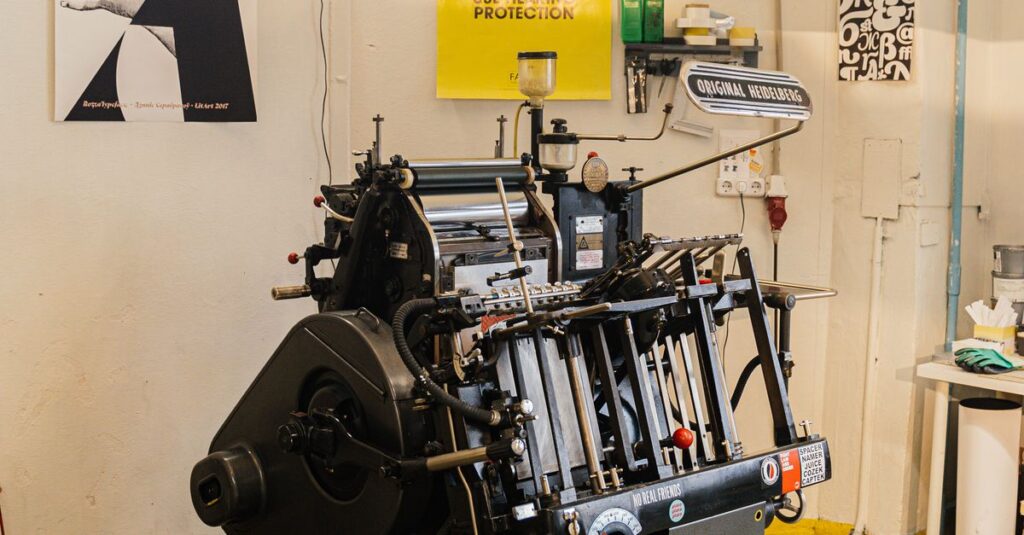
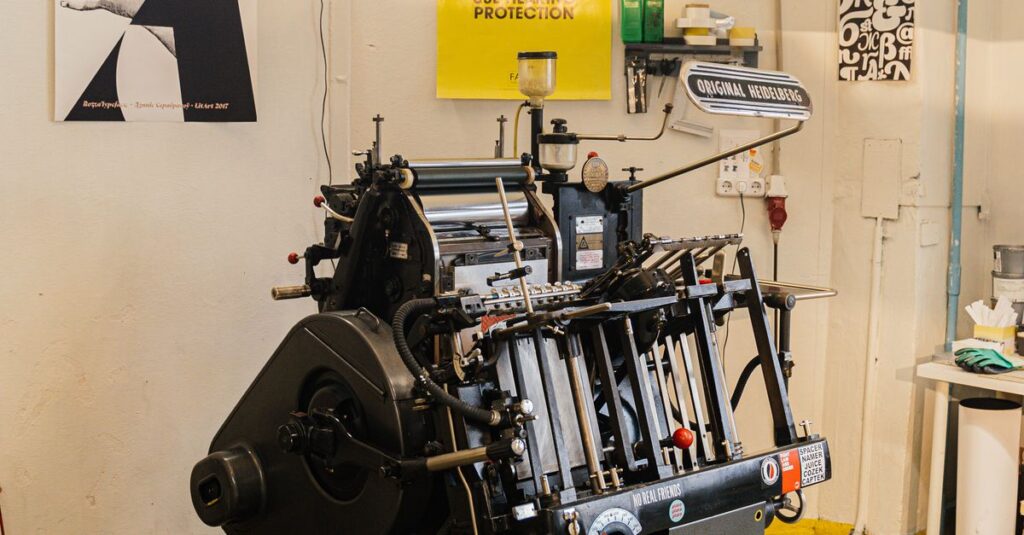
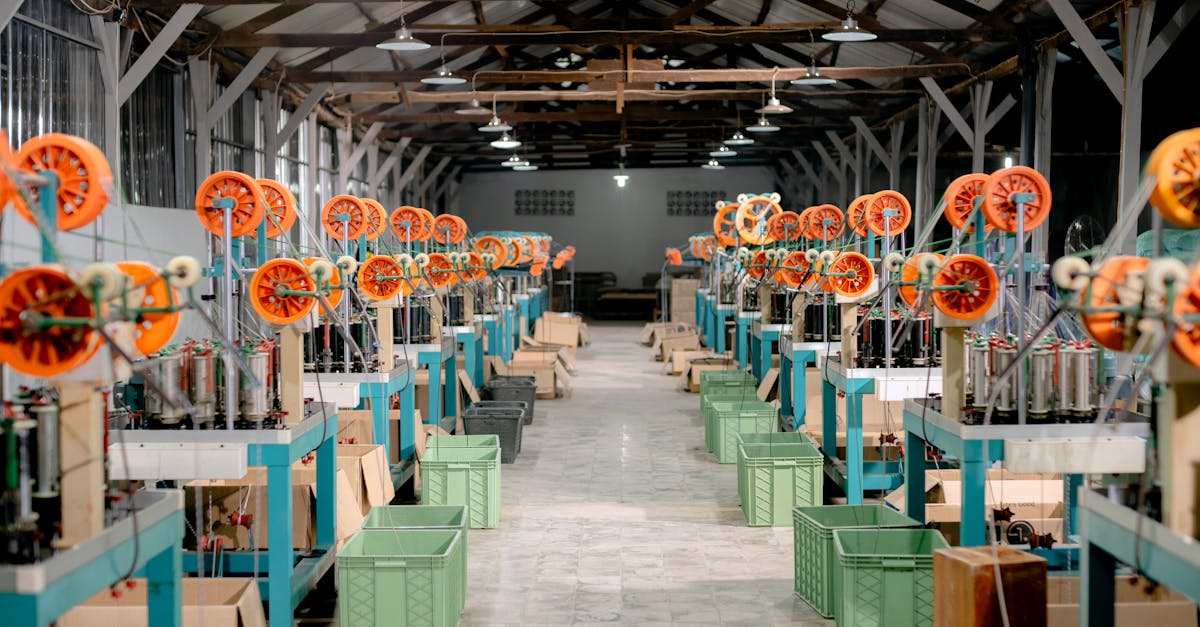
- Request a Live Video Walkthrough: Not slick promotional footage. Ask for a quick WhatsApp video call. Let them walk you through the production floor — the printing machines, the binding line, the packing section. Right now. You’ll know in two minutes if it’s real.
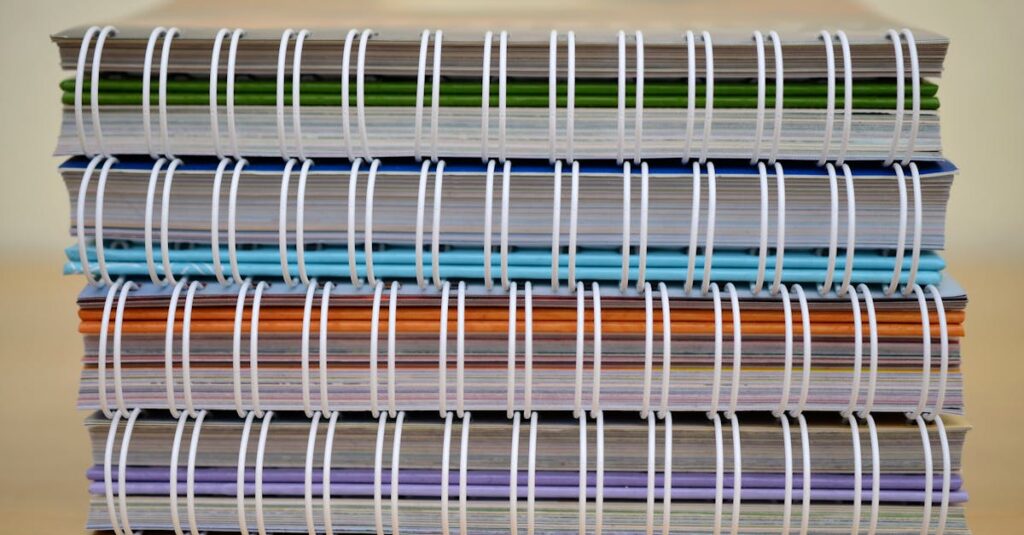
- Check Their Range: Can they do both stitched binding and spiral? Do they offer 54 GSM and 70 GSM paper? A real manufacturer has capabilities. A reseller has a catalog.
I’ll be direct — we do this all the time for potential clients. Because if you’re in Hyderabad, Chennai, or Bangalore, and we’re your ‘nearby’ option from Andhra, you deserve to see where your books are born. It builds a trust that a PDF quote never can. You can start that process by exploring our product range to see what’s possible.
Local Manufacturer vs. National Distributor: A Real Comparison
This is where most institutional buyers get stuck. Should you go with the big-name national brand’s distributor, or a local manufacturer like us? Let’s break it down, no fluff.
| Factor | Local Notebook Manufacturer | National Brand Distributor |
|---|---|---|
| Pricing | Typically 15-25% lower. No middlemen, no national branding premium. | Higher. You pay for the brand name, distributor margins, and national logistics. |
| Customization | High flexibility. Can change page count, cover design, ruling, size per batch. | Very low. You choose from pre-set SKUs. Custom logos might be possible at huge cost. |
| Minimum Order Quantity (MOQ) | Can be as low as 500-1000 pieces for custom jobs. | Usually much higher, often a full truckload (10,000+ units). |
| Lead Time | Shorter (1-3 weeks). Production is in-region, closer to you. | Longer (4-8 weeks). Centralized production, plus long-distance shipping. |
| Problem Resolution | Direct, fast, hands-on. You talk to the production head. | Layered, slow. Your complaint goes to distributor, then to brand HQ. |
| Ideal For | Schools, businesses with branding, bulk buyers with specific needs, private label. | Retail shops, offices needing small quantities of standard notebooks. |
The choice becomes pretty clear, honestly. If you’re buying in volume and you care about specificity, local manufacturing isn’t just cheaper — it’s smarter.
Our Angle: Being the ‘Nearby’ for Half of India
Look, I’m biased. I’ve been in this factory for years. But the insight from here is simple: for decades, India’s institutional stationery supply was weirdly centralized. Everyone looked to one or two big cities. It made no sense for a school in Tamil Nadu to get its books from Gujarat.
Our whole model at Sri Rama Notebooks is built on being the reliable, high-quality, nearby option for South and Central India. From our base in Rajahmundry, we’re a day’s drive or a short haul from major hubs like Vizag, Hyderabad, Chennai, and Bangalore. That’s not an accident. It’s strategy.
Expert Insight
I was reading an old logistics study once — boring, I know — and one line stuck with me. It said that in bulk goods, the cost of uncertainty is almost always higher than the cost of transportation. I think about that all the time. You can calculate the per-unit freight cost from a far-off factory down to the paisa. But you can’t calculate the cost of a delayed term opening, or a corporate gifting event with no diaries. That’s the uncertainty a local supply chain kills. A partner who’s invested in your region, who’s facing the same monsoon delays or festival logistics, just… gets it. That shared context is everything. It means they’re solving for the same things you are.
And that’s what we try to be. Not just a factory, but a regional partner. It’s why we offer so many ruling types and page options — because we know the CBSE schools here need something different from the state board schools there. It’s in the details.
Making the Switch (Without the Fear)
If you’ve been using a distant supplier, the idea of switching is terrifying. What if the quality isn’t the same? What if they mess up your first big order? I get it. Here’s how to de-risk it.
Start with a pilot. Don’t give them your annual 100,000-unit order. Give them a 2,000-unit custom notebook order for a specific department or a single school branch. Test them. Test the communication. Test the delivery accuracy. Test the paper quality with your actual users. Judge them on the stuff that matters to you — not just the price on the quote.
Ask for references from similar clients in your sector. A good manufacturer will connect you with a school or a business that’s been with them for years. Go ahead, call them. Ask the blunt questions.
Anyway. The point isn’t to jump blindly. The point is to verify that ‘nearby’ means what you hope it means: reliability, quality, and a person on the other end of the line who cares if your order lands right. That’s the baseline. If you’re thinking about what custom printing services could look like for your brand, that pilot is the perfect first step.
Frequently Asked Questions
What does ‘nearby stationery manufacturer’ usually mean for delivery time?
It cuts it down drastically. From our factory in Rajahmundry, bulk orders to most places in Andhra, Telangana, Tamil Nadu, and Karnataka can be delivered in 2-5 days. Compared to 2-3 weeks from a manufacturer up north or overseas, that’s a game-changer for last-minute needs.
Can a local manufacturer handle large bulk orders for schools?
Absolutely. That’s often their specialty. Our daily production capacity is 30,000-40,000 notebooks. We regularly fulfill single orders for tens of thousands of books from school chains and government tenders. Being local doesn’t mean being small; it means being purpose-built for regional bulk supply.
Is the quality of paper from a local supplier as good?
It can be better, because you have more control. You can specify the exact GSM and mill. We use 54 GSM and above writing paper from trusted mills. The advantage is you can request physical samples before the full run to feel the quality yourself, which is harder to do from far away.
What’s the minimum order for custom printed notebooks?
It varies, but a true manufacturer will have a much lower threshold than a distributor. For custom printed notebooks with your logo, we can start as low as 1,000 pieces. For standard notebooks in bulk, the MOQ is flexible based on your needs.
How do I know if they are real manufacturers and not just traders?
Ask detailed questions about their manufacturing process: binding types they do in-house, where their paper comes from, their printing machine capacity. Request a video of the factory floor. A trader won’t be able to show you that. A real maker will welcome it.
Final Thought
At the end of the day, ‘nearby stationery’ isn’t a search term. It’s a solution to a specific kind of stress that comes with procurement. It’s about shrinking the distance between the problem and the fix.
I don’t think there’s one perfect supplier for everyone. But if you’re tired of long lead times, rigid catalogs, and feeling like just another invoice, then the whole ‘local’ thing is worth a real, hard look. It’s not about patriotism or anything grand. It’s practicality. It’s about getting what you need, when you need it, made the way you asked for it. And that’s a pretty good place to start. If you’re ready to see what a reliable, nearby manufacturer can actually offer, the conversation starts with your requirements. You can tell us what you need right here.