So, What Exactly Is a “Field Notes” Company?
You’re probably searching for this because you need notebooks. A lot of them. Maybe for a school district, a corporate training program, or a government office. And you’re thinking — who actually makes these things? That’s the question a “field notes company” answers. It’s not just a fancy name for a stationery shop.
It’s a specific type of manufacturer. The kind that deals in bulk, understands paper quality, and doesn’t blink when you ask for 50,000 units with a custom cover. I’ve talked to enough procurement managers to know the real struggle isn’t finding a supplier — it’s finding one that knows the difference between a notebook and a proper tool.
That’s where companies like ours come in. Sri Rama Notebooks is built on this exact model. We’ve been manufacturing notebooks since 1985, right here in Rajahmundry. The entire business is set up to answer that single question for you: where do my notebooks come from, and are they built to last? If you’re trying to figure that out, you should take a closer look at our operation. It might save you a few headaches.
The Anatomy of a Notebook Factory: It’s Not Just Glue and Paper
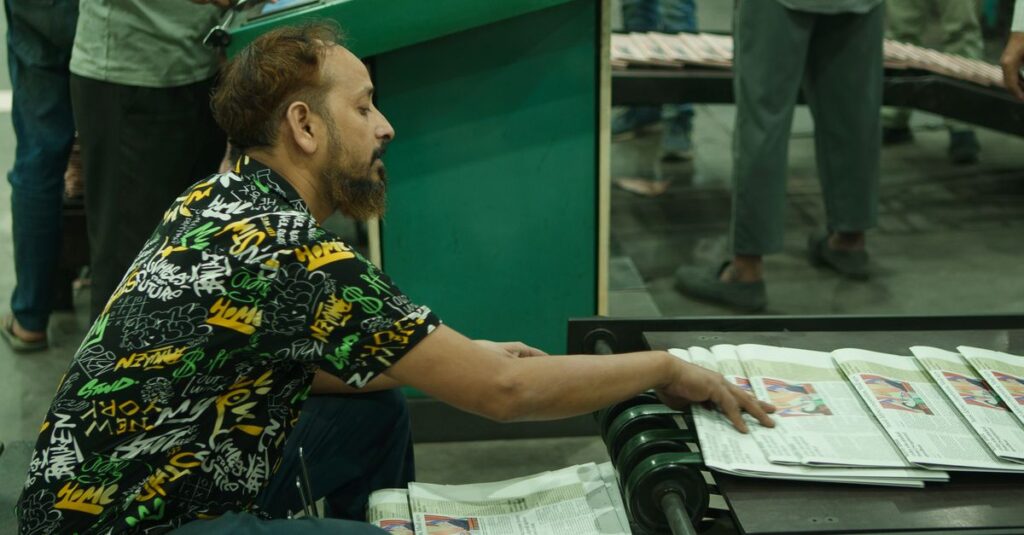
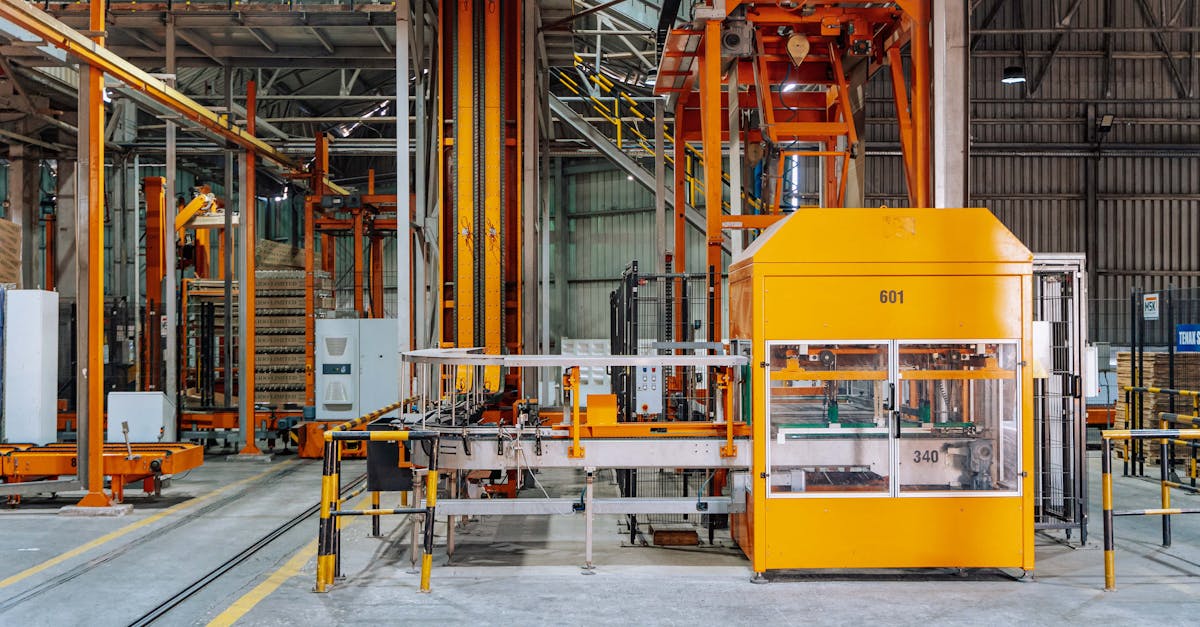
Look, I’ll just say it. A lot of people think manufacturing is a black box. Stuff goes in, notebooks come out. It feels like magic. It’s not. It’s a series of very specific, very deliberate steps that determine whether your notebooks fall apart in a month or last a school year. The factory floor — at least in a place like ours — tells the whole story.
Three things happen when you run a real notebook factory. First, you become obsessed with paper grain. It sounds trivial, but the direction the paper fibers run determines how easily it tears. Second, you start hearing the sound of a perfect bind. There’s a specific *thump-thump* rhythm of a machine stitching 92 pages together that you learn to recognize. And third, you realize that the cover isn’t just decoration — it’s the first line of defense. A cheap, flimsy cover tells the user the entire product is an afterthought.
We run a production line that can bind 30,000 to 40,000 notebooks a day. That number isn’t impressive because it’s big. It’s impressive because each one of those units has to meet the same standard. That’s the actual work. It’s consistency at scale. You don’t get that from a small print shop.
The Real-Life Micro-Story
I was on the phone last week with Priya, a procurement manager for a chain of private schools in Hyderabad. She’s 42, been in the job for eight years. She told me she’d just received a shipment of 10,000 “Long Notebooks” from a new supplier. The spines were already splitting. The pages were curling. “The teachers are complaining,” she said. “The kids can’t even write on them properly. The ink bleeds.”
She wasn’t angry. She was tired. It was 7 PM. She was still at her desk in Banjara Hills, staring at a stack of defective notebooks. The unexpected detail? She said the worst part was having to call the principal of each school and explain why she’d bought a subpar product. The embarrassment. That’s the human cost of a bad notebook. It’s not just a lost rupee. It’s lost trust.
Paper, Binding, Ruling: The Trifecta Most Buyers Get Wrong
Here’s the thing — most people ordering in bulk focus on price per unit. I get it. Budgets are real. But if you only look at the price, you’re missing the two things that actually determine cost *over time*: durability and usability. A cheap notebook that falls apart means you’re buying twice. A notebook with poor ruling means wasted paper and frustrated users.
Let’s break it down. The paper quality — we typically use 54 GSM writing paper — isn’t about feeling fancy. It’s about function. Thinner paper ghosts and bleeds. Thicker paper drives up cost and weight. 54 GSM is the sweet spot: it can handle a ballpoint pen, a fountain pen, even a marker, without becoming a mess.
Then there’s binding. Stitched binding is for workhorses — school notebooks, account books. Spiral binding is for lay-flat convenience — art books, corporate notebooks that need to stay open. Perfect binding is for that sleek, professional look — annual reports, premium diaries. Choosing the wrong one is like putting racing tires on a tractor. It might look right, but it won’t work.
The ruling? That’s where specificity matters. Single Ruled (SR) for essays. Double Ruled (DR) for accounting. Four Ruled (FR) for younger students learning to write. Cross Ruled (CR) for engineers and architects. It’s not a cosmetic choice. It’s a tool for a specific job. Ordering the wrong ruling is the quickest way to have a warehouse full of perfectly good notebooks that nobody wants to use.
Expert Insight
I was reading an industry journal last month — one of those trade publications nobody outside the business ever sees — and a line from a paper technologist stuck with me. She said something like, “The notebook is an interface between thought and record. If the interface fails, the thought is compromised.” I don’t have a cleaner way to put it than that. We’re not selling paper. We’re selling a reliable channel for ideas, data, plans. When the binding fails or the paper bleeds, you’re not just losing a stationery item. You’re losing a bit of whatever was supposed to be written down. That’s the real cost. It’s silent. And it adds up.
Custom Notebooks vs. Stock Notebooks: A Side-by-Side Look
Okay. This is where it gets practical. You need to decide: are you buying a generic product off a shelf, or are you building a tool that represents your organization? Most businesses and institutions need a mix of both. But knowing the difference — and the real trade-offs — changes everything.
| Aspect | Stock/Standard Notebooks | Custom/Private Label Notebooks |
|---|---|---|
| Lead Time | Short. Usually ready to ship from inventory. | Longer. Involves design, proofing, and a dedicated production run. |
| Cost Per Unit | Lower upfront cost. Economies of scale are already baked in. | Higher initial cost due to setup, but can be competitive at high volumes. |
| Branding | None, or the manufacturer’s brand. | Your logo, colors, and messaging on the cover and pages. |
| Flexibility | Fixed sizes, page counts, and rulings. You choose from a menu. | Tailored. You can specify paper type, binding, ruling, even custom header/footer text on each page. |
| Use Case | General internal use, disposable notepads, bulk student supplies. | Corporate gifts, branded training materials, premium client notebooks, institutional identity. |
| Minimum Order Quantity (MOQ) | Often lower, sometimes even for a few hundred. | Higher. Typically starts at 1,000–5,000 units to justify setup costs. |
| Perceived Value | Functional. A commodity. | Strategic. An extension of your brand’s quality and attention to detail. |
The table makes it pretty clear, right? It’s not that one is better. It’s about what you need. If you’re a stationery wholesaler filling shelves, stock notebooks are your bread and butter. If you’re a corporation wanting to impress clients at a conference, a flimsy stock notebook sends the wrong message before a single word is spoken.
Our custom printing services exist for this exact reason. It turns a generic product into a brand asset. But — and this is the part nobody says out loud — you have to be ready for the conversation. It needs planning. It needs someone who understands your brand book. It’s not an overnight thing.
The Hidden Supply Chain: From Our Factory to Your Desk
Most buyers see the final product. They don’t see the journey. And honestly? That’s how it should be. Your job is to source quality; our job is to make the journey invisible. But understanding a bit of it helps you spot a professional from an amateur.
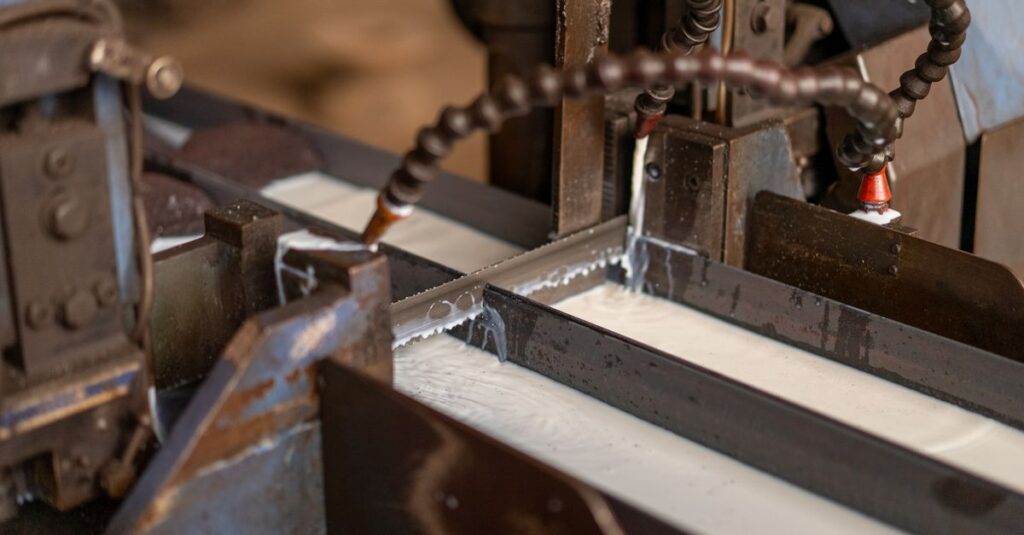
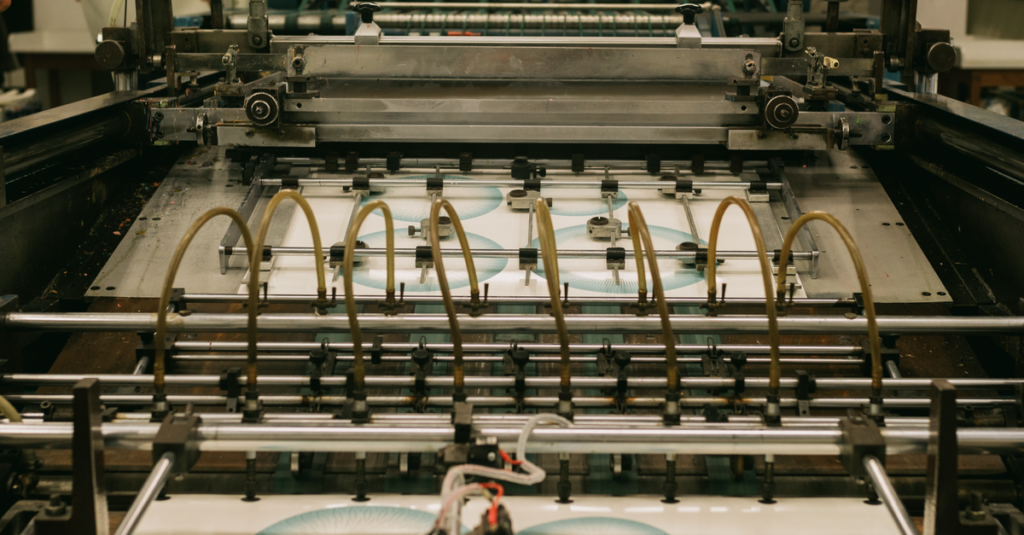
The process starts long before the printing press rolls. It starts with sourcing the right paper reels — checking for consistency, moisture content, brightness. Then it moves to the guillotine, cutting those massive reels down to specific notebook sizes: King Size, Long, Short, Account. Precision here matters by the millimeter. A mis-cut means wasted paper and inconsistent notebooks.
Printing is next. For custom work, it’s offset printing — sharp, vibrant, cost-effective for large runs. For smaller, variable runs (like numbered series), it might be digital. Then ruling — lines, squares, grids applied with calibrated cylinders. After that, the collating machine gathers the exact page count and order. Then binding — the moment it all comes together. Finally, trimming, quality check, and packing into cartons built to survive shipping across India or overseas.
We export to the Gulf, Africa, the US, Europe. The packaging for those orders is different. It has to withstand humidity, long sea voyages, and rough handling. A domestic carton won’t cut it. This is the kind of detail a real field notes company lives and breathes. It’s not glamorous. It’s logistics. But it’s the difference between your order arriving pristine and arriving as a box of pulp.
How to Talk to a Notebook Manufacturer (Without Wasting Time)
Right. Let’s get practical. You’ve found a potential supplier. Maybe it’s us, maybe it’s someone else. The first conversation sets the tone. Here’s what you need to have ready — and what you should ask — to cut through the noise and get straight to whether they can actually deliver what you need.
First, know your numbers. Not vaguely. Specifically.
- Quantity: How many units? Per month? Per year? Is this a one-time order or recurring?
- Specifications: Exact size (e.g., Long Notebook: 27.2 cm x 17.1 cm). Page count (92, 200, 240?). Ruling type (SR, DR, UR?).
- Customization Level: Just your logo on a standard cover? Or full custom cover design, inside cover printing, custom headers?
- Timeline: When do you need the first sample? When do you need the full shipment?
Second, ask them the gritty questions. Don’t be shy.
- “Can I see your quality control process for binding strength?”
- “What is your standard paper GSM, and what alternatives do you offer?”
- “What’s your production capacity per day, and what’s your current lead time?”
- “Do you handle all export documentation if we’re shipping internationally?”
A good manufacturer won’t hesitate. They’ll have answers, photos, maybe even a video walkthrough. A vague answer is a red flag. I think — and I could be wrong — that the biggest time-waster in this industry is a lack of specificity upfront. Get the details on the table first. It saves weeks of back-and-forth.
Anyway. Where was I. The point is, you’re not just buying a product. You’re buying a capability. The conversation should feel like you’re talking to an expert, not a salesperson. If it feels like the latter, you’re probably in the wrong place. Our team is built to have the expert conversation. It’s the only kind we know how to have.
Frequently Asked Questions
What does a field notes company do?
A field notes company is a specialized manufacturer that produces notebooks, diaries, and stationery, often in bulk for businesses, schools, and institutions. They handle everything from paper sourcing and printing to binding and customization, focusing on durable, functional products rather than just retail stationery.
What is the minimum order quantity (MOQ) for custom notebooks?
It varies, but for a true custom notebook run (with your own cover design, logo, etc.), MOQs typically start around 1,000 to 5,000 units. This is because setting up the printing plates and dedicating a production line has fixed costs. For standard, non-customized stock notebooks, MOQs can be much lower.
What notebook binding is most durable for school use?
For heavy daily use like in schools, stitched binding (also called saddle-stitched or side-stitched) is usually the most durable. The pages are physically sewn together through the spine, making it very hard for them to fall out. Spiral binding can snag and bend, while perfect binding can crack if folded.
Can I get different rulings on different pages in the same notebook?
Yes, but it’s a more complex and expensive custom job. A standard notebook has one ruling type throughout (like all Single Ruled). For mixed rulings (e.g., some pages ruled, some graph, some blank), you need a custom collating setup. It’s common for specialized workbooks or planners, but you’ll need to discuss it specifically with your manufacturer.
How long does it take to produce and deliver a bulk notebook order?
For a standard stock order, if the items are in inventory, shipping can be within days. For a custom manufacturing order, lead time is usually 4-8 weeks from final design approval. This includes production time, quality checks, and packing. Always factor in extra time for sample approvals and shipping, especially for international orders.
The Unresolved Bit
I don’t think there’s one perfect way to buy notebooks. Probably there isn’t. For a school administrator, perfection is a notebook that survives a term on a tight budget. For a brand manager, it’s a notebook that feels premium and reinforces a message. The needs are different. The common thread is the need for a supplier who understands that difference — and has the machinery, the paper, and the experience to deliver on it, batch after batch.
That’s the real job of a field notes company. It’s not about having the lowest price on a spreadsheet. It’s about being the last supplier you have to think about. The one whose product just works, so you can focus on your actual job. If you’ve read this far, you already know what you’re looking for in a notebook manufacturer. You’re just figuring out who’s actually built to provide it.
Let’s talk specs. Bring your numbers and your toughest questions.