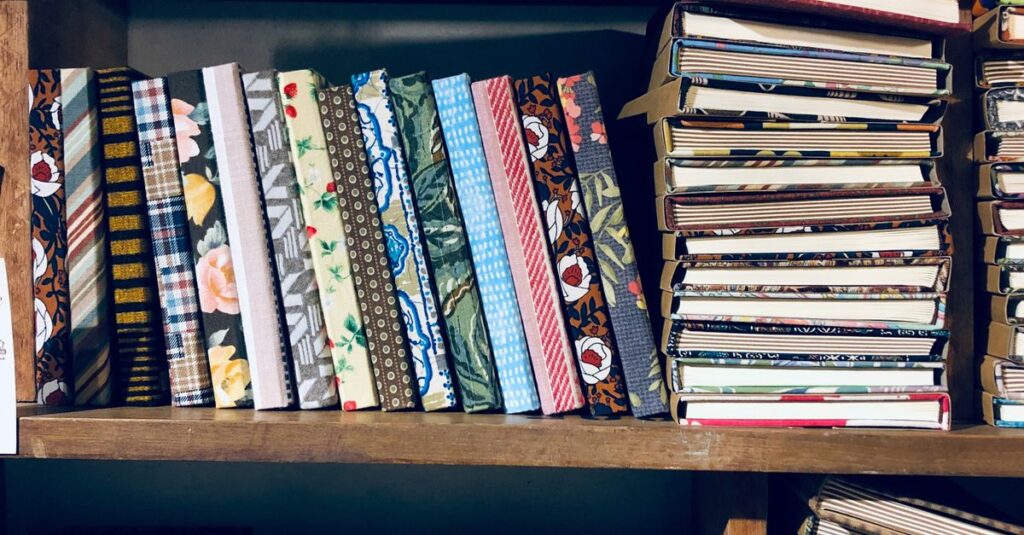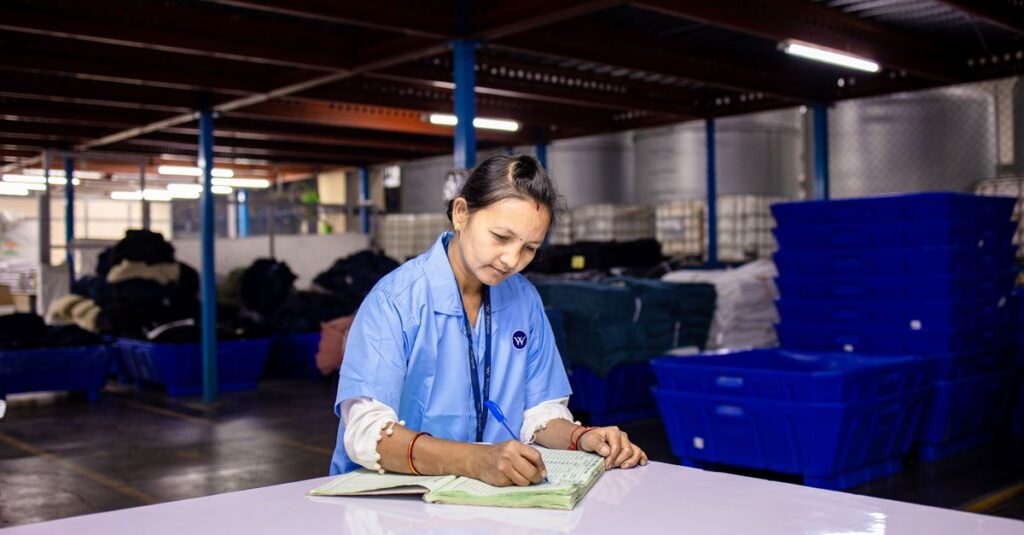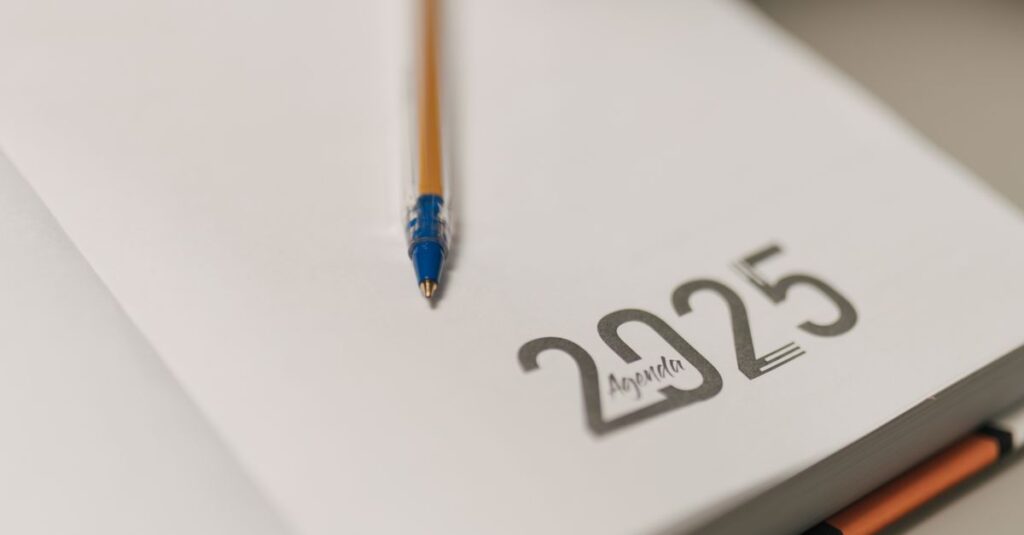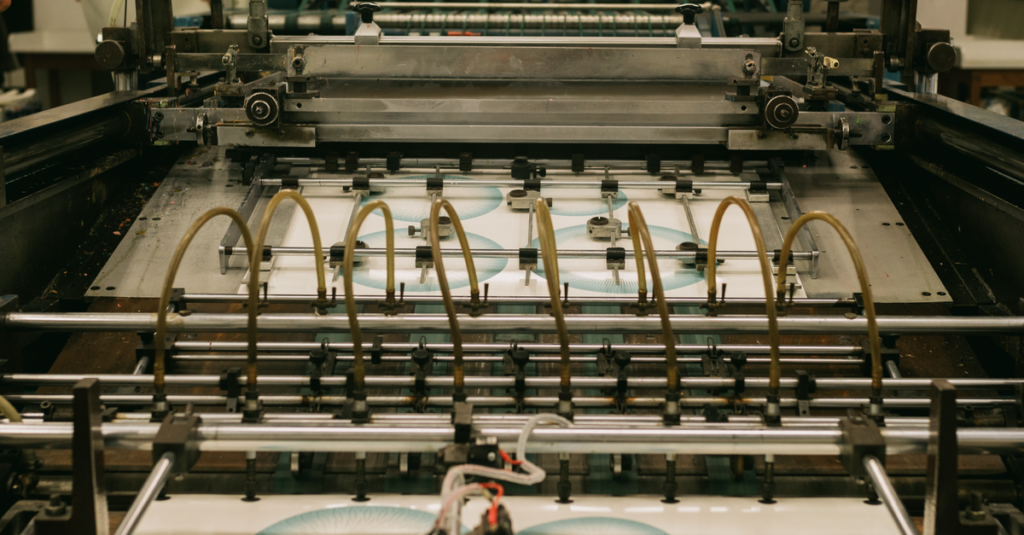
Okay, let’s talk about this.
You know the drill. Your school needs 5000 branded exercise books for the new term. Or your company’s annual diaries are about to run out. Some new training program needs custom notepads. And somebody in the office says the magic words: “Let’s just Google ‘nearest printing shop’.”
Right. Because what could be simpler?
You imagine walking in with a design on a pen drive. Agreeing on a price. Getting everything in a week. Job done. But then you actually do it. And the shop you find — because let’s be real, it’s never truly “just around the corner” when you need one — gives you a look. The guy quotes you a price that makes you wince. And then he says the real kicker: “For this quantity, sir, it will take three weeks. Minimum.”
That’s the moment. The one where you realize you’re not looking for a printing shop. You’re looking for a supplier. And those are two completely different games. If you’re ordering at scale, you need to understand why. It’s the kind of problem we’ve been solving for forty years, and trust me, the logistics aren’t what you think.
What You Actually Get at the “Nearest Printing Shop”
Here’s the thing your average local printer won’t tell you upfront. Their business is built on small-batch, quick-turnaround jobs: flyers, business cards, wedding invites. A couple hundred copies, maybe a thousand. Their machines, their paper stock, their whole workflow is set up for that.
Walk in with an order for five thousand bound, 92-page notebooks, and you’ve just broken their system. They can probably do it. But they’ll have to outsource the binding. Source special paper in bulk, which they don’t keep on hand. And your job gets slotted in around all their other small jobs.
What does that mean for you?
- The price per unit is insane. You’re paying retail rates for a wholesale product.
- Quality is a gamble. Are they experts in notebook binding? Or are they just a guy with a big printer who’ll figure it out?
- Paper choice? Limited. You get what they’ve got, which is usually lightweight or wrong for writing.
- Time. So much time. What they call “three weeks” often turns into five.
I was talking to a procurement manager from a college last month — over a very rushed phone call — and he put it perfectly: “Using a local printer for institutional stationery is like hiring a taxi to move your entire house.” It’ll get there, eventually. But the cost and the headache make zero sense.
The Micro-Story: Priya’s Corporate Diary Disaster
Priya, 38, procurement lead at a mid-size tech firm in Hyderabad. She needed 1200 custom corporate diaries by December 1st for the new year. It was October 10th. Plenty of time, right? She found a “nearest printing shop” with great reviews for brochures. They promised delivery by November 20th. She thought she’d won.
November 25th comes. No diaries. Just excuses. “Paper delay.” “Binding machine issue.” The diaries finally arrived on December 12th. The binding was flimsy. The company logo was printed slightly off-center on a third of them. And the paper was so thin you could see the next page’s writing. She had to apologize to the entire company, scramble for gift cards as a backup, and eat the cost. She told me she still gets tense thinking about it. The silence on the other end of the line had weight.
Anyway. The point isn’t that all local printers are bad. It’s that they have a specific purpose. And mass-producing bound stationery isn’t it.
Bulk Manufacturing vs. Local Printing: The Real Breakdown
You need to see this side-by-side to get why the search intent is wrong. When you type “nearest printing shop” for notebooks, you’re asking for the wrong solution.
| What You Need | Local Printing Shop | Notebook Manufacturer (Like Us) |
|---|---|---|
| Core Business | Short-run digital/offset printing (flyers, cards) | Long-run production of bound stationery |
| Paper Sourcing | Limited stock, bought at retail | Bulk direct from mills, multiple GSM & finish options |
| Binding | Often outsourced or a secondary service | Core competency. Stitched, spiral, perfect binding on-site. |
| Cost for 5000 Units | Very High (Retail + markups) | Low (Wholesale, economies of scale) |
| Lead Time (5000 notebooks) | 3-6 weeks (unpredictable) | 10-15 days (systematic production line) |
| Customization Depth | Usually just cover printing | Cover, inside pages, ruling, paper type, binding, packaging. |
| Quality Consistency | Hit or miss | Standardized, machine-controlled, batch-tested. |
See the difference? It’s not even close. One is a service for quick prints. The other is a production engine for the exact thing you need.
How to Actually Source Custom Notebooks (The Right Way)
So if “nearest printing shop” is the wrong search, what should you do? The process is simpler, but it requires thinking like a buyer, not just a customer.
1. Define What “Custom” Really Means
This is where most people waste time. Get specific. Is it just your logo on a standard notebook? Or do you need a specific size — maybe a custom A5 with your branding? What about the inside? Single-ruled? Graph paper? Thicker 70 GSM paper so ink doesn’t bleed? The more details you have, the less back-and-forth and the more accurate the quote. I think about this a lot — the clearer the ask, the smoother everything goes.
2. Volume is Everything
Let’s be direct. If you need less than 500 pieces, maybe a big manufacturer isn’t your best bet. But the moment you cross into the thousands, the economics flip entirely. Manufacturers have minimum order quantities (MOQs) because setting up the machines takes time. But that setup cost, spread over 5000 units, becomes trivial. This is why per-unit pricing from us can be half of what a local shop quotes. It’s not magic. It’s just how bulk production works.
3. Ask About the Process, Not Just the Price
When you contact a supplier, don’t just ask “How much for 1000 notebooks?” Ask: “Can you walk me through your production process for an order this size?” A real manufacturer will talk about paper sourcing, printing in signatures, binding lines, quality checks. A printer will talk about their digital press and then go quiet about the binding. The former inspires confidence. The latter? Not so much.
Expert Insight
I was reading something last month about supply chains, and one line stuck with me. It said the biggest cost in business isn’t usually the material or the labor — it’s the uncertainty. The delays, the re-works, the emergency fixes. When you choose a partner for something as fundamental as your company’s or school’s stationery, you’re buying predictability as much as you’re buying paper. A local printer offers flexibility (theoretically). A manufacturer offers reliability. In my experience, for bulk orders, the organizations that prioritize reliability sleep much better. Don’t quote me on that, but it’s been true for 40 years.
Seeing how a dedicated printing service handles scale changes the game completely.
Your Checklist Before Placing Any Order
Right. Before you send another email or make another call, run through this. It’ll save you weeks of headache.
- Sample, sample, sample. Never, ever order bulk without a physical sample. Does the paper feel right? Does the binding lie flat? Does the print quality look sharp?
- Clarify who does the binding. Is it in-house? If it’s outsourced, that’s a red flag for delay and quality control.
- Ask about paper provenance. Where do they source it? Can they offer different GSM weights? (For writing, you usually want 54 GSM or higher).
- Get a breakdown of timelines. Not just “3 weeks.” Ask: “What’s the timeline for paper arrival, printing, binding, and shipping?”
- Confirm packaging. How will 5000 notebooks arrive? In loose cartons? Shrink-wrapped in sets? This matters for storage and distribution.
Look, if you do this and your “nearest printing shop” can answer all of this confidently and competitively, great. Maybe they’re the exception. But nine times out of ten, you’ll hit a wall by question three. And that’s your signal.
Frequently Asked Questions
Can’t a local printing shop just order and assemble notebooks for me?
Technically, yes. But they become a middleman, not a manufacturer. They’ll source notebooks from a wholesaler or a factory like ours, then print your cover. This adds a markup, complicates communication, and increases the risk of error. You pay more for less control. Going direct to the maker is almost always cheaper and more reliable.
What’s the minimum order quantity for custom notebooks from a manufacturer?
It varies, but for a standard custom print run, most serious manufacturers (including us) start around 1000 to 2500 pieces. This is because of the machine setup costs. For truly unique specs (weird size, special paper), the MOQ might be higher. It’s always the first question to ask.
Is the quality from a big manufacturer better than a local shop?
For notebooks? Almost certainly. A manufacturer’s entire reputation is built on producing consistent, durable stationery at scale. They have standardized processes and quality checks at each stage. A local printer’s reputation is built on fast, small prints. Notebook binding is a specialty skill they often don’t have in-house.
How long does bulk notebook production really take?
From an established manufacturer, for an order of say, 5000 standard notebooks, you should expect 10-15 working days for production after final design approval. This doesn’t include shipping. Local shops quoting similar times are often just promising what they can’t reliably deliver, because they don’t control the full chain.
What’s the biggest mistake people make when ordering custom notebooks?
Focusing only on the unit price and the delivery date. They ignore the paper quality (GSM), the binding method, and the supplier’s proven capacity. A slightly cheaper notebook with poor binding that falls apart in a month is infinitely more expensive than a well-made one. Always, always get a sample first.
So, about that “nearest printing shop”…
The search itself isn’t wrong. It’s just incomplete. You’re not just looking for a place that can print. You’re looking for a partner that can produce, reliably and at scale. The emotional need behind the search is for something that feels simple, local, and fast. But the practical need — the one that determines whether your project succeeds or fails — is for expertise, capacity, and predictability.
I don’t think there’s one perfect answer for every single order. Probably there isn’t. But if you’re reading this because you’ve been googling “nearest printing shop” for the last hour, getting frustrated with quotes and promises… you already know you need a different approach. You’re just figuring out how to make the switch without creating more work for yourself.
The switch is easier than you think. It starts with asking the right questions, and knowing that the right partner might not be the closest one on the map, but the one built for the job you actually have. Sometimes, the fastest way forward is to talk to someone who’s done this a few thousand times.