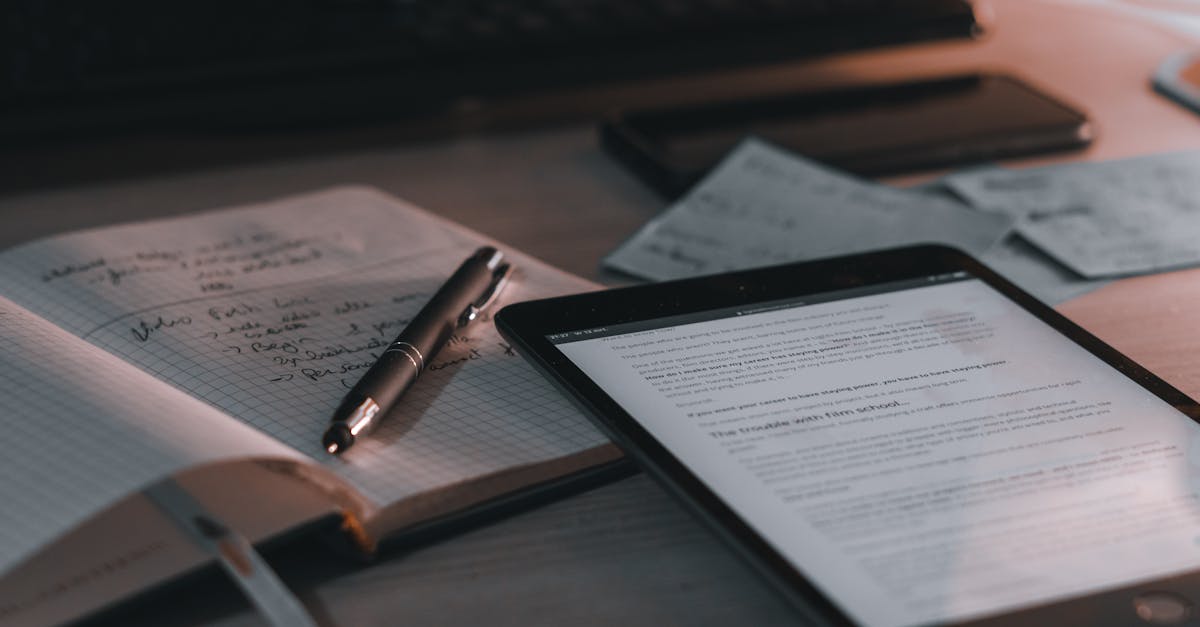
Look, Let’s Talk About This ‘Electronic Notebook’ Thing
You’ve seen the ads. Sleek tablets, apps that promise to digitize your thoughts, pens that magically transfer scribbles to the cloud. The whole electronic notebook pitch is about replacing paper. It’s clean, it’s modern, it’s searchable.
Here’s the thing — it’s not about replacement. Not in the real world where people actually need to write things down. Schools aren’t handing out iPads to every 8-year-old. Procurement managers aren’t buying 10,000 tablets for a corporate training session. The warehouse foreman isn’t taking a stylus to check inventory. The energy required to make that switch? It’s massive. And honestly? It’s mostly unnecessary.
For over 40 years, we’ve been making physical notebooks. And what I hear from buyers — from schools, from government offices, from distributors — isn’t a push for digital. It’s a quiet, persistent need for paper that just works. If you’re trying to figure out what an electronic notebook is and whether you should care, start with what you already know works.
So What Exactly IS an Electronic Notebook?
Okay, let’s define it. An “electronic notebook” usually means one of two things. First, it’s those dedicated e-ink devices like reMarkable or Boox. They try to feel like paper. Second, it’s any tablet or app (like GoodNotes or Notability) used for handwriting. The promise is simple: write once, have it everywhere. No stacks of paper, no lost notes.
The problem? It’s a promise built for individuals, not institutions. Think about it. A school principal needs to outfit 500 students. The cost isn’t just the device — it’s cases, chargers, IT support, software licenses, repair contracts, insurance. One kid drops a paper notebook? It costs 30 rupees. One kid drops a tablet? You’re looking at 30,000 rupees and a parent meeting.
And for businesses? The audit trail on paper is physical. You can see the ink, the corrections, the initial next to the change. A digital file can be copied, altered, deleted. I’m not saying it happens often. But when you’re dealing with official records, account books, or inspection logs, the permanence of paper isn’t old-fashioned. It’s reliable.
The Real-World Use Case (Where Digital Actually Makes Sense)
I’ll be fair. There are places where electronic notebooks shine. Freelancers and consultants who live on the move. Architects sketching concepts they’ll immediately email. Students in well-funded university programs where sharing annotated PDFs is the norm.
It’s for the individual who’s already deeply embedded in a digital workflow. If your whole life is in the cloud, adding a digital notepad is a logical step. But that’s a tiny slice of the actual notebook market. The bulk of paper consumption — and I mean 95% of what we manufacture — is for systematic, repeatable, low-stakes writing. Homework. Meeting minutes. Practice problems. Daily logs.
Which brings me to Ravi. He runs procurement for a chain of private schools in Hyderabad. We spoke last month. He said they trialled tablets for note-taking in one senior class. The result? Distraction. Battery anxiety. And teachers spending class time troubleshooting tech instead of teaching. They went back to paper notebooks the next term. His exact words: “We needed notebooks. We bought gadgets. They’re not the same thing.”
You see the disconnect? The electronic notebook solves a high-tech, individual problem. Most writing needs are low-tech and communal.
The Unbeatable Economics of Paper (Especially in Bulk)
Let’s talk numbers — not abstract ones, but the ones on a purchase order. A good-quality 200-page long notebook from us might cost a school 25 rupees per piece in an order of 10,000. That’s a total of 2.5 lakh rupees. A basic tablet suitable for note-taking? Even at a bulk discount, you’re starting at 8,000 rupees each. For 10,000 units? 8 crore rupees.
It’s not even the same universe of spending.
And then there’s the lifespan. A notebook is used, filled, and maybe kept for reference. Its job is done. A tablet has a 3–4 year lifecycle before it’s obsolete or the battery dies. It requires updates, management, eventual disposal as e-waste. The simplicity of paper is also an environmental calculation people miss. A paper notebook is carbon, water, pulp. It biodegrades. A tablet is rare earth metals, plastic, toxic batteries. Which is truly “disposable”?
For bulk buyers — schools, corporations, government tenders — this isn’t a philosophical debate. It’s a spreadsheet. And paper wins on the spreadsheet every single time.
Expert Insight
I was reading an interview with a cognitive scientist a while back — wish I could remember her name — about memory and writing. She said something that stuck. The physical act of forming letters on paper creates a spatial memory in your brain. You remember where on the page you wrote something, the pressure you used, the smudge in the corner. Typing or even stylus-tapping on glass doesn’t trigger the same neural pathways. It’s shallower. I think about that every time someone claims digital note-taking is “just as good.” For raw information capture, maybe. For learning and retention? The science says no. And if the goal of writing something down is to actually remember it, that’s a pretty big deal.
Side-by-Side: When to Use Paper vs. Electronic
This isn’t about one being better overall. It’s about the right tool for the job. Most businesses and institutions need both, but for completely different tasks.
| Consideration | Paper Notebooks | Electronic Notebooks |
|---|---|---|
| Best For | Bulk distribution, learning, brainstorming, official logs, quick meetings, exams. | Individual professionals, digital archiving, collaborative editing of documents, travel notes. |
| Upfront Cost (Per Unit) | Very low (₹20 – ₹100) | Very high (₹8,000 – ₹80,000+) |
| Operational Hassle | None. Give it and forget it. | High. Charging, syncing, software updates, IT support. |
| Durability & Risk | Low risk. Spill water on it? It dries. Drop it? Still works. | High risk. One drop can mean a broken screen and total loss. |
| Customization | Extreme. Any cover, any ruling, any page count, any logo. We do it daily. | Limited. Wallpaper and maybe a case. Branding is superficial. |
| Audit & Security | Physically tangible. Hard to alter without trace. | Digital files are easy to copy and alter without a clear trail. |
Why Custom Paper Notebooks Are a Silent Power Tool
This is the part most people miss. The real advantage of paper in a professional setting isn’t just cost. It’s branding and specificity. An electronic notebook is generic. A paper notebook can be a tailored tool.
Think about a new employee onboarding kit. You could give them a tablet. Or, you could give them a beautifully bound notebook with the company logo, their name embossed on the cover, the first section pre-printed with company values, the second with project templates, the third with blank pages for their own notes. Which feels more intentional? Which reinforces the company culture from day one?
We do this for corporations all the time. It’s not just a notebook; it’s a communication piece. For schools, it’s a discipline tool — a specific notebook for each subject, with the school crest on the front. It creates order. It signals that what happens inside it matters. A generic app icon on a home screen can’t do that.
The manufacturing flexibility is insane. Need a notebook with graph paper for the first 50 pages and plain paper for the rest? Done. Need a special pocket on the inside back cover for loose sheets? Easy. Need it to lay perfectly flat for left-handed writers? We adjust the binding. This level of specific problem-solving is what real notebook manufacturing is about. It’s not commodity stationery. It’s creating a physical object for a specific human need.
The Future Isn’t Either/Or (And That’s Good News)
I don’t think paper is “dying.” That’s a tired headline. I also don’t think electronic notebooks are a fad. The future is hybrid. The smartest organizations use each for what it’s best at.
Use paper for the raw, initial capture: the classroom, the brainstorm, the factory floor log, the client meeting. Then, if you need to, digitize the important bits. Scan a page. Take a photo. That’s a conscious act of selection — you’re choosing what’s valuable enough to move into the digital realm. The paper original remains the source of truth.
This takes the pressure off. You don’t need to digitize everything. You just need a reliable, durable, affordable system for the daily act of writing. That’s what we’ve always provided. The peace of mind that comes from a well-made notebook is its own kind of technology. It never needs a software update. It never runs out of battery. It just is.
Frequently Asked Questions
Are electronic notebooks better for the environment than paper?
It’s complicated. Paper comes from a renewable resource (trees from managed forests) and biodegrades. But it uses water and energy to produce. Electronic notebooks create e-waste — a huge problem — and require mining for metals. For short-term, disposable use (like single-subject school notebooks), paper often has a lower total environmental footprint, especially if recycled.
Can you get custom-printed electronic notebooks?
Not really. You can brand the case or the software startup screen, but the core device is mass-produced in a factory overseas. The true customization — page layout, ruling, cover material, binding — is only possible with physical paper notebooks. That’s a key advantage for corporate gifts or institutional identity.
Do students learn better with paper or electronic notebooks?
Most educational research points to paper for deeper learning. The act of handwriting on paper improves memory retention and understanding compared to typing. Electronic notebooks can be distracting. For mastering foundational knowledge, paper is still the gold standard for educators.
We need notebooks for official record-keeping. Is paper still secure?
In many ways, more secure. A bound paper ledger is tamper-evident. Pages can’t be deleted silently or altered without a trace. For audit trails, legal documents, and permanent records, paper’s physicality is a feature, not a bug. Many government and financial regulations still require original paper documents.
As a bulk buyer, how do I choose the right paper notebook?
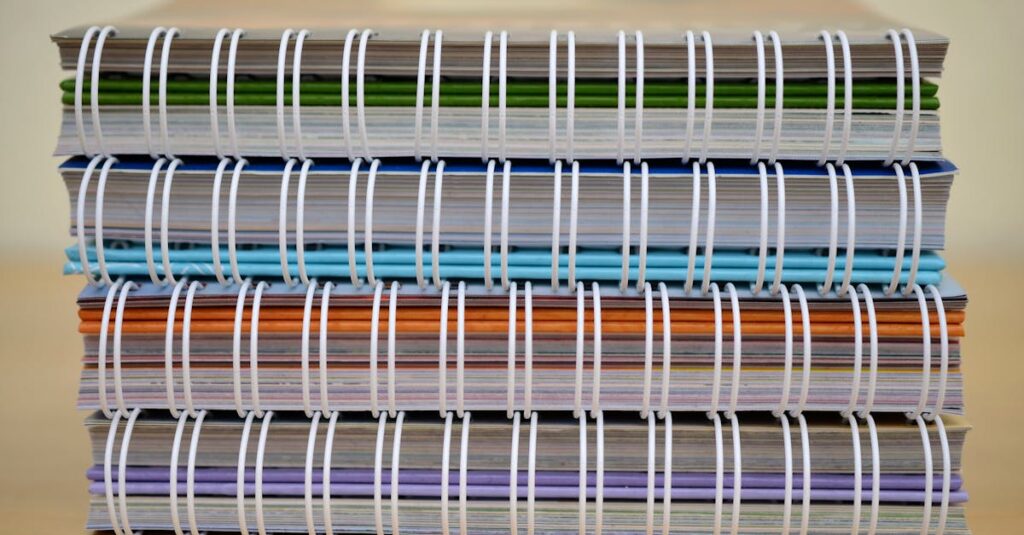
Focus on three things: paper quality (aim for 54+ GSM so ink doesn’t bleed), binding durability (stitched or spiral for heavy use), and ruling type (match it to the task — single ruled for writing, graph for math). The best move is to talk directly to a manufacturer who can guide you. We help buyers with this every day.
The Takeaway (It’s Simpler Than You Think)
Electronic notebooks are clever tools for a specific kind of user. But they haven’t changed the fundamental need for paper. Not in schools, not in offices, not in factories. That need is about cost, reliability, focus, and tangibility.
The hype cycle always wants you to believe the new thing replaces the old thing. Reality is messier. The old thing often just settles into the role it was always best at. Paper isn’t going anywhere. It’s just getting back to work.
If you’re evaluating options for your institution, start with the need, not the technology. Do you need to equip 500 people with a reliable way to write things down tomorrow? The answer is probably on our shelves, not in a shipping container from Shenzhen. Sometimes the most advanced solution is the one that’s been working for forty years.