What Actually Makes a Good Commercial Printing Vendor?
I’ll be honest with you. After 40 years in this business, I’ve seen a lot of printing vendors come and go. The good ones? They’re rarer than you’d think.
You’ve probably been through it too. You place a bulk order. You get samples that look perfect. Then the actual delivery shows up and the colors are wrong, the binding is weak, or the paper quality makes you wonder if someone swapped your order at the last minute.
So what makes a good commercial printing vendor actually worth your time?
Not the flashy website. Not the cheap quote. The stuff that matters.
Let me walk you through exactly what I’ve learned — from the other side of the table, running a notebook and stationery manufacturing unit since 1985.
1. Consistency — the boring quality nobody talks about
Here’s the thing nobody tells you about commercial printing. The first order is easy. Any decent vendor can make a good sample. The test is order number fifty.
I remember a conversation with a procurement manager from a school chain in Vijayawada. He told me his biggest headache wasn’t finding a printer. It was finding one who delivered the same quality every single time. “The first batch was beautiful,” he said. “The third batch looked like someone else printed it in their garage.”
That’s the real question you should ask any vendor before you sign: How do you ensure consistency across runs?
At our facility in Rajahmundry, we run around 30,000 to 40,000 notebooks per day. That’s a lot of paper, a lot of ink, a lot of binding. And honestly? Consistency is a headache. It requires:
- Standardized calibration on every machine
- The same paper GSM across batches
- Ink consistency checks mid-run
- Binding tension that doesn’t drift
Most vendors don’t do this. They get the order. They run it. They ship it. And you, the buyer, are left hoping it’s good. That’s not a strategy. That’s a gamble.
2. The real cost of “cheap” printing
Look, I get it. Budgets are tight. Procurement managers have targets. Schools have limited funds. I’ve heard every version of “Can you match this price?” in the last four decades.
But here’s something I’ve learned the hard way. Cheap printing has a hidden cost. And it’s not just the reprint expenses.
Let me tell you about a small incident. A distributor from Kakinada — let’s call him Rajesh — ordered 5,000 custom diaries from a vendor offering rates 20% lower than market. The delivery came in three weeks late. The logo was misaligned. The paper felt like newspaper. He had to reorder from someone else, pay for express production, and still lost two corporate clients who needed those diaries for a New Year promotion.
That “saving” of a few rupees per notebook cost him lakhs in lost business.
Expert Insight
I was talking to an old friend in the printing business a few months ago — over chai at a shop near Gantalamma Temple, actually. He said something that stuck with me. “The problem isn’t that cheap printing exists. The problem is that people forget it’s cheap for a reason.” He wasn’t being cynical. He was stating a fact that anyone who’s been in this game long enough knows. The paper costs are fixed. The ink costs are fixed. Labor is labor. If someone’s offering you a price that seems too good, it’s because they’re cutting corners somewhere you won’t see until it’s too late.
3. What to look for in a commercial printing vendor
So we know what doesn’t work. Let’s talk about what does. After years of watching vendors succeed and fail — and working with clients across India, the Gulf, Africa, the US, and Europe — here’s what separates the reliable ones from the rest.
Equipment that’s not from 1995
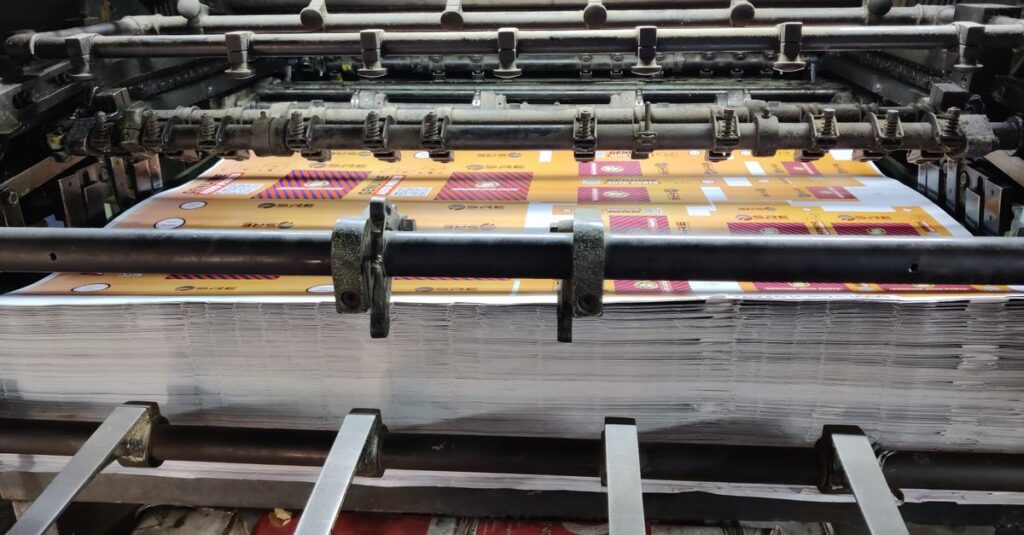
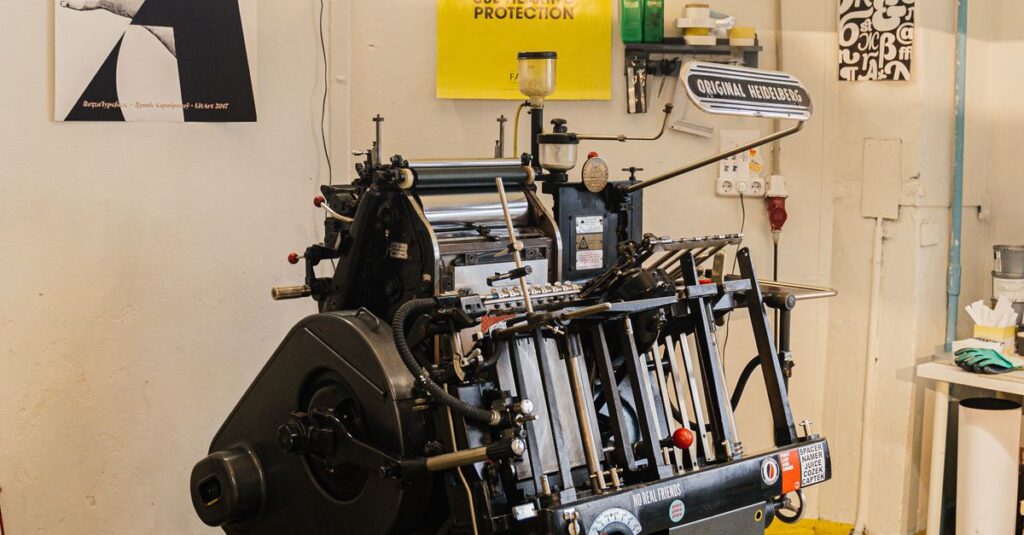
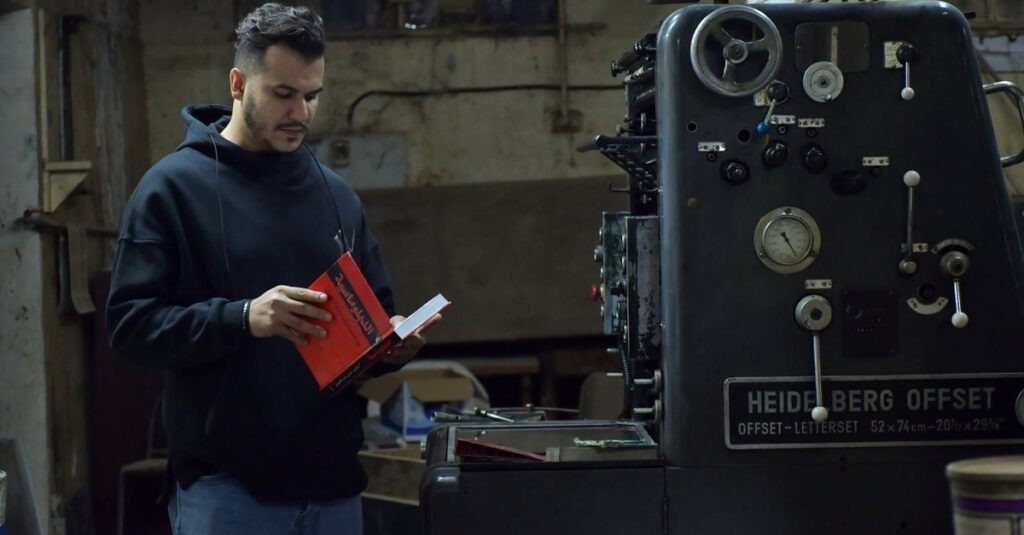
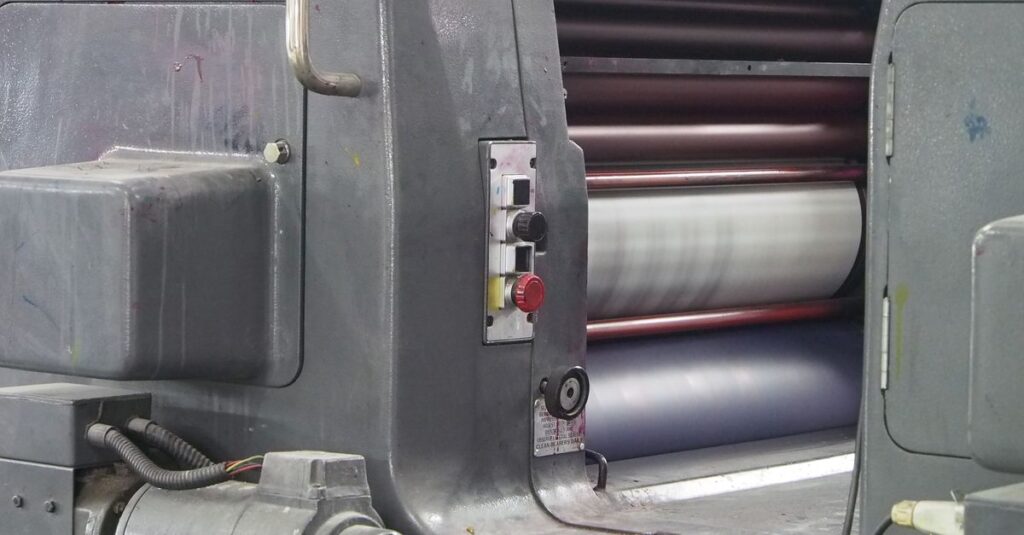
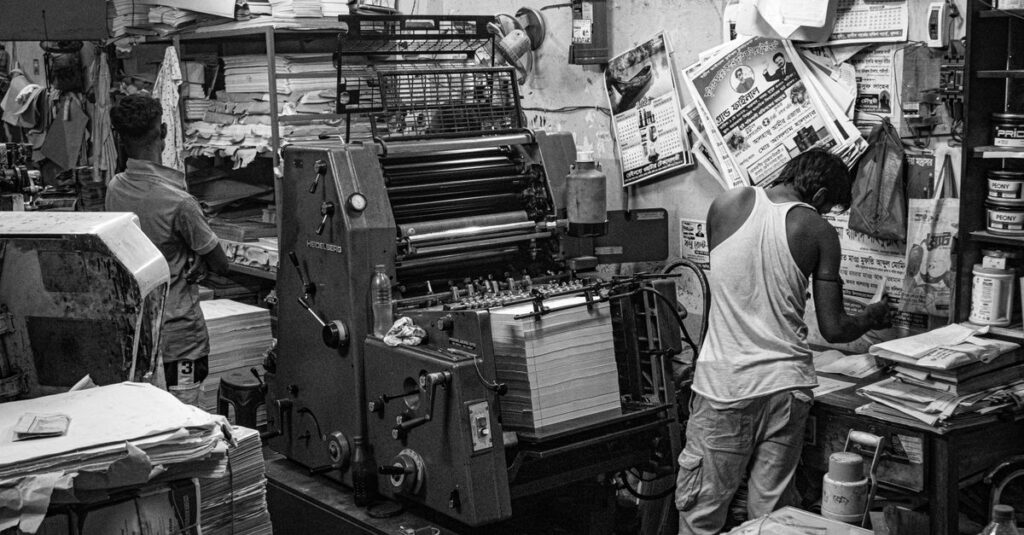
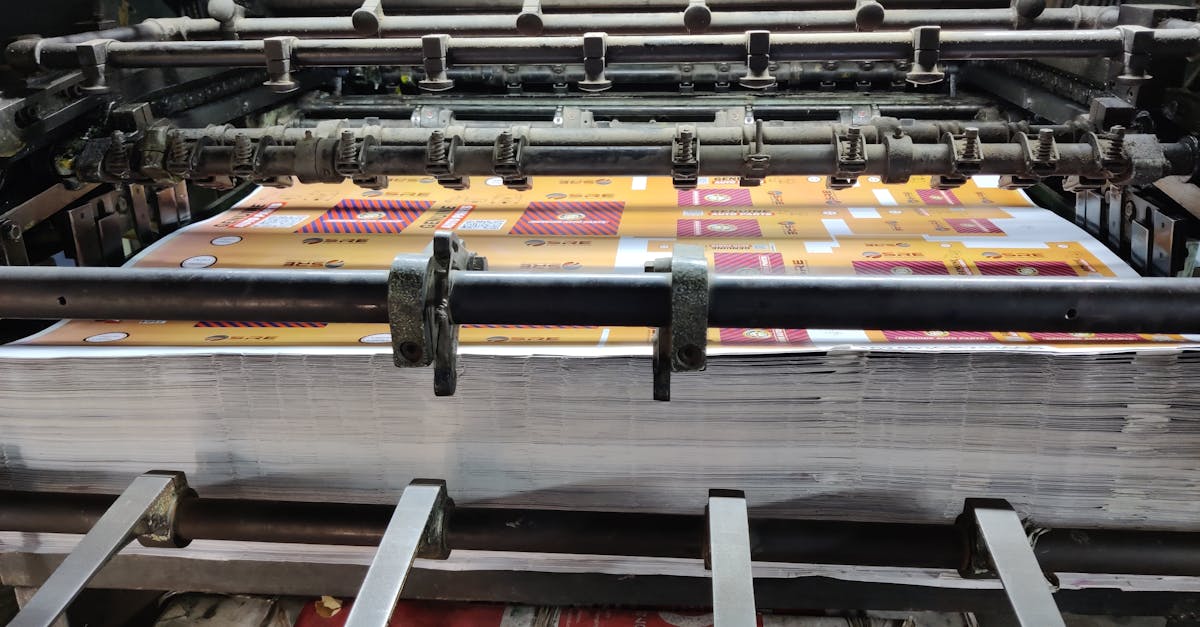
Modern offset printing machines, digital proofing, automated binding lines. If a vendor is running machines from the 90s, your quality will reflect that. Period. Ask about their equipment. A good vendor will show you around. A bad one will give you vague answers.
Proofing that’s actually accurate
Soft proofs are fine. But if your vendor can’t give you a physical proof that matches the final product within a close margin, walk away. I’ve seen too many “match” disasters where the proof looked like a museum piece and the final product looked like a photocopy.
Communication that doesn’t make you anxious
This one matters more than most people think. A good vendor returns your calls. They tell you when there’s a delay before you discover it yourself. They don’t ghost you when something goes wrong.
| What Matters | Good Vendor | Bad Vendor |
|---|---|---|
| Equipment age | Modern, maintained regularly | Outdated, poorly serviced |
| Proof accuracy | Matches final run within 95-98% | Proof looks different from delivery |
| Delivery consistency | On time or communicates early if delayed | Late with no explanation |
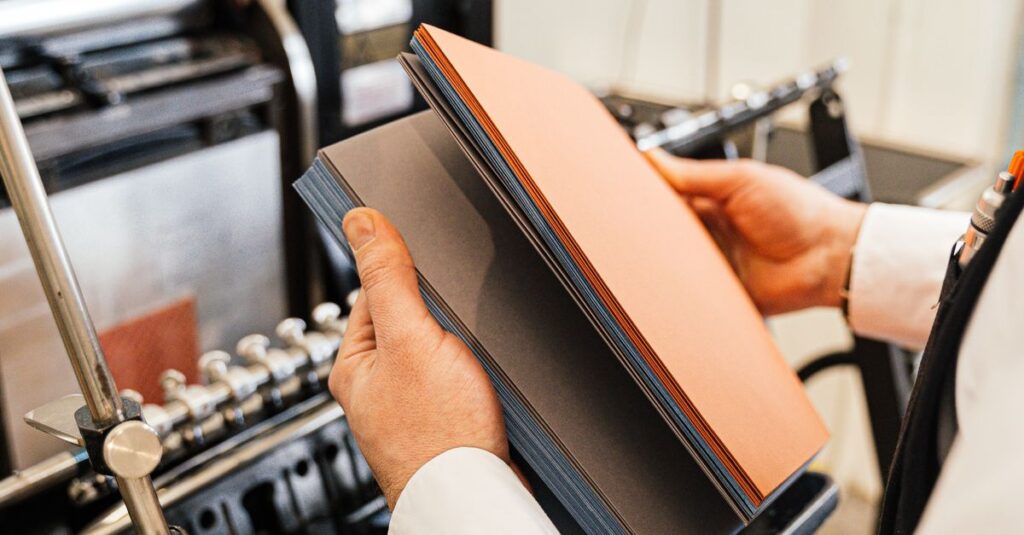
| Paper quality | Specifies GSM, shows certificates | Vague about paper source |
| Customization ability | Offers multiple binding, ruling, cover options | One-size-fits-all approach |
The question you should be asking yourself isn’t “Can they print?” It’s “Can they print my order, exactly as I need it, every single time?”
4. Customization isn’t optional anymore
I’ll say something that might surprise you. The days of ordering plain ruled notebooks and calling it a day are over. Schools want their logo on the cover. Corporates want branded diaries with foil stamping. Institutions want private label products that look like their own brand.
If your vendor can’t handle that, they’re not a commercial printing partner. They’re just a printer. And there’s a difference.
Good vendors offer:
- Logo printing and embossing
- Foil stamping for premium look
- Custom cover design assistance
- Multiple binding options — stitched, spiral, perfect binding
- Ruling customization — single, double, four-ruled, cross-ruled, you name it
- Size flexibility — King, Long, Short, A4, A5, Crown
At Sri Rama Notebooks, we regularly produce notebooks with custom layouts, specific page counts (from 52 to 700 pages), and cover designs that match a client’s brand guidelines exactly. It’s not extra work. It’s the basic expectation.
5. A real story that explains it better than I can
Let me tell you about a guy I met at a trade show in Hyderabad. Name’s Suresh. He’s 42. Runs a stationery distribution business out of Visakhapatnam. Been doing it for about a decade.
Suresh told me about an order he placed with a vendor for 10,000 spiral-bound notebooks for a chain of engineering colleges. The sample was perfect. He placed the order. Paid an advance. Waited six weeks.
The delivery arrived on a Thursday morning. He opened the first carton and noticed the spiral binding was loose on half the notebooks. He opened another carton. Same issue. By the time he finished checking, he realized about 40% of the order had binding that would fall apart within a month of student use.
He called the vendor. No answer. Emailed. No reply. Called again the next day. The vendor finally picked up and said — I swear this is true — “Binding issues happen. Just sell them at a discount.”
Suresh didn’t sell them at a discount. He couldn’t. The colleges expected quality. He ended up reordering from us at Sri Rama Notebooks, paid for express production, and delivered a week late with a personal apology to the college management. It cost him relationships he’d built for years.
I think about that story every time someone asks me what makes a good commercial printing vendor. It’s not about glossy brochures. It’s about not leaving your customer holding a pile of defective notebooks with nobody to call.
6. Things I wish every buyer knew before ordering
I’ve been on both sides now. As a manufacturer and as someone who’s had to deal with bad vendors in other industries. If I could sit down with every procurement manager and school administrator before they place a printing order, here’s what I’d say:
Don’t hide your expectations. Tell your vendor exactly what you need. Paper weight. Binding type. Ruling style. Color accuracy expectations. Delivery timeline. The more specific you are, the less room there is for disappointment.
Ask about their reprint policy. I know it’s an awkward conversation. But good vendors will tell you honestly what happens if something goes wrong. Bad vendors will avoid the question and hope you forget to ask.
Visit if you can. Not always possible, I know. But if distance allows it, seeing the facility gives you a sense of how seriously they take their work. Is it organized? Are machines being maintained? Do workers look like they know what they’re doing? You can sense these things in person.
Trust your gut about communication. If they’re slow to respond before you pay, they’ll be even slower after. If they’re vague about timelines, expect delays. If they can’t answer basic questions about GSM and binding methods, they probably don’t know their own process well enough.
That’s it. Not complicated. But it’s amazing how many buyers skip these steps and end up regretting it.
Frequently Asked Questions
What is the most important thing to check in a commercial printing vendor?
Consistency above everything. Ask for references from repeat clients. A vendor who delivers the same quality order after order is worth more than one who gives you a perfect first batch and disappears.
How do I know if a printing vendor is using quality paper?
Ask about GSM (grams per square meter). Standard writing paper is around 54 GSM. For premium notebooks, you want 60-70 GSM. Also ask about the paper source. A good vendor can tell you exactly what they’re using.
What commercial printing services should a good vendor offer?
Look for offset printing, digital proofing, multiple binding options (stitched, spiral, perfect), foil stamping, embossing, and custom cover design. If they can only do basic printing, they’re not a full-service commercial vendor.
How long does a typical bulk printing order take?
For bulk notebook orders (5,000+ units), expect 3-6 weeks depending on customization complexity. A good vendor will give you a realistic timeline and communicate if anything changes. Avoid vendors who promise unrealistic turnaround times.
What’s a reasonable minimum order quantity for custom printed notebooks?
Most commercial printing vendors require at least 500-1,000 units for custom printed notebooks. Some, like Sri Rama Notebooks, can accommodate smaller runs depending on the complexity. Always confirm MOQ before requesting a quote.
Finding someone who actually delivers
Look, I don’t think there’s a perfect vendor out there. Probably there isn’t. Printing is a human process, and humans make mistakes. But what separates the good vendors from the bad ones isn’t perfection. It’s how they handle imperfection.
Do they own their mistakes? Do they fix them? Do they treat you like a partner or like a transaction?
If you’re evaluating vendors for your next order, don’t just look at the price. Look at the person on the other end of the line. Ask hard questions. Trust your instincts.
And if you want to talk to someone who’s been doing this since 1985 — who knows the difference between good printing and bad printing because he’s lived it — Sri Rama Notebooks is here. Give us a call. We’ll tell you honestly if we can help or not. No pressure. Just straight talk.